
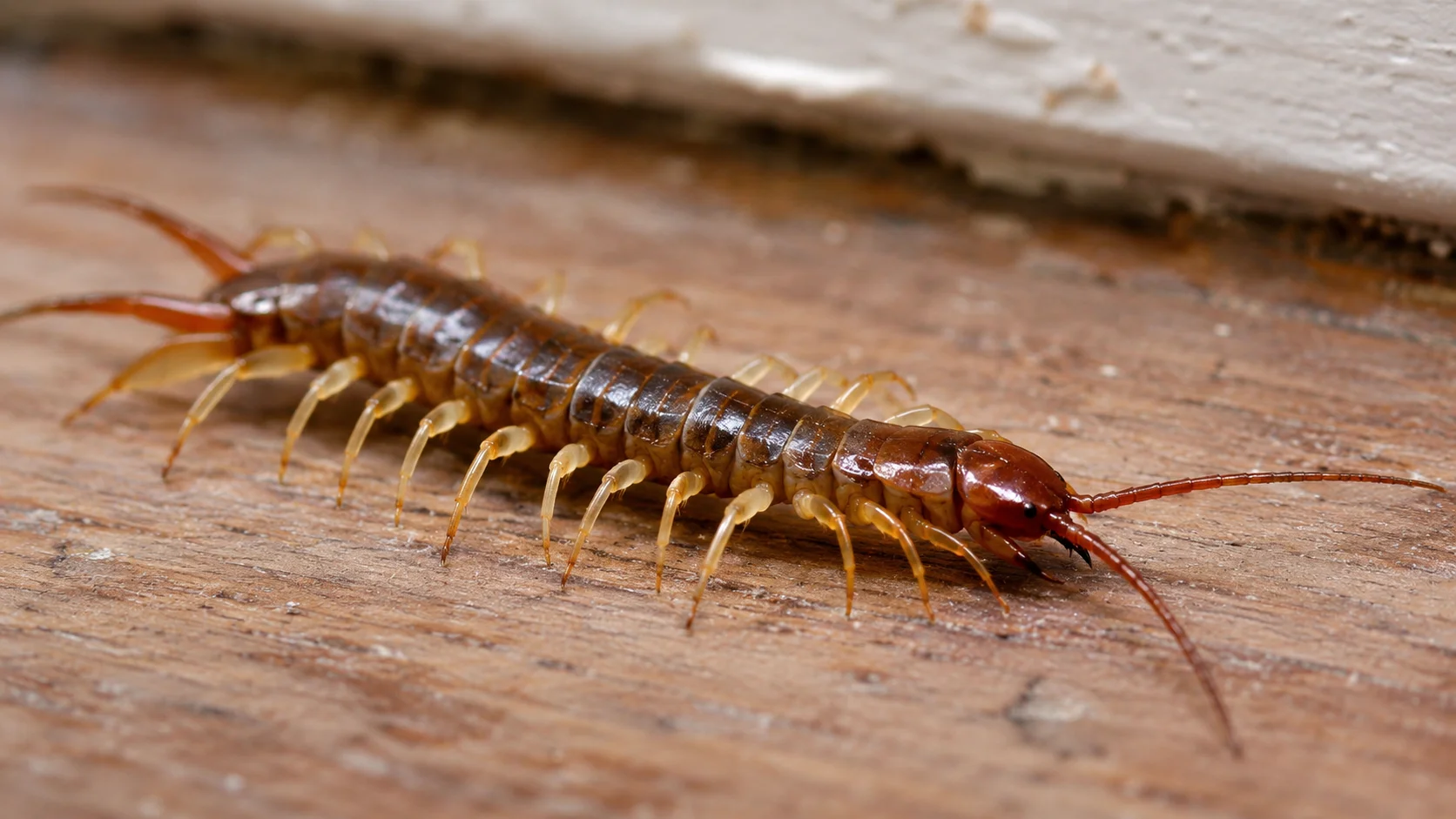
Finding a centipede crawling across your bathroom floor or hiding beneath a box can be unsettling. Its long body, numerous legs, and rapid movements may leave you wondering whether it is poisonous, whether it can hurt your family, or whether your pets are at risk.
The short answer is that centipedes are venomous rather than poisonous in the usual biological sense. They use specialized appendages near their heads to deliver venom when catching prey or defending themselves. A bite from a common house centipede is generally not considered dangerous to most healthy adults, but it can cause pain, redness, and swelling. Larger species can produce more painful reactions.
The level of risk depends on the centipede species, the circumstances of the encounter, and the individual's sensitivity. Understanding how centipedes behave, recognizing potential bite symptoms, and knowing when to seek help can make it easier to protect your household without unnecessary panic.
Are Centipedes Poisonous or Venomous?
Centipedes are venomous because they actively deliver venom through specialized, claw-like appendages called forcipules. These structures are modified front legs located near the head and are used to immobilize prey. Although the venom primarily helps centipedes hunt insects and other small animals, it can also cause a painful reaction if a centipede bites a person or pet.
Poisonous and venomous do not mean exactly the same thing. A poisonous organism causes harm when its toxic substances are swallowed, inhaled, or absorbed, while a venomous organism injects toxins through a bite or similar mechanism. Centipedes fit the second category.
Most centipedes prefer to escape rather than confront people. Bites usually happen when one is handled, trapped against the skin, or accidentally pressed against a person. Their venom affects different species and individuals differently, so it is best not to handle an unfamiliar centipede.
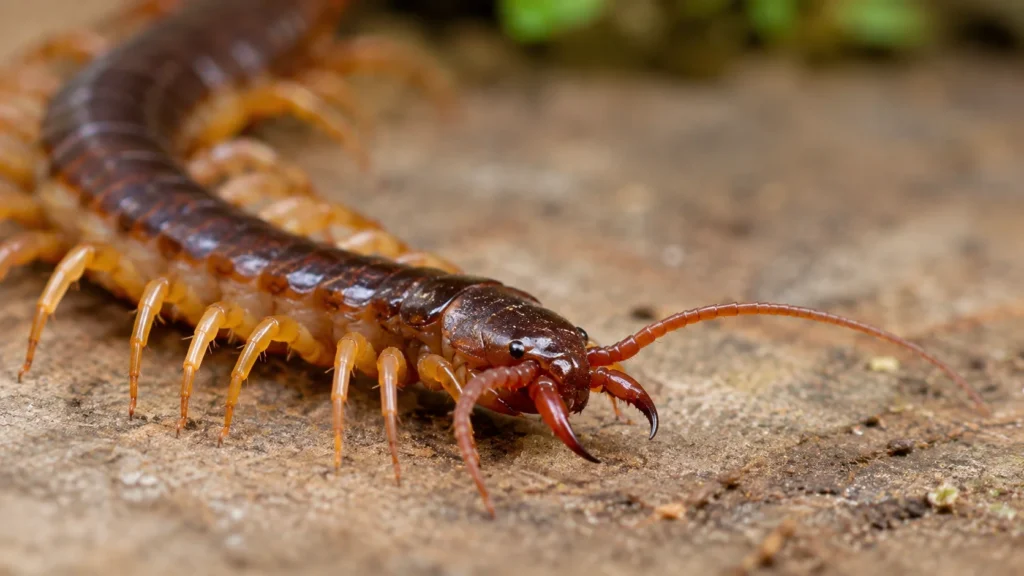
Why Do Centipedes Have Venom?
Centipedes are active predators that feed on insects, spiders, and other small animals. Their venom helps them subdue prey quickly, reducing the chance that a struggling insect will escape or injure them.
The same defensive equipment can be used when a centipede feels threatened. This does not mean centipedes actively hunt people; humans are generally far too large to be considered prey. Avoiding direct contact is the simplest way to prevent a defensive bite.
Can a Centipede Poison You Without Biting?
A centipede usually does not inject venom simply by crawling across a floor or passing near someone. The main concern is a bite that introduces venom into the skin.
However, you should avoid handling unfamiliar arthropods because identification can be difficult and other creatures may have different defensive mechanisms. If you find a centipede indoors, use a container and stiff card to remove it safely, or seek professional assistance if it is large or difficult to reach.
Are Centipedes Poisonous to Humans?
Most encounters with centipedes do not result in serious harm to humans, but their bites can be painful. Common symptoms include localized redness, swelling, tenderness, and a burning or stinging sensation around the affected area. Symptoms may vary depending on the species and the person's response to the venom.
House centipedes are generally less concerning than some larger species. Nevertheless, no unfamiliar centipede should be treated as completely harmless. Children, people with known allergies, and anyone who develops unusual symptoms should receive appropriate attention after a suspected bite.
A bite does not automatically mean that someone has experienced serious poisoning. However, increasing pain, spreading swelling, or other concerning symptoms should not be ignored.
What Happens If a Centipede Bites You?
A centipede bite may feel like a sharp pinch or sting. The affected skin can become red, swollen, and tender, and the discomfort may last for hours or longer.
Some people may experience itching or temporary changes in sensation around the bite. The severity varies, and symptoms cannot reliably identify the centipede species on their own.
Seek emergency medical help if you develop difficulty breathing, swelling of the tongue or throat, fainting, or other signs of a severe allergic reaction. Severe or worsening pain, spreading swelling, fever, or other unusual symptoms also warrant medical evaluation.
Are Centipede Bites Dangerous or Fatal?
Centipede bites are rarely life-threatening, but they should not be dismissed. Larger species can cause significant pain, and some people may develop more serious reactions than others.
The risk depends on the species, the location of the bite, and the individual's sensitivity. A bite near the face or mouth may be particularly concerning if swelling develops.
If you are bitten, clean the area and monitor your symptoms. Seek medical advice if the reaction is severe, persistent, or getting worse instead of assuming it will resolve on its own.
Explore more articles:
- Fruit Flies vs Gnats
- Rat vs Mouse
- Bugs That Look Like Flying Termites
- Bugs That Look Like Fleas
- What Do Fleas Look Like?
- Wood Ants vs Termites
- What Are Centipedes Attracted To?
- What Do Drain Flies Look Like
- What Do Baby Black Widows Look Like?
- Deer Mouse vs House Mouse
- Bugs That Look Like Lice
- Mice in Walls but Not in House
Are House Centipedes Poisonous to Humans?
House centipedes (Scutigera coleoptrata) are venomous, but their bites are generally considered low risk for most people. They have slender bodies, exceptionally long legs, and fast movements that can make them look more threatening than they usually are.
These centipedes often appear in basements, bathrooms, laundry rooms, and other sheltered areas. They hunt small insects and spiders, so their presence may indicate that other arthropods are available inside the building.
House centipedes usually try to escape when disturbed. Bites are uncommon, but one may bite defensively if it is handled or trapped against the skin.
Should You Kill a House Centipede?
You do not necessarily need to kill a house centipede when you find one indoors. Because it eats other small arthropods, it can provide some natural pest control.
However, you are not required to tolerate centipedes inside your home. If you prefer to remove one, use a container and a stiff piece of card to keep your hands away from it.
Repeated sightings may indicate excess moisture, accessible entry points, or other insects that attract centipedes. Addressing these conditions is often more useful than removing individual centipedes without investigating why they are appearing.
Are Centipedes Poisonous to Cats?
Centipedes can pose a risk to cats, particularly when a cat tries to catch, bite, or eat one. The outcome depends on the centipede species, whether the cat is bitten, and how the animal reacts.
A brief encounter with a small house centipede may cause no noticeable problems, but a bite can produce localized pain and swelling. Cats may paw at their mouths, drool, or show signs of discomfort after interacting with an unfamiliar arthropod.
Do not assume that every centipede is harmless to cats simply because many common household species present a relatively low risk to humans. If your cat has been bitten or develops unusual symptoms after an encounter, contact a veterinarian.
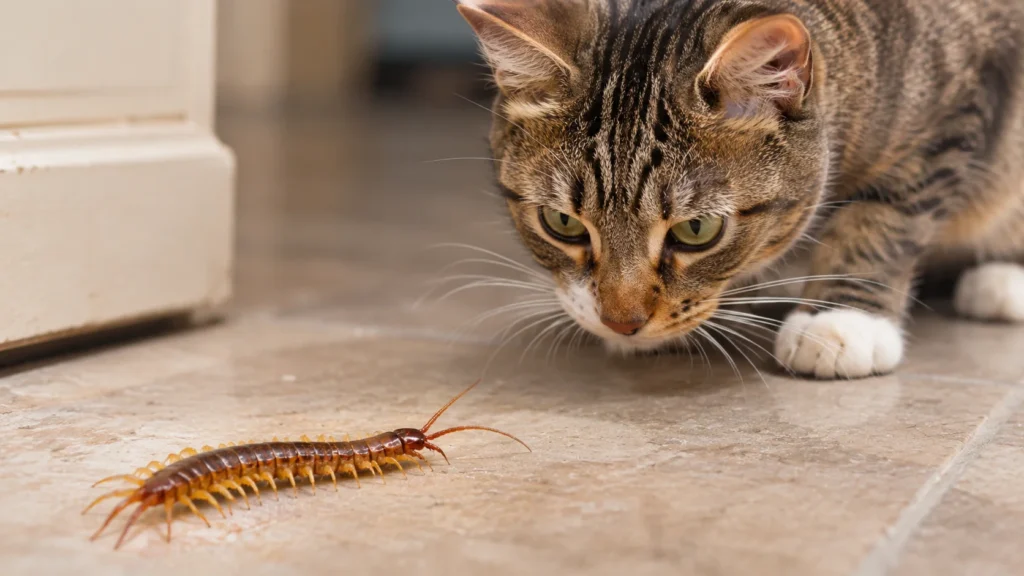
What If Your Cat Eats a Centipede?
If your cat eats a centipede, the effects can vary. The cat may show no symptoms, but an encounter with a larger venomous species could lead to discomfort or other concerning signs.
Watch for excessive drooling, pawing at the mouth, vomiting, facial swelling, or unusual behavior. These signs can have many causes, so a veterinarian should assess the situation rather than relying on an online diagnosis.
Do not induce vomiting or give your cat human medication unless a veterinarian specifically instructs you to do so. Seek emergency veterinary care if your cat has difficulty breathing, collapses, or develops significant swelling.
Are Centipedes Poisonous to Dogs?
Centipedes may bite dogs that sniff around vegetation, dig through leaves, or investigate dark spaces. Dogs may also chase or eat centipedes because their rapid movements attract attention.
Many encounters with small centipedes cause little more than temporary discomfort, but larger species can inflict more painful bites. The risk depends on the species and the dog's reaction, so it is inaccurate to say that every centipede is harmless to dogs.
Signs Your Dog May Have Been Bitten
A dog that has been bitten may suddenly yelp, lick or paw at the affected area, or develop localized redness and swelling. If the bite occurs around the mouth, the dog may drool or appear reluctant to eat.
More concerning signs include substantial facial swelling, repeated vomiting, weakness, or difficulty breathing. These symptoms require prompt veterinary attention, especially if they develop quickly.
If you suspect a centipede bite, keep your dog calm and contact your veterinarian for advice. Avoid applying household chemicals or giving human painkillers without veterinary guidance.
Are All Centipedes Poisonous?
Centipedes are generally venomous as a group, but the strength of their venom and their ability to affect humans vary. A species that presents little risk to an adult may still cause a painful bite, particularly if it is large enough to penetrate the skin effectively.
It is therefore more useful to consider the likely species and circumstances of an encounter than to assume that every centipede presents the same level of danger. Color, size, and location can offer clues, but they are not always enough for reliable identification.
Are Giant Centipedes More Dangerous?
Large centipedes, including some species in the genus Scolopendra, can inflict particularly painful bites. Their size and powerful venom-delivering appendages make them more concerning than small house centipedes.
The giant desert centipede (Scolopendra heros), found in parts of the southwestern United States, is one example of a large species that deserves caution. Its bite can cause substantial pain and swelling, and additional symptoms may occur.
Never try to capture or handle a large centipede to identify it. If one is inside your home and you cannot remove it safely, contact a qualified pest-control professional.
Are Small Centipedes Poisonous?
Small centipedes can also possess venom, but their bites are often less consequential than those of larger species. Some may be unable to penetrate human skin effectively, although this should not be treated as a universal rule.
A centipede's small size does not prove that it is harmless. If you cannot identify it confidently, avoid direct contact and use a safe removal method.
Are Red, Black, Brown, or Orange Centipedes Poisonous?
Centipede color alone cannot reliably establish how dangerous an individual is. Red, black, brown, and orange centipedes may belong to different species, and similar-looking animals can have different characteristics.
Red or orange coloration occurs in some larger centipedes, including certain Scolopendra species. However, not every red or orange centipede is highly dangerous, and dark coloration does not mean that an animal is harmless.
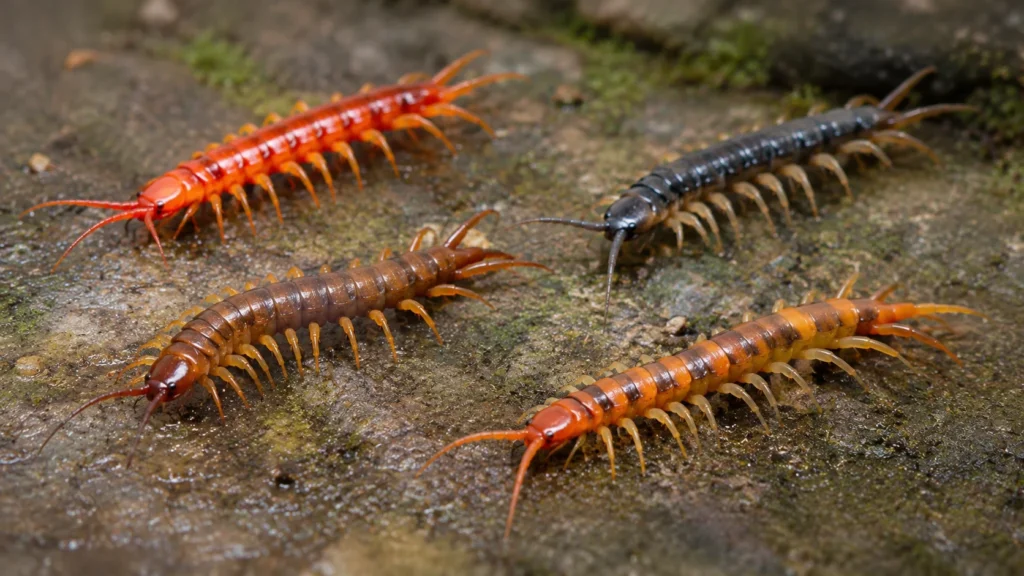
Body shape, size, leg arrangement, location, and other identifying characteristics can help with identification. Even then, a photograph may not be sufficient to confirm a species.
The safest approach is to avoid touching unfamiliar centipedes, regardless of their color. If you need an accurate identification, consult a local university extension service or qualified pest professional.
Are Centipedes in California, Arizona, Texas, or Hawaii Poisonous?
Centipedes occur throughout many parts of the United States, but the species people encounter depend on local climate, habitat, and geography. Some regions have small centipedes commonly found in damp indoor spaces, while others have larger outdoor species.
Are Centipedes in Arizona and Texas Poisonous?
Arizona and Texas are home to larger centipedes, including species adapted to dry environments. Some can deliver painful bites, so avoid reaching blindly beneath rocks, logs, or other sheltered objects.
If you encounter a large centipede in either state, give it space and do not attempt to pick it up. If a bite occurs, monitor symptoms and seek medical advice when necessary.
Are Centipedes in California Poisonous?
California has several centipede species, and their potential to cause harm varies. A small centipede found in a garden may present a different level of risk from a larger species encountered in an outdoor hiding place.
Do not assume that every centipede found in California is dangerous, but do not handle unfamiliar specimens either. Accurate identification is more useful than relying on color or location alone.
Are Centipedes in Hawaii Poisonous?
Hawaii is home to centipedes, including larger species capable of delivering painful bites. A bite from a large centipede may cause significant local pain and swelling.
Residents and visitors should take care when handling outdoor materials, shoes, towels, and items stored in sheltered areas. If you suspect a bite and develop severe or worsening symptoms, seek medical attention.
Are Centipedes or Millipedes Poisonous?
Centipedes and millipedes look similar because both have elongated, segmented bodies and numerous legs, but their behavior and defenses differ.
Centipedes are predators with one pair of legs per body segment and venom-delivering front appendages. Millipedes usually have more cylindrical bodies, move more slowly, and have two pairs of legs on most body segments.
Millipedes do not bite or inject venom like centipedes. However, some species release defensive chemicals that may irritate skin or eyes, so they should not be handled carelessly.
How Can You Tell Centipedes and Millipedes Apart?
- Body shape: Centipedes generally have flatter bodies, while millipedes are often cylindrical.
- Movement: Centipedes usually move quickly; millipedes tend to move more slowly.
- Legs: Centipedes have one pair of legs per body segment, while millipedes have two pairs on most segments.
- Diet: Centipedes hunt other small animals; millipedes mainly consume decaying plant material.
- Defense: Centipedes can deliver venomous bites, while some millipedes release irritating defensive fluids.
- Response to disturbance: Millipedes commonly curl up, while centipedes often try to run away.
- Typical habitat: Both may be found in sheltered, moist places, although their preferred microhabitats and food sources differ.
- Human risk: Centipedes may bite, whereas millipedes are more commonly a concern because of their defensive secretions.
If you are unsure which animal you have found, avoid handling it with bare hands. This is particularly important if children or pets are nearby.
What Should You Do After a Centipede Bite?
A suspected centipede bite should be treated carefully, even when the initial symptoms appear mild. Basic first aid can help protect the affected area, but it cannot replace medical assessment when symptoms are severe or unusual.
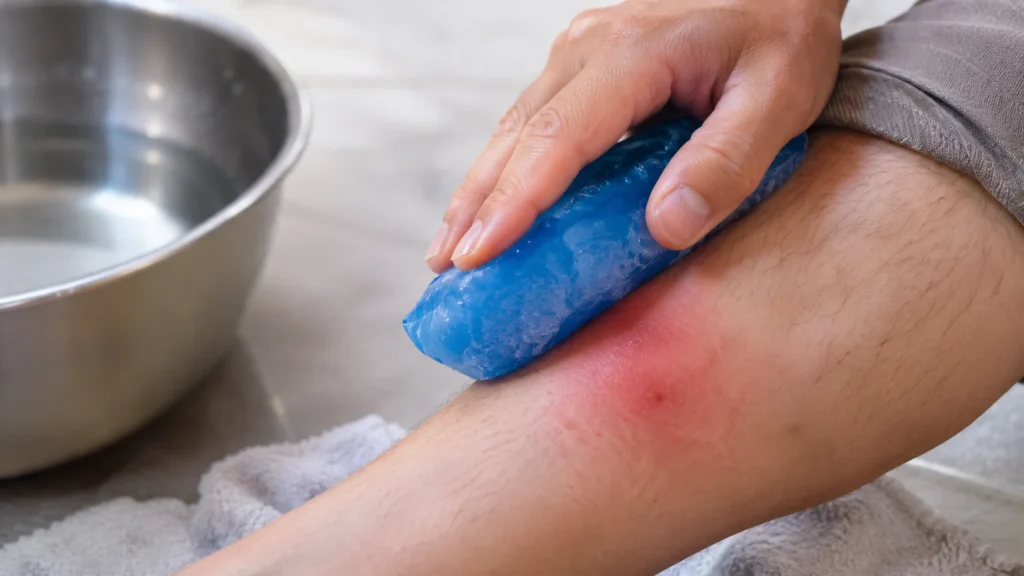
Basic First Aid for a Centipede Bite
- Move away from the centipede to prevent another bite.
- Wash the affected area gently with soap and clean water.
- Apply a cold pack wrapped in a cloth to help reduce pain and swelling.
- Avoid placing ice directly against the skin.
- Do not cut, squeeze, or attempt to suck venom from the wound.
- Avoid applying pesticides, cleaning products, or unverified home remedies to the bite.
- Monitor the area for increasing redness, swelling, or pain.
- Seek medical advice if symptoms are severe, persistent, or worsening.
- Get emergency help for breathing difficulties, throat swelling, fainting, or other signs of a serious allergic reaction.
- If possible, take a photograph of the centipede from a safe distance to help with identification.
These are general first-aid measures, not a diagnosis. If you are unsure about the severity of a bite, contact a healthcare professional for guidance.
How Can You Keep Centipedes Out of Your Home?
Centipedes often enter buildings seeking shelter, moisture, and prey. Preventing access and reducing the conditions that support them can make indoor encounters less common.
Try these practical prevention measures:
- Fix leaks: Repair dripping taps and leaking pipes.
- Reduce humidity: Improve ventilation in damp rooms and consider a dehumidifier where appropriate.
- Seal entry points: Close gaps around doors, windows, foundations, and utility openings.
- Install door sweeps: Reduce gaps beneath exterior doors.
- Clear outdoor debris: Move piles of leaves, stones, and wood away from the foundation.
- Store firewood carefully: Keep it away from exterior walls and inspect it before bringing it indoors.
- Reduce clutter: Avoid leaving cardboard boxes and stored items undisturbed in damp areas.
- Control other pests: Reduce populations of insects that may provide food for centipedes.
- Inspect shoes and stored items: Take extra care with objects left in dark or sheltered locations.
- Keep bathrooms dry: Wipe up standing water and address persistent dampness.
- Maintain window screens: Repair damaged screens and close gaps around frames.
- Check basement areas: Inspect damp corners, storage spaces, and utility rooms.
- Trim vegetation near walls: Reduce sheltered areas immediately beside the building.
- Use sticky monitors carefully: Place appropriate monitoring traps where children and pets cannot access them.
- Seek professional help when needed: Repeated sightings may justify a pest inspection.
These measures focus on the conditions that allow centipedes to enter and survive indoors. If sightings continue despite reasonable prevention efforts, a qualified pest-control professional can help identify the source and recommend suitable treatment.
Conclusion
Centipedes are venomous rather than conventionally poisonous, and most encounters with common house centipedes do not cause serious harm to humans. However, their bites can be painful, and larger species may cause more significant reactions.
The same caution applies around cats and dogs, which may try to chase or eat these fast-moving arthropods. Avoid direct contact, take appropriate action after a suspected bite, and seek professional help if concerning symptoms develop.
To reduce centipede encounters, focus on controlling excess moisture, sealing entry points, clearing sheltered outdoor debris, and addressing other pests that may attract them. Understanding the differences between centipedes and millipedesand recognizing that species varycan help you make safer decisions for your household.
Are centipedes poisonous if you touch them?
Centipedes generally do not inject venom simply by being touched, but they can bite defensively if threatened or trapped. Avoid handling them with bare hands.
Are house centipedes poisonous to humans?
House centipedes are venomous, but their bites are generally low risk for most people. A bite can still cause localized pain, redness, and swelling.
Are centipedes poisonous to cats and dogs?
Centipedes can bite pets, and the effects depend on the species and the animal's reaction. Contact a veterinarian if your pet develops pain, swelling, vomiting, or unusual behavior after an encounter.
Are centipedes poisonous if swallowed?
Swallowing a centipede is not the same as being bitten, and the outcome depends on the circumstances. If a person or pet swallows one and develops symptoms, contact a healthcare professional or veterinarian for appropriate guidance.
Are black centipedes more dangerous than brown centipedes?
Not necessarily. Color alone is not a reliable indicator of venom potency or medical risk. Species identification and the circumstances of the encounter matter more.
Are millipedes more dangerous than centipedes?
They present different risks. Centipedes can deliver venomous bites, while some millipedes release defensive chemicals that irritate skin or eyes. Neither should be handled carelessly.
Should I call pest control if I see one centipede?
A single centipede does not automatically indicate an infestation. If you see them repeatedly, find many indoors, or cannot identify or remove a large specimen safely, professional advice may be useful.