
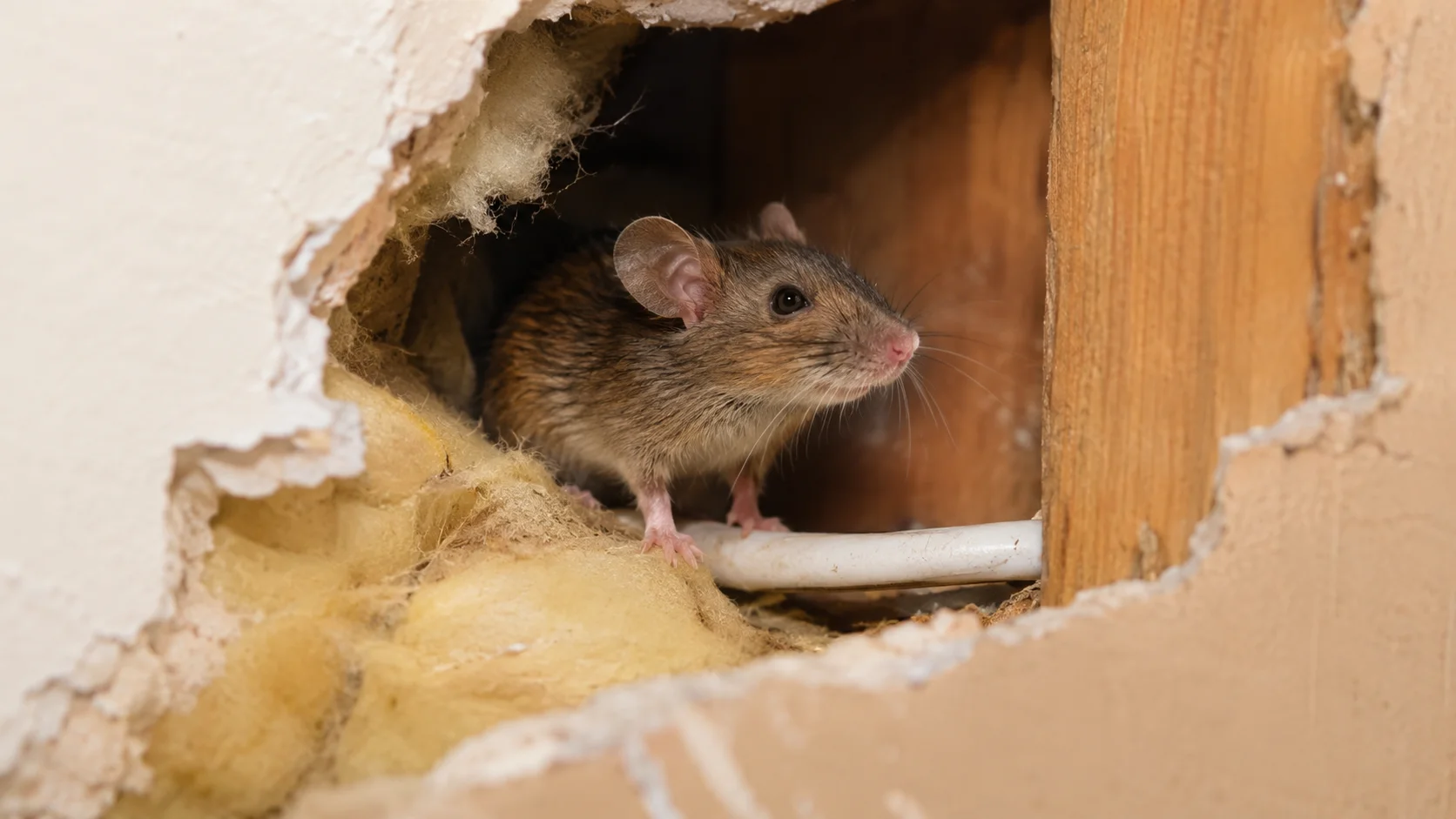
Hearing scratching, scurrying, or faint squeaking inside your walls without seeing a mouse in your rooms can be confusing. Mice can travel through wall cavities, ceiling voids, lofts, and gaps around pipes while remaining hidden from view. They may be nesting inside the structure or moving between an outdoor entry point and a food or shelter source elsewhere in the building.
Mice in walls but not in the house does not necessarily mean the problem is minor or that the mice cannot enter your living space. The key is to identify where they are moving, find how they gained access, and deal with the infestation without trapping animals inside inaccessible spaces or exposing children and pets to unsafe control methods. Let's learn why mice stay in wall cavities, why found mice in walls but not in house.
Why Are There Mice in the Walls but Not in the House?
Mice are small, cautious animals that can use narrow gaps and concealed spaces to move around a building. A wall cavity may offer shelter, warmth, and protection from people and predators, even when the rooms on either side appear completely clean.
Common reasons include:
- An entry point behind the exterior wall: Mice may enter through gaps around utility pipes, damaged vents, roof edges, foundations, or openings near doors.
- Connected wall cavities: Gaps around plumbing, wiring, and building joints can allow mice to move between walls, ceilings, and loft spaces.
- No easy route into the room: A mouse may be able to enter the wall cavity but not have a suitable opening into the living area.
- A nearby nesting site: Insulation, undisturbed materials, and protected voids may provide places to hide or nest.
- Access to food elsewhere: Mice might feed outdoors, in a garage, in a loft, or near rubbish storage rather than entering the kitchen.
- Recent changes in weather: Cold, wet, or otherwise unfavourable outdoor conditions may encourage mice to seek shelter inside buildings.
A lack of droppings on your kitchen floor is not proof that the walls are mouse-free. However, scratching sounds alone cannot confirm that mice are responsible; pipes, heating systems, and other small animals can sometimes produce similar noises.
Signs of Mice Living Inside Wall Cavities
When mice remain behind plasterboard, brickwork, or other wall materials, you may notice sounds before you find physical evidence. Look for a pattern of activity rather than relying on one isolated noise.
1. Scratching and scurrying sounds
Light scratching, rapid footsteps, or rustling may indicate mice moving through a cavity or disturbing insulation. The sound can seem to travel along a wall as the animal moves.
2. Noises that become noticeable at night
Mice are generally more active during the night, so scratching may be easiest to hear when the house is quiet. If you hear movement shortly after going to bed or before dawn, mice are one possible explanation.
However, noise at night does not automatically mean there is an infestation. Pipes expanding or contracting, heating systems, and other animals can also create sounds inside building structures.
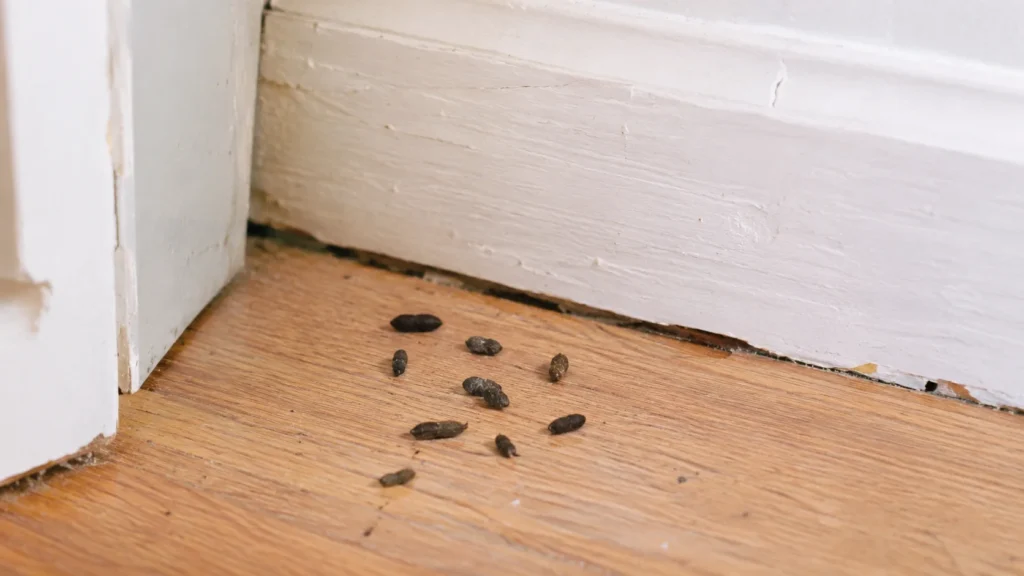
3. Droppings near wall openings
Check discreet areas near skirting boards, cupboards, utility connections, loft hatches, and gaps around pipes. Small, dark droppings may indicate rodent activity, especially when accompanied by gnaw marks or nesting material.
Avoid touching droppings with bare hands or sweeping them up dry.
4. Gnawing sounds or damaged materials
Mice gnaw to wear down their continuously growing incisors and may damage insulation, cardboard, wood, and other materials. If you hear repeated nibbling or discover fresh damage near an opening, inspect the surrounding area carefully.
5. A musty or unpleasant smell
A persistent musky smell near a wall may come from urine, nesting materials, or a dead rodent. Odour alone cannot establish the cause, so investigate other evidence before opening the wall.
6. Activity in the loft or ceiling
Mice may use the same concealed routes to move between wall cavities and roof spaces. Scratching above a ceiling, disturbed insulation, or droppings near loft access points can help you narrow down the location.
The CDC's rodent control guidance recommends looking for evidence such as droppings and gnaw marks and inspecting the building to understand how rodents entered.
Mice in Walls but Not in House at Night: What Does It Mean?
If you hear mice in the walls at night but cannot find them in your rooms during the day, they may be following a concealed route between a nesting area and an access point.
There are several possible explanations:
- They are staying inside the wall: The cavity may provide enough shelter for them to remain hidden.
- They are travelling through the ceiling or loft: The sounds may appear to come from a wall even when the mice are moving above it.
- They are entering from outdoors: A gap behind cladding, near a roofline, or around a service pipe may connect the exterior to the wall cavity.
- They are avoiding people: Mice may be less likely to emerge into open rooms when people are active.
- The sound is coming from another source: Plumbing, heating equipment, and other small animals can sound similar.
Try to note when the noise starts, how long it lasts, and which section of the wall seems affected. Check that area from both inside and outside if it is safe to do so. This can help you or a pest control professional identify a likely route without immediately cutting into the wall.
Explore more articles:
- Fruit Flies vs Gnats
- Rat vs Mouse
- Bugs That Look Like Flying Termites
- Bugs That Look Like Fleas
- What Do Fleas Look Like?
- Wood Ants vs Termites
- What Are Centipedes Attracted To?
- What Do Drain Flies Look Like
- What Do Baby Black Widows Look Like?
- Deer Mouse vs House Mouse
- Bugs That Look Like Lice
- Do Mice Hate Peppermint
- Mice Exterminator Near Me
Are Mice in Walls but Not in House Dangerous?
Yes, they can pose risks even if you never see them in your living areas. The level of risk depends on the number of mice, the location of their activity, and whether they can reach electrical wiring, insulation, stored goods, or occupied rooms.
Electrical and structural damage
Mice can gnaw on electrical cables and other building materials. Damaged wiring can create a potential fire hazard, so arrange a qualified electrician's inspection if you suspect cables have been chewed or notice electrical faults. Do not reach blindly into wall cavities or attempt to handle damaged wiring yourself.
Contamination from urine and droppings
Mice can leave urine, droppings, and nesting materials in concealed spaces. Rodents may carry germs and parasites, and contamination can become a concern if waste is disturbed during repairs or renovation.
The CDC's rodent guidance explains how rodent contact can create health risks and why safe cleaning and control practices matter.
Insulation damage and unpleasant odours
Nesting activity can disturb insulation and leave contaminated materials behind. If a mouse dies in an inaccessible cavity, the resulting smell may persist until the carcass is located or decomposes. Heavy contamination may require professional removal of affected insulation or other materials.
The possibility of mice entering rooms later
Mice can use small openings around plumbing, cables, vents, and structural joints. An animal that is currently confined to a wall cavity may eventually find a route into a cupboard, kitchen, bedroom, or other interior space.
For these reasons, do not assume that the problem has resolved simply because there are no mice visible on the floor.
How to Get Rid of Mice in Walls but Not in House
The most effective approach is to identify the access points, reduce what attracts mice, and use an appropriate control method. Simply blocking a visible opening without checking whether mice are still inside can make the situation harder to resolve.
Step 1: Find the likely entry points
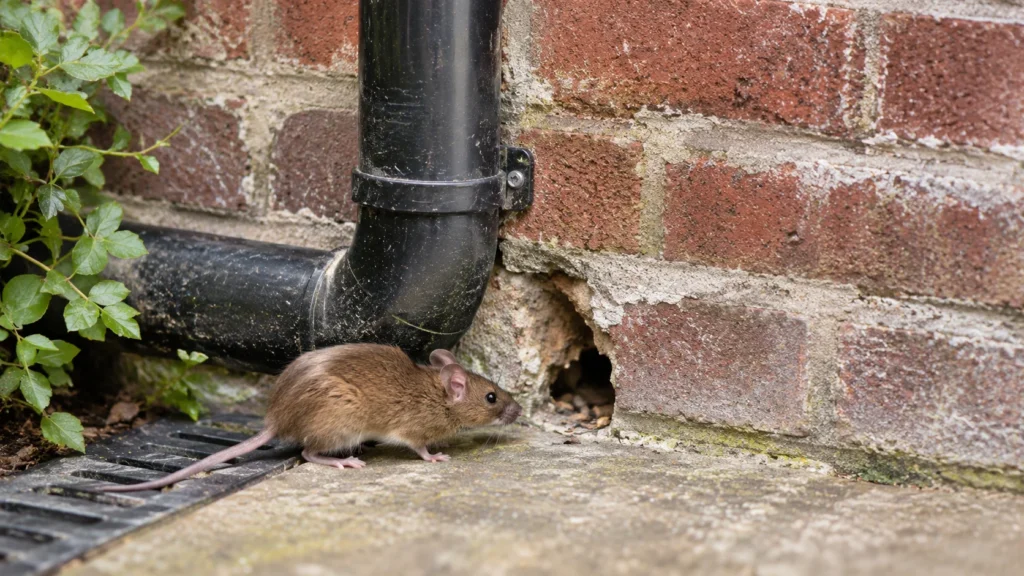
Inspect the exterior of your property for gaps around:
- Water, gas, and drainage pipes.
- Cable entries and utility lines.
- Doors, windows, and garage doors.
- Roof edges, eaves, and damaged vents.
- Foundations, cladding, and exterior wall joints.
- Air bricks or other ventilation openings.
Mice can squeeze through very small gaps. The CDC's guide to sealing rodent entry points notes that a mouse can fit through a hole approximately the width of a pencil.
Use a torch to inspect accessible areas, but do not dismantle electrical fittings, remove structural materials, or enter unsafe roof spaces to investigate.
Step 2: Check connected spaces
Inspect accessible lofts, basements, cupboards, garages, and utility rooms for droppings, gnaw marks, nesting materials, and food packaging damage.
If you find evidence in more than one area, the mice may be moving through a connected route rather than living in just one wall. Record where fresh evidence appears so you can target the control measures more accurately.
Step 3: Remove food and shelter
Even when mice are not entering your rooms, reducing nearby food sources can make the property less attractive.
- Store dry food in sturdy, tightly sealed containers.
- Keep pet food sealed and remove uneaten food.
- Use bins with secure lids.
- Clean crumbs and food residue from cupboards and floors.
- Avoid leaving rubbish or food waste near exterior walls.
- Reduce clutter and unnecessary stored materials in garages and lofts.
- Repair leaking pipes and address standing water where practical.
The CDC's rodent prevention recommendations emphasise reducing access to food, water, and shelter.
Step 4: Use traps in accessible locations
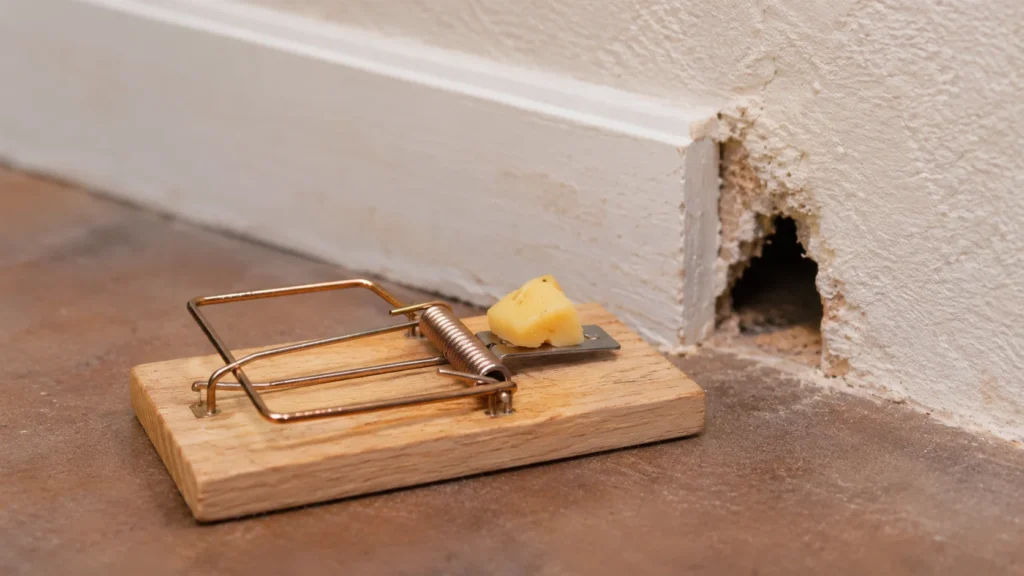
If there is evidence that mice are travelling through an accessible loft, garage, basement, or utility area, appropriately sized snap traps may help control them. Place traps along likely travel routes and follow the manufacturer's instructions.
Keep traps away from children and pets. Check them regularly, and use protective gloves when handling a trap or carcass. Avoid putting traps blindly inside walls or placing them where you cannot retrieve a captured mouse.
The CDC's trapping guidance recommends placing traps where rodent activity has been observed and continuing control until there are no new signs.
Step 5: Seal the openings properly
Once you have assessed the route and dealt with any mice that may be inside, seal suitable gaps using durable, rodent-resistant materials appropriate for the location. Depending on the opening, this may involve metal mesh, metal flashing, mortar, or a suitable sealing system.
Do not block ventilation openings or compromise fire-rated construction. Around pipes and cables, use materials compatible with the building and the service involved.
If you suspect mice remain inside a cavity, ask a pest control professional to determine the right order of trapping and exclusion. Sealing every exit prematurely may leave animals trapped inside.
Step 6: Consider professional pest control
A professional inspection is particularly useful when:
- Scratching continues for several nights or keeps returning.
- You cannot identify where the mice entered.
- You suspect several mice are nesting inside a wall or ceiling.
- There is a strong odour but no accessible carcass.
- Insulation or wiring may be damaged.
- Previous trapping and proofing have not stopped the activity.
A pest controller can assess entry points, identify likely nesting areas, and recommend a control plan. If opening a wall is necessary, a qualified contractor can help determine whether it is safe and appropriate.
Should You Put Mouse Poison Inside the Walls?
Usually, you should not put loose poison or improvised bait inside a wall cavity. Although rodenticides can control mice when used correctly, placing poison where you cannot inspect or retrieve it can create additional problems.
A poisoned mouse may die in an inaccessible area, potentially causing a persistent odour. There is also a risk of accidental exposure to children, pets, or other animals if bait is placed improperly.
If rodenticide is being considered, use only a product authorised for the intended location and follow its label precisely. Where applicable, use a suitable tamper-resistant bait station and keep it inaccessible to children and pets. Do not use homemade poison mixtures.
The US Environmental Protection Agency provides further advice on rodent control options and safe use of rodent bait products. Product authorisations and rules differ by country, so UK readers should follow applicable UK requirements and seek advice from a qualified pest controller.
Can Mice Live in Walls Without Entering the House?
Yes. Mice can live and nest inside wall cavities without regularly entering the rooms of a building. These spaces can provide shelter and protection, while gaps between wall sections or connections to ceilings may let them move around unnoticed.
However, a wall cavity is not necessarily a closed environment. Mice may be able to reach the loft, basement, garage, or rooms through small gaps. Their behaviour can change if food becomes available or an existing route is disturbed.
If you hear occasional scratching but cannot find any other evidence, monitor the area and inspect accessible spaces before assuming there is a large infestation. If the noises continue or you discover fresh droppings or damage, investigate further.
Mice in Walls but Not in House in the UK
For homeowners and tenants in the UK, the first steps are much the same: investigate the noise, inspect accessible areas, identify potential entry points, and avoid unsafe DIY poisoning.
The Rentokil UK mice control service provides information about mouse problems and professional pest control. A qualified pest controller may be useful when the activity appears to be inside a sealed cavity or when the entry point is difficult to locate.
If you rent your home, report the issue to your landlord or property manager in writing and keep records of the sounds, damage, and any signs you find. Responsibility for pest control and repairs depends on the circumstances, tenancy agreement, and applicable law, so seek local housing advice if the problem is not addressed.
How to Prevent Mice from Returning to the Walls
Once the activity has stopped, prevention helps reduce the chance of another infestation.
- Inspect exterior walls, roof edges, and service openings periodically.
- Repair damaged vents, door seals, and other potential entry points.
- Keep food, pet food, and rubbish securely stored.
- Avoid leaving bird food or other attractants close to the building.
- Maintain gardens and remove unnecessary clutter near exterior walls.
- Investigate new scratching sounds rather than ignoring repeated activity.
- Recheck previously affected areas for fresh droppings or gnaw marks.
Continue monitoring after treatment. The CDC advises that a week without captures or new rodent signs is a useful indication that trapping has worked, although concealed wall activity may require additional inspection if sounds or other evidence continue.
Conclusion
Mice in walls but not in the house can indicate that rodents are using concealed cavities to nest or travel around your property. You may hear scratching at night without seeing a single mouse indoors, but the absence of visible activity does not rule out a problem.
Start by identifying the likely source of the noise, inspecting accessible spaces, removing food and shelter, and checking for entry points. Use traps only in accessible, appropriate locations, and avoid putting loose poison inside walls. If the noise persists, an unpleasant smell develops, or you suspect damage to wiring or insulation, professional inspection can help you resolve the problem safely and prevent it from returning.
1. Why do I hear mice in my walls but never see them?
Mice may be travelling or nesting inside wall cavities, ceiling voids, or connected roof spaces. These concealed areas allow them to move without entering rooms. Check accessible areas for droppings, gnaw marks, and possible entry points to establish whether mice are responsible.
2. Are mice in walls but not in the house dangerous?
They can be. Mice may damage wiring and insulation, leave urine and droppings, and eventually find a route into living areas. The level of risk depends on their activity and the condition of the building.
3. Why are mice in the walls at night?
Mice are generally more active during the night, when human activity is lower. Scratching or scurrying may therefore be more noticeable after dark. However, pipes and heating systems can also make noises at night.
4. How do I get rid of mice in walls but not in the house?
Inspect exterior entry points and accessible lofts, basements, and utility spaces. Remove nearby food sources, use suitable traps in accessible areas, and seal entry gaps once you have assessed whether mice remain inside. Contact a pest control professional if the activity continues.
5. Will mice eventually come out of the walls?
They may. If a wall cavity connects to a cupboard, loft, kitchen, or another room, mice may eventually use that route. Some remain concealed for long periods, so finding no mice indoors does not establish that they have left.
6. Can mice die inside walls?
Yes. A mouse can die from illness, injury, or exposure to a rodenticide inside a wall cavity. The carcass may produce an unpleasant smell that can last until decomposition progresses. If the odour is strong or persistent, professional help may be needed to locate and remove the carcass.
7. Should I block the hole where I think mice are entering?
Not before considering whether mice may still be inside. Sealing an opening too early can trap animals in a wall cavity. Identify the likely entry and exit routes, arrange control if necessary, and then seal suitable gaps with durable materials.
8. Can mice in walls damage electrical wiring?
Yes. Mice gnaw on materials, including cable insulation, and damaged wiring can create a safety hazard. If you suspect electrical damage, avoid disturbing the area and contact a qualified electrician.
9. What if I only hear scratching but find no droppings?
The noise may come from mice, but it could also be caused by plumbing, heating equipment, or another animal. Note the timing and location, inspect accessible areas, and monitor for additional signs before deciding on treatment.
10. When should I call a pest control professional?
Seek professional help if the noises persist, you cannot locate the entry point, you suspect multiple mice, an unpleasant smell develops, or you find evidence of damaged wiring or contaminated insulation. A professional can assess the cavity and recommend an appropriate control and proofing plan.