
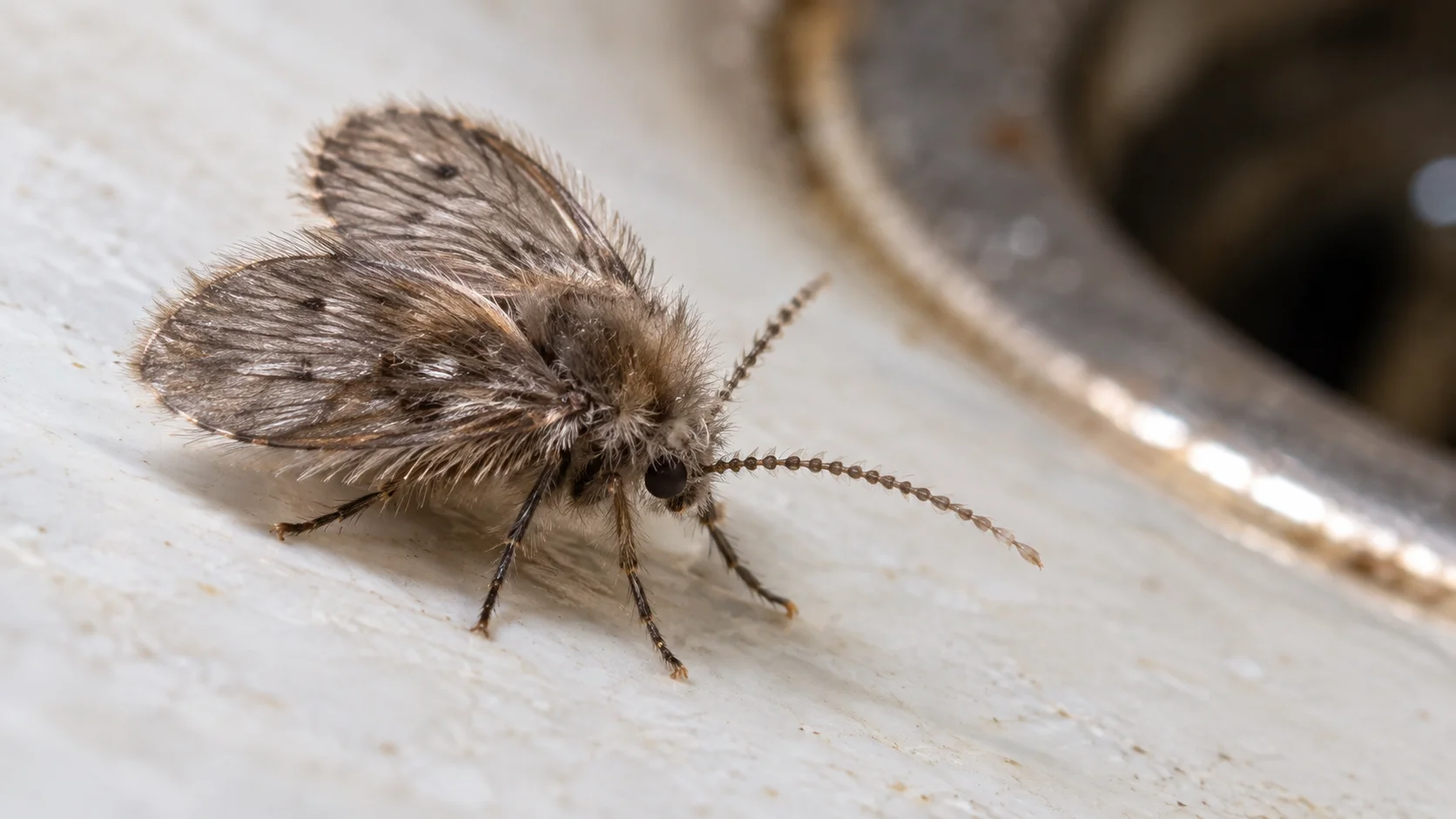
Drain flies are tiny insects commonly found around sinks, showers, bathtubs, floor drains, and other damp plumbing areas. They are also called moth flies, sewer flies, filter flies, or bathroom flies because of their fuzzy, moth-like appearance and association with wet organic buildup.
Adult drain flies are usually dark gray, gray-brown, or tan and are covered with fine hairs. Their hairy wings and short, hopping flight make them look noticeably different from fruit flies and other small household flies.
Recognizing their appearance can help identify the source of an infestation before the population becomes larger. The adult flies are usually seen resting on bathroom walls, shower surfaces, sinks, or nearby windows rather than flying continuously around a room. So, let's understand What Do Drain Flies Look Like?
Drain Fly Appearance and Physical Features
Drain flies are very small, generally measuring around 1/8 inch or less, although reported size varies somewhat by species. Their bodies and wings are densely covered with fine hairs, producing the characteristic fuzzy appearance associated with moth flies.
The wings are broad and hairy, and the insects commonly hold them over the body in a roof-like position while resting. Their wings also have distinctive parallel veins, a useful identification feature for the Psychodidae family.
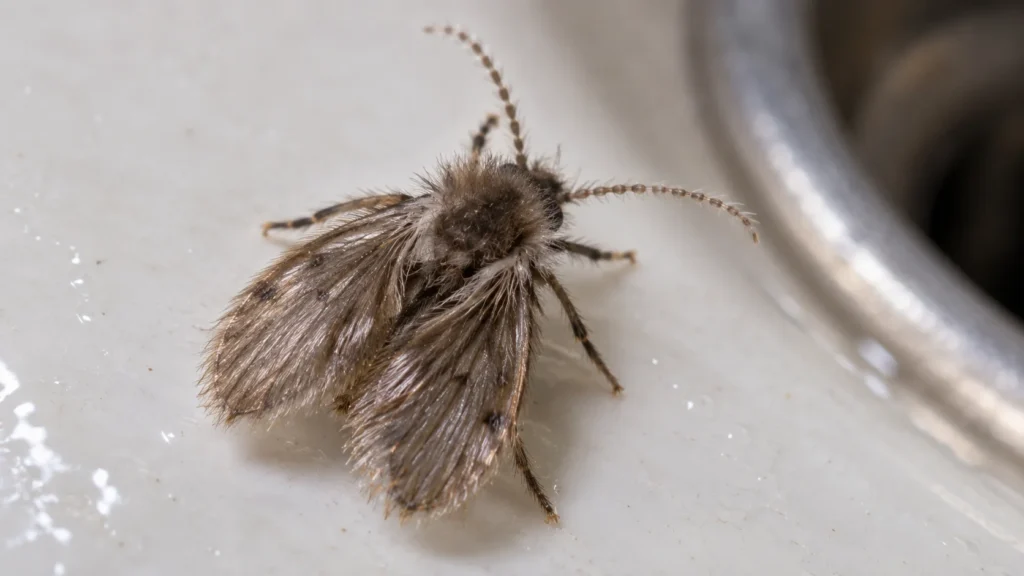
Small Gray or Brown Fuzzy Bodies
Adult drain flies usually have a dark gray, gray-brown, or tan appearance. The dense hairs covering the body can make the insect look darker and softer than it actually is.
Their fuzzy body separates them visually from smooth-bodied fruit flies. The small size can make individual features difficult to see without magnification, especially when the insect is resting on a dark bathroom surface.
Hairy Wings With a Moth-Like Shape
The wings are one of the easiest features to recognize. They are covered with fine hairs and can give the insect a tiny moth-like appearance.
When resting, drain flies often hold their wings over the back in a roof-like arrangement. UC IPM identifies this posture, along with the hairy wings and parallel wing veins, as useful characteristics for distinguishing moth flies from other small flies.
Long Antennae and Tiny Legs
Drain flies have six legs and noticeable antennae. Their antennae can appear relatively long compared with the size of their body.
Because the flies are only a few millimeters long, their legs and antennae may not be obvious in an ordinary photograph. A close-up image makes these structures much easier to recognize.
What Drain Flies Look Like Up Close
A close-up view makes the characteristic features of a drain fly much easier to see. The body appears fuzzy because of the numerous fine hairs covering the insect, while the wings have a broad, rounded or leaf-like appearance.
The wings may appear gray, brownish, or nearly transparent depending on lighting. Their dense hair covering is particularly useful for separating them from smoother flies such as common fruit flies.
Adult Drain Fly Identification
An adult drain fly typically has:
- A very small body
- Gray, tan, or brown coloration
- A fuzzy or hairy appearance
- Broad hairy wings
- Prominent antennae
- Six legs
- Roof-like wings when resting
- Weak, short-distance flight
The adults often remain close to the breeding site because they are weak fliers. This is why a cluster of small fuzzy flies on a bathroom wall can provide a useful clue about a nearby drain or other wet organic source.
What Baby Drain Flies Look Like
Baby drain flies are not miniature versions of the winged adults. The immature stage is a legless larva, commonly described as a small, slender maggot that develops inside wet organic material.
Drain fly larvae are usually found within the slimy organic film lining drains rather than openly crawling across bathroom surfaces. UC IPM reports that mature larvae can reach approximately 1/4 inch and have a distinct head and a breathing siphon at one end.
Drain Fly Larvae in Drain Slime
The larvae feed on decomposing organic material, including the gelatinous buildup that develops inside plumbing. This material can contain fungi, algae, bacteria, soap residue, and other organic debris.
Their location explains why homeowners usually notice adult flies before discovering larvae. The immature stages can remain hidden deep inside the drain or plumbing where ordinary surface cleaning does not reach.
What Drain Fly Eggs Look Like
Drain fly eggs are extremely small and are normally deposited in moist, decomposing organic material. They can be difficult to distinguish individually without magnification because they are hidden within the wet material where the larvae develop.
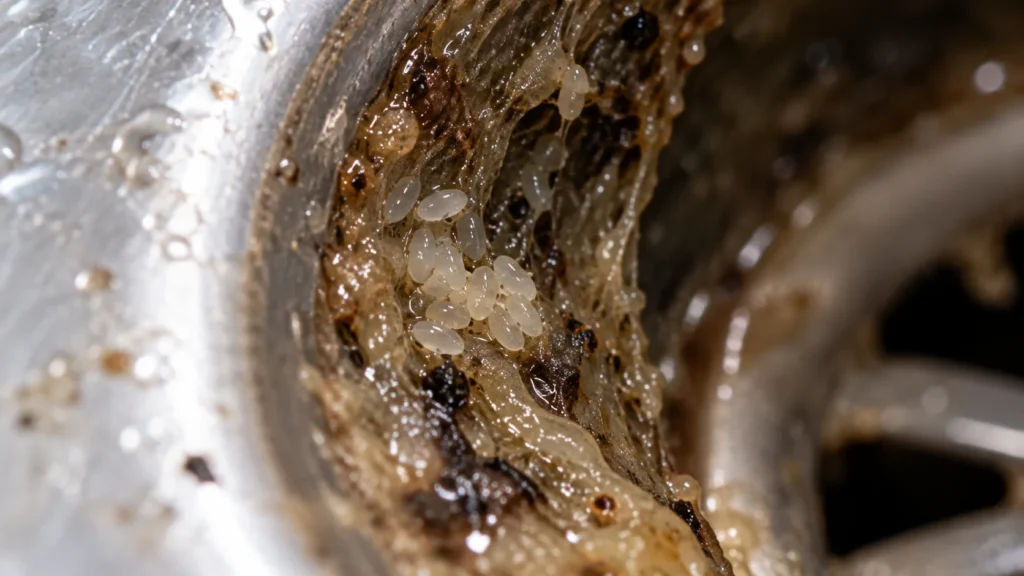
Females deposit eggs in damp organic buildup, particularly the gelatinous film that accumulates inside drains. UC IPM notes that eggs can hatch in approximately 48 hours under suitable conditions, although development time varies with environmental conditions.
Eggs Hidden Inside Organic Buildup
The eggs are not usually visible on the open bathroom floor or wall. Instead, they occur within the wet material coating the inside of drains, traps, pipes, or other suitable breeding areas.
This hidden location is one reason simply wiping away adult flies does not solve the underlying problem. Removing the breeding material is the more important part of long-term control.
What Drain Flies Look Like in a Shower
Drain flies in a shower usually appear as tiny dark, fuzzy insects resting on shower walls, tiles, curtains, ceilings, or surfaces close to the drain. They may also gather around the shower drain itself.
A shower that is used infrequently can provide favorable conditions when moisture and organic residue remain inside the drain. The University of Arkansas Extension specifically notes that guest bathroom shower drains can support drain fly development when water and organic material remain stagnant.
Signs Around Shower Drains
Common visual clues include:
- Tiny fuzzy flies resting on nearby walls
- Several flies appearing around one shower
- Weak, hopping flights rather than fast continuous flying
- Adults appearing repeatedly after cleaning
- Small flies concentrated around the drain opening
Finding adult flies close to a particular drain can help narrow down the likely breeding location.
What Black Drain Flies Look Like
Some drain flies can appear nearly black because their bodies and wings are dark and densely covered with hairs. However, drain flies are not necessarily pure black; many are described as dark gray, gray-brown, or tan.
Lighting can also change their apparent color. A tiny drain fly viewed against a white bathroom wall may look black, while the same insect viewed close up may show gray or brown tones.
Explore more articles:
- Fruit Flies vs Gnats
- Rat vs Mouse
- Bugs That Look Like Flying Termites
- Bugs That Look Like Fleas
- What Do Fleas Look Like?
- Wood Ants vs Termites
- What Are Centipedes Attracted To?
Black Appearance Compared With Other Small Flies
The fuzzy wings are more useful for identification than color alone. Fruit flies commonly have smoother bodies and prominent red or dark eyes, while drain flies have hairy, moth-like wings and a characteristic resting posture.
Drain Flies Compared With Similar Small Flies
Several tiny flies can appear around homes, particularly in kitchens and bathrooms. Identifying the insect by its body shape, wings, movement, and preferred location can help separate drain flies from other species.
| Feature | Drain Flies | Fruit Flies | Fungus Gnats |
| Typical appearance | Fuzzy and moth-like | Smooth and compact | Slender and mosquito-like |
| Common color | Gray, tan, brown, dark | Yellow-brown to brown | Black or dark brown |
| Wings | Hairy, broad | Clear and delicate | Narrow and slender |
| Common location | Drains and damp plumbing | Fruit, fermenting food, trash | Houseplants and moist soil |
| Flight | Weak, short, hopping | More active | Weak to moderate |
| Larval habitat | Wet organic drain buildup | Fermenting organic material | Moist potting soil |
Drain flies are especially recognizable because their wings and body are densely hairy. UC IPM and Penn State Extension both describe their fuzzy, moth-like appearance as a key identification characteristic.
Where Drain Flies Are Commonly Found
Drain flies favor moist locations containing organic material. Inside homes, this often includes sink drains, shower drains, bathtub drains, floor drains, garbage disposals, and areas affected by plumbing leaks.
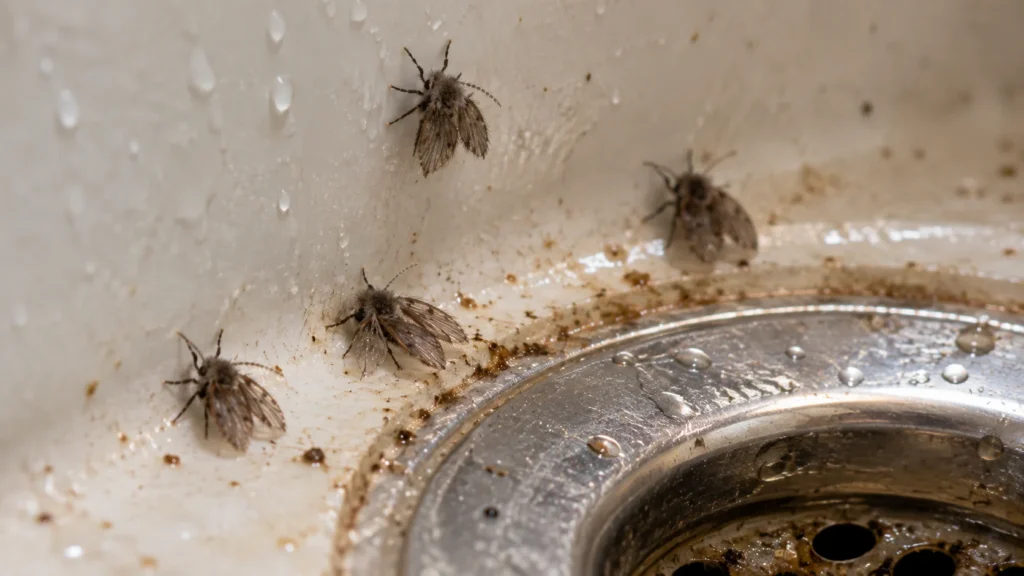
They can also occur around sewage systems, wastewater facilities, wet compost, clogged gutters, and other damp environments containing decomposing organic matter.
Bathroom and Kitchen Locations
Bathrooms are common locations because showers, sinks, and floor drains can retain moisture and organic residue. Kitchens can also support drain flies when buildup develops inside sink drains or garbage disposal plumbing.
Adults may rest on walls or counters close to the breeding location because these insects generally do not fly long distances.
Health and Nuisance Concerns
Drain flies are primarily considered nuisance pests and do not bite or sting people. Their presence does, however, indicate that a moist organic breeding source may be nearby.
UC IPM notes that drain flies can potentially transmit pathogens and trigger allergies, while extension sources generally emphasize their nuisance status rather than treating them as biting pests.
Ten Quick Drain Fly Identification Facts
- Drain flies are also called moth flies.
- Adults are usually only a few millimeters long.
- Their bodies are covered with fine hairs.
- Their wings are hairy and broad.
- Wings are often held in a roof-like position while resting.
- Drain flies commonly appear around sinks and showers.
- They are weak fliers and often make short hopping flights.
- Larvae are legless and develop in wet organic material.
- Eggs are deposited in moist, decomposing organic buildup.
- Removing the breeding material is central to controlling an infestation.
Conclusion
Drain flies are easy to recognize once their main features are understood. They are tiny, dark-colored, fuzzy flies with hairy wings, prominent antennae, and a moth-like appearance. Adults commonly rest on walls and surfaces near sinks, showers, bathtubs, and other drains.
Their larvae and eggs remain hidden in wet organic buildup inside drains, which means seeing adult flies can indicate a breeding site nearby. Identifying the insects correctly and locating the damp organic material where they develop are important steps toward addressing a recurring drain fly problem.
Are drain flies black?
Some drain flies can appear black or very dark gray, but their actual coloration can range from dark gray and brown to tan. Their fuzzy, hairy wings are more reliable identification features than color alone.
Are drain flies harmful to people?
Drain flies do not bite or sting people. They are primarily nuisance insects, although their association with drains and organic waste means they can potentially carry microorganisms mechanically.
Do drain flies have hairy wings?
Yes. Hair-covered wings are one of the most recognizable characteristics of adult drain flies. The hairs give them their distinctive fuzzy, moth-like appearance.
What do drain fly larvae look like?
Drain fly larvae are small, slender, legless, maggot-like organisms. Mature larvae can reach about 1/4 inch and have a breathing siphon at one end.
Where are drain fly eggs found?
Drain fly eggs are laid in moist, decomposing organic material, especially the gelatinous buildup inside sink, shower, bathtub, and floor drains.