
Seeing a swarm of small winged insects around a home can immediately raise concerns about termites. However, several insects can resemble flying termites, especially when they are moving quickly or appearing in large numbers. Correct identification matters because a termite swarm can indicate a nearby colony, while a similar-looking insect may require an entirely different response.
Bugs That Look Like Flying Termites. They are reproductive termites that leave established colonies to mate and start new colonies. Their straight antennae, broad waist, and equal-length wings provide some of the most useful identification clues.
Flying Termite Identification Features
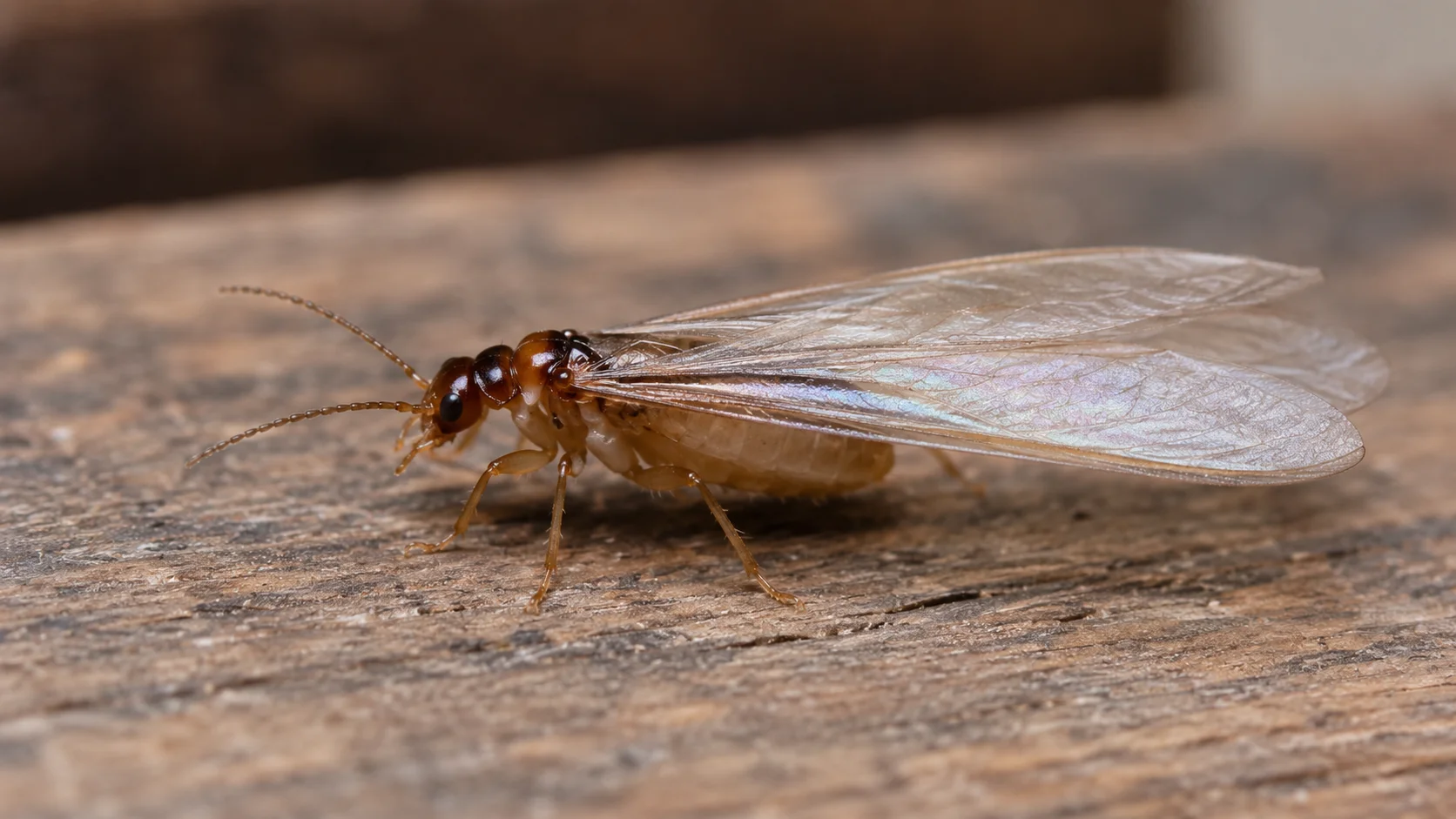
Before identifying a look-alike, it helps to establish what an actual flying termite looks like. Termite swarmers generally have two pairs of wings that are similar in length, straight antennae, and a body without the narrow, pinched waist seen in ants.
Flying termites may range from light brown to dark colors depending on species. After swarming, they commonly shed their wings, so piles of discarded wings around windows, doors, or other light sources can also be an important sign.
Straight Antennae and Broad Waist
A termite's antennae are generally straight rather than sharply bent. Its body also has a relatively uniform appearance through the middle instead of the narrow waist associated with ants.
These characteristics are particularly useful when examining an individual insect rather than trying to identify an entire swarm from a distance.
Equal-Length Wings
Flying termites have two pairs of wings that are approximately equal in length and shape. The wings usually extend beyond the body and can appear translucent.
Flying ants have a different wing arrangement: their front wings are longer than their rear wings. This distinction can be extremely useful when separating flying ants bugs that look like termites from actual termite swarmers.
Common Bugs That Look Like Flying Termites
Several insects can be mistaken for termite swarmers because they fly, swarm, have wings, or are associated with wood. The most important look-alike is the flying ant, particularly the carpenter ant, but other insects can also create confusion.
Terminix identifies carpenter ants, powderpost beetles, and carpenter bees among insects that may be mistaken for termites, although some are confused because of their wood-related activity rather than close physical resemblance.
Flying Ants and Carpenter Ants
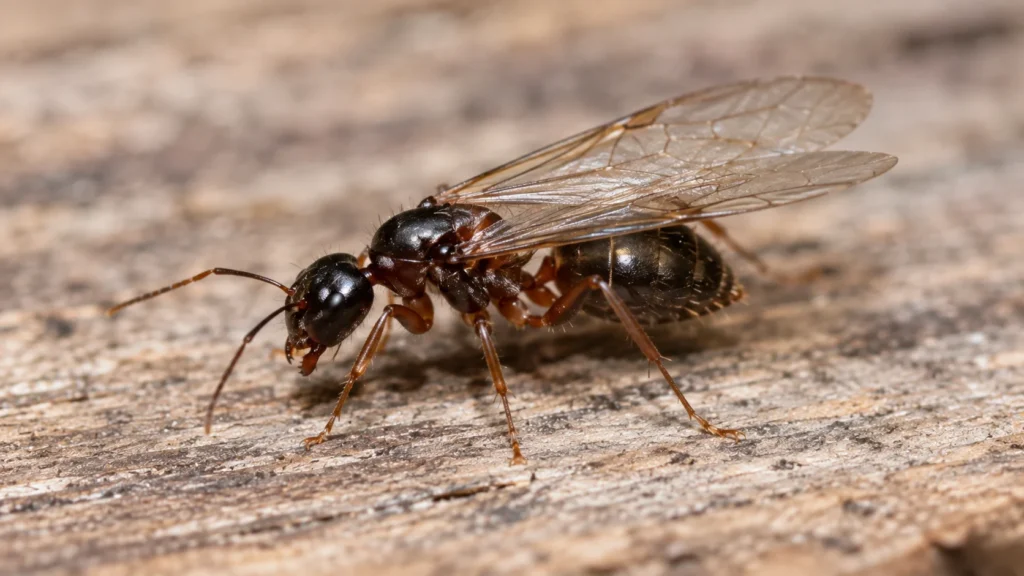
Flying ants are among the most common insects confused with flying termites. Carpenter ants are particularly relevant because they can nest in wood and produce winged reproductive ants during swarming periods.
Unlike termite swarmers, flying ants have bent or elbowed antennae, a distinctly narrow waist, and front wings that are longer than their rear wings. Carpenter ants also generally have darker, harder-looking bodies.
Powderpost Beetles and Carpenter Bees
Powderpost beetles can be associated with damaged wood, while carpenter bees create tunnels in wooden structures. Their connection with wood can make homeowners suspect termites even when the insects themselves do not closely resemble termite swarmers.
Carpenter bees are much more robust and bee-like, while powderpost beetles have a hard-bodied beetle appearance. Their presence should therefore be assessed through both the insect's appearance and the type of damage found nearby.
Flying Bugs That Look Like Termites in a House
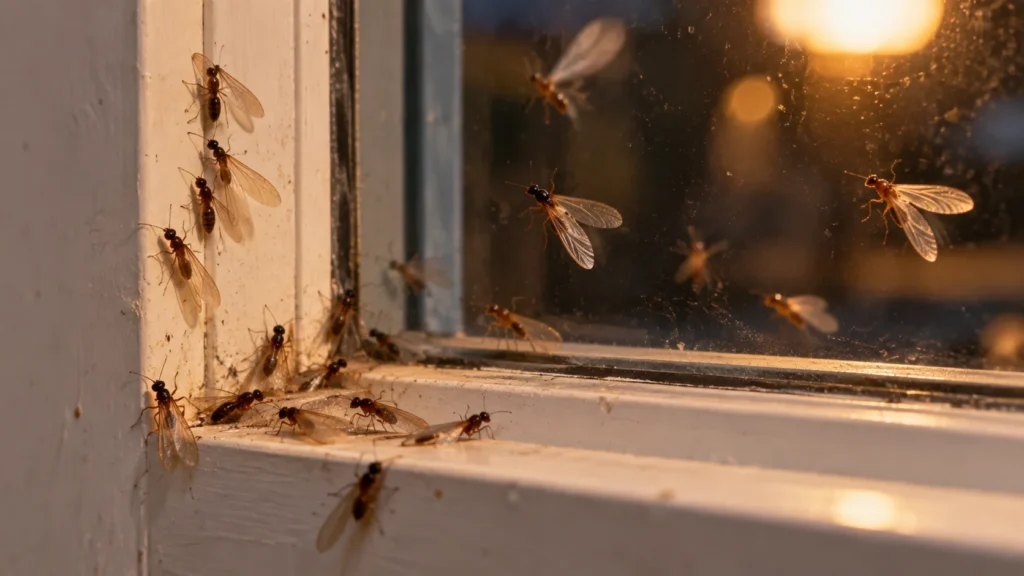
Winged insects appearing indoors deserve closer attention because the location can provide useful identification information. A swarm around windows or lights may consist of termite swarmers, flying ants, or another flying insect.
Termite swarmers are attracted to light, which is why they may gather around windows, doors, lamps, and other illuminated areas. NC State Extension also notes that termite swarming can occur after favorable weather conditions, including rain, depending on the species and region.
Swarming Bugs Near Windows and Lights
A large number of insects around a light source does not automatically mean termites. Examine the antennae, waist, wing proportions, and whether discarded wings are accumulating nearby.
A pile of shed wings can be particularly significant because termite swarmers commonly shed their wings after leaving the colony. However, identification should still be confirmed before assuming a termite infestation.
Tiny Winged Insects Around Wood
Small winged insects around wooden walls, window frames, flooring, furniture, or other wood may have several possible causes. Carpenter ants and carpenter bees can also be associated with wood, while termite activity can produce swarmers and other evidence of a colony.
Wood damage alone therefore does not prove that termites are responsible. The insect's physical characteristics and other signs should be considered together.
Drywood Termite Bugs That Look Like Flying Termites
Drywood termites are themselves termites, but their swarmers can be confused with flying ants and other winged insects. Drywood termite colonies live within dry wood and do not require direct contact with soil in the same way subterranean termites do.
Their winged reproductive forms can have clear or smoky-gray wings, while their bodies can range from pale brown to darker brown or yellowish-tan shades.
Drywood Termite Swarmers
Drywood termite swarmers can emerge from wooden structures when a mature colony produces reproductive adults. Finding swarmers or discarded wings inside a building can therefore warrant closer inspection of nearby wood.
Other signs may include small kick-out holes and frass, which is termite waste expelled from infested wood.
Subterranean Termite Swarmers
Subterranean termites generally depend on moisture and commonly maintain colonies in soil or protected moist environments. Their swarmers can emerge from an established colony and may enter structures.
NC State Extension explains that termite swarmers seen around a property may have originated from a nearby underground nest, making the surrounding environment relevant when evaluating an infestation.
Carpenter Ant Bugs That Look Like Flying Termites
Carpenter ants deserve special attention because they can both swarm and use wood for nesting. Their winged forms can look surprisingly similar to termite swarmers when viewed from a distance.
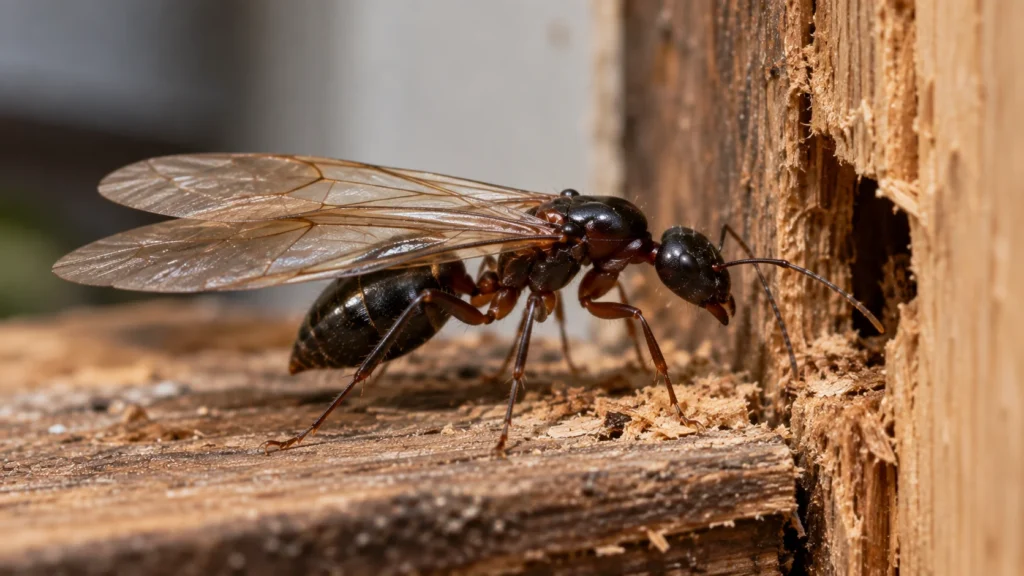
The key differences are their pinched waist, elbowed antennae, and unequal wing lengths. Carpenter ants also excavate wood to create nesting chambers rather than consuming wood as their primary food source.
Carpenter Ant Swarmers
Winged carpenter ants are reproductive members of the colony. They emerge during reproductive periods and can be found around buildings, trees, or other nesting locations.
Their larger front wings, narrow waist, and bent antennae distinguish them from termite swarmers. A close inspection with a magnifying glass can make these differences easier to see.
Wood Damage from Carpenter Ants
Carpenter ants do not eat wood in the same way termites consume cellulose. Instead, they excavate galleries in wood to create nesting areas, particularly where wood has become damp or compromised.
This means sawdust-like debris, galleries, or carpenter-ant activity can point toward an ant problem even when homeowners initially suspect termites.
10 Identification Points for Bugs That Look Like Flying Termites
- Antennae: Termite swarmers have straight antennae; flying ants have bent or elbowed antennae.
- Waist: Termites have a broad, relatively uniform waist; ants have a narrow, pinched waist.
- Wings: Termite wings are approximately equal in length.
- Flying ant wings: The front wings of ants are longer than the rear wings.
- Discarded wings: Shed wings around windows or doors can be a sign of termite swarmers.
- Body color: Termites can range from pale brown to darker shades, while many carpenter ants are dark.
- Wood activity: Both termites and carpenter ants can be associated with wood, but they use it differently.
- Frass: Drywood termite activity can produce frass and small kick-out holes.
- Swarming: Both ants and termites can produce winged reproductive insects.
- Professional identification: When winged insects are numerous or signs of wood damage are present, professional inspection can help determine the actual pest.
Signs That a Termite Inspection May Be Appropriate
A few flying insects do not automatically establish a termite infestation. However, multiple signs occurring together deserve closer attention, particularly when insects are appearing indoors.
Discarded wings, mud tubes, frass, hollow-sounding wood, visible wood damage, or repeated swarming activity can all be relevant evidence. Terminix lists these among signs that can accompany termite activity.
Explore more articles:
Indoor Swarmers and Shed Wings
Finding numerous winged insects indoors or large numbers of detached wings around windows and doors is more significant than seeing an isolated insect outside. Termite swarmers may emerge from a colony inside or close to a structure.
Because flying ants can produce similar swarms, physical identification should be completed before deciding which pest is responsible.
Visible Wood and Structural Signs
Wood damage combined with swarmers can strengthen the reason for a professional inspection. The specific pattern of damage, location, moisture conditions, frass, mud tubes, and insect identity can help distinguish termite activity from carpenter ants or other wood-associated pests.
Early identification is useful because different pests require different management approaches.
Conclusion
Many bugs that look like flying termites are actually flying ants or other winged insects. The most reliable visual clues are the antennae, waist shape, wing proportions, body structure, and surrounding evidence.
Flying termites have straight antennae, a broad waist, and equal-length wings, while flying ants have elbowed antennae, a narrow waist, and unequal wings. Carpenter ants can also be associated with wood, but they excavate wood for nesting rather than feeding on it as termites do.
If winged insects are appearing repeatedly inside a home, especially alongside discarded wings, frass, mud tubes, or visible wood damage, identifying the insect accurately is important before choosing a control method.
What bugs look like flying termites?
Flying ants, especially carpenter ants, are among the most common termite look-alikes. Powderpost beetles and carpenter bees can also be confused with termites because of their association with wood.
How can flying ants be distinguished from flying termites?
Look at the antennae, waist, and wings. Flying ants have bent antennae, a narrow waist, and unequal wing lengths, while termite swarmers have straight antennae, a broad waist, and wings that are approximately equal in length.
What do flying termites look like?
Flying termites are winged reproductive termites with relatively straight bodies, straight antennae, and two pairs of similarly sized wings. Their color varies by species.