
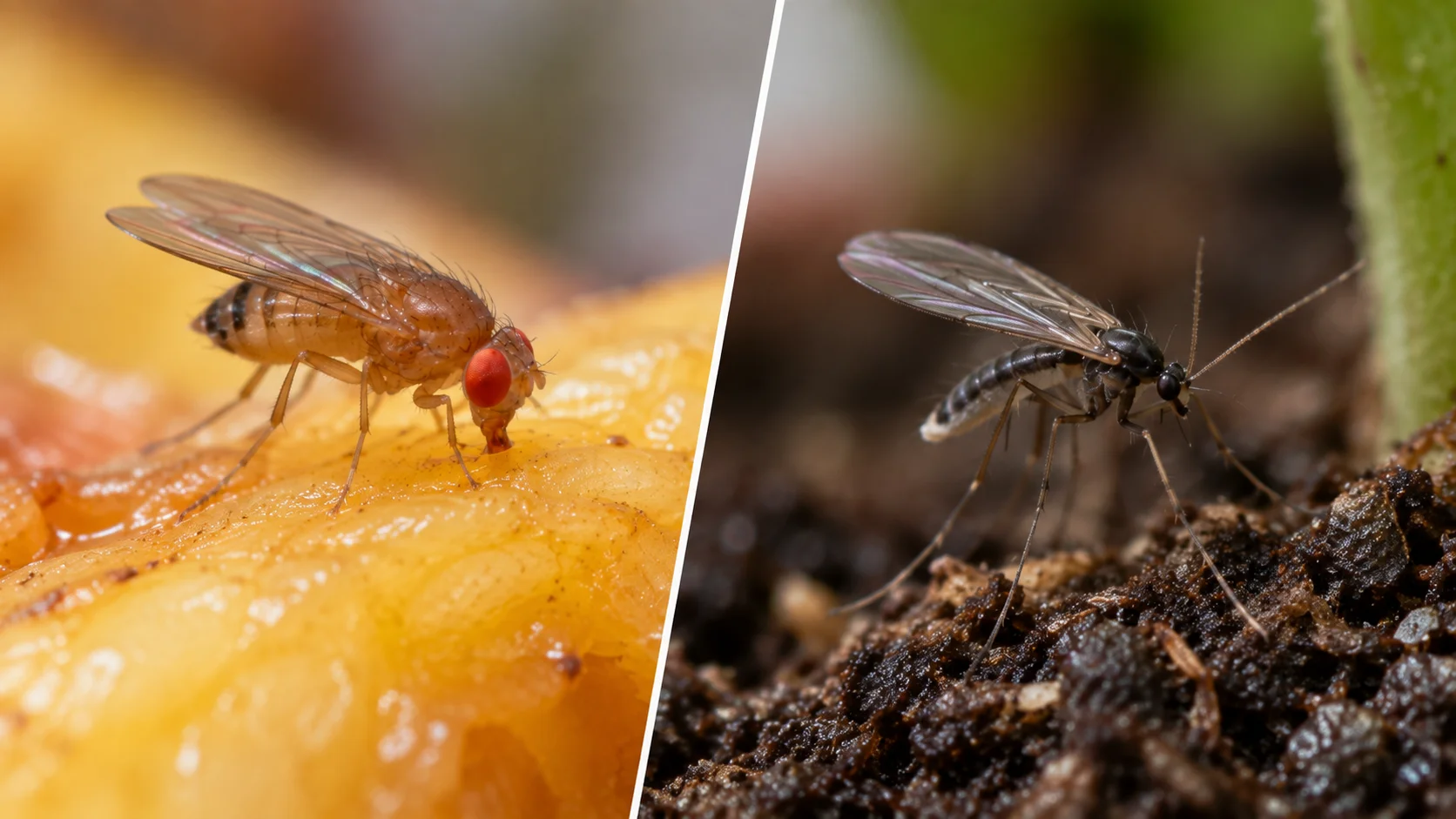
Fruit flies vs gnats can be difficult to distinguish because both are tiny flying insects that may appear indoors. However, they are not the same pest, and identifying the correct insect is important because their breeding locations and control methods can differ.
Fruit flies are commonly associated with ripening or fermenting produce, food waste, and other moist organic material. Fungus gnats are more strongly associated with damp potting soil and houseplants. Other small flies, including drain flies, can create a similar impression in kitchens and bathrooms.
Fruit Flies vs Gnats: The Core Differences
The most useful fruit flies vs gnats difference is where the insects are found and what is supporting their development. Appearance can help, but habitat often provides an even stronger clue.
Fruit flies commonly gather around fruit bowls, garbage, recycling containers, fermenting liquids, and suitable organic residue. Fungus gnats are commonly found around moist soil, especially indoor potted plants.
Fruit Fly Identification
Fruit flies are very small flies, with common house-infesting species often measuring around 3–4 mm. They may have tan or light-brown bodies, darker abdominal markings, and prominent eyes that can appear red in common species.
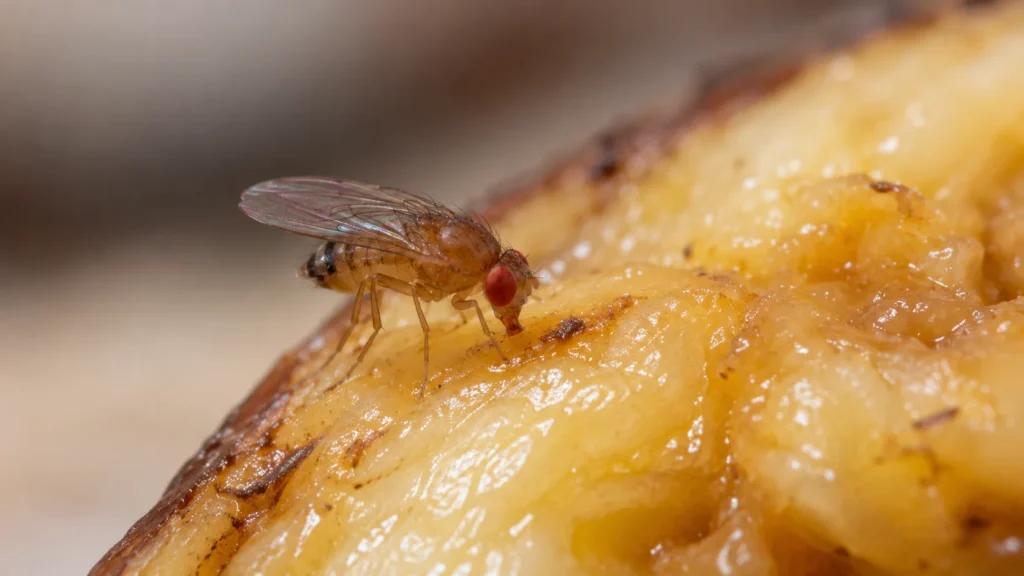
Their activity is frequently concentrated around fermenting or overripe produce and other sugary organic materials. Fruit flies can also develop in moist organic residue inside poorly maintained drains, which means finding them near a sink does not automatically prove that they are drain flies.
Fungus Gnat Identification
Fungus gnats are generally slender, dark-colored flies with comparatively long legs. University of Minnesota Extension describes them as approximately 1/16 to 1/8 inch long and commonly associated with overwatered or organically rich potting soil.
The strongest clue is often their connection with plants. If tiny dark flies repeatedly emerge from or hover around the soil of houseplants, fungus gnats become a strong identification possibility.
Fruit Flies vs Fungus Gnats in Appearance and Habitat
A fruit flies vs fungus gnats comparison becomes easier when physical characteristics are combined with location. Both insects are small enough to be mistaken for one another, but their preferred environments are different.
Fruit flies usually have a more compact, rounded appearance, while fungus gnats tend to look slender and somewhat mosquito-like. Fungus gnats also have noticeably long legs relative to their small bodies.
Fruit Flies Around Food and Drains
Fruit flies commonly appear around ripe or overripe fruit, vegetables, trash, recycling containers, sugary spills, and fermenting materials. They can also use moist organic buildup in drains as a breeding resource.
This means fruit flies vs drain flies vs gnats should not be determined solely by finding insects near a sink. The insects' appearance and the actual breeding material should also be inspected.
Fungus Gnats Around Houseplants
Fungus gnats are strongly connected with moist soil. Overwatering and poor drainage can create conditions that encourage them, while their larvae develop in soil and feed on fungi, decaying organic material, and sometimes plant roots.
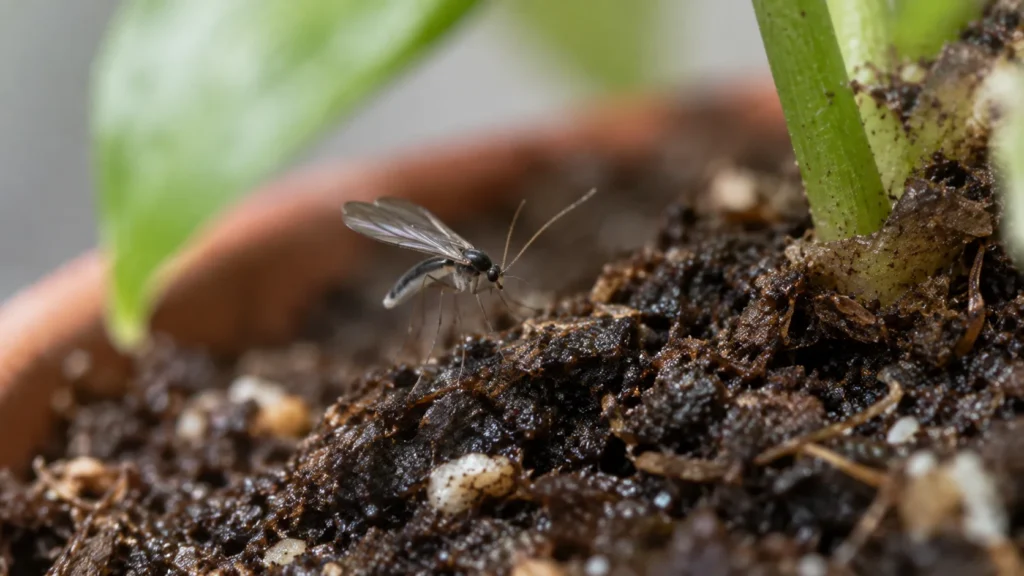
This makes fungus gnats vs fruit flies houseplants a particularly useful distinction: insects repeatedly emerging from damp potting soil point toward fungus gnats rather than typical kitchen fruit flies.
Fruit Flies vs Drain Flies vs Gnats
Small flies around sinks, bathrooms, kitchens, and drains are not necessarily the same insect. Fruit flies vs drain flies vs gnats requires attention to body shape, wings, preferred habitat, and breeding material.
Drain flies have a fuzzy, moth-like appearance and commonly develop in the organic film that accumulates inside drains and other damp plumbing areas. Fruit flies generally have a more conventional fly-like appearance, while fungus gnats are slender and commonly associated with soil.
Explore more articles:
Drain Fly Identification
Drain flies are usually tiny, grayish or tan insects with fuzzy bodies and wings that give them a moth-like appearance. They are associated with dark, damp locations containing accumulated organic material, particularly drains and plumbing areas.
Therefore, drain flies vs fruit flies vs gnats can often be separated by examining both the insect and the location where its immature stages are likely developing.
Other Gnat-Like Indoor Flies
The word gnat is sometimes used broadly for several different tiny flies, so visual identification should be approached carefully. Phorid flies, moth flies, fungus gnats, and fruit flies can all be encountered indoors but have different characteristics and habitats.
This is why terms such as house gnats vs fruit flies, soil gnats vs fruit flies, and sewer gnats vs fruit flies can refer to different pest situations rather than one single insect.
Fruit Flies vs Gnats: Identification by Location
Location is one of the fastest ways to narrow down a small-fly identification. The exact breeding source is more informative than simply noticing where adults are flying.
If the insects repeatedly appear around fruit, trash, recycling, or fermenting food, investigate those areas first. If they repeatedly emerge around damp plant soil, inspect the pots, saucers, drainage, and watering habits.
Kitchen and Food Areas
Fruit flies are particularly associated with kitchens because exposed produce, food residue, beverages, trash, and recycling can provide suitable resources. Removing these sources is an important part of controlling an infestation rather than simply killing visible adults.
Plants and Potting Soil
Fungus gnats are especially relevant when tiny dark flies appear around houseplants. University of Minnesota Extension recommends avoiding excessive watering, ensuring pots drain well, and using yellow sticky cards to monitor and capture adults.
Fruit Flies vs Gnats: Control Methods
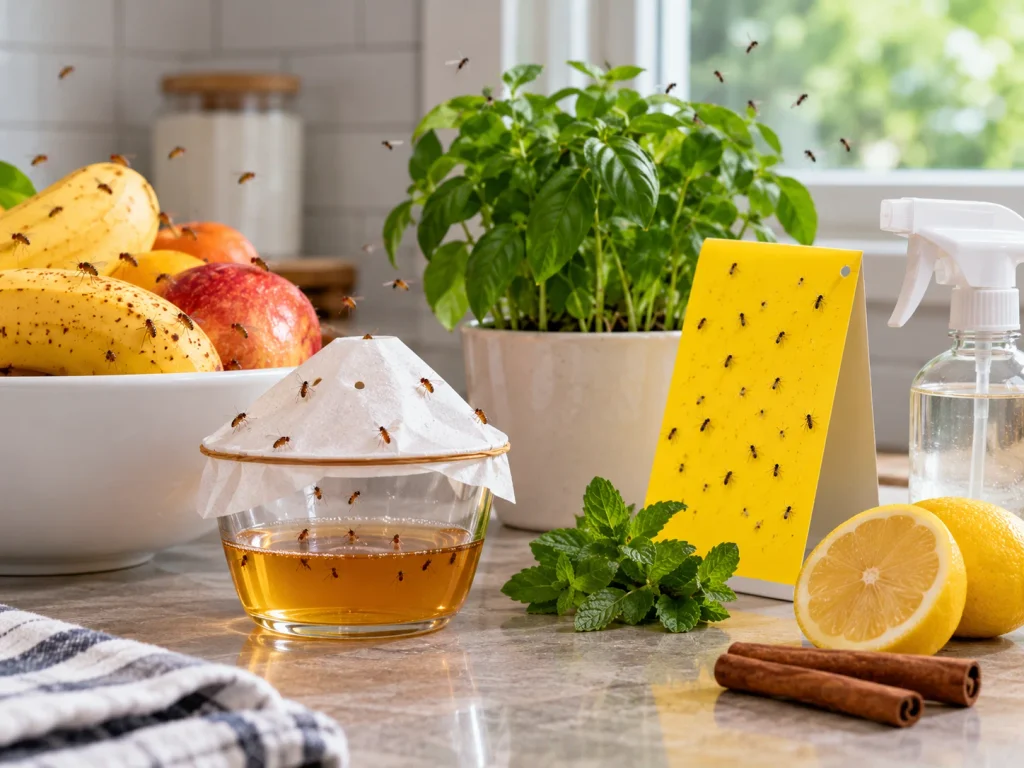
Control should follow identification because removing the wrong source can leave the actual breeding site untouched. Traps may reduce visible adults, but they do not necessarily eliminate eggs or larvae developing elsewhere.
For fruit flies, sanitation should focus on removing fermenting or decaying organic material, cleaning suitable breeding areas, and limiting access to exposed produce. For fungus gnats, moisture management in plant soil is a central part of control.
Fruit Fly Control Methods
Start by inspecting produce, garbage, recycling containers, drains, spills, and other moist organic material. Fruit should be stored appropriately, damaged produce removed, and food-related surfaces kept clean.
Homemade or commercial traps may capture adults, but they should support—not replace—source removal. If the breeding source remains available, new adults can continue emerging.
Fungus Gnat Control Methods
For fungus gnats, allow the surface of potting soil to dry appropriately between waterings according to the plant's needs, improve drainage where necessary, and use yellow sticky cards for adult monitoring.
University of Minnesota Extension notes that traps primarily help with adults, while soil-focused measures are important because immature fungus gnats develop in the growing medium.
Fruit Flies vs Gnats: 10 Quick Identification Points
- Body shape: Fruit flies are generally compact; fungus gnats are slender.
- Eyes: Common fruit flies may have prominent red eyes.
- Legs: Fungus gnats have relatively long legs.
- Color: Fungus gnats are commonly dark gray or black.
- Food source: Fruit flies favor fermenting and overripe organic material.
- Soil: Fungus gnats are strongly associated with moist potting soil.
- Kitchen activity: Frequent activity around fruit and food waste points toward fruit flies.
- Plant activity: Repeated activity around damp houseplant soil points toward fungus gnats.
- Drain activity: Organic buildup inside drains can support small fly infestations, including fruit flies and drain flies.
- Control: Correct identification should come before choosing a targeted control approach.
Conclusion
Understanding fruit flies vs gnats starts with more than simply looking at the size of the insect. Body shape, eye appearance, leg length, flight behavior, location, food sources, soil conditions, and potential breeding sites together provide a much stronger identification process.
Fruit flies are commonly linked with fermenting produce and moist organic food residues, while fungus gnats are strongly associated with damp potting soil and houseplants. Drain flies have a distinctly fuzzy, moth-like appearance and are commonly connected with organic buildup in drains.
Removing the breeding source is central to long-term control. Traps can help reduce or monitor adults, but they are much more useful when combined with sanitation, moisture management, and removal of the conditions supporting the insects.
Are fruit flies and gnats the same insect?
No. Fruit flies and fungus gnats are different insects with different physical characteristics and preferred breeding environments.
How can fruit flies and gnats be identified quickly?
Check the insect's body shape and location. Fruit flies are commonly found around fermenting food, while fungus gnats are frequently associated with damp plant soil.
Can fungus gnats live in houseplants?
Yes. Fungus gnats commonly develop in moist potting soil, particularly when soil remains excessively wet.