
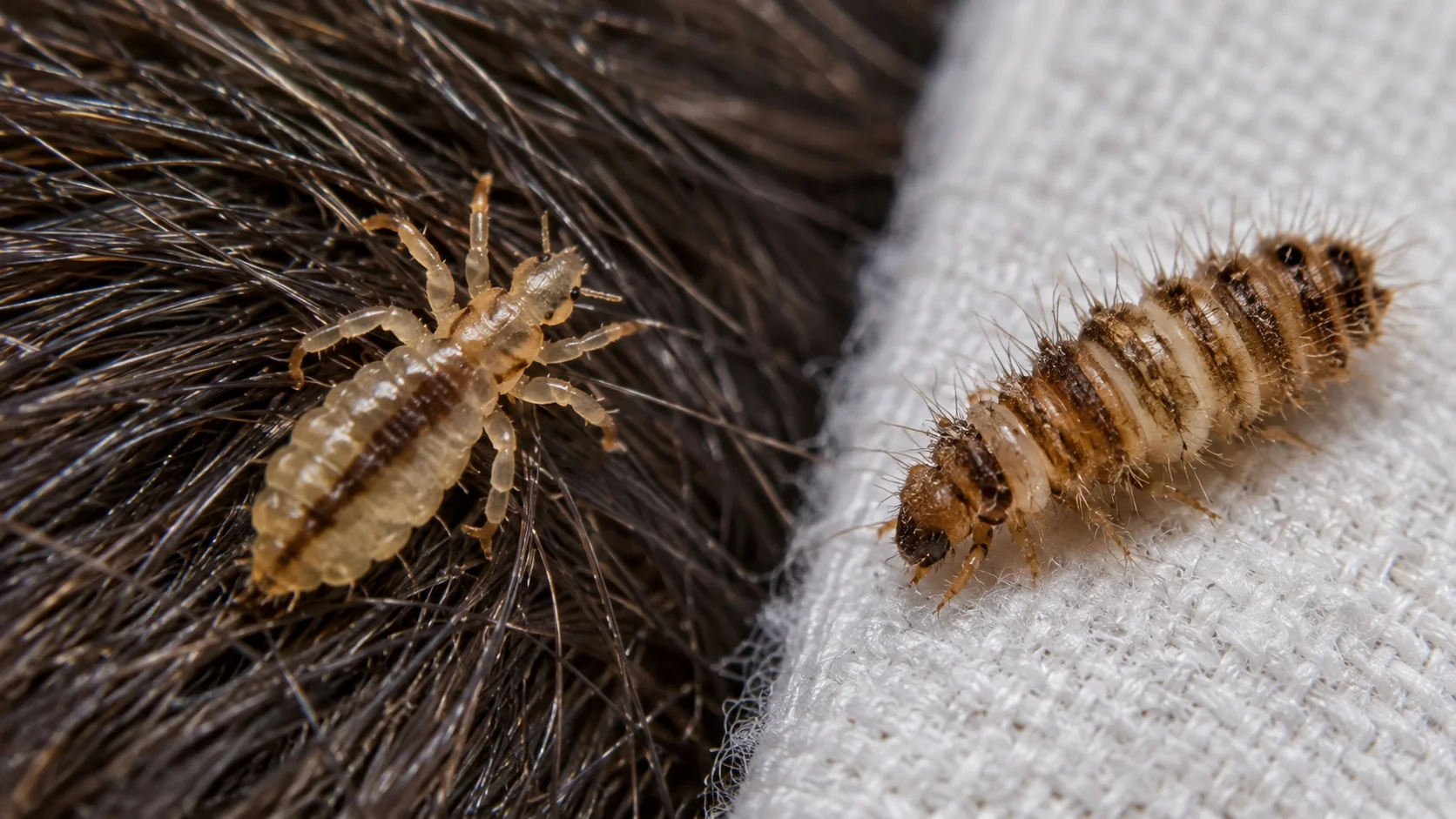
Several tiny insects and mites can be mistaken for lice because they are small, pale, brown, or found around hair, clothing, bedding, or household surfaces. However, true head lice are specialized human parasites that live on the scalp and feed on human blood. Adult head lice are about 2–3 mm long, have six legs, and cannot fly or jump.
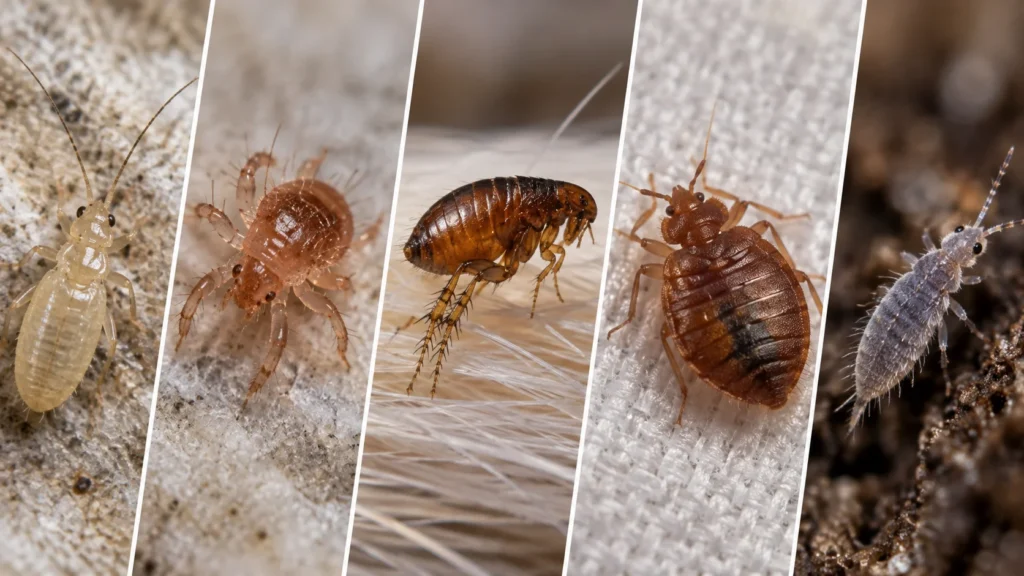
Common lookalikes include booklice, barklice, bird mites, fleas, bed bugs, springtails, carpet beetle larvae, and other small arthropods. Some can be found indoors, while others are associated with moisture, pets, birds, stored materials, or outdoor environments.
Correct identification matters because these pests require very different control methods. A tiny insect found on a wall, bed, pet, or piece of clothing should not automatically be classified as head lice. So, let's learn about bugs that look like lice.
Head Lice Identification
Before comparing lookalikes, it helps to understand the characteristics of actual head lice. Adult head lice are small, wingless, tan to grayish-white insects with six legs adapted for gripping human hair. They spend their lives on the human scalp and require blood meals to survive.
Nits are the eggs of head lice and are firmly attached to individual hair shafts, usually close to the scalp. Finding a live crawling louse or nymph is the strongest evidence of an active head-lice infestation.
Typical Head Louse Features
- About 2–3 mm long
- Tan, grayish, or darker depending on hair color
- Six legs
- Wingless
- Flattened body
- Claws adapted for gripping hair
- Crawls rather than jumping or flying
- Lives primarily on human scalp hair
- Feeds on human blood
- Nits are firmly attached to hair shafts
Misidentifying dandruff, dirt, or other tiny insects as lice is common, so finding a live louse is particularly important for confirmation.
Explore more articles:
- Fruit Flies vs Gnats
- Rat vs Mouse
- Bugs That Look Like Flying Termites
- Bugs That Look Like Fleas
- What Do Fleas Look Like?
- Wood Ants vs Termites
- What Are Centipedes Attracted To?
- What Do Drain Flies Look Like
- What Do Baby Black Widows Look Like?
Bugs That Look Like Lice but Aren't
A variety of small organisms can resemble lice when viewed without magnification. Their similarities may be limited to size or color, while their anatomy, habitat, and behavior are quite different.
The most useful identification clues are where the bug was found, whether it has six or eight legs, whether it jumps or flies, and whether it remains attached to hair. These characteristics can quickly narrow down the possibilities.
Booklice and Barklice
Booklice and barklice, collectively known as psocids, are among the most common insects mistaken for tiny lice. They are soft-bodied and generally less than 3/16 inch long, with long slender antennae. They can be white, gray, or brown, and some species have wings while others are wingless.
Booklice are often found in warm, damp indoor locations near books, cardboard, paper, mold, or fungi. Barklice are generally outdoor insects found on tree bark and vegetation. Neither type is a human parasite.
Bird Mites
Bird mites are extremely small arachnids that can resemble tiny crawling insects. Adult bird mites have eight legs, unlike head lice, and are usually brownish or grayish. They are associated with bird nests on or inside buildings.
Bird mites can enter homes when birds abandon nests or when nesting material is located close to a building. They can bite people while searching for a host, but they cannot reproduce on human blood.
Fleas
Fleas can be confused with tiny dark insects associated with people or pets, but their body structure is very different. Adult fleas are dark brown to black, wingless, less than 1/8 inch long, and flattened from side to side. They also have large hind legs for jumping.
Unlike head lice, fleas commonly infest animals and can bite both pets and people. A tiny dark insect that jumps quickly is therefore more consistent with a flea than a head louse.
Bed Bugs
Bed bugs can be mistaken for lice when a small reddish-brown insect is discovered around bedding or clothing. Adult bed bugs are much larger than head lice, generally reaching about 1–7 mm, and have a flat, oval body.
Bed bugs are wingless and feed on blood, but they do not live permanently in scalp hair. They usually hide around mattresses, bed frames, furniture, cracks, and other areas near sleeping locations.
Springtails
Springtails are another group of tiny insects that may be mistaken for lice because some species are extremely small and can be white, gray, brown, or black. They are commonly associated with damp soil, organic debris, bathrooms, basements, and houseplants.
Springtails do not have wings and do not bite people. Their distinctive ability to jump several inches using a forked structure under the abdomen makes them very different from head lice.
Small Bugs That Look Like Head Lice
Small bugs found in hair or around the home can create confusion because several species are only a few millimeters long. Color alone is especially unreliable because lighting, hair color, and the insect's life stage can change its apparent appearance.
A careful inspection should focus on whether the organism is actually attached to a hair shaft, whether it has six or eight legs, and whether it moves by crawling, jumping, or flying.
Carpet Beetle Larvae
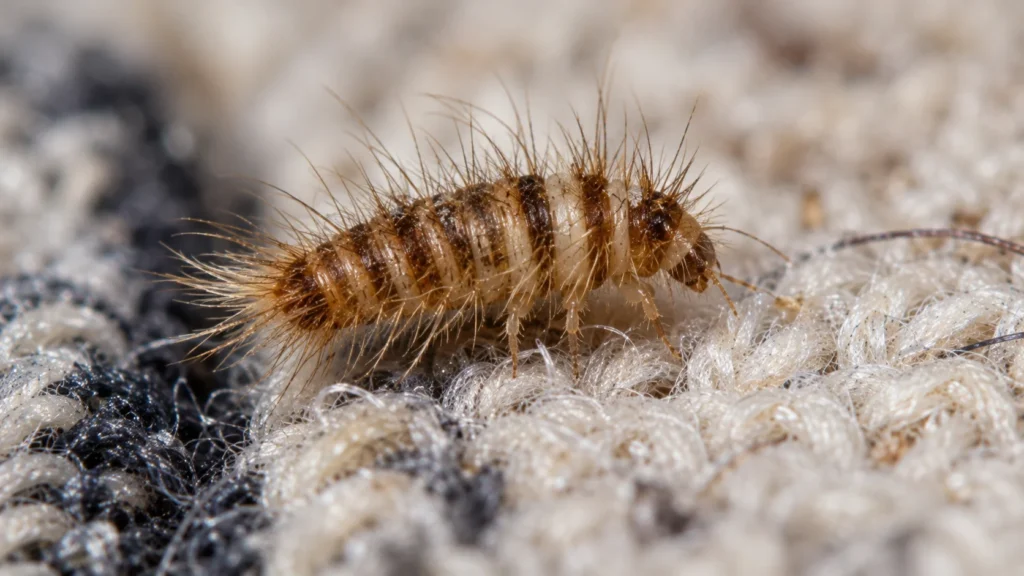
Carpet beetle larvae can look vaguely louse-like when viewed quickly because they are small and may be found around fabrics, hair, lint, and household debris. However, they are elongated, carrot-shaped or teardrop-shaped larvae covered with hairs.
Black carpet beetle larvae can reach approximately 3–7 mm and have golden-brown hairs with a characteristic hairy tail. They feed on animal-derived materials such as wool, fur, feathers, and accumulated organic debris rather than living on human hair.
Mites
Several mite species can appear as extremely small crawling dots. Unlike lice, adult mites have eight legs because they are arachnids.
Some mites are harmless environmental species, while others can affect animals or temporarily bite people. Bird mites are one example that can enter homes when bird nests are located in or around buildings.
Bugs That Look Like Lice in Hair
Finding a tiny object or insect in hair does not automatically indicate head lice. Hair can collect dandruff, skin flakes, hair products, fibers, dust, and other particles that may resemble lice or nits.
Actual head lice remain associated with scalp hair, and their eggs are firmly cemented to individual hair shafts. CDC guidance recommends examining especially behind the ears and around the back of the neck when checking for head lice.
Lice vs Dandruff
Dandruff can resemble white or pale nits, particularly when viewed close to the scalp. The major difference is attachment: dandruff and loose debris can generally be moved or brushed away, while nits are firmly attached to individual hairs.
A suspected nit that slides easily along the hair or falls away may be debris rather than a louse egg. Confirmation should focus on finding live crawling lice or properly identifying attached nits.
Bugs With Wings
Head lice are wingless and cannot fly. Therefore, a tiny insect that repeatedly flies around a room is not an adult head louse.
Booklice or barklice can have wings, while other small household insects may also fly. Psocids can be white, gray, or brown and may be winged or wingless depending on the species.
White Bugs That Look Like Lice
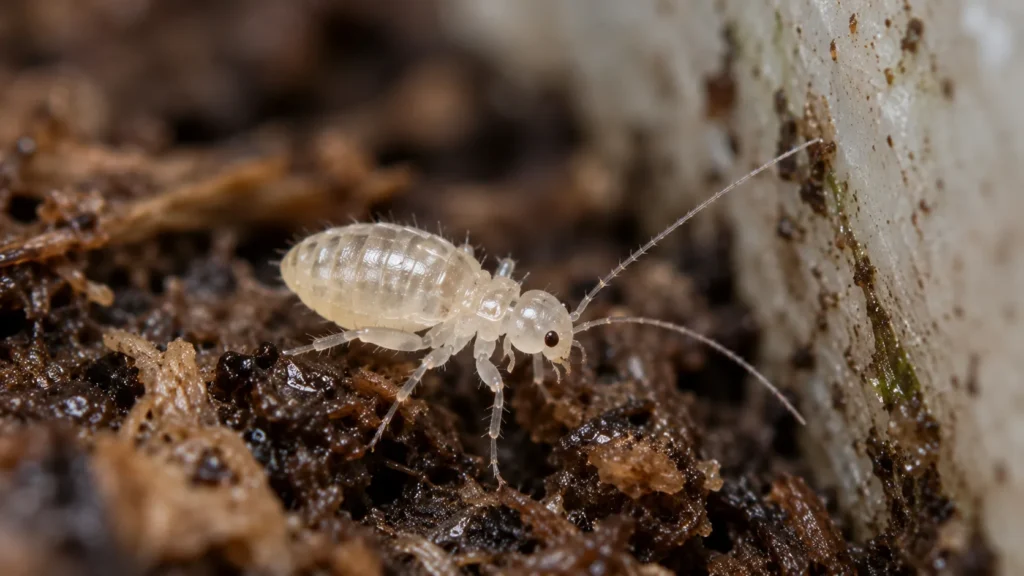
Tiny white insects are often mistaken for lice, particularly when they are found on walls, plants, paper, or damp materials. Several harmless household arthropods can be pale or nearly translucent.
Booklice are a particularly relevant possibility because they can be white, gray, or brown and are often associated with damp areas where mold and fungi develop.
Little White Indoor Bugs
Small white bugs around books, cardboard, windows, or damp surfaces may be psocids rather than lice. They are generally harmless to people and pets and are managed primarily by reducing moisture.
Small pale insects around houseplant soil may instead be springtails. These organisms favor high-moisture environments and organic debris and do not normally damage property or bite people.
Black Bugs That Look Like Lice
Dark-colored bugs can also be mistaken for lice, especially when found on clothing or bedding. Fleas are one important possibility because adult fleas are dark brown to black, very small, wingless, and laterally flattened.
Some springtails are also black, while certain carpet beetle adults are dark brown or black. Their habitats and body structures, however, differ substantially from human lice.
Tiny Black Bugs
A tiny black insect that jumps is more suggestive of a flea than a louse. A tiny dark insect associated with damp soil or organic debris may be a springtail.
A small oval insect found around mattresses and sleeping areas could instead be a bed bug. Adult bed bugs are reddish-brown, wingless, and flattened, making their body shape useful for identification.
Bugs That Look Like Lice in the House
Different household environments attract different lookalikes. Damp rooms may support booklice and springtails, while bedrooms can contain bed bugs or fleas. Bird nests around a building can introduce bird mites.
This means the location of the insect provides valuable evidence. An insect found in a humid bathroom is less likely to be head lice than an organism actually crawling through scalp hair.
| Bug | Typical Size | Key Feature | Common Location |
| Head louse | 2–3 mm | Six legs, clings to hair | Human scalp |
| Booklouse | <3/16 inch | Soft-bodied, long antennae | Damp indoor areas |
| Bird mite | ~1/32 inch | Eight legs | Bird nests/buildings |
| Flea | <1/8 inch | Large hind legs, jumps | Pets, carpets |
| Bed bug | 1–7 mm | Flat reddish-brown body | Beds, furniture |
| Springtail | 1/16–1/8 inch | Jumps, no wings | Damp areas |
| Carpet beetle larva | Up to several mm | Hairy, carrot-shaped | Fabrics, lint |
These organisms require different identification and control approaches.
Outdoor Bugs That Look Like Lice
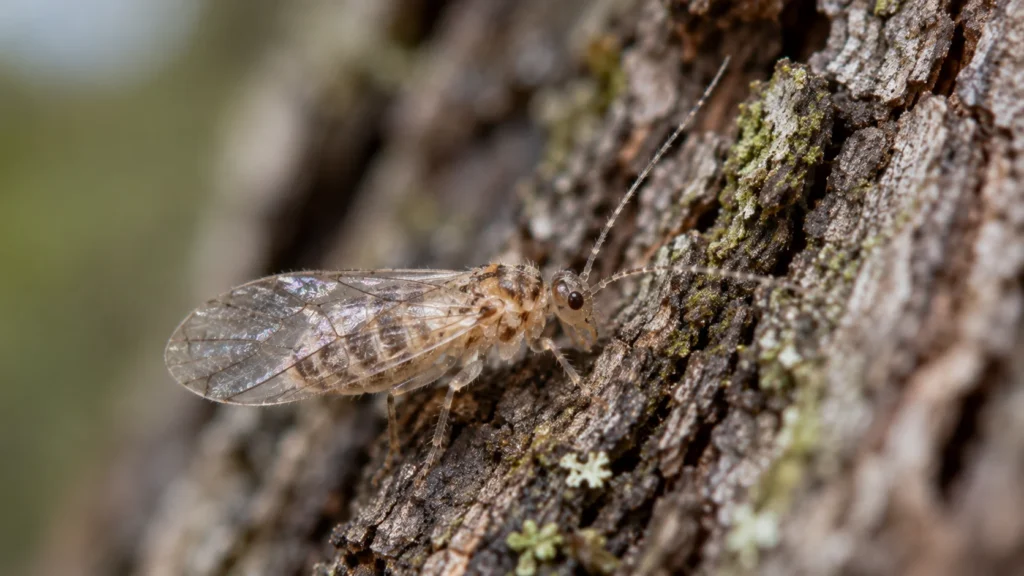
Barklice are a notable outdoor lookalike. They commonly gather on tree trunks, bark, leaves, shrubs, and other outdoor surfaces. Most barklice are winged and feed on fungi, lichen, pollen, and decaying organic material.
They are harmless to people and plants and do not require the same treatment used for human lice. Their outdoor habitat is also a major clue that they are unrelated to a head-lice infestation.
Barklice Identification
Barklice are soft-bodied insects with long antennae and can be less than 3/16 inch long. Depending on the species, they may have four wings or no wings.
Seeing many tiny insects clustered on tree bark therefore does not indicate a human lice problem. Barklice are primarily outdoor organisms associated with trees and organic material.
How to Tell Lice From Similar Bugs
The most reliable identification process combines appearance, location, movement, and anatomy. A suspected head louse should be examined directly on the scalp or hair rather than identified solely from an itchy sensation or a small skin mark.
CDC guidance states that finding a live nymph or adult louse is the best way to diagnose head lice. A fine-toothed lice comb can help locate crawling lice when they are difficult to see.
Important Identification Clues
Check these characteristics:
- Location: scalp hair strongly supports head lice.
- Leg count: lice have six legs; mites have eight.
- Movement: lice crawl rather than jump or fly.
- Attachment: nits are firmly attached to hair shafts.
- Body shape: lice are flattened and elongated.
- Jumping: strongly suggests fleas or springtails rather than lice.
- Flying: excludes adult head lice.
- Moisture association: supports booklice, springtails, or some mites.
- Bird-nest association: supports bird mites.
- Bedding association: can support bed bugs or fleas but does not establish lice.
Ten Common Bugs That Can Be Mistaken for Lice
- Booklice tiny, soft-bodied insects associated with damp indoor areas.
- Barklice outdoor psocids commonly found on tree bark and vegetation.
- Bird mites eight-legged mites associated with bird nests.
- Fleas dark, wingless jumpers commonly associated with pets.
- Bed bugs flat, reddish-brown blood-feeding insects found around sleeping areas.
- Springtails tiny moisture-loving jumpers that do not bite.
- Carpet beetle larvae hairy larvae associated with fabrics and organic debris.
- Other mites tiny eight-legged arthropods that can be difficult to identify.
- Dandruff and debris nonliving particles frequently confused with nits.
- Bark and plant insects outdoor insects that may resemble tiny lice at a glance.
Conclusion
Many tiny bugs can look like lice when they are viewed quickly, but true head lice have several distinctive characteristics. They are small, wingless, six-legged parasites that live on human scalp hair, while their eggs are firmly attached to individual hair shafts.
Booklice, barklice, bird mites, fleas, bed bugs, springtails, and carpet beetle larvae can all create confusion because of their small size or unusual appearance. Looking at the insect's location, leg count, movement, body shape, and attachment to hair is much more reliable than judging its color alone.
Are there bugs that look like lice but are not?
Yes. Booklice, barklice, bird mites, fleas, bed bugs, springtails, and carpet beetle larvae can all be mistaken for lice under certain circumstances. Their anatomy and habitats differ from true human lice.
What bugs look like head lice but are not?
Booklice, bird mites, fleas, and some other tiny arthropods can resemble head lice. A key difference is that head lice are six-legged insects that live on human scalp hair, while mites have eight legs and many other lookalikes have different habitats.
Can bugs that look like lice live in human hair?
Some organisms may temporarily come into contact with hair, but ordinary household lookalikes such as booklice and springtails do not live as human scalp parasites. Actual head lice are specifically adapted to live on human scalp hair.
Can fleas look like lice?
Fleas can be confused with lice because both are small, wingless insects. Fleas are typically dark brown to black, flattened from side to side, and have large hind legs for jumping, while head lice are adapted for crawling and gripping hair.
Can bed bugs look like lice?
Small bed bug nymphs can be confused with other tiny insects, but bed bugs have a different body shape and habitat. Adult bed bugs are reddish-brown, flat, oval insects and are commonly found around mattresses, bed frames, furniture, and cracks rather than attached to scalp hair.
Can booklice be mistaken for head lice?
Yes. Booklice are tiny, soft-bodied insects that may be white, gray, or brown and can be wingless. Unlike head lice, they are associated with damp indoor areas, mold, fungi, paper, cardboard, and other environmental materials.