
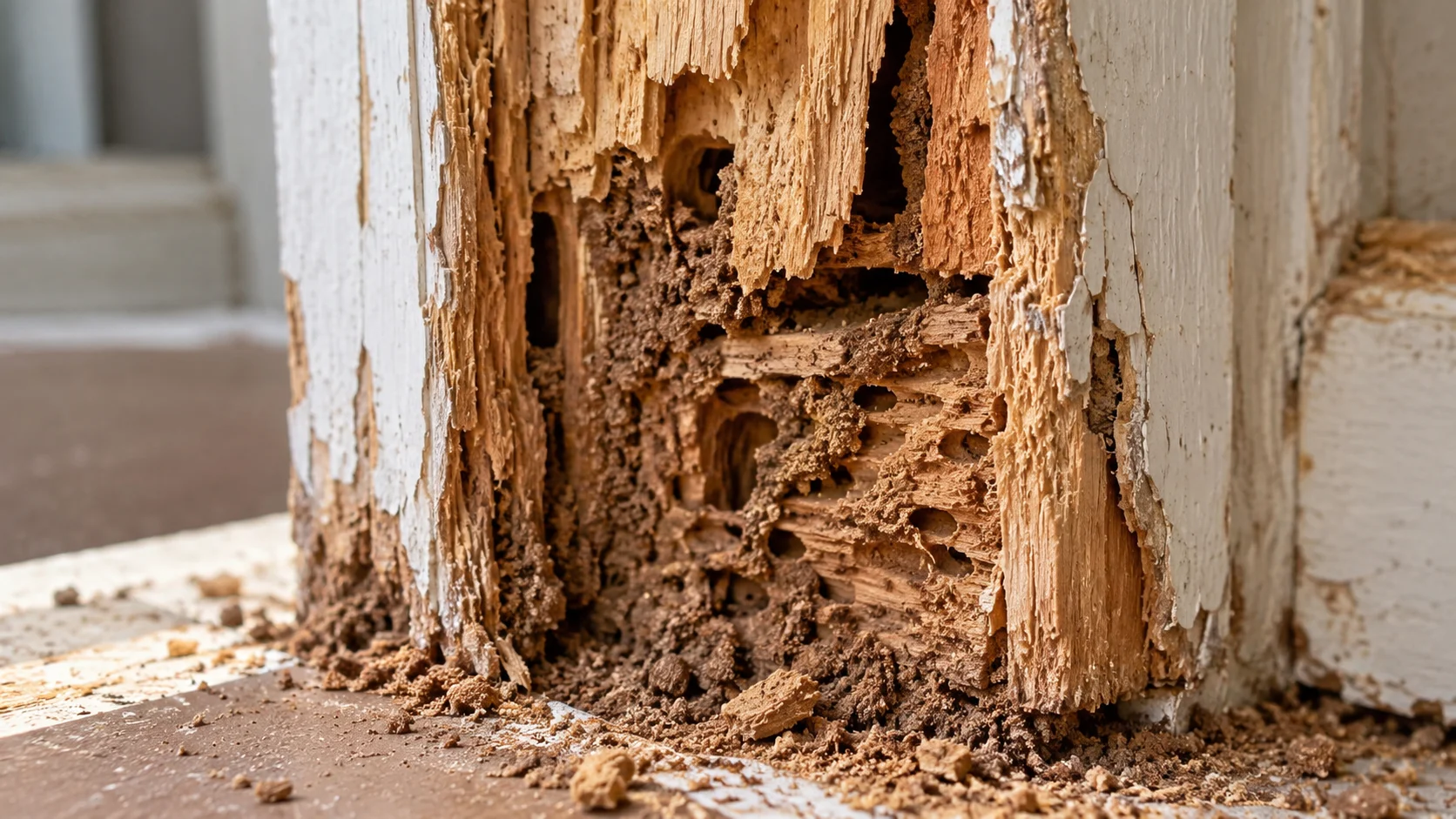
Termite damage can be difficult to recognize because termites often consume wood from the inside while leaving the outer surface looking relatively normal. Early signs may include hollow-sounding wood, narrow galleries, mud tubes, blistered surfaces, discarded wings, or small piles of dry pellets. The visible appearance depends on the termite species, location, moisture conditions, and length of infestation.
Understanding the difference between active termite damage, old termite damage, and ordinary wood deterioration can help prevent a small problem from becoming a major structural concern. Subterranean termites commonly create soil-lined galleries and shelter tubes, while drywood termites can leave distinctive pellet piles and hidden galleries within dry wood.
What Does Termite Damage Look Like on Wood
Termite-damaged wood often has internal passages, hollow areas, and weakened sections rather than obvious surface chewing. Subterranean termites may leave galleries coated with soil or mud, while the remaining wood can become thin and fragile.
The exterior may initially look intact, making termite wood damage easy to overlook. As damage progresses, wood can become cracked, blistered, hollow, or structurally weak.
Hollow or Honeycomb-Like Wood
Termites excavate galleries through wood as they feed. In established infestations, these passages can leave sections of timber largely hollowed out while a thin outer layer remains.
- Hollow-sounding beams
- Thin remaining wood surfaces
- Maze-like internal galleries
- Long channels following the wood grain
- Fragile or weakened timber
- Crumbling edges around damaged areas
- Soil-lined passages in subterranean termite damage
- Hidden damage beneath an apparently solid surface
- Weakened joists or studs
- Splintering around heavily damaged sections
Cracked, Blistered, or Warped Wood
Surface changes can appear when termites have weakened wood behind paint, trim, or other finishes. However, similar symptoms can also result from moisture, rot, or normal deterioration, so surface appearance alone does not confirm termites.
- Bubbling paint
- Peeling finishes
- Fine cracks
- Warped trim
- Swollen-looking wood
- Loose baseboards
- Damaged door frames
- Soft spots
- Splintered surfaces
- Uneven wooden panels
What Does Termite Damage Look Like in a House
Inside a house, termite damage can affect structural framing, floors, doors, windows, trim, and other cellulose-containing materials. Subterranean termites commonly enter from soil and may travel through protected shelter tubes before reaching wooden components.
The most concerning signs occur when damaged wood is associated with mud tubes, live termites, discarded wings, or structural movement. A professional inspection is appropriate when these signs appear together.
Damage Around Walls and Framing
Termites can attack studs, joists, sill plates, posts, and other wooden components hidden behind finished surfaces. Damage may therefore become visible only after remodeling or when the surrounding material begins to deform.
- Weak wall framing
- Cracks near corners
- Loose trim
- Bowed wall sections
- Damaged studs
- Weakened sill plates
- Sagging areas
- Hollow-sounding sections
- Mud tubes near foundations
- Damaged wood behind finished surfaces
Damage Around Doors and Windows
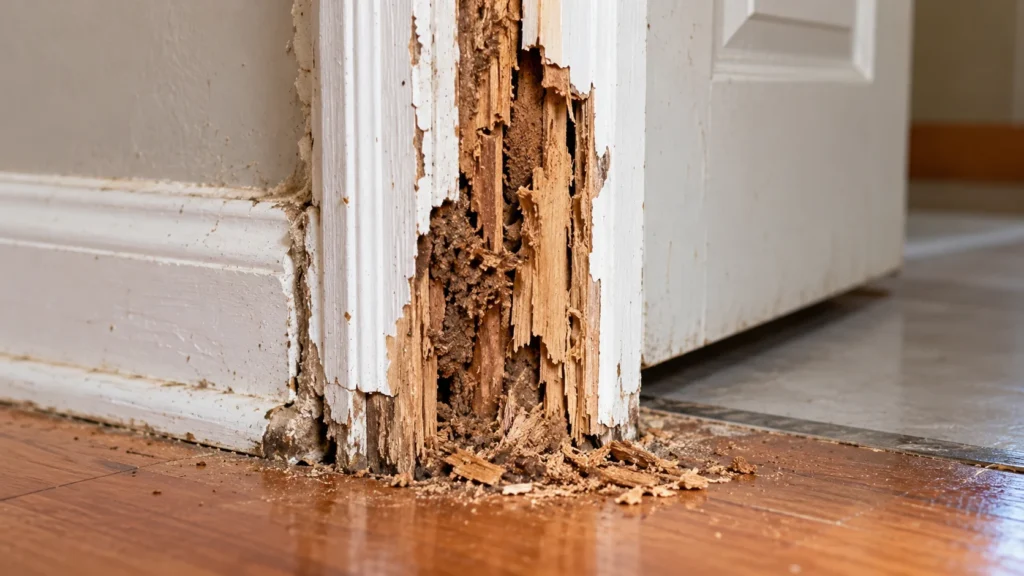
Door and window frames provide accessible wooden components that can be affected by termites. Weakening around these areas may cause functional changes in addition to visible surface damage.
- Doors that become difficult to close
- Loose wooden frames
- Cracked trim
- Blistered paint
- Soft frame sections
- Warped wood
- Hollow-sounding trim
- Mud tubes near lower frames
- Damaged sill areas
- Fine cracks around openings
What Does Termite Damage Look Like on Drywall
Drywall itself is not usually the main food source in a termite infestation. The more important concern is the wooden framing, trim, or other cellulose material behind or around the drywall. Termites can travel through concealed areas and damage structural wood without immediately creating a large visible opening.
Wall surfaces can therefore show indirect signs of hidden termite damage. Similar changes can also result from plumbing leaks, moisture, settling, or poor ventilation, so additional evidence is important.
Drywall and Sheetrock Surface Changes
Termite activity behind a finished wall may contribute to cracks, soft spots, or uneven areas when supporting wood becomes weakened. These signs should be evaluated alongside moisture and structural conditions.
- Small cracks
- Uneven wall surfaces
- Localized soft areas
- Loose sections
- Bubbling paint
- Peeling finishes
- Warped drywall
- Cracks near door frames
- Damaged baseboards
- Mud tubes around accessible wall edges
What Does Early Termite Damage Look Like
Early termite damage can be subtle because much of the feeding occurs inside wood or behind concealed surfaces. A visible shelter tube, fresh pellet pile, discarded wings, or a small area of damaged wood may provide an earlier warning than major structural deformation.
Early detection matters because obvious structural damage may represent a longer period of hidden activity. Mississippi State University Extension notes that termite signs often become noticeable only after an infestation has developed, although shelter tubes can sometimes provide an earlier visible clue.
Early Warning Signs
Small clues deserve attention when they appear around wood, foundations, crawl spaces, or windowsills. Different termite groups leave different evidence.
- Fresh mud shelter tubes
- Small areas of hollow wood
- Tiny cracks in wooden trim
- Newly appearing blistered paint
- Discarded termite wings
- Live swarmers indoors
- Fresh drywood termite pellets
- Small damaged sections of wood
- Weak spots around frames
- Newly discovered galleries
Explore more articles:
- Fruit Flies vs Gnats
- Rat vs Mouse
- Bugs That Look Like Flying Termites
- Bugs That Look Like Fleas
- What Do Fleas Look Like?
- Wood Ants vs Termites
- What Are Centipedes Attracted To?
- What Do Drain Flies Look Like
- What Do Baby Black Widows Look Like?
- What Do Dust Mites Look Like?
What Does Active Termite Damage Look Like
Active termite damage means there is evidence of current termite activity rather than damage left by a previous infestation. Live termites inside damaged wood, fresh shelter tubes, or recurring drywood termite pellets are stronger indicators of current activity than old structural damage alone.
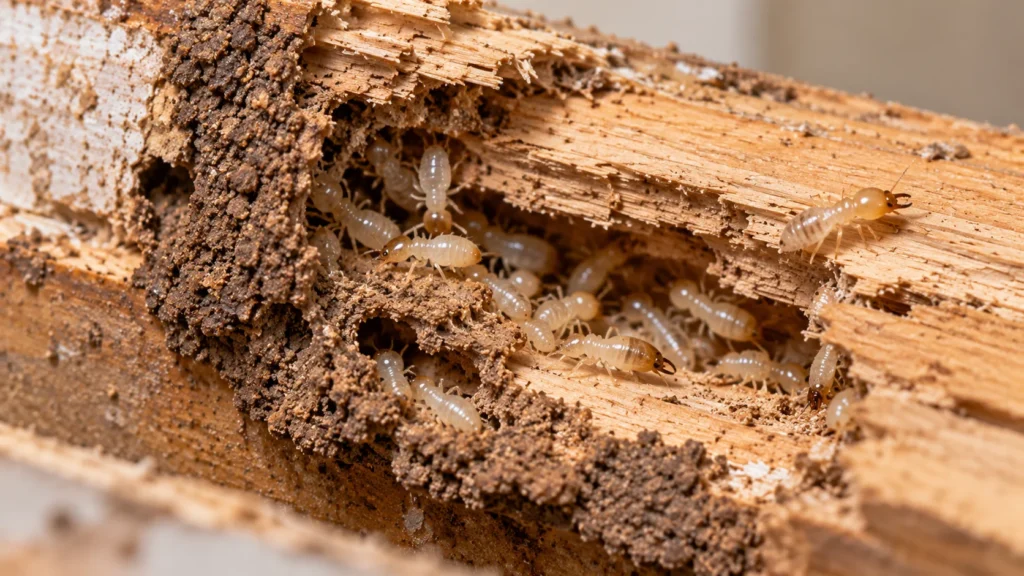
Dried mud inside old galleries can remain long after termites have left. For this reason, the appearance of damaged wood alone cannot always establish whether termites are currently present.
Signs of Current Activity
Current activity is more convincing when physical evidence is fresh or when termites themselves are found. Professional inspection can determine the extent and status of an infestation.
- Live worker termites
- Live soldiers
- Fresh shelter tubes
- Newly constructed mud tubes
- Freshly deposited pellets
- Reappearing pellet piles
- Freshly damaged galleries
- Active swarmers indoors
- New discarded wings
- Recently weakened wood
What Does Old Termite Damage Look Like
Old termite damage can remain visible even after termites have been eliminated. Dried soil inside galleries, empty tunnels, hollowed wood, and repaired structural sections can all represent previous activity rather than a current infestation. Mississippi State University Extension specifically notes that dried mud in galleries without termites can indicate old damage from an infestation that was previously controlled.
This distinction is important because structural damage and active infestation are separate issues. A damaged beam may require repair even when no live termites remain.
Characteristics of Previous Damage
Older damage is generally identified by its condition and supporting evidence rather than by appearance alone. A professional inspection can help establish whether additional activity exists.
- Dry, empty galleries
- Dried mud inside passages
- Old structural repairs
- Repaired framing
- Weathered damaged wood
- No live termites found
- No fresh shelter tubes
- No recurring pellet deposits
- Historic inspection records
- Previously treated areas
What Does Drywood Termite Damage Look Like
Drywood termites live directly inside dry wood and do not require the soil contact associated with subterranean termites. Their galleries can remain concealed inside furniture, framing, trim, doors, window components, and other wooden materials.
One of the most recognizable signs is a pile of small, uniform, six-sided fecal pellets beneath an infested piece of wood. These pellets are pushed through small openings in the wood and may resemble dust or debris.
Drywood Galleries and Pellet Piles
Drywood termite damage can remain hidden until pellets accumulate or the wood becomes noticeably weakened. Pellet deposits that repeatedly return after cleaning are particularly significant.
- Small pellet piles
- Uniform six-sided pellets
- Light to dark pellet colors
- Tiny kick-out holes
- Hidden internal galleries
- Hollow wooden components
- Damaged furniture
- Damaged window frames
- Weak trim
- Localized drywood infestation
What Does Termite Damage Look Like on Hardwood Floors and Decks
Wood floors and decks can show termite damage when termites reach accessible structural or finished wood. Flooring may become loose or weak when underlying subflooring or framing is affected, while decks can be vulnerable where wood contacts soil or remains exposed to moisture.

Subterranean termites are especially associated with wood that is close to or in contact with soil. Regular inspection of decks, steps, posts, crawl spaces, and other ground-adjacent wood can help identify problems earlier.
Floor and Deck Damage
Damage can occur below the visible surface, meaning a floorboard may appear acceptable while supporting wood underneath has deteriorated.
- Soft floorboards
- Hollow-sounding flooring
- Loose boards
- Sagging sections
- Cracked wooden steps
- Weakened deck posts
- Damaged joists
- Mud tubes near supports
- Wood touching soil
- Crumbling or splintered sections
What Does Termite Damage Look Like on a Tree
Termites commonly feed on dead wood, stumps, fallen branches, and other cellulose material, although some species can attack living trees. Mississippi State University Extension notes that Formosan termites are particularly associated with infestations of living trees in affected areas.
Tree damage should not automatically be attributed to termites because borers, fungi, decay, animals, and other problems can produce similar symptoms. Inspection beneath bark and around the root zone may be necessary for reliable identification.
Tree and Stump Indicators
Termite activity around a tree is more convincing when insects, galleries, or shelter structures are found with the damaged wood. Dead wood around the tree can also provide a food source without indicating that a healthy living tree is infested.
- Damaged roots
- Hollow sections
- Galleries beneath bark
- Termites inside decayed wood
- Mud shelter structures
- Infested stumps
- Damaged fallen branches
- Weak or decaying wood
- Soil-to-wood contact
- Visible termite activity
Termite Damage vs Wood Rot
Termite damage and wood rot can produce similar signs, including soft wood, discoloration, cracking, and structural weakness. The distinction is important because the underlying cause determines the appropriate corrective action.
Termite-damaged wood commonly contains characteristic galleries, soil-lined passages, or other insect evidence. Wood rot is associated with fungal decay and moisture conditions, so a proper inspection should consider both possibilities instead of relying on appearance alone.
Key Identification Differences
A combination of evidence is more reliable than a single visual symptom. Professional inspection is particularly useful when damage is concealed behind finished surfaces.
- Termite galleries may look maze-like
- Subterranean galleries can contain dried soil
- Drywood infestations can produce uniform pellets
- Live termites indicate current activity
- Wood rot is strongly associated with moisture
- Rot can make wood soft and spongy
- Moisture damage may affect drywall independently
- Mud tubes strongly support subterranean termite activity
- Pellet piles support drywood termite activity
- Similar symptoms can have multiple causes
10 Important Termite Damage Signs to Remember
- Hollow or weakened wooden beams can indicate internal termite galleries.
- Mud tubes along foundations are a major sign associated with subterranean termites.
- Drywood termites can leave uniform six-sided fecal pellets beneath infested wood.
- Bubbling or cracked finishes can occur around damaged wood but are not exclusive to termites.
- Damaged doors and windows can reflect weakening of surrounding wooden frames.
- Hardwood floors may become loose or weak when underlying wood is damaged.
- Deck posts, steps, and other ground-adjacent wood deserve regular inspection.
- Dried galleries without live insects can represent old termite damage.
- Live termites, fresh tubes, or recurring pellets provide stronger evidence of active infestation.
- Structural damage should be evaluated by appropriate pest-control and building professionals before major repairs.
Conclusion
Termite damage can range from subtle internal galleries and hollow wood to visibly weakened floors, walls, frames, decks, and structural timbers. The appearance varies according to termite species and location, with subterranean termites commonly associated with mud-lined passages and shelter tubes and drywood termites associated with concealed galleries and pellet deposits.
Because old damage can look similar to active damage, visual inspection alone is not always enough to establish current infestation. Finding live termites, fresh shelter tubes, recurring pellet deposits, or newly damaged wood warrants professional evaluation, particularly when structural components may be involved.
1. What does termite damage look like on wood?
Termite damage often appears as hollowed or weakened wood containing tunnels or galleries. Subterranean termite galleries may contain soil-like material, while drywood termite damage can produce small piles of uniform fecal pellets.
2. What does termite damage look like on drywall?
Termites generally cause concern around drywall because they can damage wooden framing behind or around the finished surface. Cracks, soft areas, warping, or damaged trim can accompany concealed framing damage, although moisture and other problems can cause similar symptoms.
3. What does old termite damage look like?
Old termite damage may consist of empty galleries, dried mud inside passages, weakened wood, and previous repairs. Dried galleries without live termites can represent an earlier infestation rather than current activity.
4. What does active termite damage look like?
Active damage is more strongly indicated by live termites, fresh shelter tubes, newly damaged galleries, or recurring drywood termite pellet deposits. A professional inspection can determine the current extent of activity.
5. What does termite damage look like on a tree?
Tree-related termite activity can involve damaged roots, galleries, decaying wood, stumps, or visible termites. Because other insects and tree diseases can create similar symptoms, tree damage should be professionally evaluated when termite activity is suspected.