
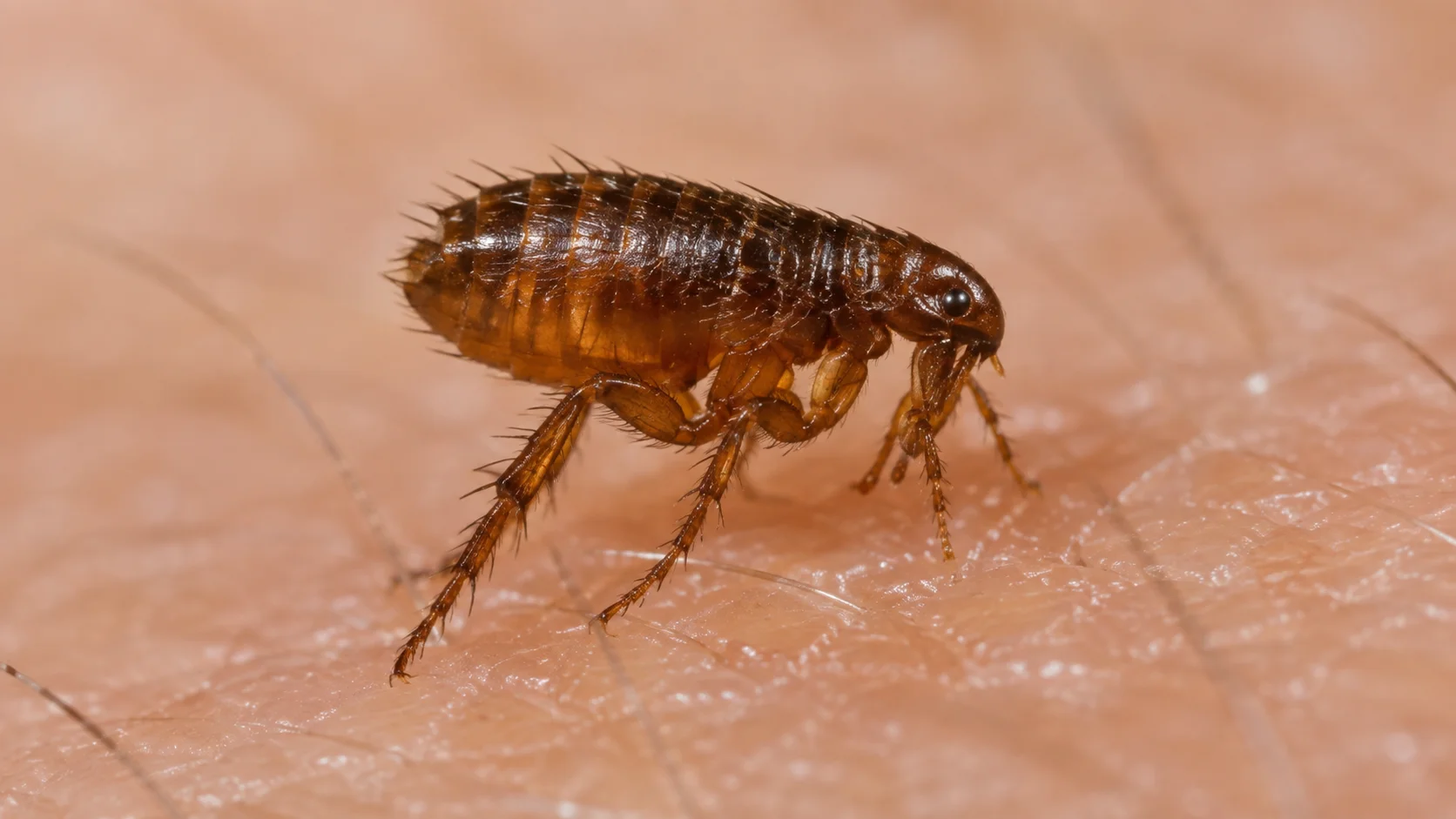
If you are trying to understand what do fleas look like, the first thing to know is that adult fleas are extremely small. They are usually dark reddish-brown to brown, wingless insects with flattened bodies and powerful hind legs designed for jumping. Adult fleas are generally only a few millimeters long, so they can be difficult to see clearly without close inspection.
Flea identification becomes more complicated because fleas do not look the same throughout their life cycle. Eggs, larvae, pupae, and adults have very different appearances, and most of the flea population in an infestation is not found on the pet itself.
What Do Fleas Look Like to the Human Eye?
Adult fleas look like tiny, dark insects that may appear reddish-brown, brown, or nearly black. Their bodies are laterally flattened, meaning they are narrow from side to side, which helps them move through animal fur. They have six legs and no wings, with the rear legs adapted for jumping.
Because of their small size and rapid movement, a flea may appear more like a tiny moving speck than a clearly recognizable insect. Seeing an insect jump rather than fly is another useful clue.
Explore more articles:
Adult Flea Appearance
An adult flea typically has a compact oval body with a dark exterior, small head, and long legs. Its body has hairs and spines that help it remain among the hairs of a host animal. The cat flea, Ctenocephalides felis, is especially common on dogs and cats.
A flea's body is built for life on a host. Its mouthparts pierce skin and take blood, while its strong hind legs allow it to move quickly and jump between surfaces or hosts.
Fleas Up Close
When viewed closely, a flea has a noticeably flattened body rather than the rounded appearance of many other tiny insects. Its legs are prominent compared with its body size, and the hind pair is especially developed for jumping.
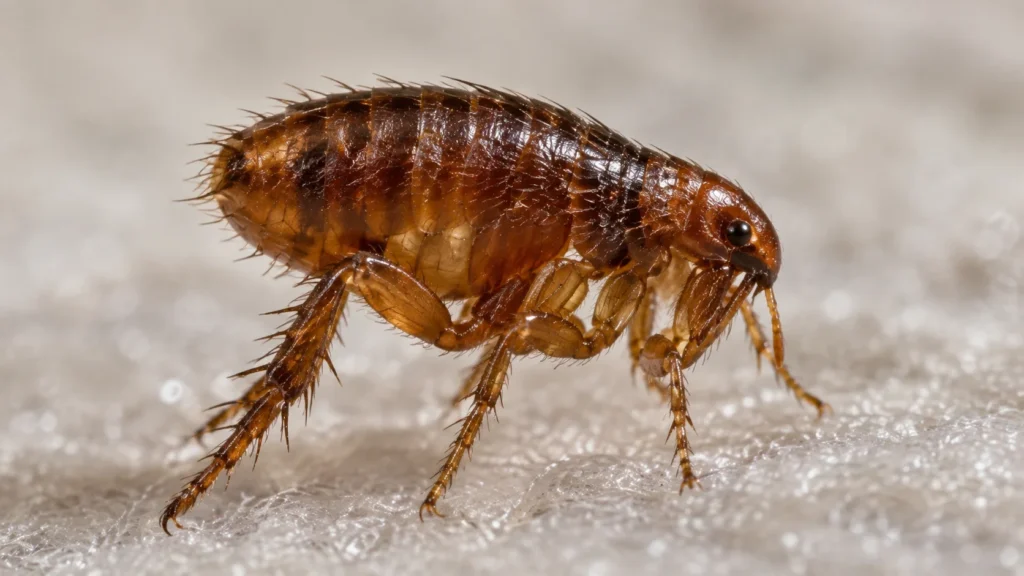
A close-up view can make identification easier, but a photograph of a tiny dark insect is not always sufficient for species-level identification. Physical characteristics, the host animal, and other infestation signs should be considered together.
What Do Fleas Look Like on Dogs and Cats?
Fleas on dogs and cats can be difficult to spot because they move through the animal's fur. Instead of seeing numerous adult fleas, owners may first notice scratching, excessive grooming, irritated skin, hair loss, or small dark particles known as flea dirt.
Most fleas found on dogs and cats are cat fleas, even though their common name can make this confusing. Veterinary references identify Ctenocephalides felis as the most prevalent flea affecting both dogs and cats.
What Do Fleas Look Like on Dogs?
On dogs, adult fleas may appear as tiny dark brown or reddish-brown specks moving quickly through the coat. They are often easier to detect around areas where fleas commonly remain, although they can occur elsewhere on the body.
Flea dirt can be an important supporting clue. It consists largely of digested blood excreted by adult fleas and may appear as dark reddish-black material in the dog's coat.
What Do Fleas Look Like on Cats?
On cats, fleas may be hidden beneath dense fur and can be difficult to see directly. A cat may show excessive grooming, scratching, skin irritation, or other signs before an owner notices an adult flea.
The head and neck can be useful areas to inspect, while a flea comb can help collect small insects or flea dirt for closer examination. Persistent skin irritation should also be evaluated by a veterinarian because several conditions can cause similar symptoms.
What Do Flea Eggs, Larvae, and Pupae Look Like?
A flea infestation cannot be understood by looking only for adult fleas. Fleas have four major life stages: egg, larva, pupa, and adult. The immature stages are usually found in the environment rather than continuously remaining on the animal.
Flea eggs are tiny, pale, and difficult to notice individually. Larvae are worm-like and pale, while pupae develop inside protective cocoons that can blend into surrounding debris.
What Do Flea Eggs Look Like?
Flea eggs are small, oval, and usually pearly white. They are approximately half a millimeter long in cat fleas, making them difficult to identify without close examination. Eggs laid in an animal's coat can fall onto carpets, bedding, furniture, cracks, and other areas.
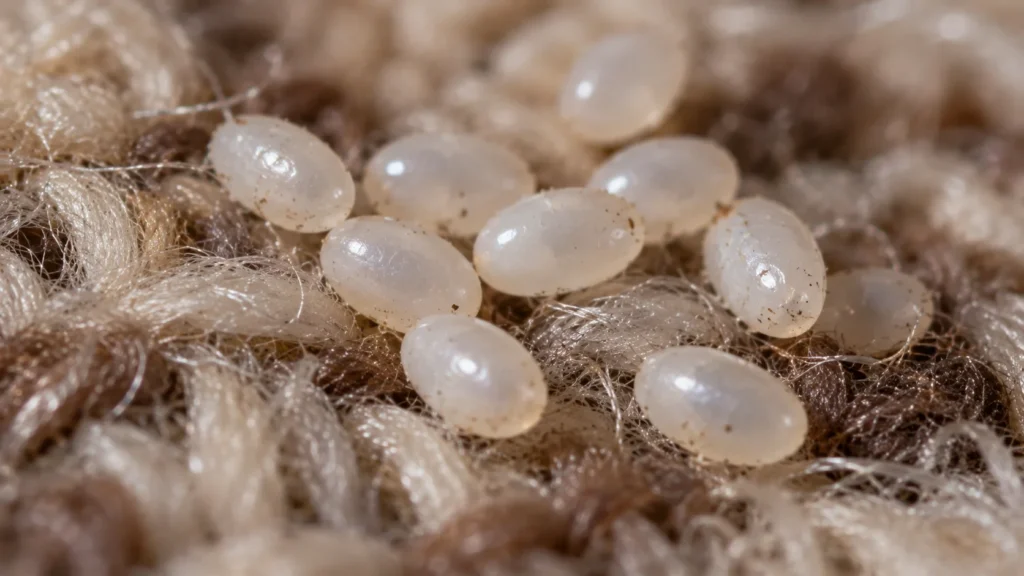
Because eggs can leave the pet and accumulate in the environment, seeing no adult fleas on an animal does not necessarily mean the surrounding area is flea-free.
What Do Baby Fleas Look Like?
Baby fleas are not miniature versions of adult fleas. Flea larvae look like tiny pale or whitish worms, are legless, and have elongated segmented bodies. They do not look like the dark jumping insects associated with adult fleas.
Larvae avoid direct light and can hide deep in carpet fibers, beneath furniture, inside cracks, and in areas where pets rest. They feed on organic material and adult flea feces rather than taking fresh blood meals like adults.
What Do Dead Fleas Look Like?
Dead adult fleas may still look like small dark brown or reddish-brown insects, but they may be motionless and easier to overlook among pet bedding, carpet fibers, or other debris. A dead flea alone does not establish the extent of an infestation.
Finding multiple dead fleas alongside flea dirt, eggs, larvae, or repeated pet scratching provides stronger evidence that an active or recent infestation may be present.
What Do Flea Bites Look Like on Humans?
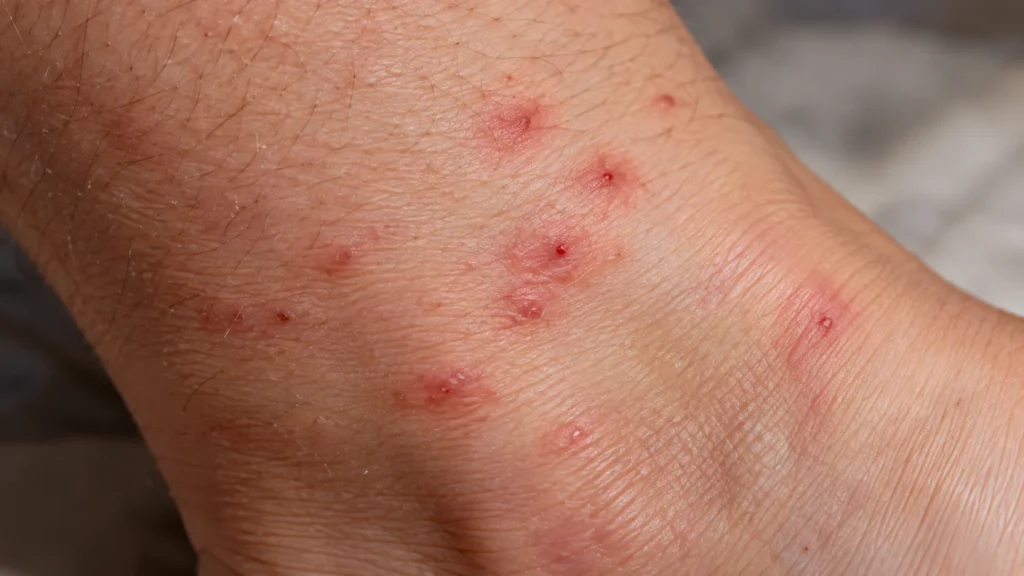
Flea bites on humans commonly appear as small, red, itchy bumps. They are often found around the feet and ankles because fleas tend to remain close to floor level, although bites can occur elsewhere.
A skin reaction alone cannot reliably prove that fleas caused the bites because other insects and skin conditions can produce similar marks.
What Do Flea Bites Look Like on Skin?
Flea bites may appear as small raised red spots and can occur in clusters. Some people experience stronger reactions because of sensitivity to flea saliva.
If bites become severely swollen, painful, infected, or accompanied by concerning symptoms, medical advice is appropriate rather than relying on visual identification alone.
What Do Sand Flea Bites Look Like?
The term sand flea can be confusing because it is used for different organisms. Some organisms commonly called sand fleas are actually small crustaceans rather than true fleas. Their bites or skin reactions can therefore represent a different issue from an indoor cat- or dog-flea infestation.
What Do Fleas Look Like in Beds, Bedding, and Clothes?
Fleas can be present in areas where pets sleep or spend significant time. Adult fleas may be found on the host, while eggs, larvae, and pupae can occur in carpets, bedding, furniture, cracks, and other protected areas.
Small dark insects on bedding should not automatically be identified as fleas. Their shape, movement, relationship to pets, and additional signs such as flea dirt can help establish whether fleas are involved.
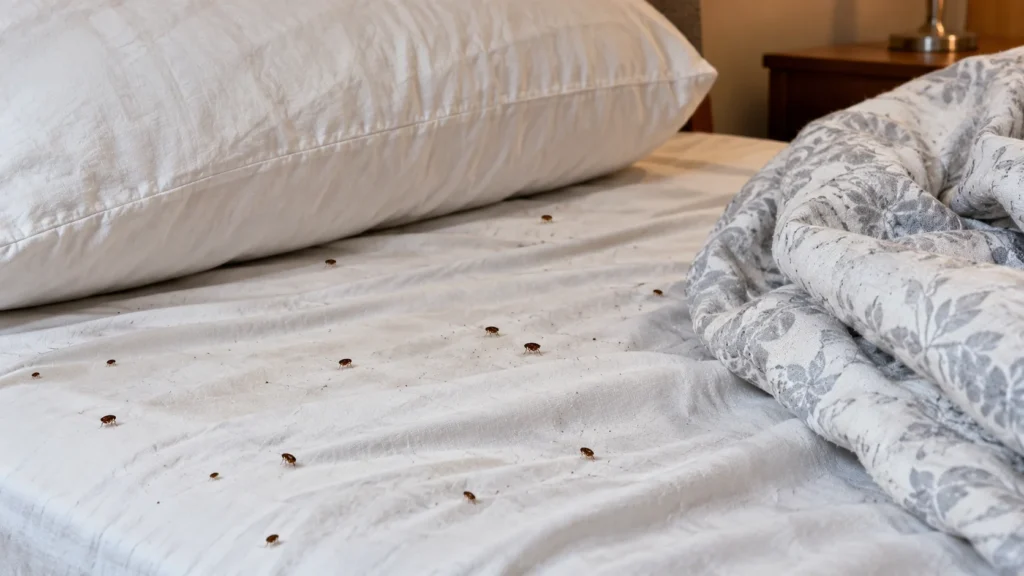
Fleas on Bedding
Flea activity in bedding can be associated with pets that sleep on or near the bed. Washing removable bedding and regularly cleaning pet sleeping areas can help reduce environmental flea stages.
Fleas on Clothes
Fleas can move between environments by using animals, fabrics, belongings, or other surfaces as temporary transport. Finding a single flea on clothing does not necessarily demonstrate an established infestation, so the surrounding environment and pets should also be checked.
10 Quick Signs That Help Identify Fleas
- Tiny body: Adult fleas are only a few millimeters long.
- Dark color: Adults are commonly brown, reddish-brown, or dark.
- Flattened shape: Their bodies are compressed from side to side.
- No wings: Fleas cannot fly.
- Six legs: Their legs are adapted for rapid movement.
- Powerful hind legs: Adults can jump rather than fly.
- Fast movement: Fleas can move quickly through fur or across surfaces.
- Flea dirt: Dark reddish-black particles may indicate flea activity.
- Itchy bites: Flea bites can produce small, itchy red marks.
- Different life stages: Eggs, larvae, pupae, and adults look very different from one another.
How to Confirm a Flea Problem
Identification should combine visual evidence with signs around the animal and home. A flea comb can help detect adult fleas or flea dirt, while inspecting pet bedding and resting areas can reveal environmental evidence.
Because immature stages can remain in the environment, treating only visible adult fleas may not address the entire life cycle. The CDC notes that fleas develop through egg, larval, pupal, and adult stages, and environmental conditions can greatly affect how quickly the cycle progresses.
For pets, flea-control products should be selected with veterinary guidance. Products intended for one animal species are not automatically safe for another; the AVMA specifically warns that some dog flea products can be toxic to cats.
Conclusion
Knowing what do fleas look like means recognizing more than one tiny dark insect. Adult fleas are small, wingless, flattened insects with powerful hind legs, while flea eggs, larvae, and pupae have completely different appearances.
On dogs and cats, look for moving dark insects, flea dirt, scratching, and skin irritation. In the home, inspect bedding, carpets, furniture, and areas where pets rest because much of the flea life cycle occurs away from the animal.
When identification is uncertain or a pet has significant skin irritation, a veterinarian can help determine whether fleas are responsible and recommend an appropriate treatment plan.
What do fleas look like to the naked eye?
Adult fleas look like tiny dark brown, reddish-brown, or nearly black insects. They are only a few millimeters long, so they may appear as small moving specks rather than clearly recognizable insects.
What do dog fleas look like?
Dog fleas are small, wingless, dark-colored insects with flattened bodies and strong hind legs. However, the cat flea is more commonly found on dogs than the true dog flea in many regions.
What do cat fleas look like?
Cat fleas are small, dark brown to reddish-brown, wingless insects with laterally flattened bodies and powerful hind legs. They are the most common flea found on cats and are also frequently found on dogs.