
Finding a tiny dark insect jumping across the floor can immediately make you think of fleas. However, bugs that look like fleas include several different insects and arthropods that can be similar in size, color, or movement. Some are harmless nuisance pests, while others can bite people, affect pets, or damage plants.
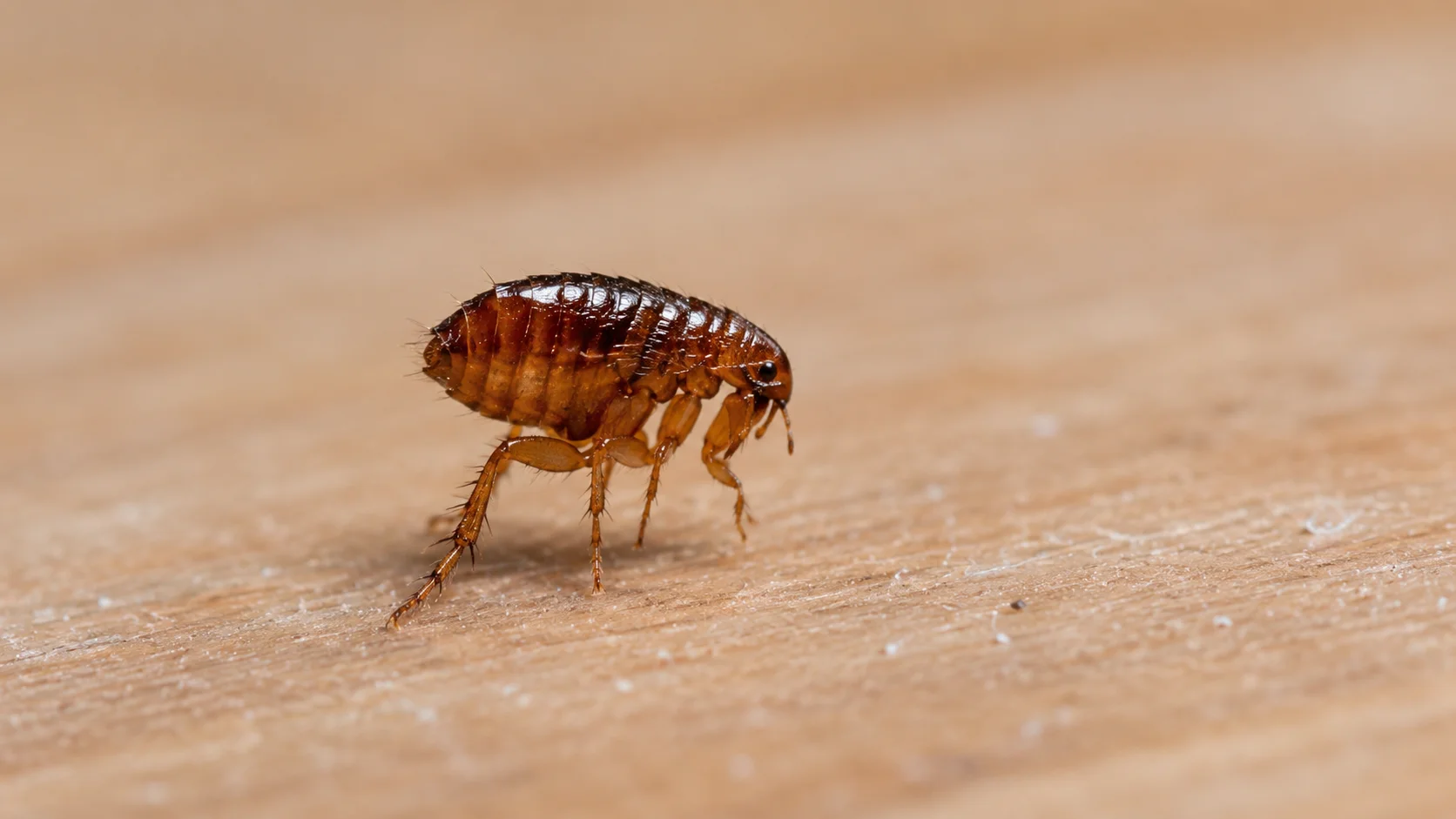
True fleas are small, wingless, laterally flattened insects with powerful hind legs adapted for jumping. Adult fleas are generally around 1 4 mm long, and they feed on the blood of animals or humans.
The most useful clues are body shape, jumping or flying behavior, number of legs, habitat, host association, and whether the insect remains attached to a person or animal. This guide covers common flea look-alikes found in homes, kitchens, bathrooms, carpets, yards, and on pets.
What Fleas Actually Look Like
Before identifying a look-alike, it helps to understand the features of a genuine flea. Adult fleas are small, dark reddish-brown to brownish-black, wingless insects with hard, laterally compressed bodies and six legs. Their hind legs are particularly powerful and allow them to jump rather than fly.
Fleas are blood-feeding parasites. Cat and dog fleas are commonly associated with pets, although fleas can also bite humans. Their life cycle includes egg, larva, pupa, and adult stages, so not every flea life stage looks like the familiar jumping adult.
Flea Appearance and Movement
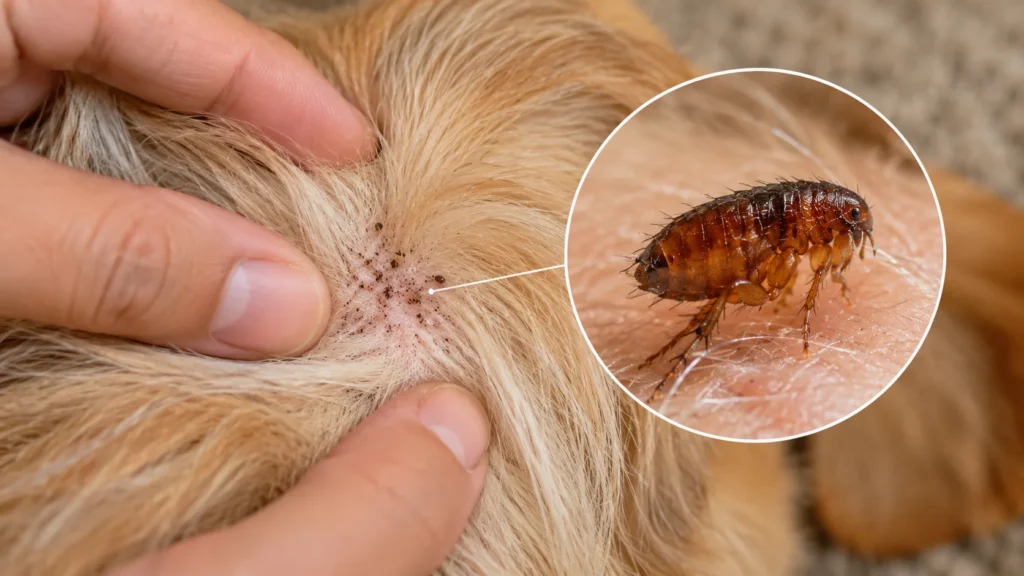
A flea usually looks like a tiny dark speck when viewed from a distance. Its body is narrow from side to side, and its long hind legs are adapted for jumping.
One important identification clue is that fleas do not have wings. If a tiny insect genuinely takes flight rather than jumping, it is not an adult flea.
Flea Activity Around Pets and Homes
Fleas can be found on pets and in places where infested animals spend time. Eggs and immature stages can occur in carpets, bedding, upholstery, and other protected areas.
Scratching pets, flea dirt, or repeatedly seeing tiny jumping insects around pet resting areas can support a flea identification, but these signs should be considered together rather than individually.
Springtails That Look Like Fleas
Springtails are among the most commonly confused bugs that look like fleas, especially when they suddenly jump across floors. They can be very small and dark, and some species are only a few millimeters long.
The major difference is that springtails are not blood-feeding parasites. They are associated with moisture, soil, fungi, algae, and decaying organic material, and they do not bite people or animals.
Tiny Jumping Springtails
Springtails can look almost identical to tiny black specks when they move quickly. Their jumping ability comes from a specialized abdominal structure called a furcula, rather than the powerful hind legs characteristic of fleas.
They are often found around damp bathrooms, kitchens, basements, houseplants, mulch, and wet soil. If the insects are concentrated in a damp location and disappear by jumping when disturbed, springtails are an important possibility.
Springtails vs Fleas
Fleas have hard, laterally flattened bodies, while springtails generally have softer, more rounded bodies. Springtails are also strongly associated with moisture, whereas fleas are associated with animal hosts and blood feeding.
This distinction is particularly useful for small bugs that look like fleas but aren't. A jumping insect in a humid bathroom is not necessarily evidence of fleas.
Mites That Look Like Fleas
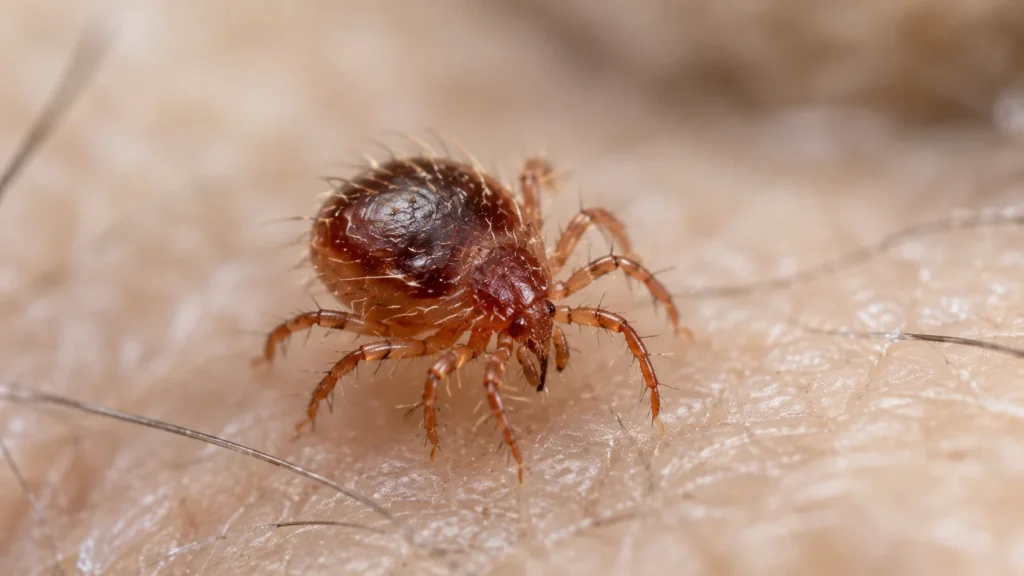
Some mites can be mistaken for fleas because they are extremely small and may appear dark or reddish when viewed without magnification. However, mites are arachnids rather than insects, so adults have eight legs, unlike the six legs of fleas.
Mites vary substantially by species. Some are associated with animals, some with plants, and others live in soil or organic material. Because of their size, accurate identification may require magnification.
Tiny Black Mites
If tiny dark organisms are crawling rather than making long jumps, mites can be considered. Their movement is generally different from the characteristic rapid jumping of fleas.
A close photograph or specimen is much more useful than trying to identify a mite from its color alone.
Mites on People or Pets
Some mites are associated with animals, while others have different habitats and do not live on humans. Therefore, seeing a tiny moving speck on skin does not automatically mean it is a flea or parasitic mite.
When an animal is persistently scratching, chewing its skin, or showing irritation, veterinary evaluation can help determine whether fleas, mites, allergies, or another condition is involved.
Carpet Beetles That Resemble Fleas
Carpet beetles are another group of small bugs that look like fleas, particularly when only the adult beetle is noticed briefly. Some carpet beetles are small, rounded, dark, or patterned insects that can occur indoors.
Unlike fleas, carpet beetles are beetles with hard wing covers. They do not have the laterally flattened flea body or flea-style jumping ability.
Adult Carpet Beetles
Adult carpet beetles may be found on walls, windows, flowers, and other areas around a home. Their bodies are generally more rounded than those of fleas.
Carpet beetle larvae are especially important indoors because they can feed on materials containing animal-derived fibers. Finding shed larval skins or larvae can provide a stronger clue than seeing one small adult beetle.
Bed Bugs That Look Like Fleas
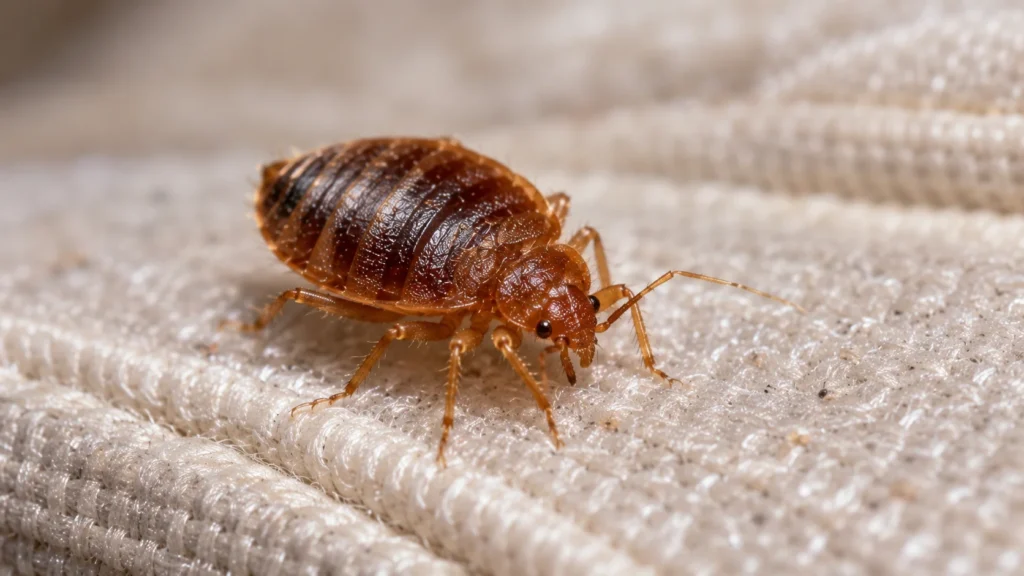
Bed bugs can be confused with fleas because both are small, wingless, blood-feeding insects that may bite people. However, their body shapes and behavior are different.
Bed bugs are generally broader and more oval, while fleas are narrower and laterally compressed. Bed bugs crawl rather than jump, which makes movement one of the useful clues during identification.
Bed Bug vs Flea Movement
A flea can suddenly jump several inches, whereas a bed bug cannot jump or fly. Bed bugs are also more strongly associated with mattresses, bed frames, upholstered furniture, and cracks near sleeping areas.
Because bite reactions can overlap, identifying the actual insect or finding physical evidence is more reliable than diagnosing the pest from skin marks alone.
Lice That Look Like Fleas
Head lice are small, wingless insects and can sometimes be included among bugs that look like fleas, particularly when someone notices a tiny insect on hair or clothing.
The habitat is the key difference. Head lice are adapted to living on human scalp hair and cannot jump or fly. Fleas, by contrast, can jump and are commonly associated with animal hosts.
Lice vs Fleas
Lice crawl along hair and remain closely associated with their host. Fleas have powerful jumping legs and a body adapted to moving through fur or feathers.
If the insects are consistently located on the scalp, especially around the ears and back of the neck, lice should be considered rather than assuming the insects are fleas.
Explore more articles:
Flea Beetles That Look Like Fleas
Flea beetles are small beetles known for their ability to jump when disturbed. This behavior makes them particularly confusing when someone sees a tiny dark insect suddenly leap away.
Unlike fleas, flea beetles have hard beetle-like bodies and are primarily associated with plants. Some species have a metallic bronze, green, blue, or dark appearance.
Flea Beetles Around Plants
Flea beetles are more likely to be found on vegetation than on pets or bedding. They can chew small holes in leaves, particularly on young plants.
Therefore, a tiny jumping insect repeatedly found on garden plants is more suggestive of a flea beetle than a household flea.
Other Bugs That Look Like Fleas
Several other small organisms can create confusion because of their size or dark coloration. Depending on the location, possibilities can include ticks, fungus gnats, small beetles, and other tiny arthropods.
Western Exterminator notes that small black mites, bed bugs, beetles, and gnats can all be mistaken for fleas.
Ticks
Ticks are especially important to distinguish from fleas because they are also parasites associated with animals and can transmit disease. However, ticks are arachnids with eight legs as adults, while fleas are insects with six.
Ticks generally crawl and attach to a host rather than performing the rapid jumping behavior associated with fleas.
Fungus Gnats
Fungus gnats are tiny flying insects commonly associated with moist potting soil. Their ability to fly immediately separates them from fleas.
If small insects are repeatedly flying around indoor plants rather than jumping across floors, fungus gnats or another plant-associated fly may be a more relevant possibility.
Small Black Beetles
Small beetles can resemble fleas at a glance because their dark bodies can appear as tiny black dots. Their hard outer wing covers and slower movement help distinguish them from fleas.
Finding hard-shelled insects around food, fabrics, plants, or windows can provide additional clues about their identity.
Flying Bugs That Look Like Fleas
A genuine adult flea does not fly. It is a wingless insect that moves by crawling and jumping. Therefore, an insect that clearly flies is another type of pest even if it looks flea-sized.
Small flying bugs that can be confused with fleas include fungus gnats, small flies, winged psocids, and some plant pests. Their wings, flight pattern, and preferred habitat provide useful identification clues.
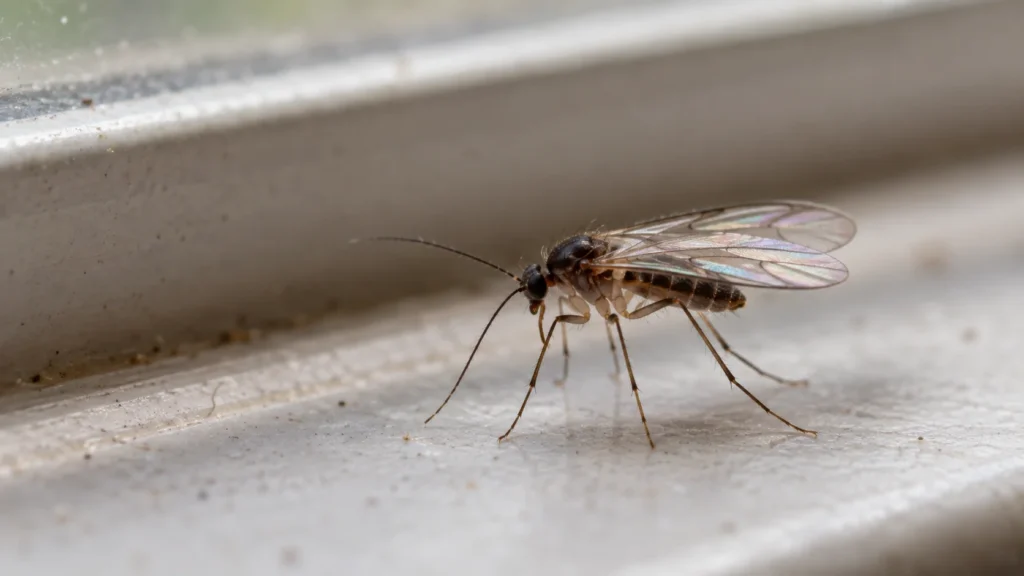
Small Flying Bugs in the House
If the insects are concentrated around windows, lights, sinks, houseplants, or damp areas, inspect the surrounding environment rather than focusing only on their color.
A photograph taken while the insect is stationary can reveal wings and body structure that are difficult to observe while it is moving.
Bugs That Look Like Fleas on Dogs
When tiny insects are noticed on a dog, fleas are an important possibility, but other parasites or debris can be mistaken for them. Adult fleas are small, dark, wingless insects that can move rapidly through fur.
Regular scratching, biting at the coat, flea dirt, or visible jumping insects can support suspicion of fleas. The CDC recommends checking pets regularly and discussing appropriate flea-control products with a veterinarian.
Tiny Black Bugs on Dogs
A tiny dark bug on a dog should not automatically be called a flea. Use a flea comb and inspect the animal's fur, especially areas where fleas commonly hide.
If the animal has persistent itching, skin irritation, hair loss, or suspected parasites, a veterinarian can distinguish fleas from mites and other causes of skin problems.
Identifying Flea Look-Alikes by Location and Movement
Location and movement provide two of the fastest ways to narrow down the possibilities. A tiny jumper in a damp bathroom points toward a different group of pests than a tiny jumper found repeatedly on garden leaves.
The following clues can help organize an identification before professional confirmation:
Moisture-Associated Locations
Bathrooms, kitchens, basements, damp soil, wet mulch, and overwatered plant pots are environments where springtails are commonly found. Their presence can indicate excessive moisture rather than a flea infestation.
Pet-Associated Locations
Carpets, pet bedding, upholstery, and areas where animals sleep deserve attention when fleas are suspected. Flea eggs and immature stages develop in the environment after eggs fall from the host.
Plant-Associated Locations
Tiny insects concentrated on leaves or around potting soil may indicate plant-associated pests such as flea beetles, whiteflies, or fungus gnats rather than fleas.
Safe Flea and Look-Alike Identification Steps
Avoid treating every tiny jumping insect as a flea. Misidentification can lead to unnecessary pesticide use while leaving the actual cause unresolved.
Start by observing the insect's movement, checking whether it has wings, noting its location, and examining pets or plants when appropriate. A close photograph can also make professional identification easier.
Professional Identification
If the insects are numerous, repeatedly appearing indoors, biting, affecting pets, or impossible to identify, a pest professional or appropriate veterinary/extension service can help determine the species.
Correct identification is especially useful because springtails require moisture management, while genuine flea infestations may require coordinated treatment of pets and indoor environments.
10 Quick Points for Identifying Bugs That Look Like Fleas
- True fleas are wingless insects.
- Adult fleas have six legs and powerful hind legs.
- Fleas have laterally flattened bodies.
- Springtails can jump but do not bite people or pets.
- Springtails are strongly associated with damp environments.
- Bed bugs crawl and do not jump like fleas.
- Ticks have eight legs as adults because they are arachnids.
- Flea beetles jump but are associated primarily with plants.
- A clearly flying insect is not an adult flea.
- Pets, moisture, plants, and the insect's movement can provide important identification clues.
Conclusion
There are many bugs that look like fleas, but similar size or dark coloration does not mean they are the same pest. Springtails are especially easy to confuse with fleas because they jump, while bed bugs, carpet beetles, flea beetles, mites, lice, ticks, and fungus gnats can resemble fleas in other ways.
The most reliable identification comes from combining body structure, number of legs, movement, habitat, and association with pets or plants. A tiny jumping bug in a damp bathroom may have a very different explanation from a dark insect found in pet bedding.
If true fleas are confirmed, remember that their four-stage life cycle includes eggs, larvae, pupae, and adults, so controlling only the visible jumping insects may not eliminate an established infestation.
Are there bugs that look like fleas?
Yes. Springtails, flea beetles, carpet beetles, bed bugs, lice, ticks, mites, and some small flying insects can be mistaken for fleas.
What are the little bugs that look like fleas and jump?
Springtails and flea beetles are two important possibilities. Springtails are strongly associated with moisture, while flea beetles are commonly associated with plants.
What are tiny black bugs that look like fleas in a house?
Possible explanations include fleas, springtails, small beetles, mites, or other tiny insects. Their movement and location are important for distinguishing them.
What bugs look like fleas but do not jump?
Bed bugs, lice, ticks, and many small beetles can resemble fleas without having the same jumping behavior. Ticks and lice also differ from fleas in body structure and habitat.
What bugs look like fleas but fly?
Fungus gnats, small flies, winged psocids, and other tiny flying insects may be mistaken for fleas. Adult fleas are wingless and cannot fly.
What bugs look like fleas on dogs?
Fleas are an important possibility, but mites, ticks, debris, and other small organisms can also be mistaken for fleas. Persistent itching or skin irritation should be evaluated by a veterinarian.
Can springtails be mistaken for fleas?
Yes. Their small size and jumping movement can make them look very similar. Springtails, however, are associated with moisture and do not bite people or pets.
Do fleas have wings?
No. Adult fleas are wingless and use their powerful hind legs to jump.