

Rats live in a wide range of environments, from fields, forests, and riverbanks to city streets, sewers, gardens, and buildings. The exact place depends on the species, local climate, food supply, and availability of shelter. Some rats spend much of their time underground, while others prefer trees, roof spaces, or elevated nesting sites.
If you are wondering where rats live in a house or where they hide during the day, the answer often comes down to finding a quiet, sheltered location close to food and water. Understanding rat habitats can help you recognise signs of activity, identify likely entry points, and take practical steps to prevent an infestation.
Where Do Rats Live in the Wild?
Wild rats typically settle in places that offer shelter from predators and weather, access to food, and opportunities to build nests. Their habitats vary by species, but many rats adapt well to environments changed by human activity.
Common wild habitats include:
- Underground burrows: Some rats dig tunnels beneath soil, banks, gardens, fields, and the edges of buildings.
- Rock piles and crevices: Gaps between rocks, fallen timber, and other sheltered spaces provide protection.
- Vegetation and woodland edges: Dense ground cover can offer hiding places and access to seeds, fruit, and insects.
- Riverbanks and wetlands: Some species live near water where vegetation and food sources are available.
- Agricultural areas: Farms, grain stores, animal-feed areas, and field margins may provide food and shelter.
- Human settlements: Rats often thrive around rubbish, drains, warehouses, and buildings where food is easy to find.
Not all animals commonly called rats belong to the same species. Their preferred habitats can be very different, so identifying the type of rodent is useful when interpreting its behaviour.
Where Do Rats Live in a House?
Rats can enter buildings through gaps around pipes, damaged vents, door openings, roof edges, and other access points. Once inside, they tend to choose sheltered areas where they can remain undisturbed and travel to food or water.
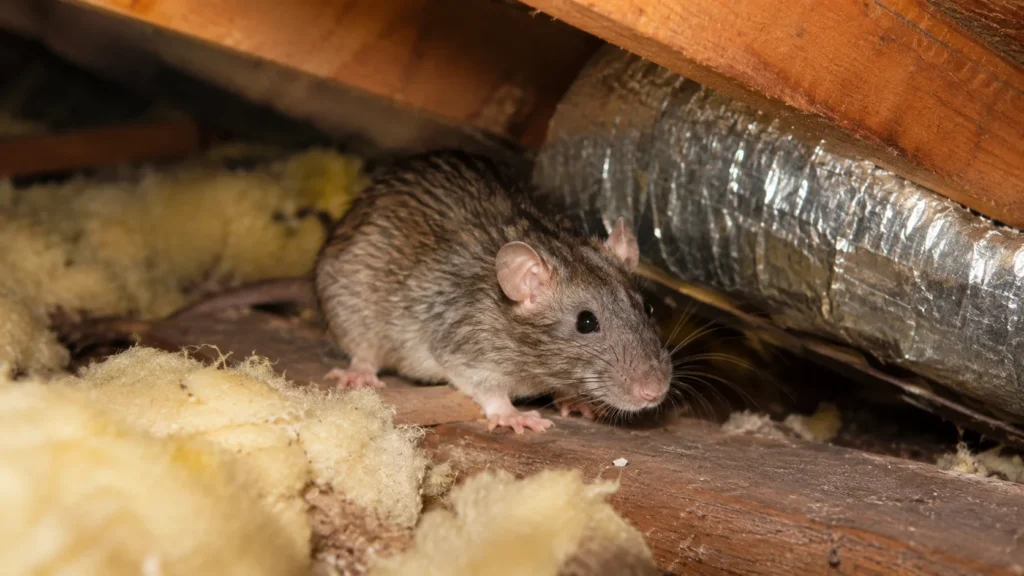
Common indoor hiding places include:
1. Attics and Roof Spaces
Roof rats are particularly associated with elevated areas. They may nest in attics, roof voids, ceiling spaces, and wall cavities close to the roofline. Insulation and stored materials can provide nesting material, while branches touching the building may offer access to the roof.
Signs include scratching overhead, droppings along beams, gnawed materials, and nesting debris.
2. Wall Cavities and Ceilings
Rats may travel through gaps around pipes, wiring, and structural openings. Wall cavities provide shelter, although the exact location of a nest can be difficult to determine from scratching sounds alone.
If you hear repeated movement inside a wall, avoid sealing every opening immediately. A rat could become trapped inside. Identify likely entry and exit points and consider professional help if the animal cannot be reached safely.
3. Basements and Crawlspaces
Basements and crawlspaces can provide dark, sheltered environments with access to plumbing, foundation gaps, and stored items. Norway rats, in particular, are often associated with lower levels of buildings and burrows near foundations.
Check for droppings, gnaw marks, disturbed insulation, and openings around utility pipes. Moisture problems and clutter may make these areas more attractive to rodents.
4. Kitchens and Pantries
Rats may shelter behind refrigerators, ovens, cupboards, and other appliances. They can also enter spaces beneath cabinets or around plumbing connections.
Food crumbs, uncovered rubbish, pet food, and poorly sealed pantry goods can attract them. Keep food in sturdy, sealed containers and investigate any repeated signs of activity.
5. Garages, Sheds, and Storage Rooms
Garages and sheds often contain cardboard, fabric, garden supplies, animal feed, and other materials that rats can use for shelter or nesting.
Store goods in rodent-resistant containers, keep rubbish secured, and reduce clutter along walls. Inspect the base of doors and the edges of the building for gaps that could allow entry.
Where Do Rats Live During the Day?
Rats commonly rest in sheltered nests during daylight and become more active when the surroundings are quieter, often at night. However, their activity patterns vary according to food availability, disturbance, and the species involved.
During the day, rats may hide in:
- Underground burrows near buildings or gardens.
- Attics, roof voids, and ceiling spaces.
- Wall cavities and spaces beneath floors.
- Dense vegetation, wood piles, or garden structures.
- Sewers, drains, and other sheltered urban locations.
- Stored materials in garages, sheds, and outbuildings.
Seeing a rat during daylight does not automatically mean the infestation is severe. Rats may emerge during the day when food is readily available or when their usual hiding places are disturbed. Repeated daytime sightings, particularly alongside droppings or damage, are a reason to investigate further.
Where Do Roof Rats Live?
Roof rats, also called black rats (Rattus rattus), are agile climbers that often favour elevated nesting locations. Their habitats can include trees, shrubs, roof spaces, lofts, and upper portions of buildings.
They may enter properties by climbing branches, fences, cables, or other structures that provide access to roofs. Inside a building, they can travel through roof voids and other elevated spaces.
Signs of possible roof-rat activity include:
- Scratching or movement above ceilings.
- Droppings in attics or near roof access points.
- Gnaw marks around roofline openings.
- Nesting materials in elevated, sheltered areas.
- Rodent activity near trees or climbing routes beside a building.
Trim vegetation away from roofs where practical, repair damaged vents, and seal suitable openings with rodent-resistant materials. Because different rat species can occupy overlapping habitats, these signs alone cannot confirm the species.
Explore more articles:
- Fruit Flies vs Gnats
- Rat vs Mouse
- Bugs That Look Like Flying Termites
- Bugs That Look Like Fleas
- What Do Fleas Look Like?
- Wood Ants vs Termites
- What Are Centipedes Attracted To?
- What Do Drain Flies Look Like
- What Do Baby Black Widows Look Like?
- Deer Mouse vs House Mouse
- Bugs That Look Like Lice
- Mice in Walls but Not in House
Where Do Norway Rats Live?
Norway rats (Rattus norvegicus), often called brown rats, commonly live at ground level or below it. They are adaptable animals that may occupy urban, suburban, and rural environments.
Typical locations include:
- Burrows beneath soil, banks, and building foundations.
- Areas beside drains and sewer systems.
- Basements, cellars, and lower building spaces.
- Rubbish storage areas and waste facilities.
- Farms, animal housing, and grain-storage locations.
- Riverbanks, ditches, and other sheltered outdoor sites.
Norway rats often excavate burrows when the soil and surroundings permit. They may also shelter inside buildings, particularly where access to food and suitable nesting areas is available.
If you find a burrow near your home, do not assume it belongs to a rat based on its appearance alone. Other animals can create similar openings.
Where Do Black, Brown, and Field Rats Live?
The names used for rats can overlap, and common names are not always reliable indicators of species. The following comparisons describe broad habitat tendencies rather than rules that apply everywhere.
| Common name | Typical habitat tendencies |
| Black rat or roof rat | Trees, shrubs, roof spaces, attics, and elevated parts of buildings |
| Brown rat or Norway rat | Ground-level areas, burrows, sewers, basements, and building foundations |
| Field rat | A broad, informal term that may refer to different species living in fields, crops, or rural areas |
| Wood rat or pack rat | Often rocky areas, woodland edges, desert habitats, and sheltered sites where nests can be built |
The best way to identify a rodent is to consider its physical characteristics, droppings, location, and other evidence together. If identification affects the control method, ask a qualified professional rather than relying on the habitat alone.
Where Do Rats Live in Cities?
City rats are well adapted to environments where food and shelter are regularly available. Urban areas may provide rubbish, food waste, sewer systems, transport infrastructure, construction gaps, and sheltered spaces beneath buildings.

Rats can live around:
- Restaurants, markets, and food-storage areas.
- Waste collection points and rubbish bins.
- Drains and sewer networks.
- Parks, gardens, and landscaped areas.
- Warehouses, loading areas, and commercial buildings.
- Construction sites and gaps around building foundations.
Poor waste management can increase the availability of food, but rats may also live in otherwise clean neighbourhoods. Structural access and nearby nesting locations matter as well.
To reduce the likelihood of rats around a property, secure rubbish, avoid leaving food outdoors, maintain drainage and building structures, and report persistent activity to the appropriate property manager or local authority.
Where Do Rats Live in the World?
Rats occur across many parts of the world, although distribution differs by species. Some are native to particular regions, while others have spread widely through trade, transport, and human settlement.
Norway rats and black rats are now found in many regions, including parts of North America, Europe, Asia, Africa, and Australia. Their ability to use buildings, ports, farms, and urban infrastructure has helped them establish populations far beyond their original ranges.
Other animals with “rat” in their common names have much narrower or very different distributions. For example, kangaroo rats are native to North American habitats, while naked mole-rats are native to parts of East Africa. These animals are not ordinary members of the genus Rattus and should not be assumed to share the same habits.
Where Do Kangaroo Rats Live?
Kangaroo rats are small rodents adapted to dry environments in North America. Many species inhabit deserts, semi-arid regions, and other areas with sandy or loose soils suitable for burrowing.
They often use underground burrows for shelter from temperature extremes and predators. Seeds form an important part of the diet of many species, and their food-gathering behaviour is adapted to environments where water may be scarce.
Despite their name, kangaroo rats are not true rats of the genus Rattus. They belong to a different rodent group and have distinctive adaptations, including powerful hind legs used for hopping.
Where Do Naked Mole-Rats Live?
Naked mole-rats live underground in parts of East Africa, including regions of Ethiopia, Kenya, and Somalia. They inhabit complex burrow systems in suitable soils and are highly adapted to subterranean life.
Unlike common house rats, naked mole-rats live in organised colonies with specialised social roles. They feed primarily on underground plant parts, including tubers and roots.
They are not animals that normally invade homes in the same way as Norway rats or roof rats. Their unusual biology makes them a distinct example of underground rodent life.
Where Do Pack Rats and Wood Rats Live?
Pack rats, commonly associated with wood rats in North America, can inhabit deserts, rocky landscapes, woodland edges, and other environments with suitable shelter.
Depending on the species, their nests may be built among rocks, in cavities, around vegetation, or inside structures. Some collect plant material and other objects near their nests, which is why the name “pack rat” is often used.
If one enters a shed, garage, or attic, inspect for nesting debris, droppings, and stored materials that may provide shelter. Avoid reaching into a nest or handling a wild rodent directly.
Where Do Rats Live in Winter?
Rats do not all respond to winter in the same way, but many seek sheltered locations when temperatures fall. They may move into burrows, buildings, storage areas, or protected spaces where food and warmth are easier to find.
In cold regions, garages, basements, attics, and wall cavities may provide protection from harsh weather. Outdoor rats may also remain active if conditions and food supplies permit.
To reduce the chance of rats moving indoors during colder months:
- Seal gaps around pipes, doors, vents, and foundations.
- Store food and animal feed securely.
- Keep rubbish containers closed.
- Remove clutter near the building.
- Inspect garages, sheds, and roof spaces for fresh signs of activity.
Winter does not necessarily cause an infestation, but buildings with accessible food, shelter, and entry points can become attractive nesting locations.
How Can You Tell Where Rats Are Hiding?
Finding the likely hiding place is often the first step toward controlling a rat problem. Rather than opening walls or disturbing nests, look for evidence along edges and in sheltered areas.
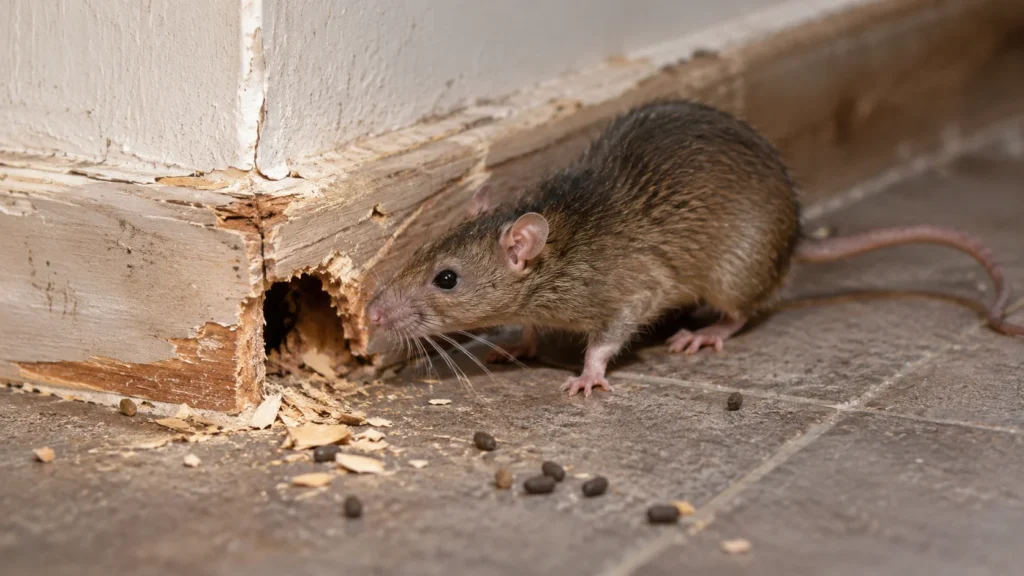
Check for:
- Droppings: Near food sources, walls, stored goods, or suspected routes.
- Gnaw marks: Around packaging, wood, plastic, and possible entry points.
- Nesting debris: Shredded paper, fabric, insulation, or other gathered materials.
- Sounds: Repeated scratching or movement in a specific area.
- Entry gaps: Openings around pipes, doors, roof edges, and foundations.
- Outdoor burrows: Holes near sheltered areas, while remembering that other animals may use burrows too.
Do not sweep or vacuum dry rodent droppings. Follow the CDC's instructions for safe cleanup, available in its rodent-control guidance.
If activity appears to be inside a wall, roof void, or another inaccessible area, professional inspection can help locate the source without unnecessary damage.
Conclusion
Rats live in a variety of places, from underground burrows and wild habitats to city sewers, gardens, attics, and wall cavities. Where a rat settles depends on its species, the local environment, and access to food, water, and shelter. Roof rats often favour elevated spaces, while Norway rats are commonly associated with ground-level areas and burrows.
If you suspect rats in your home, look for droppings, gnaw marks, nesting materials, and repeated sounds rather than relying on sightings alone. Secure food, remove accessible rubbish, seal suitable entry points, and use appropriate control methods. Persistent activity or rodents in inaccessible spaces may require help from a pest-control professional.
1. Where do rats usually live?
Rats may live in burrows, sewers, vegetation, sheds, attics, wall cavities, and other sheltered places. Their preferred habitat depends on the species and the availability of food and nesting sites.
2. Where do rats hide during the day?
They often rest in burrows, roof spaces, wall cavities, basements, dense vegetation, or stored materials. Many become more active at night, although daytime activity can occur.
3. Where do rats live in a house?
Common locations include attics, wall cavities, basements, crawlspaces, garages, and spaces behind kitchen appliances. They often choose sheltered places near food or water.
4. Do rats live in walls?
Yes. Rats can enter and travel through wall cavities and structural gaps. Repeated scratching sounds may indicate activity, but other causes should also be considered.
5. Where do roof rats live during the day?
Roof rats often shelter in trees, shrubs, attics, roof voids, and other elevated spaces. They may leave these hiding places to find food when surroundings are quieter.
6. Where do Norway rats live?
Norway rats commonly inhabit ground-level areas, burrows, sewers, basements, riverbanks, and sheltered spaces around buildings. They may also nest indoors where food and access are available.
7. Where do wild rats live naturally?
Depending on the species, wild rats may inhabit grasslands, woodland edges, riverbanks, rocky areas, fields, and other environments with shelter and food. Some species are now closely associated with human settlements.
8. Where do rats go in winter?
Rats may seek burrows, buildings, sheds, and other protected places when conditions become cold. Some remain outdoors if the habitat provides enough shelter and food.
9. Where do rats build their nests?
Rats may build nests in underground burrows, roof spaces, wall cavities, dense vegetation, or piles of stored materials. They commonly use shredded paper, fabric, vegetation, and other soft materials.
10. Do rats live in trees?
Some rats, particularly roof rats, are agile climbers and may shelter or nest in trees and shrubs. Other species are more commonly associated with ground-level burrows or underground spaces.