
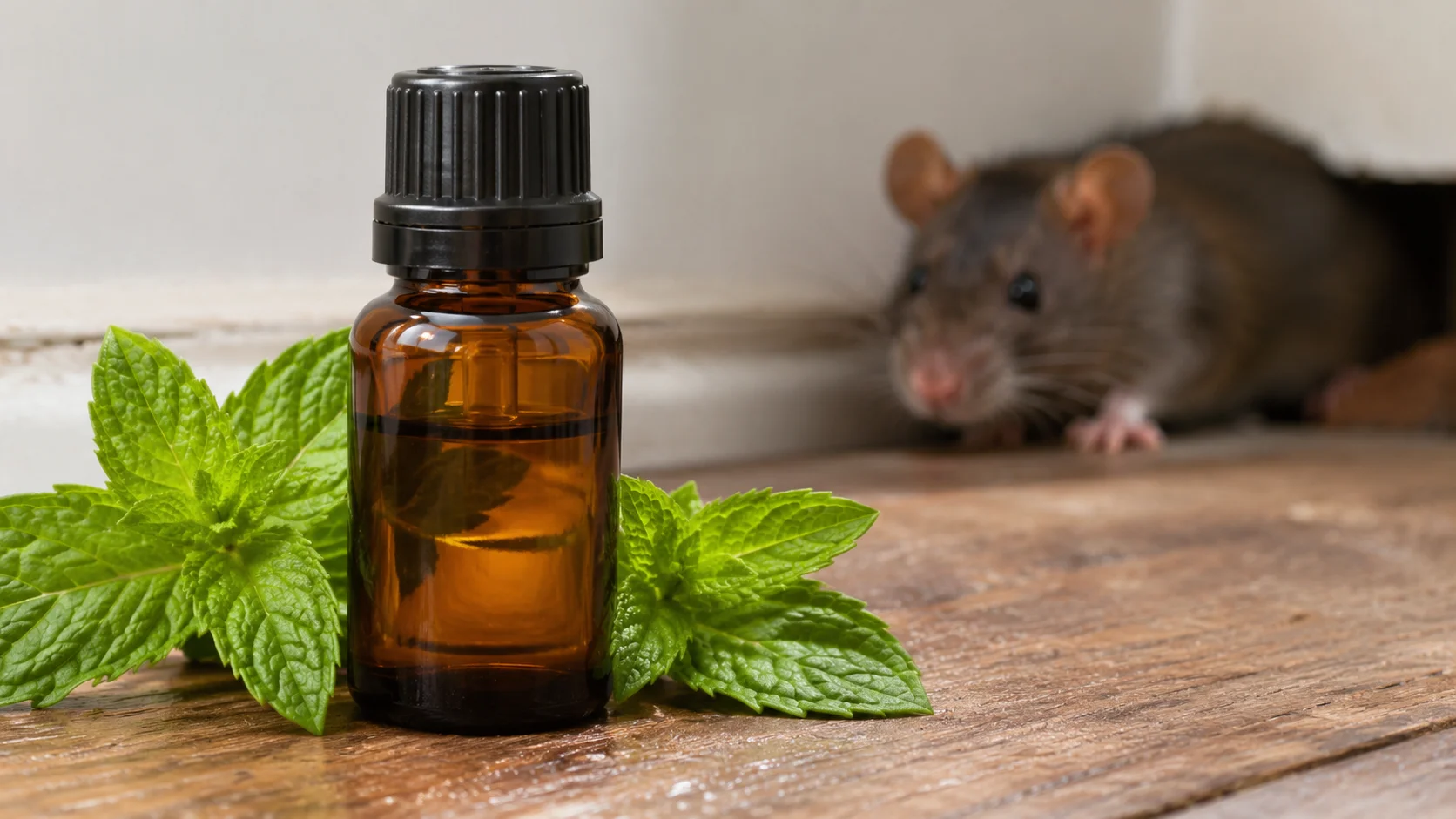
Peppermint oil is often promoted as a natural way to deter rats from homes, garages, gardens, and vehicles. Its strong minty aroma may seem like a simple alternative to traps or chemical rodenticides, and ready-made peppermint sprays are widely marketed for rodent control. However, a strong smell does not necessarily mean rats will stay away for long.
Peppermint oil should be treated as a possible short-term deterrent, not a proven solution for an established rat infestation. Its effectiveness can vary, and the scent fades over time. For more reliable control, combine sensible prevention measures—such as securing food, removing rubbish, and sealing entry points—with suitable trapping or professional pest management when necessary. Let's learn how to use peppermint oil for rats.
Does Peppermint Oil Actually Work for Rats?
Peppermint oil may temporarily discourage some rats from entering a small area, but there is not strong evidence that it reliably eliminates or prevents an established infestation. Its strong aroma is the main reason it is marketed as a repellent, yet rats can become accustomed to smells or continue visiting when food and shelter are readily available.
Pest-control guidance from Rentokil discusses the limitations of peppermint oil as a rat-control method. Similarly, Orkin's guidance on natural rat deterrents explains why household repellents should not be relied on as the sole answer to rodent activity.
Peppermint oil is most reasonably considered an optional supplementary measure. It should not replace trapping, sanitation, sealing entry points, or professional help when rats continue to appear.
How to Use Peppermint Oil for Rats
If you decide to try peppermint oil, use it cautiously and avoid applying concentrated essential oil directly to surfaces where children or animals may touch it.
1. Choose an Appropriate Product
Look for a clearly labelled peppermint essential oil or a ready-made rodent-repellent spray specifically intended for the location where you plan to use it.
Check the ingredients, application instructions, warnings, and any restrictions on indoor or outdoor use. A product marketed as a rodent repellent is not automatically proven effective in every situation.
2. Apply Only as Directed
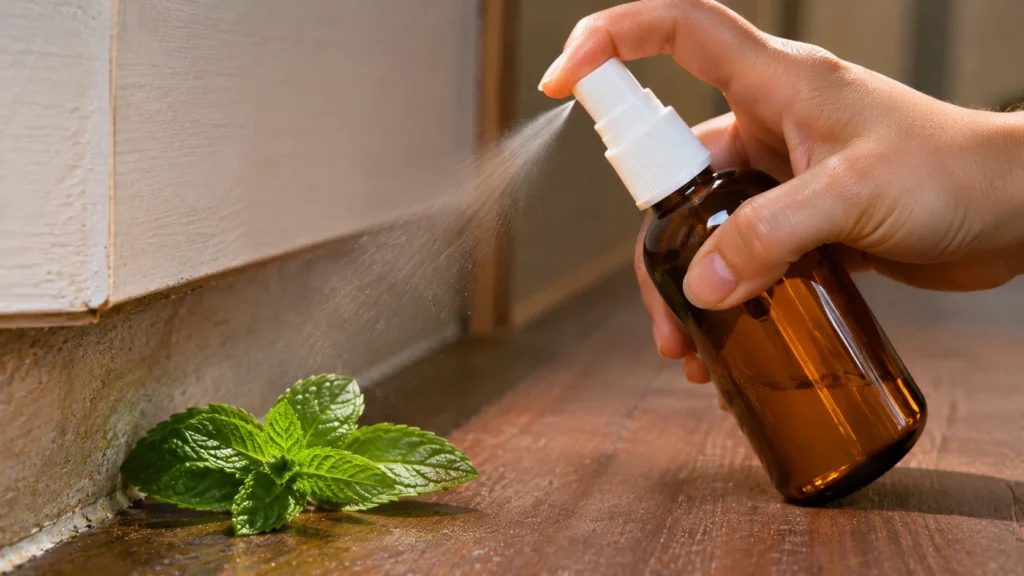
If using a ready-made spray, follow the manufacturer's directions regarding where to apply it, how much to use, and how often to reapply it.
Avoid spraying food-preparation surfaces, food containers, electrical components, air intakes, or areas where pets sleep. Do not apply concentrated oil directly to a rat, a trap, or a rat's nest.
3. Monitor for Continuing Activity
Look for fresh droppings, gnaw marks, damaged food packaging, and other signs of rats after applying the product.
If activity continues, do not keep increasing the amount of oil in an attempt to overpower the smell. Switch your attention to finding entry points, removing food sources, and using a suitable rodent-control method.
How to Mix Peppermint Oil With Water for Rats
People often search for a peppermint-oil-to-water ratio for homemade rat spray. However, there is no well-established, scientifically validated dilution ratio that guarantees rats will be repelled safely and effectively.
Essential oils do not mix evenly with plain water. A homemade mixture can separate, leaving concentrated droplets on surfaces even when the bottle appears diluted.
If you still wish to make a spray, consider these precautions:
- Prefer a ready-made product with clear application and safety instructions.
- Do not assume that adding more peppermint oil will improve the result.
- Do not mix essential oil with water and spray it around pets or children without assessing exposure risks.
- Never mix peppermint oil with pesticides or other cleaning chemicals unless the product instructions explicitly permit it.
- Keep homemade mixtures in clearly labelled containers and away from food and drink.
A product formulated for use as a spray may include ingredients that help it disperse more evenly. Follow its label rather than borrowing a recipe from an online post.
Explore more articles:
- Fruit Flies vs Gnats
- Rat vs Mouse
- Bugs That Look Like Flying Termites
- Bugs That Look Like Fleas
- What Do Fleas Look Like?
- Wood Ants vs Termites
- What Are Centipedes Attracted To?
- What Do Drain Flies Look Like
- What Do Baby Black Widows Look Like?
- Deer Mouse vs House Mouse
- Bugs That Look Like Lice
- Do Mice Hate Peppermint
- Mice Exterminator Near Me
How to Make Peppermint Oil Spray for Rats
A homemade peppermint spray is often described as a mixture of peppermint oil and water in a spray bottle. Although this is simple to prepare, plain water does not reliably disperse essential oil, and the resulting mixture has no established effectiveness against rats.
For this reason, a ready-made product intended for rodent repelling is generally the more straightforward option if you want to try this approach. Use it only in the places and at the frequency permitted by its label.
If you have already prepared a homemade mixture, do not spray it indiscriminately throughout the home. Keep it away from pets, children's play areas, food, bedding, and sensitive surfaces. Discontinue use if it causes irritation or breathing discomfort.
Where to Apply Peppermint Oil for Rats
The location matters as much as the product. However, using peppermint oil in a particular area does not guarantee that rats will avoid it.
Peppermint Oil for Rats in the House
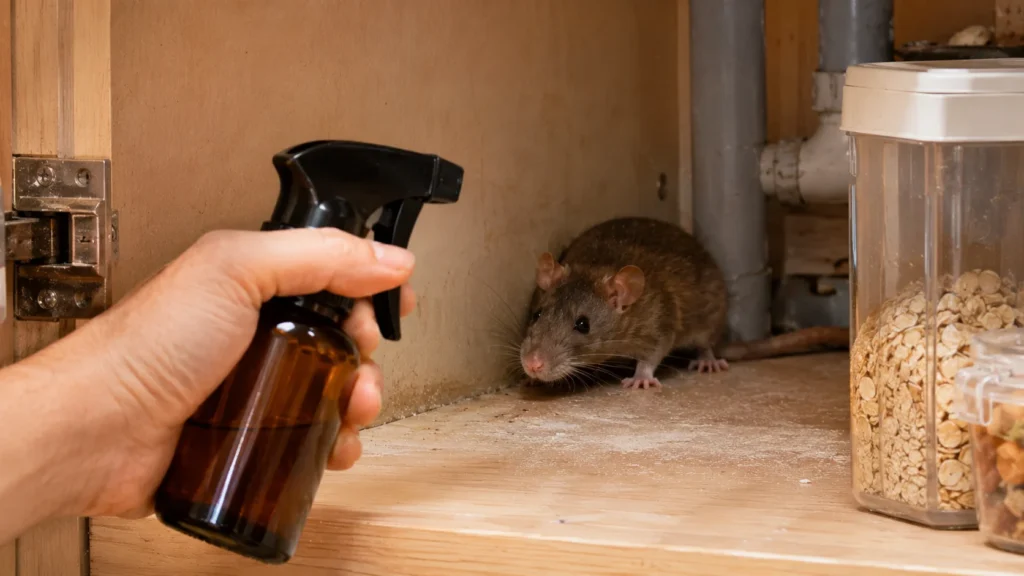
If rats have been seen in a kitchen, pantry, garage, or utility room, first remove accessible food and rubbish. Inspect the room for gaps around pipes, doors, and cabinets.
Do not spray peppermint oil directly onto pantry shelves, utensils, or food-contact surfaces unless the product specifically permits that use. The priority should be securing food and addressing the source of rodent activity.
Peppermint Oil for Rats in a Car
Some people use peppermint oil in vehicles in an attempt to discourage rodents from nesting in the engine compartment or cabin.
However, oil can leave residues, and strong fragrances may be unpleasant in an enclosed vehicle. Never spray it onto wiring, electrical connectors, engine components, air intakes, pedals, or other moving or safety-critical parts.
If you suspect rats are entering your car, remove food wrappers, inspect for nesting material, and seek a mechanic's help if there are signs of chewed wiring. A fragrance alone will not repair damage or reliably prevent rodents from returning.
Peppermint Oil for Rats Outside
Outdoor use presents additional challenges because wind, rain, sunlight, and changing temperatures can reduce or disperse the scent.
If you use a labelled outdoor product, follow its directions and consider whether pets, birds, or other wildlife may encounter the treated area. Do not apply essential oil indiscriminately to plants, soil, water, or animal habitats.
For outdoor rat problems, secure rubbish bins, remove fallen fruit, store birdseed properly, and reduce clutter near buildings.
Peppermint Oil for Rats in an Attic or Wall Cavity
Do not pour oil into wall cavities, loft insulation, ducts, or other inaccessible spaces. This can leave residues, expose occupants to concentrated fragrance, and fail to reach the rat.
If you hear scratching or find droppings in a wall or attic, inspect accessible areas safely and arrange professional assistance if necessary. A hidden infestation needs a control plan, not just a stronger smell.
What Is the Best Peppermint Oil for Rats?
There is no independently established best peppermint oil for rats that guarantees effective control. When comparing products, consider the intended use, clear labelling, ingredient transparency, application instructions, and safety precautions rather than fragrance strength alone.
| Product type | What to consider |
| Pure peppermint essential oil | Highly concentrated; requires careful handling and is not a proven standalone rat treatment |
| Ready-made peppermint rodent spray | Check whether it is labelled for indoor or outdoor use and follow all directions |
| Peppermint oil balls or sachets | Check ingredients, exposure risks, and whether the product is intended for rodent control |
| Peppermint oil mixed with other scents | More ingredients do not guarantee better results; assess each ingredient and its warnings |
Terms such as 100% pure, extra strong, or maximum strength describe marketing or formulation characteristics, not proof that a product will eliminate rats.
Where to Buy Peppermint Oil for Rats
Peppermint essential oil and rodent-repellent products may be available from:
- Pharmacies and shops selling essential oils.
- Home-improvement and hardware stores.
- Garden and pest-control supply retailers.
- Online marketplaces and manufacturers' websites.
Searches such as peppermint oil for rats where to buy, peppermint oil for rats near me, or peppermint oil spray for rats can help you locate options. Availability varies by country and retailer.
Before purchasing, check the product's intended use, ingredient list, directions, and return policy. Do not assume that an ordinary aromatherapy oil has been tested or registered as a rodent repellent.
Is Peppermint Oil Safe Around Pets?
Peppermint essential oil is concentrated, and careless use can expose animals to substances that may be harmful. Safety depends on the species, concentration, route of exposure, and formulation.
The ASPCA's essential-oil safety guidance warns that concentrated essential oils can pose risks to pets, including through skin contact or ingestion. The ASPCA also lists mint as potentially toxic to dogs and cats when significant quantities are ingested, with essential oils identified as the toxic principle: ASPCA mint safety information.
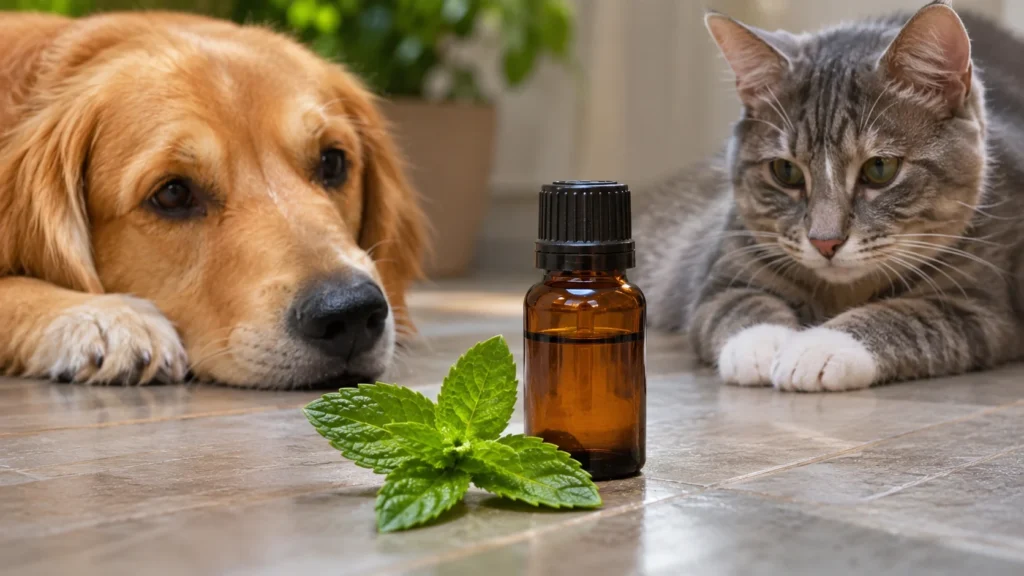
Take particular care if you have cats, dogs, rabbits, guinea pigs, hamsters, or birds. Avoid applying peppermint oil to animals or placing oil-soaked cotton balls where pets can chew them or come into direct contact with the oil. If an animal shows signs of illness after exposure, contact a veterinarian promptly.
Better Ways to Keep Rats Away
Rather than relying on peppermint oil alone, use practical prevention and control measures.
Remove Food and Water Sources
Keep dry foods and pet food in sturdy, sealed containers. Clean up crumbs and spills, secure rubbish, and repair leaking pipes where possible. Avoid leaving pet food out overnight.
Seal Entry Points
Inspect gaps around doors, pipes, vents, foundations, and rooflines. Seal suitable openings with durable, rodent-resistant materials.
The CDC's guide to sealing rodent entry points explains how to inspect a property and reduce opportunities for rodents to enter.
Use Appropriate Traps
If you find signs of rats, choose a trap designed for rats and position it according to the manufacturer's instructions. Keep traps inaccessible to children and pets.
The CDC recommends trapping around the home when there is evidence of rodent activity and continuing until signs stop. See its rodent-trapping guidance.
Seek Professional Help if Necessary
If rats repeatedly return, are living inside walls or ceilings, or have damaged wiring, professional pest control may be the most practical option. A qualified provider can inspect the property, identify access points, and recommend suitable treatment.
Conclusion
Peppermint oil for rats is a popular home remedy, but its effectiveness is uncertain and it should not be treated as a reliable way to eliminate an infestation. Although the strong scent may provide temporary deterrence in some circumstances, it does not address food sources, nesting sites, or openings that allow rats to enter.
If you choose to use peppermint oil, follow the product instructions and take care around pets, children, food, and electrical equipment. For more dependable results, secure rubbish and food, seal entry points, monitor for rodent activity, and use suitable traps or professional pest control when needed.
Does peppermint oil work for rats?
Peppermint oil may temporarily discourage some rats, but strong evidence that it reliably controls infestations is lacking. It should be used, if at all, as a supplementary measure rather than a replacement for established rodent-control methods.
How do you use peppermint oil for rats?
Use a product specifically intended for the proposed application and follow its label. Avoid applying concentrated oil directly to surfaces, animals, food, or inaccessible cavities. Monitor for continuing rat activity and address entry points and food sources.
What is the ratio of peppermint oil to water for rats?
There is no scientifically validated ratio that guarantees effective rat repellence. Essential oil does not mix evenly with plain water, so homemade sprays may contain concentrated droplets. A properly labelled ready-made product is a more straightforward option.
What is the strongest peppermint oil for rats?
No particular strength has been shown to guarantee rat control. A stronger concentration may increase exposure risks without providing dependable results. Choose products based on their intended use, instructions, and safety information rather than strength claims.
Can peppermint oil keep rats out of a car?
It is not a dependable method for preventing rats from entering a vehicle. Remove food debris, check for nesting material, and have suspected wiring damage inspected by a mechanic. Avoid spraying oil on electrical or mechanical components.
Can I put peppermint oil on cotton balls for rats?
Cotton balls soaked in concentrated oil can create direct-contact and ingestion risks, particularly for pets and children. They are also not a proven solution for an infestation. If using any commercial product, follow its instructions and keep it inaccessible to animals.
Is peppermint oil safe around cats and dogs?
Concentrated essential oils can be harmful to pets, and peppermint oil warrants particular caution. Do not apply it to animals or allow them to lick or chew oil-soaked materials. Ask a veterinarian for advice if exposure occurs.
How often should I spray peppermint oil for rats?
There is no universally effective reapplication schedule. If using a labelled repellent, follow its stated frequency and restrictions. Repeated spraying will not resolve a persistent infestation if rats still have access to food, shelter, and entry points.
Does peppermint oil repel both rats and mice?
Some products are marketed for both, but effectiveness varies and should not be assumed. For either pest, removing food sources, sealing gaps, and using appropriate traps are more dependable steps than relying on scent alone.
Where can I buy peppermint oil for rats?
You may find peppermint oil or rodent-repellent sprays at essential-oil retailers, hardware stores, garden centres, pest-control suppliers, and online marketplaces. Verify the product's ingredients, intended use, safety directions, and local availability before buying.