
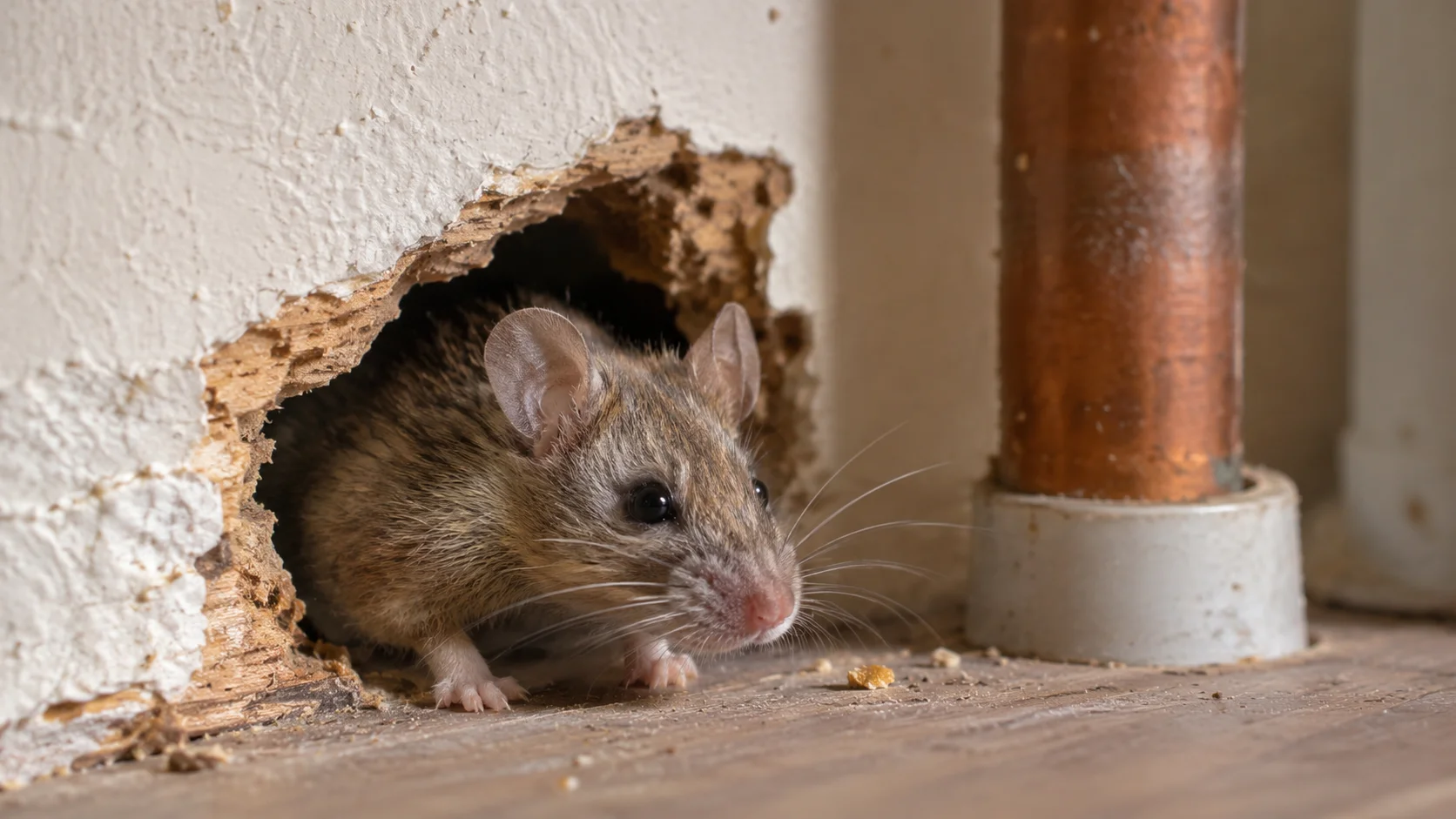
Finding a mouse in your home can be surprising, especially when doors and windows are usually kept closed. However, mice are excellent at squeezing through small openings, climbing rough surfaces, and exploring hidden spaces around buildings. They may enter through gaps near pipes, damaged vents, garage doors, rooflines, or foundations without being noticed.
Understanding how mice get in your house is the first step towards preventing an infestation. Mice usually enter in search of food, water, warmth, and shelter. Once inside, they can hide behind kitchen appliances, nest in wall cavities, and move between floors through concealed gaps. Identifying their entry points and removing the conditions that attract them can help keep your home mouse-free.
How Do Mice Get in Your House?
Mice usually enter houses through small openings in walls, foundations, doors, roofs, and utility penetrations. They can squeeze through surprisingly narrow gaps because their flexible bodies allow them to pass through openings only a few millimetres wide, depending on the mouse's size.
According to Orkin's guide to how mice enter houses, rodents can exploit openings around building materials and utility lines to gain access indoors.
Common entry points include:
- Gaps around water pipes, cables, and heating equipment.
- Cracks in foundations and exterior walls.
- Spaces beneath poorly sealed doors.
- Damaged window screens and ventilation covers.
- Openings around roof edges, eaves, and attic vents.
- Garage doors that do not close tightly.
- Gaps where extensions, porches, or utility structures meet the house.
A mouse does not need an obviously broken window or an open front door to enter. Even a small, overlooked gap can provide access.
Explore more articles:
- Fruit Flies vs Gnats
- Rat vs Mouse
- Bugs That Look Like Flying Termites
- Bugs That Look Like Fleas
- What Do Fleas Look Like?
- Wood Ants vs Termites
- What Are Centipedes Attracted To?
- What Do Drain Flies Look Like
- What Do Baby Black Widows Look Like?
- Deer Mouse vs House Mouse
- Bugs That Look Like Lice
- Do Mice Hate Peppermint
- Mice Exterminator Near Me
How Small a Hole Can a Mouse Fit Through?
Mice can squeeze through openings around 6 millimetres wide, approximately the diameter of a pencil, although the precise size depends on the individual animal and the shape of the opening.
Their flexible skeletons and narrow bodies allow them to pass through spaces that appear too small to be possible entry points. If a mouse can get its head through a gap, the rest of its body may follow.
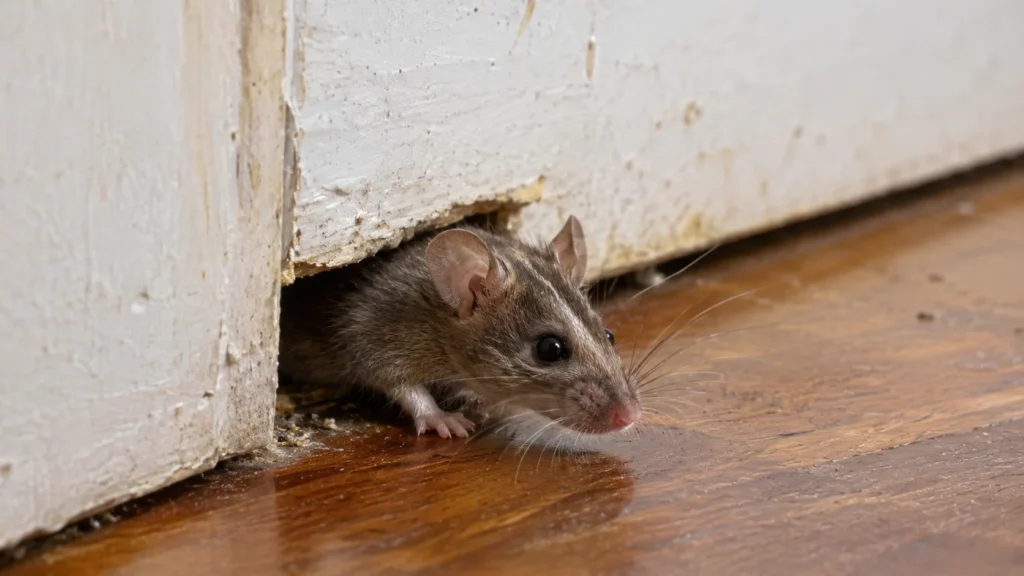
This is why checking only large holes is not enough when mouse-proofing a home.
Pay particular attention to:
- Gaps around pipes beneath sinks.
- Spaces behind kitchen cupboards.
- Cracks where flooring meets walls.
- Small openings near radiators and heating pipes.
- Damaged seals around external doors.
- Holes around cables entering the building.
Use suitable rodent-resistant materials to close gaps rather than relying on soft materials that mice may chew through. The right repair depends on the location, building material, and whether ventilation or drainage must remain unobstructed.
How Do Mice Typically Get Into a House?
Although mice can enter through many different routes, some locations are especially common because they contain gaps that are difficult to see during everyday cleaning.
1. Through gaps around pipes and cables
Pipes and cables frequently pass through walls, floors, cupboards, and foundations. The holes left around them may provide a direct route into the building.
Check under kitchen and bathroom sinks, behind washing machines, near boilers, and around external utility connections. Look for droppings, gnaw marks, or nesting material that may indicate activity.
Seal suitable gaps with rodent-resistant materials, taking care not to interfere with plumbing, electrical systems, ventilation, or fire-safety requirements.
2. Under doors and through damaged seals
Mice can enter through gaps beneath exterior doors, particularly when door sweeps or weather seals are damaged.
Inspect front doors, back doors, patio entrances, and garage doors. A door that looks closed may still leave enough space for a small rodent to pass through.
Install appropriate door sweeps and replace worn seals. For garage doors, check that the bottom edge meets the floor evenly and that side seals remain intact.
3. Through cracks in walls and foundations
Buildings naturally develop small cracks as materials age, settle, or experience changes in temperature and moisture. Some openings become large enough to allow rodents inside.
Inspect the lower exterior walls, foundations, and areas where different building materials meet. Look closely around basement windows, vents, and utility entrances.
Repair structural cracks appropriately. If a crack is widening or appears to indicate a structural problem, consult a qualified building professional before attempting a simple surface repair.
4. Through roofs, eaves, and attics
Mice can climb rough surfaces and use pipes, cables, vegetation, and structural features to reach higher openings. Damaged roof edges, loose vents, and gaps around eaves can provide access to roof spaces.
Check roofline junctions, attic vents, soffits, and areas where cables or pipes enter the building. Keep climbing vegetation away from the structure where practical, and repair damaged screening or coverings.
Do not block essential ventilation openings. Use suitable rodent-resistant screening that preserves the ventilation required by the building.
5. Through garages and sheds
Garages and sheds often contain cardboard boxes, stored fabrics, pet food, birdseed, and other materials that attract rodents or provide nesting opportunities.
Mice may enter through poorly sealed doors, wall gaps, or openings around stored equipment. From a connected garage, they may then find another gap leading into the house.
Keep stored food in sealed, rodent-resistant containers, reduce clutter, and inspect the walls shared with the main building.
How Do Field Mice Get in Your House?
Field mice may enter homes from gardens, fields, hedgerows, compost areas, and other outdoor habitats. When outdoor conditions become less favourable or food becomes harder to find, buildings can offer attractive shelter.
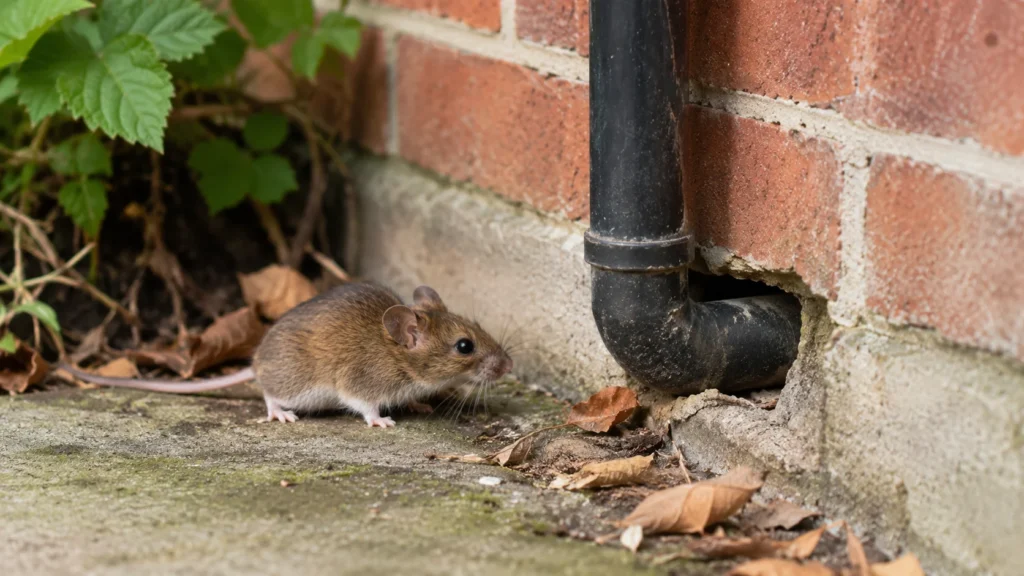
They may use openings around foundations, utility pipes, exterior doors, roof edges, and damaged vents. Once inside, they can hide in lofts, garages, cupboards, wall cavities, and storage areas.
The term field mouse is used for different small rodents in everyday conversation, and the exact species varies by region. Not every mouse found indoors is a field mouse; common house mice may also enter through similar openings.
To reduce the likelihood of field mice entering:
- Keep grass and vegetation trimmed near the building.
- Remove unnecessary piles of wood, cardboard, and garden debris beside exterior walls.
- Store birdseed and animal feed in secure containers.
- Close gaps around pipes, doors, and foundations.
- Inspect sheds, garages, and outbuildings for signs of nesting.
Outdoor housekeeping helps reduce shelter and food opportunities, but sealing the building is still essential.
Why Do Mice Come Into Your House?
Mice do not necessarily enter because a house is dirty. They may be attracted to ordinary household resources and openings that provide shelter.
Food availability
Mice can feed on crumbs, cereal, grains, pet food, seeds, and improperly stored pantry items. Even small amounts of accessible food may encourage them to investigate a kitchen or storage area.
Store dry food in secure containers, clean spills promptly, and avoid leaving pet food out for extended periods.
Warmth and shelter
Indoor spaces offer protection from harsh weather, predators, and temperature changes. Insulation, stored clothing, cardboard, and undisturbed cupboards can also provide nesting materials.
Lofts, wall cavities, garages, and spaces behind appliances may be particularly attractive because they are quiet and rarely disturbed.
Water
Mice need water, although the amount they obtain from food can vary. Leaking pipes, condensation, pet-water bowls, and other accessible moisture sources may contribute to an attractive environment.
Repair leaks and address persistent dampness, but remember that removing a water source alone will not prevent mice from entering if other resources remain available.
Easy access
A house with several small exterior gaps offers more opportunities for rodents to get inside. An open garage door, damaged vent, or unsealed pipe opening may be enough to create a route indoors.
The Illinois Department of Public Health's house mouse guidance provides additional information about house mouse behaviour and prevention.
How Do Mice Get Into the Walls of Your House?
Mice can enter wall cavities through gaps around pipes, electrical cables, floor openings, and poorly sealed construction joints. Once inside a wall, they may travel through concealed spaces and emerge in cupboards, ceilings, lofts, or other rooms.
You might suspect mice in a wall if you notice:
- Scratching, scurrying, or light movement sounds.
- Droppings near skirting boards or utility openings.
- Gnaw marks on nearby materials.
- Unusual smells from concealed spaces.
- Repeated activity in the same part of a room.
Sounds alone do not confirm that mice are present. Other animals, building movement, and plumbing can sometimes produce similar noises.
If you suspect mice in a wall cavity, avoid sealing every opening immediately without understanding where the animals are. Closing an exit while rodents remain inside can create additional problems. Identify likely access points, use suitable control measures, and consult a pest-control professional if the activity persists or the nest is inaccessible.
How Do Mice Get Upstairs in Your House?
Mice can reach upper floors by climbing rough surfaces, pipes, cables, stairs, shelving, and other structures. They may also travel through wall cavities, service voids, ceiling spaces, and gaps around plumbing.
Finding a mouse upstairs does not necessarily mean it entered through a bedroom window or the roof. It may have entered at ground level and moved through concealed routes inside the building.
To investigate:
- Look for droppings or gnaw marks along the suspected route.
- Inspect gaps around pipes and cables on each floor.
- Check loft access points, ceiling openings, and roofline damage.
- Store food securely in bedrooms, utility rooms, and upstairs storage areas.
- Seal suitable entry points once rodent activity has been addressed.
If noises or droppings occur across several floors, the infestation may involve more than one nesting or travel area.
How Do Mice Get in Your House During Winter?
Mice may be more noticeable indoors during colder weather because houses provide warmth, shelter, and reliable access to food. However, mice can enter buildings throughout the year.
In winter, inspect openings that may be hidden by stored items, garden equipment, or seasonal decorations. Pay particular attention to garages, basements, lofts, utility rooms, and gaps around exterior doors.
Before cold weather arrives, repair damaged seals, close appropriate gaps, store food securely, and remove clutter from areas close to the house.
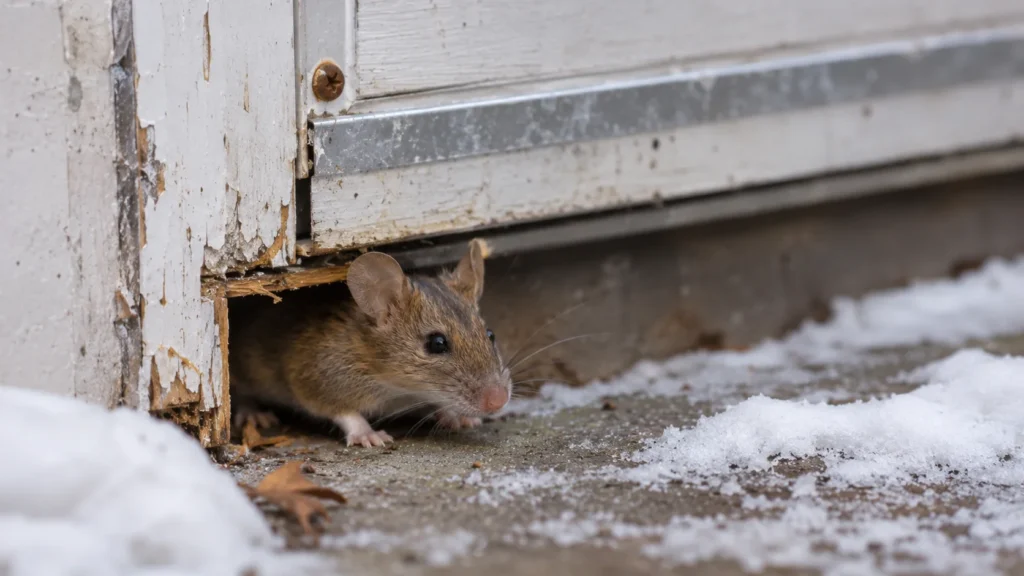
Do not assume that a mouse will leave when spring returns. If it has found shelter and food inside, it may remain and reproduce. Address signs of activity as soon as possible rather than waiting for a change in season.
How Do Baby Mice Get in Your House?
Baby mice usually appear indoors because adult mice have entered the building and established a nest, although the exact circumstances can vary.
A female mouse may choose a quiet, protected area with nesting material and nearby food. Possible locations include wall cavities, loft insulation, cupboards, garages, and spaces behind appliances.
Very young mice may be found in a nest rather than travelling independently around the house. Seeing several small mice can indicate that a nest is nearby, but it does not reveal the full size of the infestation.
If you find a nest, avoid handling the animals with bare hands or disturbing contaminated nesting material. Keep children and pets away, and use appropriate rodent-control and cleaning procedures. Professional help may be appropriate when the nest is inaccessible or the infestation is extensive.
How Do You Get Rid of Mice in Your House?
Once mice have entered, the goal is to control the rodents already indoors and prevent new ones from coming in. Simply chasing a mouse out of one room does not address hidden nesting sites or additional entry points.
1. Remove food sources
Store food, grains, and pet food in secure containers. Clean crumbs, empty rubbish regularly, and avoid leaving accessible food on worktops overnight.
2. Seal entry points
Inspect the exterior and interior of the building, paying particular attention to pipe openings, foundation gaps, doors, and damaged vents. Use appropriate rodent-resistant materials to seal suitable gaps.
The CDC's guidance on sealing up to prevent rodents explains why excluding rodents from buildings is an important prevention measure.
3. Use suitable traps
Snap traps and other purpose-designed traps may help control mice when placed along areas where rodent activity has been identified. Follow the manufacturer's directions and position traps where children and pets cannot reach them.
Avoid handling trapped rodents or droppings without following suitable public-health precautions.
4. Clean contaminated areas safely
Do not sweep or vacuum dry mouse droppings or nesting material. Follow the CDC's guidance on cleaning up after rodents to reduce exposure to potentially contaminated particles.
5. Consider professional pest control
If mice keep returning, appear in multiple rooms, or are active in wall cavities or lofts, a pest-control professional can help identify entry points and recommend an appropriate treatment plan.
Effective control should address both the rodents inside and the conditions allowing them to enter.
How Do Exterminators Get Rid of Mice in a House?
Professional pest controllers generally begin by inspecting the property for rodent evidence, access points, and conditions that support an infestation.
Depending on the situation, a treatment plan may include:
- Identifying droppings, gnaw marks, nesting sites, and travel routes.
- Inspecting the building exterior and internal service openings.
- Recommending appropriate traps or other authorised control methods.
- Advising on food storage, sanitation, and clutter reduction.
- Identifying repairs needed to prevent further entry.
- Arranging follow-up inspections where necessary.
The exact approach depends on the building, the extent of rodent activity, local regulations, and the presence of children or pets. If rodenticides are used, they must be handled according to the product label and applicable rules.
Professional treatment is especially worth considering when mice continue to appear after prevention measures have been taken or when the source of activity cannot be identified.
Conclusion
Mice get into houses through small openings around pipes, doors, foundations, vents, roofs, and other parts of a building. They may then travel through wall cavities, garages, lofts, and service spaces while searching for food, water, warmth, and shelter.
The most effective prevention strategy is to identify and seal suitable entry points, secure food, remove nesting opportunities, and deal promptly with signs of rodent activity. Traps and professional pest control may be necessary when mice are already established indoors.
If you are wondering how mice get into your house despite keeping it clean, remember that even a well-maintained home can have hidden gaps. Finding and closing those gaps is one of the most important steps towards keeping mice out.
1. How do mice get in your house if the doors are closed?
Mice can enter through small gaps around pipes, cables, foundations, roof edges, vents, and door seals. A closed door does not prevent entry if a nearby opening remains accessible.
2. How small a hole can a mouse fit through?
A mouse can squeeze through an opening around 6 millimetres wide, depending on its size and the shape of the gap. Check even small openings when inspecting a property for rodent entry points.
3. How do field mice get into houses?
Field mice may enter from gardens, fields, and other outdoor habitats through foundation cracks, utility openings, damaged vents, and gaps around doors. They often seek food and sheltered nesting areas indoors.
4. How do mice get into the walls of a house?
They may enter wall cavities through gaps around pipes, cables, floors, and construction joints. From there, they can move through concealed spaces and emerge in different rooms or ceiling areas.
5. Why do mice come into houses in winter?
Cold weather may make indoor shelter and accessible food more attractive. However, mice can enter at any time of year and may remain indoors if they find suitable nesting conditions.
6. Can mice climb stairs and reach upstairs rooms?
Yes. Mice can climb and use stairs, pipes, cables, shelving, and concealed building spaces to reach upper floors. An upstairs sighting does not necessarily mean the mouse entered through a window.
7. How do you get rid of mice in your house quickly?
Secure food, identify entry points, use suitable traps according to their instructions, and clean contaminated areas safely. If activity continues or the infestation is extensive, contact a pest-control professional.
8. Does a clean house still get mice?
Yes. Cleanliness helps reduce accessible food, but mice can still enter through structural gaps or seek shelter. Sealing entry points is important even when food and rubbish are managed carefully.
9. How can I tell where mice are entering my house?
Look for droppings, gnaw marks, greasy rub marks, nesting material, and gaps around pipes, doors, vents, and foundations. Follow signs of activity carefully, and consider a professional inspection if the entry point is unclear.
10. Do mice leave a house on their own?
Not necessarily. If mice have access to food, water, and shelter, they may remain indoors and reproduce. Use appropriate control methods and seal entry points instead of waiting for them to leave naturally.