
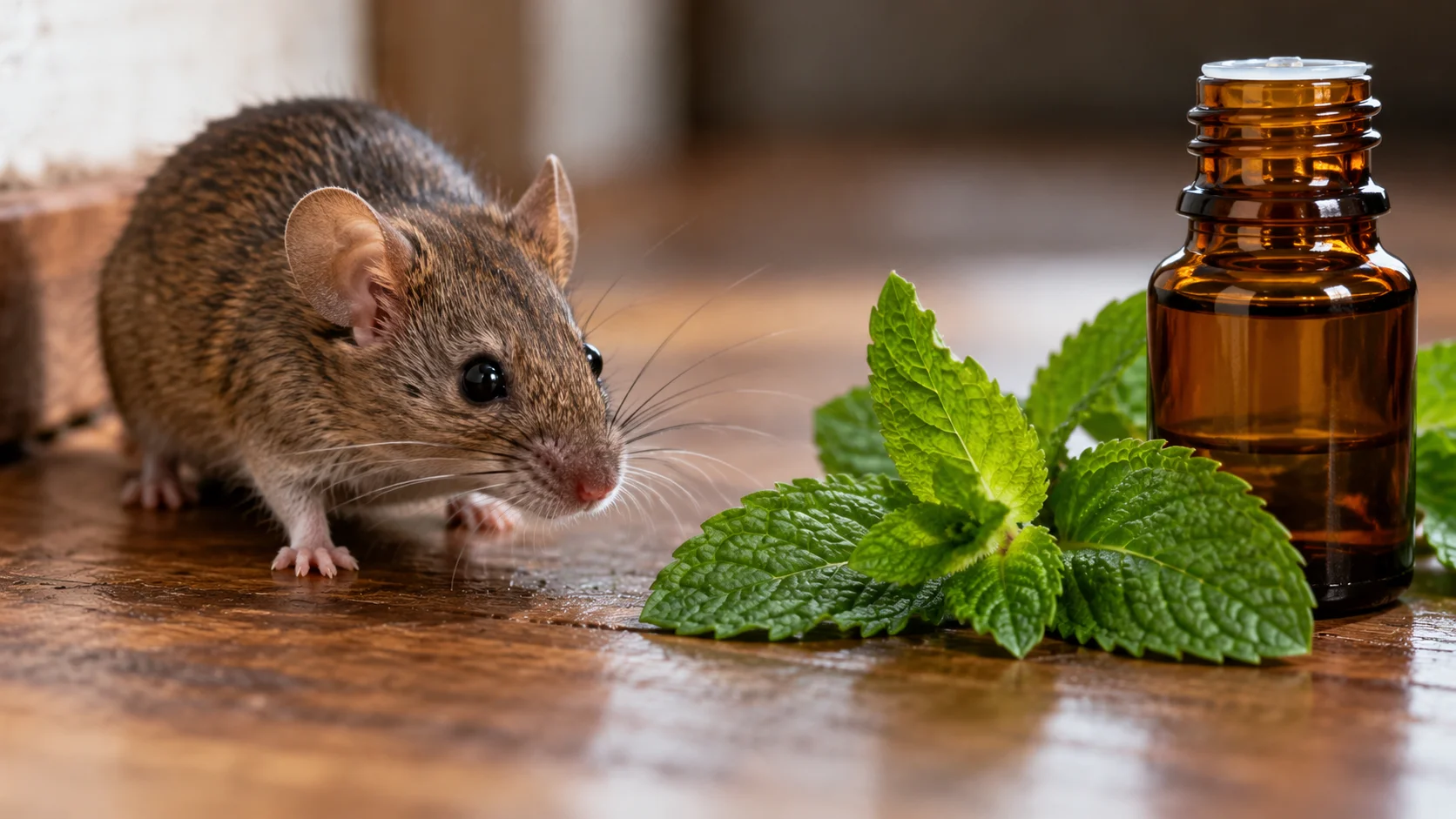
Do mice hate peppermint is a common search because peppermint has a strong, distinctive aroma and is frequently promoted as a natural mouse repellent. Peppermint oil contains volatile compounds that can affect animal behavior, and laboratory research has found that peppermint oil can produce short-term repellent effects in house mice. However, the evidence does not establish peppermint as a dependable stand-alone solution for an established household infestation.
The distinction between temporary scent avoidance and lasting mouse control is important. A 2022 study testing peppermint and other herbal oils found short-term repellent activity in mouse behavioral tests, but peppermint oil did not maintain its repellent effect during the longer-term testing period. A broader systematic review also found that plant-based rodent repellents can show promising laboratory effects, while results have been inconsistent between laboratory, enclosure, and field conditions.
Do Mice Hate Peppermint Smell
Mice can respond negatively to strong peppermint odors, particularly when the scent is concentrated. Research involving peppermint oil and mice has demonstrated behavioral avoidance under controlled experimental conditions, which supports the idea that peppermint can act as a temporary olfactory deterrent.
However, saying that mice universally hate peppermint would be too strong. Mouse behavior depends on concentration, exposure time, environmental conditions, food availability, and whether the animal has alternatives. A strong smell may make a particular area less attractive without causing the mouse to leave an entire building.
How Peppermint Affects Mouse Behavior
Peppermint's effect appears to be associated with its volatile aromatic compounds rather than some special mouse-specific aversion.
- Peppermint has a strong aromatic odor.
- Mice have highly developed olfactory abilities.
- Concentrated odors can influence mouse movement.
- Peppermint oil can create short-term avoidance.
- The response can vary between individual mice.
- Odor concentration affects behavioral response.
- Freshness can influence how strongly an oil smells.
- Repeated exposure can reduce the novelty of a scent.
- Food and shelter can compete with an unpleasant odor.
- A scent deterrent does not remove an existing mouse population.
Does Peppermint Oil Repel Mice
Peppermint oil can repel mice under certain experimental conditions, but its effectiveness in a real home is less certain. A 2022 behavioral study tested peppermint oil against Mus musculus and found short-term repellent activity. The researchers also reported that peppermint oil and menthol failed to maintain their repellent activity during the longer-term week-one testing.
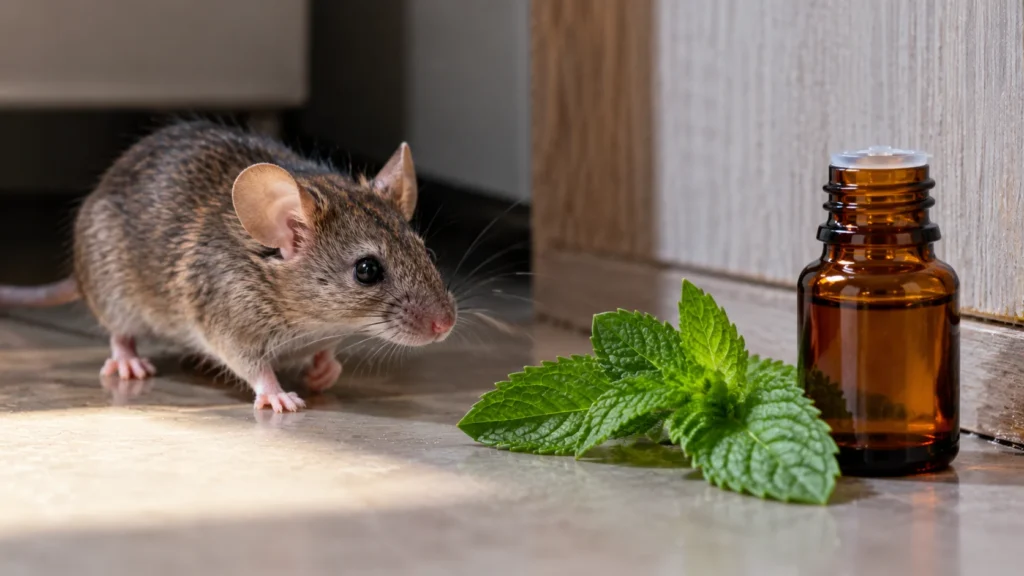
This finding is important because many online claims present peppermint oil as a permanent mouse solution. Scientific evidence supports a more cautious conclusion: peppermint oil may temporarily influence mouse behavior, but it should not replace exclusion, trapping, sanitation, and other established control measures.
Peppermint Oil and Mice in Scientific Research
Research on plant-derived rodent repellents shows that essential oils are worth studying, but the results are not uniform. A systematic review of 54 publications found strong effects from many essential-oil and terpenoid compounds in laboratory research, while also highlighting inconsistent success across laboratory, enclosure, and field studies.
A separate study on wild house mice found repellent effects from other essential oils, demonstrating that responses can vary according to the plant compound, concentration, bait freshness, and mouse sex.
Why Mice May Avoid Peppermint Oil
The strong aroma of peppermint oil can make an area less appealing to mice. Peppermint contains multiple volatile compounds, including menthol and other aromatic constituents, that interact with sensory systems.
Laboratory research has demonstrated that peppermint oil can alter mouse behavior, although not every study examines repulsion in a household setting. One study identified several active constituents of peppermint oil and found behavioral effects in mice after experimental administration.
Factors That Influence Peppermint Repellency
Peppermint does not operate independently of the surrounding environment. A mouse may tolerate an unpleasant odor when a building provides strong access to food, water, nesting material, and shelter.
- Oil concentration
- Freshness of the peppermint scent
- Size of the treated area
- Ventilation
- Air movement
- Availability of food
- Availability of water
- Nearby nesting locations
- Existing mouse population
- Duration of exposure
Explore more articles:
- Fruit Flies vs Gnats
- Rat vs Mouse
- Bugs That Look Like Flying Termites
- Bugs That Look Like Fleas
- What Do Fleas Look Like?
- Wood Ants vs Termites
- What Are Centipedes Attracted To?
- What Do Drain Flies Look Like
- What Do Baby Black Widows Look Like?
- Deer Mouse vs House Mouse
- Bugs That Look Like Lice
Peppermint Oil Versus Peppermint Tea Bags
Peppermint tea bags are sometimes recommended as a simple household deterrent because they release a recognizable mint aroma. However, dried peppermint leaves in a tea bag are not equivalent to concentrated peppermint essential oil.
The scientific research supporting mouse repellency has generally evaluated oils, extracts, or defined plant compounds under controlled conditions rather than ordinary used tea bags placed around a house. Consequently, tea bags should not be presented as a scientifically established mouse-control method.
Peppermint Extract and Household Scents
Peppermint extract can also smell strongly, but products sold for cooking or flavoring are not necessarily formulated or tested as pest repellents. Their concentration and composition can differ substantially from essential oils used in research.
This makes it difficult to predict how long an extract, tea bag, or homemade peppermint mixture will affect mouse behavior.
Do Mice Really Hate Peppermint Oil Long Term
The evidence does not support a reliable long-term claim. The 2022 study that specifically evaluated peppermint oil found short-term repellency but reported that peppermint oil and menthol did not retain their repellent activity during the longer-term assessment.
This is consistent with the broader scientific literature, where plant-based repellents can perform differently under laboratory and real-world conditions. A mouse inside a home may also have strong incentives to remain nearby because of food, warmth, nesting locations, and protection from predators.
Why Scent Alone Can Fail
A scent does not close the hole through which a mouse entered. It also does not remove nesting material or eliminate food sources.
The CDC recommends addressing the environmental conditions that support rodent infestations by removing food, water, and shelter and sealing openings around the home.
This means peppermint can potentially serve as a supplemental measure, while exclusion and population control address the underlying problem.
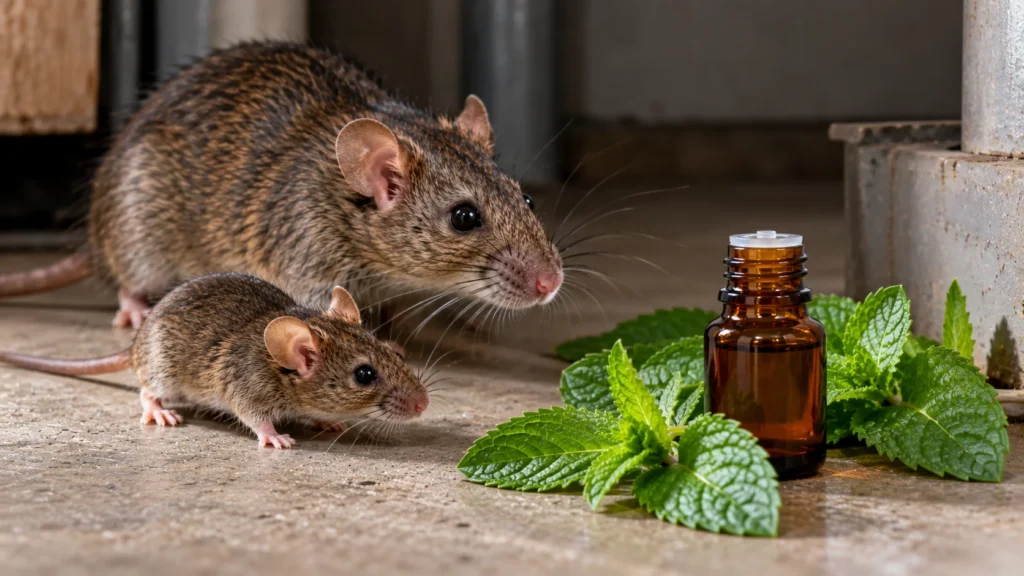
Do Mice and Rats Hate Peppermint
Peppermint oil can affect both mice and rats, but evidence from one rodent species should not automatically be generalized to another. Research has demonstrated behavioral effects of plant oils across different rodents, but responses can depend on species and experimental conditions.
Therefore, claims that rats and mice hate peppermint equally are stronger than the available evidence supports.
Peppermint as a Rodent Deterrent
Peppermint is best viewed as a possible supplemental odor-based deterrent rather than a complete rodent-control strategy.
- It may temporarily discourage exploration.
- It has a strong odor.
- Concentrated oil produces a stronger scent than dried leaves.
- Mouse responses can vary.
- Rats and mice may respond differently.
- Repeated exposure can change behavior.
- Outdoor conditions can disperse the aroma.
- Ventilation can reduce scent concentration indoors.
- Food availability can override avoidance.
- Peppermint does not eliminate nesting or entry points.
Peppermint Versus Cinnamon for Mice
Both cinnamon and peppermint are commonly promoted as natural mouse deterrents, but there is not enough evidence to make a universal ranking that applies to every home.
The available research shows that plant-derived compounds can have repellent properties, but effectiveness varies by substance, concentration, species, and experimental design. The systematic review of plant secondary metabolites specifically found inconsistent outcomes across different research settings.
Choosing Between Natural Mouse Scents
Rather than depending on a particular scent, homeowners should focus on eliminating the reasons mice remain inside a building. Natural scents may have a supplemental role, but they should not replace physical exclusion or appropriate trapping.
How to Use Peppermint as a Supplemental Deterrent
Peppermint can be used as a scent-based supplement in areas where mouse activity is suspected, but expectations should remain realistic. A strong smell may influence movement temporarily without removing the mouse population.
Essential oils should also be handled according to their product instructions. Concentrated oils can irritate skin and eyes, and they should not be placed where children or pets can access or ingest them.
Practical Peppermint Precautions
Using a scent safely is more important than maximizing its concentration.
- Follow the product label for essential oils.
- Avoid direct skin contact with concentrated oil.
- Keep essential oils away from children's reach.
- Keep oils away from pets.
- Avoid placing oils directly on food surfaces.
- Do not assume natural means harmless.
- Ventilate areas where strong odors are used.
- Do not rely on scent as the only control method.
- Monitor for continuing mouse signs.
- Stop relying on peppermint if mouse activity persists.
Better Ways to Keep Mice Away
The most reliable mouse-control strategy starts with preventing entry and removing resources that allow mice to survive indoors. CDC recommends looking for gaps and holes and sealing them, noting that mice can fit through openings about 1/4 inch or 6 millimeters in diameter.
Food should also be stored in tightly sealed containers, spills should be cleaned promptly, and pet food should not remain available overnight. Outdoor food and nesting sources should also be managed.
Proven Mouse Control Measures
Peppermint can be considered an optional supplement while more dependable measures address the infestation.
- Seal holes and gaps around the building.
- Check areas behind appliances.
- Inspect pipes and utility openings.
- Secure pantry foods.
- Store pet food properly.
- Clean food spills quickly.
- Reduce clutter that can provide nesting material.
- Monitor for fresh droppings.
- Use appropriate snap traps where mice are active.
- Contact a pest professional for persistent infestations.
Mouse Traps and Peppermint Oil
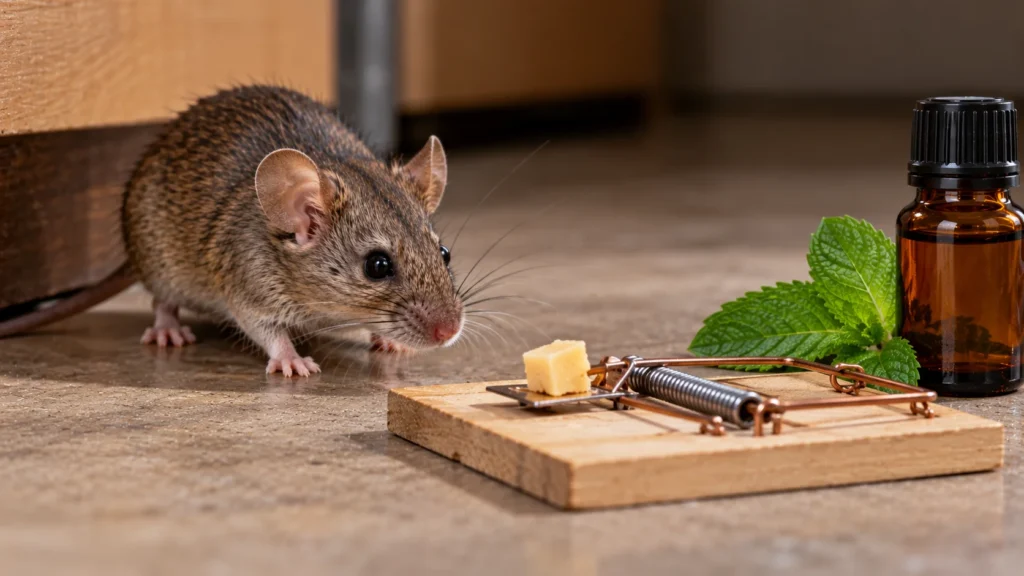
Peppermint oil and mouse traps serve completely different purposes. Peppermint attempts to make an area less attractive through scent, while a properly positioned trap is intended to physically remove a mouse.
The CDC recommends traditional snap traps when there is evidence of rodents inside a home. Traps should be positioned where mice have been observed or where signs such as droppings, urine, gnaw marks, nesting material, or damaged food occur.
Combining Repellents With Trapping
A scent should never be used in a way that prevents effective monitoring of an infestation. If mouse activity continues, trapping and exclusion should take priority over repeatedly refreshing peppermint.
This approach provides a better indication of whether the mouse population is actually declining.
10 Key Facts About Mice and Peppermint
- Mice can respond negatively to strong peppermint odors.
- Peppermint oil has demonstrated short-term repellent activity in controlled mouse studies.
- Scientific evidence does not establish peppermint oil as a guaranteed long-term mouse repellent.
- A 2022 study found that peppermint oil did not maintain its repellent activity during its longer-term testing period.
- Essential-oil effects can vary according to concentration and experimental conditions.
- Peppermint tea bags are not equivalent to concentrated peppermint essential oil.
- Peppermint extract has not been established as a dependable household mouse-control method.
- Strong food and shelter availability can reduce the practical value of scent-based deterrence.
- Sealing entry points is a more dependable prevention measure.
- Snap traps and exclusion remain important components of established household mouse control.
Conclusion
So, do mice hate peppermint? Mice can show avoidance of peppermint oil under certain conditions, and scientific research provides evidence for short-term behavioral repellency. However, the available research does not support treating peppermint as a guaranteed or permanent solution. A 2022 study found that peppermint oil's repellent effect did not persist during longer-term testing, while broader research has shown that plant-based rodent repellents can produce inconsistent results outside controlled environments.
For a mouse problem inside a home, peppermint oil is best considered a supplemental deterrent rather than the primary treatment. Seal entry points, remove accessible food and nesting resources, monitor for fresh signs, and use appropriate traps when mice are already established indoors. These measures target the conditions that allow mice to remain and reproduce rather than simply changing the smell of the room.
Do mice hate peppermint oil?
Mice can show avoidance of peppermint oil in controlled behavioral studies, particularly over short periods. However, the effect is not proven to provide reliable long-term control in homes.
Does peppermint oil repel mice?
Peppermint oil can have a repellent effect under certain experimental conditions. Research has demonstrated short-term behavioral repellency, but results do not establish peppermint oil as a dependable stand-alone method for eliminating household mice.
Do mice hate the smell of peppermint?
Mice can avoid areas containing strong peppermint odors, but individual responses vary. The strength, freshness, duration, and surrounding environmental conditions can influence the response.
Do mice hate peppermint tea bags?
Peppermint tea bags may produce an odor that mice find unpleasant, but there is insufficient scientific evidence to establish ordinary tea bags as an effective mouse-control method. Research has focused more heavily on concentrated oils and specific plant compounds.
Do mice really hate peppermint oil long term?
Current evidence does not support a dependable long-term effect. One controlled study found short-term repellency from peppermint oil but reported that the effect was not maintained during its longer-term assessment.