

Finding a mice exterminator near me is often the right step when mouse activity continues despite traps, cleaning, and basic prevention. Professional mouse control is not simply about catching visible mice. A qualified exterminator should identify how mice are entering, locate areas of activity, remove or control the infestation, and recommend exclusion measures that reduce the chance of another infestation.
The cost and treatment process vary according to the size of the infestation, property type, accessibility, number of visits, and repairs required. Effective rodent management generally combines identification, prevention, trapping or baiting when appropriate, and sanitation rather than relying on a single treatment.
When to Hire a Mice Exterminator
A professional mouse exterminator becomes particularly useful when signs continue after reasonable DIY control measures or when mice are entering inaccessible areas. Droppings, gnaw marks, nesting material, damaged food packaging, scratching sounds, and repeated sightings can all indicate ongoing rodent activity.
Professional assistance can also be appropriate when mice have entered walls, ceilings, attics, ventilation systems, or other areas that are difficult to inspect and clean safely. CDC recommends professional rodent services when rodents have entered inaccessible ventilation systems.
Signs that professional control may be needed
Repeated or widespread evidence usually deserves more attention than an isolated sighting.
- Fresh mouse droppings continue appearing
- Gnaw marks are found repeatedly
- Mice are active during both day and night
- Scratching occurs inside walls or ceilings
- Nesting material is discovered
- Food packaging has been damaged
- Mouse activity returns after trapping
- Mice are entering inaccessible spaces
- There is extensive contamination
- DIY control has not solved the problem
Explore more articles:
- Fruit Flies vs Gnats
- Rat vs Mouse
- Bugs That Look Like Flying Termites
- Bugs That Look Like Fleas
- What Do Fleas Look Like?
- Wood Ants vs Termites
- What Are Centipedes Attracted To?
- What Do Drain Flies Look Like
- What Do Baby Black Widows Look Like?
- Bugs That Look Like Lice
What Does an Exterminator Do for Mice
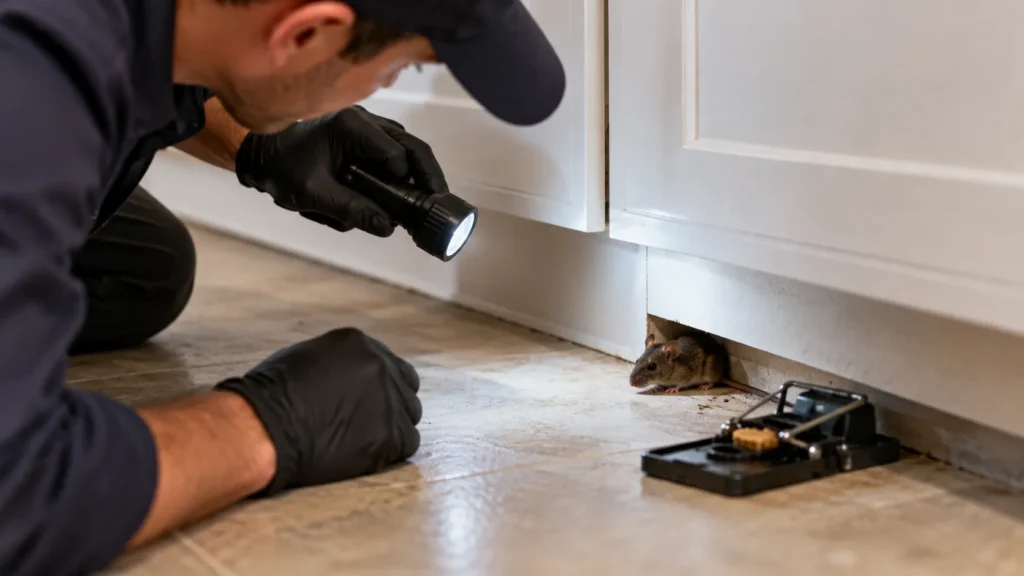
A professional mouse exterminator typically starts by inspecting the property for evidence of activity and possible entry points. The inspection may cover kitchens, basements, attics, garages, crawl spaces, utility penetrations, exterior walls, doors, windows, and other areas where rodents can enter or travel.
Treatment can involve traps, exclusion recommendations, sanitation guidance, monitoring, and, where appropriate, regulated rodenticide products. EPA recommends identifying and preventing rodent infestations first, with traps or properly used bait stations as additional control options.
Professional mouse control process
The exact procedure depends on the property and infestation, but a comprehensive service commonly follows a structured process.
- Inspect the property
- Identify evidence of mouse activity
- Locate potential entry points
- Determine likely nesting areas
- Assess food and water sources
- Recommend exclusion repairs
- Place appropriate traps when needed
- Use bait stations where appropriate
- Monitor activity after treatment
- Recommend long-term prevention
Mice Exterminator Cost
The mice exterminator cost varies considerably because pest-control companies use different pricing models. A small infestation requiring one visit can cost much less than a widespread problem involving multiple visits, inaccessible areas, structural exclusion, or extensive cleanup.
The final price can also depend on property size, infestation severity, geographic location, treatment method, warranty or follow-up visits, and the amount of exclusion work required. Because of these variables, a professional inspection and written estimate are more useful than relying on one universal price.
Factors affecting exterminator costs
Several factors can increase or decrease the final cost of professional mouse control.
- Size of the property
- Severity of the infestation
- Number of mice or activity areas
- Number of required visits
- Accessibility of nesting locations
- Attic or crawl-space treatment
- Wall or ceiling activity
- Entry-point repairs
- Amount of sanitation required
- Local pest-control pricing
Average Cost of an Exterminator for Mice
There is no single national price that accurately represents every mice exterminator near me search. Companies may charge per visit, offer treatment packages, or include follow-up inspections in a service plan.
A basic service may involve inspection and trapping, while a more comprehensive program can include exclusion work and continued monitoring. Ask the company to explain exactly what is included so the quoted price can be compared fairly with other providers.
Comparing mice exterminator prices
A low initial price does not necessarily represent the lowest overall cost. A treatment that removes mice without addressing entry points can result in repeated infestations and additional service calls.
Look for a clear description of inspection, treatment, follow-up, exclusion recommendations, warranty terms, and any additional charges before accepting an estimate.
How an Exterminator Gets Rid of Mice
Professional mouse control generally combines direct removal with prevention. CDC recommends traditional snap traps for reducing rodent populations around homes and advises placing traps in areas where rodents have been observed or are likely to travel.
Traps should be positioned carefully, particularly along walls and near evidence such as droppings, gnaw marks, nesting material, and damaged food. Professional technicians can also determine whether bait stations are appropriate when trapping alone does not resolve persistent activity.
Common professional treatment methods
Treatment selection depends on the infestation and conditions around the property.
- Inspection and monitoring
- Snap trapping
- Strategic trap placement
- Exclusion recommendations
- Sealing structural openings
- Food-source reduction
- Sanitation recommendations
- Tamper-resistant bait stations when appropriate
- Follow-up inspections
- Long-term prevention planning
Mice Exterminator for House Mice
House mice can establish nests in wall voids, attics, cabinets, storage areas, basements, and other protected spaces. Because mice can enter through very small openings, removing visible mice without addressing structural access may provide only temporary relief.
CDC states that mice can fit through openings about 1/4 inch in diameter, making small gaps around pipes, vents, doors, windows, foundations, and utility lines important inspection points.
House mouse exclusion
A professional may identify openings that homeowners overlook, particularly around plumbing, electrical lines, roof structures, vents, appliances, and foundation gaps. Small openings can be sealed with appropriate materials such as steel wool combined with caulk, while larger openings may require hardware cloth, metal, or cement.
Mice Exterminator for Attics, Walls, and Ceilings
Mice inside walls, ceilings, and attics can be harder to control because their nests and travel routes may not be directly accessible. Scratching sounds and droppings can reveal activity even when the animals themselves are rarely seen.
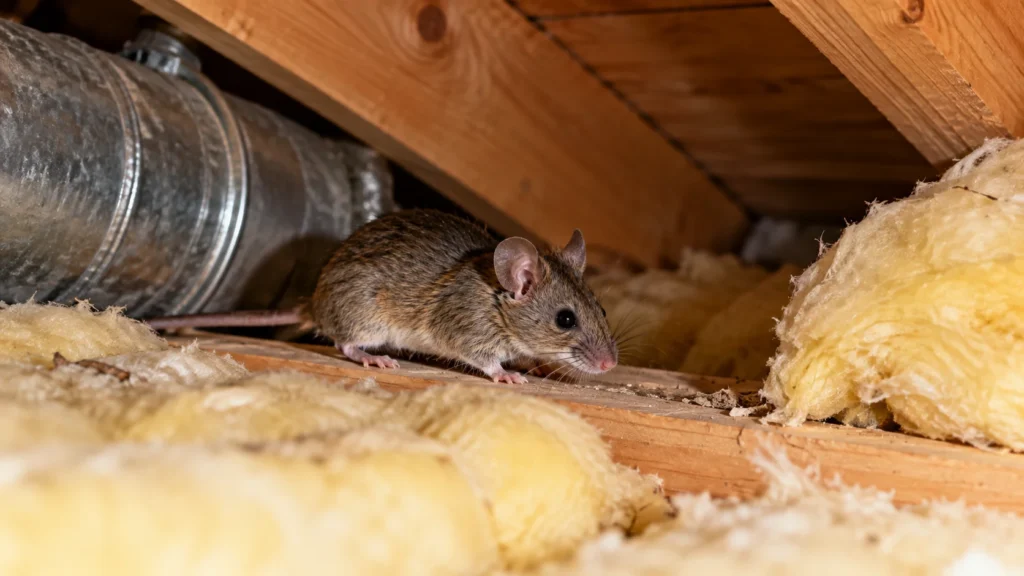
Treatment should also consider contamination. Rodent urine, droppings, nests, and dead rodents need to be cleaned safely because sweeping or vacuuming contaminated material can put potentially infectious particles into the air.
Controlling mice in inaccessible areas
Do not simply close every opening while mice are actively trapped inside an inaccessible cavity. A professional can determine the safest sequence for removing active rodents and then improving exclusion.
Ventilation systems require particular care. CDC recommends contacting a professional rodent-control service when rodents have accessed heating or cooling ventilation systems.
Is It Worth Getting an Exterminator for Mice
Professional treatment can be worthwhile when mouse activity is persistent, widespread, difficult to locate, or occurring in inaccessible areas. It can also be valuable when repeated DIY trapping removes individual mice but new activity continues.
The biggest advantage is that professional control can address both the infestation and the conditions supporting it. EPA guidance similarly emphasizes identification and prevention as important first steps in rodent management.
Benefits of professional mouse control
Professional service can provide several advantages beyond simply placing traps.
- Detailed property inspection
- Identification of likely entry points
- Targeted treatment
- Correct trap placement
- Monitoring of activity
- Exclusion recommendations
- Guidance on sanitation
- Safer handling of rodent contamination
- Follow-up service options
- Long-term prevention advice
Mouse Exterminator vs DIY Mouse Control
DIY control can work for a small and clearly defined mouse problem, especially when entry points can be sealed and traps can be safely positioned. CDC recommends traditional snap traps and keeping traps and bait away from children and pets.
Professional treatment becomes more useful when activity persists, the infestation is extensive, or mice are located in areas that cannot be safely reached. A combination of exclusion, sanitation, monitoring, and trapping is generally more dependable than repeatedly catching individual mice.
When DIY control may be insufficient
Certain circumstances make professional assistance more practical.
- Numerous droppings are present
- Multiple rooms show activity
- Mice are nesting in walls
- Attic activity continues
- Ceiling noises persist
- Entry points are difficult to locate
- Contaminated insulation is present
- Ventilation systems are affected
- Trapping has repeatedly failed
- The infestation keeps returning
Mouse Poison and Exterminator Treatment
Rodenticides require careful handling because misuse can harm people, pets, and wildlife. EPA advises consumers to follow product labels, keep pesticides away from children and pets, and use appropriate ready-to-use bait stations where applicable.
Professional pest-control technicians may have access to products and application methods that differ from consumer products. Any pesticide treatment should comply with the applicable product label and local requirements.
Rodenticide safety
Poison should never be treated as a casual substitute for exclusion and sanitation. Dead rodents should also be removed promptly because poisoned carcasses can create risks for animals that consume them.
How to Choose the Best Mice Exterminator Near Me
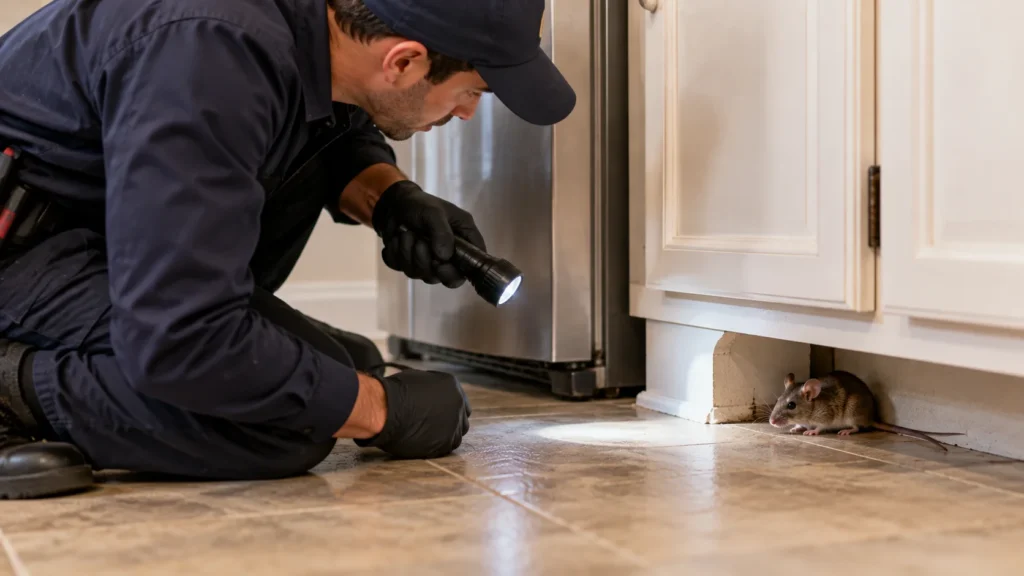
When searching for the best mice exterminator near me, compare more than advertising claims. A reliable provider should explain the inspection process, treatment options, follow-up policy, and prevention recommendations before work begins.
Ask for a written estimate when possible and verify that the company is properly licensed or certified according to the requirements in your location. A professional who explains why mice are present and how future entry will be prevented is generally offering a more complete service than one focused only on immediate removal.
Things to check before hiring
Use these criteria when comparing local mouse-control providers.
- Appropriate licensing or certification
- Experience with mouse infestations
- Clear inspection process
- Written treatment plan
- Transparent pricing
- Explanation of follow-up visits
- Exclusion recommendations
- Safe pesticide practices
- Customer service and communication
- Clearly stated warranty terms
10 Key Points About Mice Exterminators
These points summarize the most important considerations when arranging professional mouse control.
- A mouse exterminator should inspect before treating.
- Identifying entry points is essential for long-term control.
- Mice can enter through openings about 1/4 inch wide.
- Snap traps are a recommended household rodent-control option.
- Traps should be kept away from children and pets.
- Persistent infestations may require professional assistance.
- Attic and wall activity can require specialized inspection.
- Rodent droppings should not be swept or vacuumed before proper disinfection.
- Rodenticide products must be used according to their labels.
- Exclusion and sanitation are important for preventing mice from returning.
Conclusion
A mice exterminator near me can provide more than immediate mouse removal. The strongest professional approach identifies where mice are active, determines how they entered, uses suitable control methods, and addresses the conditions that allow the infestation to continue. Trapping, exclusion, sanitation, monitoring, and carefully managed baiting can all have a role depending on the situation.
The cost of a mouse exterminator varies according to the infestation, property, treatment method, number of visits, and exclusion work required. For persistent activity, inaccessible nests, extensive contamination, or repeated DIY failures, professional mouse control can provide a more complete and structured solution.
1. How much does an exterminator cost for mice?
Mouse exterminator pricing varies by location, property size, infestation severity, treatment method, and follow-up requirements. Some companies charge per visit while others provide treatment packages or ongoing service plans.
2. Can an exterminator completely get rid of mice?
Professional treatment can eliminate an existing infestation, but long-term success also depends on sealing entry points and removing food and shelter sources. CDC recommends combining rodent removal with measures that prevent new rodents from entering.
3. When should you call an exterminator for mice?
Professional help is appropriate when mouse activity continues after reasonable control efforts, when mice are inside inaccessible areas, or when there are extensive signs of infestation or contamination.
4. What will an exterminator do for mice?
An exterminator typically inspects the property, identifies activity and entry points, recommends or performs appropriate control measures, and provides prevention or exclusion guidance. Treatment can include trapping and, where appropriate, regulated bait stations.
5. Is a mice exterminator worth the cost?
Professional service can be worthwhile when the infestation is persistent, widespread, difficult to locate, or repeatedly returning. The value is greater when the service addresses both existing mice and the conditions that allow new mice to enter.