
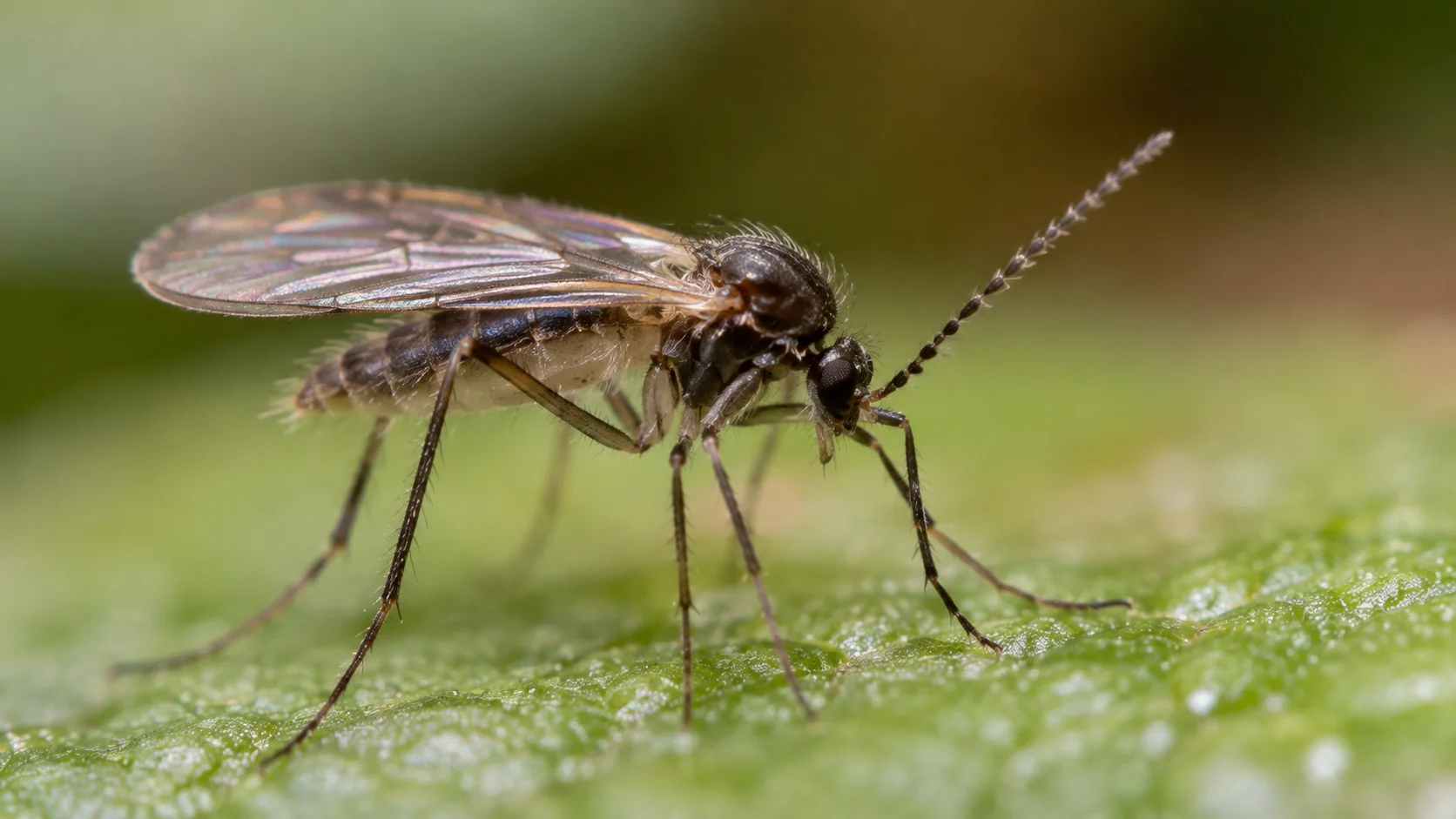
Gnats are tiny flying insects that are often noticed around houseplants, moist soil, drains, outdoor vegetation, lights, or people. The word gnat is a common name rather than a single scientific group, so several kinds of small flies may be called gnats. Their appearance varies by species, but many are only about 1/16 to 1/8 inch long, with slender bodies, six legs, and transparent or translucent wings.
A typical gnat may look like a miniature mosquito or delicate fly, although some types have noticeably different shapes. Fungus gnats are especially common indoors around moist houseplant soil, while biting gnats include tiny biting midges that can cause itchy skin reactions. Correct identification depends on body shape, color, wings, habitat, and whether the insect bites.
What Does a Gnat Look Like
Adult gnats are generally tiny, slender flies with six legs, a head, thorax, abdomen, and one pair of functional wings. Many common gnats have dark bodies and delicate wings, although their exact appearance varies among species.
Because gnats are so small, they may look like moving black specks from a distance. Up close, their long legs, narrow body, wings, and antennae become easier to see.
Common Gnat Appearance
The general characteristics below are useful when identifying a small fly that may be a gnat.
- Very small flying insect
- Usually slender body
- Six legs
- One pair of wings
- Dark or black coloration in many species
- Transparent or translucent wings
- Relatively long legs
- Small head
- Moderate to long antennae
- Weak or delicate flight in many species
What Does a Gnat Look Like Up Close
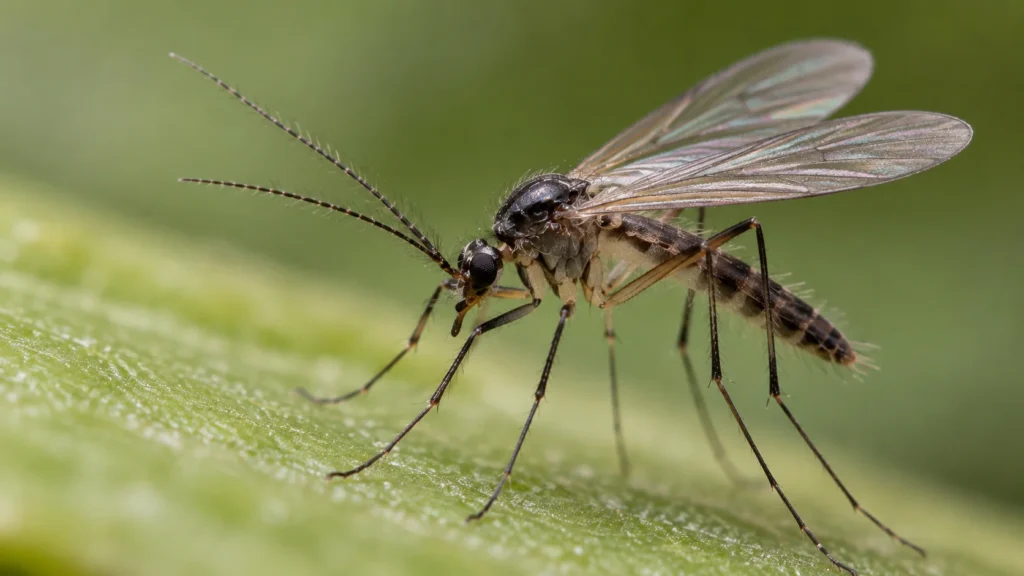
A close-up view reveals details that are difficult to see with the naked eye. Fungus gnats, for example, have slender legs, segmented antennae, and clear to light-gray wings. Their antennae are longer than the head and contribute to their delicate, mosquito-like appearance.
Magnification can also help distinguish gnats from other tiny flies. Body shape, wing structure, antennae, and leg proportions are more useful than simply judging whether an insect looks black or gray.
Close-Up Identification Features
A hand lens or clear photograph can make these characteristics easier to examine.
- Slender abdomen
- Narrow thorax
- Long delicate legs
- Segmented antennae
- Clear wings
- Fine wing veins
- Small head
- Dark body in many fungus gnats
- Delicate overall appearance
- Mosquito-like profile in fungus gnats
What Does a Fungus Gnat Look Like
Fungus gnats are among the most common gnats encountered indoors. Adult fungus gnats are usually dark, delicate-looking flies that resemble miniature mosquitoes and are commonly found around potted plants, moist potting soil, compost, and organic debris.
UC IPM reports that common fungus gnat adults are approximately 1/16 to 1/8 inch long, although some species can be larger. They have slender legs, long segmented antennae, and light-gray to clear wings.
Fungus Gnat Appearance
These features are particularly useful when small flies are repeatedly appearing around indoor plants.
- Dark gray to black body
- Slender abdomen
- Long thin legs
- Long segmented antennae
- Clear to light-gray wings
- Mosquito-like appearance
- Usually about 1/16 to 1/8 inch long
- Weak flying ability
- Often rests on plant leaves
- Commonly remains near moist soil
What Does a Gnat Fly Look Like
Adult gnats are winged insects, and their wings are usually much more delicate than those of larger flies. Many gnats fly close to their breeding or feeding areas rather than traveling long distances. Fungus gnats, in particular, are weak fliers and commonly remain around plants, soil, windows, and walls.
The flight pattern can therefore provide a useful clue. A tiny dark insect hovering around a houseplant is more consistent with fungus gnat activity than a fast-moving larger fly.
Wing and Flight Characteristics
Wing structure varies among gnat groups, but several general features help distinguish them from crawling pests.
- One pair of functional wings
- Wings usually transparent or translucent
- Fine wing veins
- Small overall wing surface
- Delicate wing appearance
- Weak flight in fungus gnats
- Short flights around plants
- Attraction to light in some species
- Frequent hovering near breeding areas
- Can rest on leaves or soil between flights
What Does a Baby Gnat Look Like
The immature stage of a gnat does not normally resemble the familiar tiny flying adult. Depending on the species, immature gnats may appear as small larvae or maggot-like organisms that develop in soil, organic matter, water, or other suitable breeding environments.
Fungus gnat larvae are especially distinctive because they develop in moist soil or organic growing media. They have a shiny black head and an elongated, whitish-to-clear body without legs.
Fungus Gnat Larvae Appearance
Fungus gnat larvae can be found beneath or near the surface of damp plant-growing media.
- Legless body
- Elongated shape
- Whitish to translucent body
- Shiny black head
- Soft-bodied appearance
- Develop in moist soil
- Found among organic material
- Can feed on fungi
- Can feed on root hairs
- May leave shiny trails on very moist media
What Does a Gnat Egg Look Like
Gnat eggs are extremely small and are usually difficult to see without magnification. Their appearance and location depend on the species. Fungus gnat females lay tiny eggs in moist organic debris or potting soil, where larvae later develop.
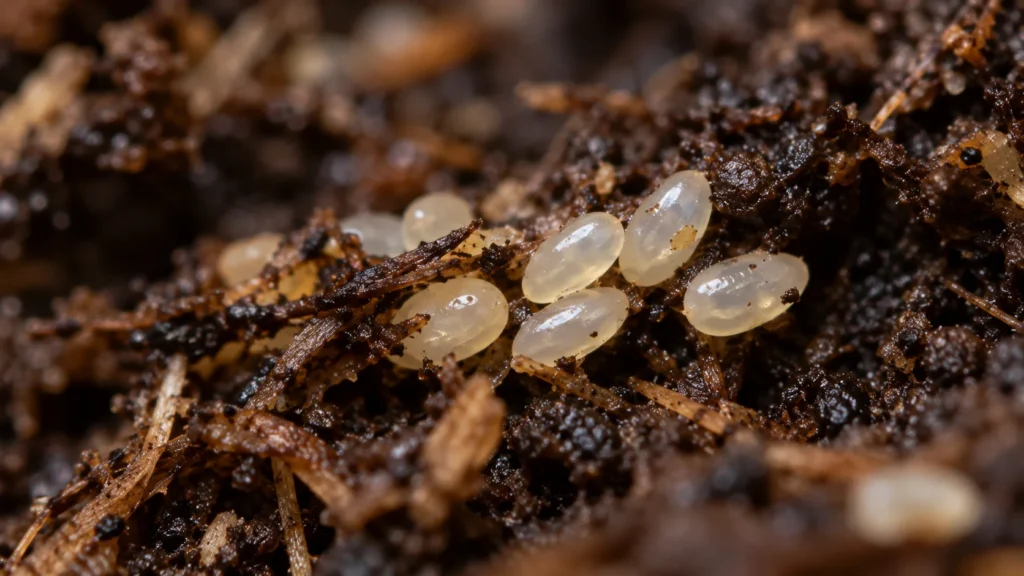
Because eggs can be hidden among soil particles and organic matter, seeing adult gnats around plants is usually a more practical way to detect an infestation.
Gnat Egg Characteristics
Egg identification is generally more difficult than adult identification.
- Extremely small
- Difficult to see individually
- Laid in suitable moist habitat
- Associated with organic material in fungus gnats
- May occur in groups
- Develop before the larval stage
- Hidden within soil or growing media
- Require suitable moisture
- Hatch into legless larvae in fungus gnats
- Usually require magnification for close inspection
What Does a Buffalo Gnat Look Like
Buffalo gnats are a type of black fly rather than the same type of insect commonly found around houseplants. Adult black flies are small, compact insects, and some species can bite people and animals. Their appearance differs from the delicate, mosquito-like fungus gnats commonly seen around indoor plants.
The term buffalo gnat is commonly used for certain black flies because of their hump-backed appearance. Their body shape and biting behavior help distinguish them from nonbiting fungus gnats.
Buffalo Gnat Features
Outdoor conditions and the presence of biting activity provide important identification clues.
- Small black fly
- Compact body
- Hump-backed appearance
- Shorter overall profile than fungus gnats
- Six legs
- One pair of wings
- Common around flowing-water habitats
- Adults can form swarms
- Some species bite
- More strongly associated with outdoor environments
What Does a Black Gnat Look Like
Black gnats can refer to several different small flies, so the name alone does not establish a species. Fungus gnats are frequently dark gray or black and have slender, mosquito-like bodies, while black flies are more compact and can have different behavior.
The location of the insect provides an important clue. Tiny black flies repeatedly appearing around moist houseplant soil are commonly associated with fungus gnats.
Black Gnat Identification Clues
Color should be combined with structure and habitat for better identification.
- Black or dark-gray body
- Tiny overall size
- Six legs
- One pair of wings
- Slender shape in fungus gnats
- Longer legs in fungus gnats
- May appear around plants
- May hover near windows
- Can be attracted to light
- Species identification requires additional features
What Does a Gnat Bite Look Like
Not every insect called a gnat bites people. Fungus gnats do not bite humans, while biting gnats or biting midges can produce itchy skin reactions. PestWorld notes that biting gnats can cause itching and welts where they feed.
A suspected gnat bite can therefore look like a small red or swollen area, but skin appearance alone cannot reliably identify the insect responsible. Other biting insects can produce similar marks.
Gnat Bite Characteristics
Biting reactions vary between individuals and species.
- Small red skin mark
- Localized swelling
- Itching
- Irritation
- Possible small welt
- Multiple marks after outdoor exposure
- Often occurs on exposed skin
- May become more noticeable after scratching
- Can resemble other insect bites
- Identification should include the insect and exposure circumstances
What Does a Gnat Nest Look Like
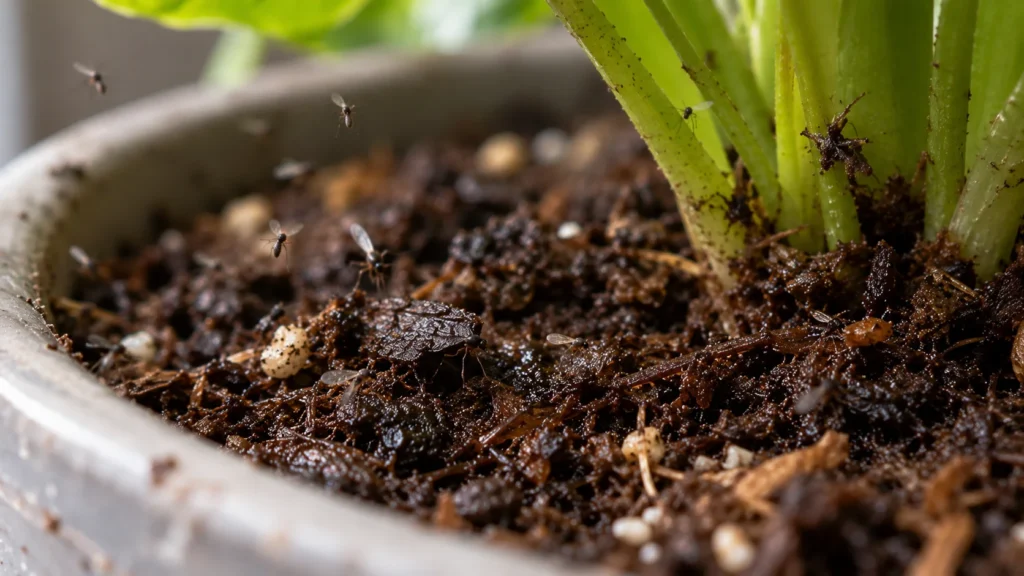
Gnats generally do not build conspicuous nests like social insects. Instead, their eggs and immature stages develop in suitable breeding material. Fungus gnats commonly use moist potting soil, organic debris, compost, and other damp growing media.
Consequently, an indoor fungus gnat infestation is more likely to show adult flies around plants and moist soil than a visible nest structure.
Common Gnat Breeding Sites
The breeding environment depends on the gnat group, but moisture and organic material are important for many types.
- Moist potting soil
- Overwatered houseplants
- Organic debris
- Compost
- Wet mulch
- Decaying plant material
- Damp growing media
- Soil rich in organic matter
- Areas with poor drainage
- Outdoor vegetation and wet habitats
What Does a Gnat Infestation Look Like
A gnat infestation can appear as repeated sightings of tiny flying insects rather than a single obvious colony. Fungus gnat infestations commonly involve adults around houseplants, windows, walls, and moist soil.
Large numbers of adults usually indicate that suitable breeding conditions exist nearby. Moisture control is particularly important for fungus gnats because their immature stages develop in damp organic media.
Signs of Gnat Activity
Repeated signs around one area can help locate the source.
- Several tiny flies around plants
- Gnats resting on leaves
- Gnats crawling across soil
- Flying insects near windows
- Gnats around indoor lights
- Moist potting soil
- Organic debris around plants
- Larvae in growing media
- Plant stress during severe infestations
- Repeated adult emergence
Explore more articles:
- Fruit Flies vs Gnats
- Rat vs Mouse
- Bugs That Look Like Flying Termites
- Bugs That Look Like Fleas
- What Do Fleas Look Like?
- Wood Ants vs Termites
- What Are Centipedes Attracted To?
- What Do Drain Flies Look Like
- What Do Baby Black Widows Look Like?
- False Widow vs Black Widow
Gnat Lookalikes
Several tiny flies can be mistaken for gnats because the common term covers numerous small flying insects. Fruit flies, phorid flies, moth flies, and fungus gnats can all appear in homes but have different body shapes and habits.
For example, phorid flies have a noticeable hump-backed profile and often run across surfaces, while moth flies have fuzzy-looking wings and bodies. Fungus gnats are more slender and are strongly associated with moist plant-growing media.
Common Lookalikes
Careful observation of body shape and location helps separate these small flies.
- Fungus gnats
- Fruit flies
- Phorid flies
- Moth flies
- Shore flies
- Black flies
- Biting midges
- Eye gnats
- Other small flies
- Moisture-associated flies
How to Reduce Gnat Problems
Control depends on the type of gnat involved. For fungus gnats, UC IPM recommends reducing excess moisture and organic debris because the larvae develop in moist growing media. Allowing soil to dry appropriately between watering and improving drainage can reduce favorable conditions.
Yellow sticky traps can help monitor and capture adult fungus gnats, but controlling the immature stages is important because most of the life cycle occurs in soil or organic material.
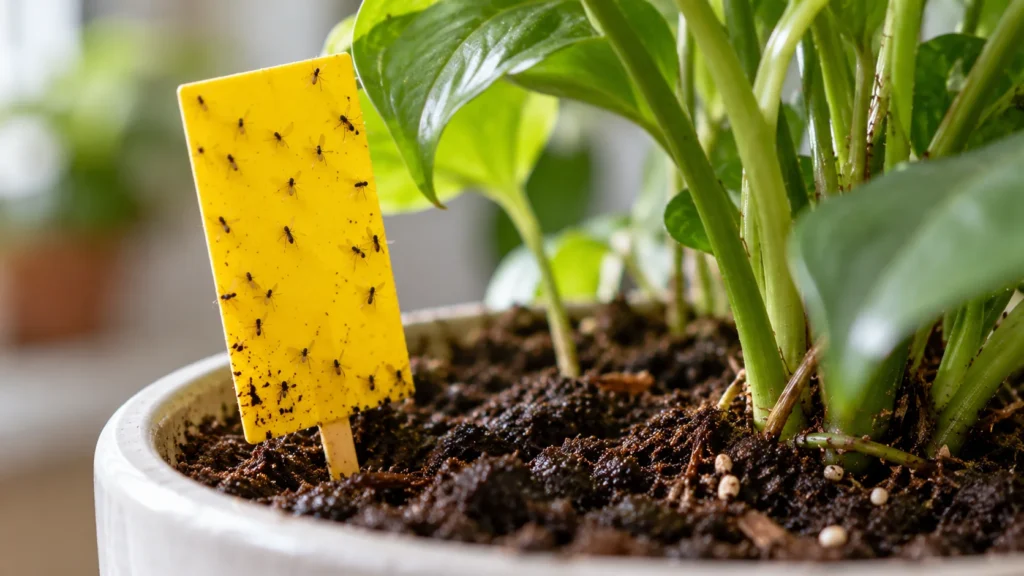
Practical Gnat Control Steps
These measures are particularly relevant to fungus gnats found around indoor plants.
- Reduce unnecessary watering
- Improve drainage
- Remove dead plant material
- Avoid standing water
- Inspect newly purchased plants
- Check plants brought indoors
- Allow appropriate soil drying
- Use yellow sticky traps
- Clean plant areas regularly
- Target larvae and breeding conditions
10 Quick Gnat Identification Points
- Gnats are tiny flies rather than a single scientific insect group.
- Many common gnats measure around 1/16 to 1/8 inch long.
- Adult gnats have six legs.
- Adult gnats have one pair of functional wings.
- Fungus gnats are usually dark and delicate-looking.
- Fungus gnats commonly appear around moist houseplant soil.
- Fungus gnat larvae have a shiny black head and translucent, legless body.
- Fungus gnats do not bite humans.
- Biting gnats can produce itchy bites or welts.
- Moisture reduction is an important part of managing fungus gnat infestations.
Conclusion
A typical gnat is a very small flying insect with six legs, a slender body, and one pair of wings, but the exact appearance depends on the type of gnat. Fungus gnats are usually dark, delicate, mosquito-like flies associated with moist plant soil, while other insects commonly called gnats can have substantially different body shapes and habits.
Identification becomes easier when appearance is considered alongside habitat and behavior. Tiny flies around overwatered houseplants are consistent with fungus gnats, while itchy outdoor bites may involve biting gnats or other insects. Accurate identification helps determine the appropriate control method.
1. What does a gnat look like to the human eye?
A gnat usually appears as a tiny dark flying speck. At closer range, many have slender bodies, six legs, delicate wings, and relatively long legs or antennae.
2. What does a fungus gnat look like?
A fungus gnat is generally a small dark-gray or black fly with a slender body, long delicate legs, long segmented antennae, and clear to light-gray wings.
3. What does a gnat bite look like on a human?
A biting gnat can leave a small itchy, red, or swollen mark, sometimes appearing as a welt. The appearance can overlap with bites from other insects, so the skin mark alone is not enough for reliable identification.
4. What does gnat larvae look like?
Fungus gnat larvae are elongated, legless, and whitish to translucent, with a distinctive shiny black head. They develop in moist soil and organic growing media.
5. What does a gnat infestation look like?
A fungus gnat infestation commonly appears as repeated sightings of tiny flies around houseplants, moist soil, windows, walls, or indoor lights. Larvae may also be present in damp growing media.