
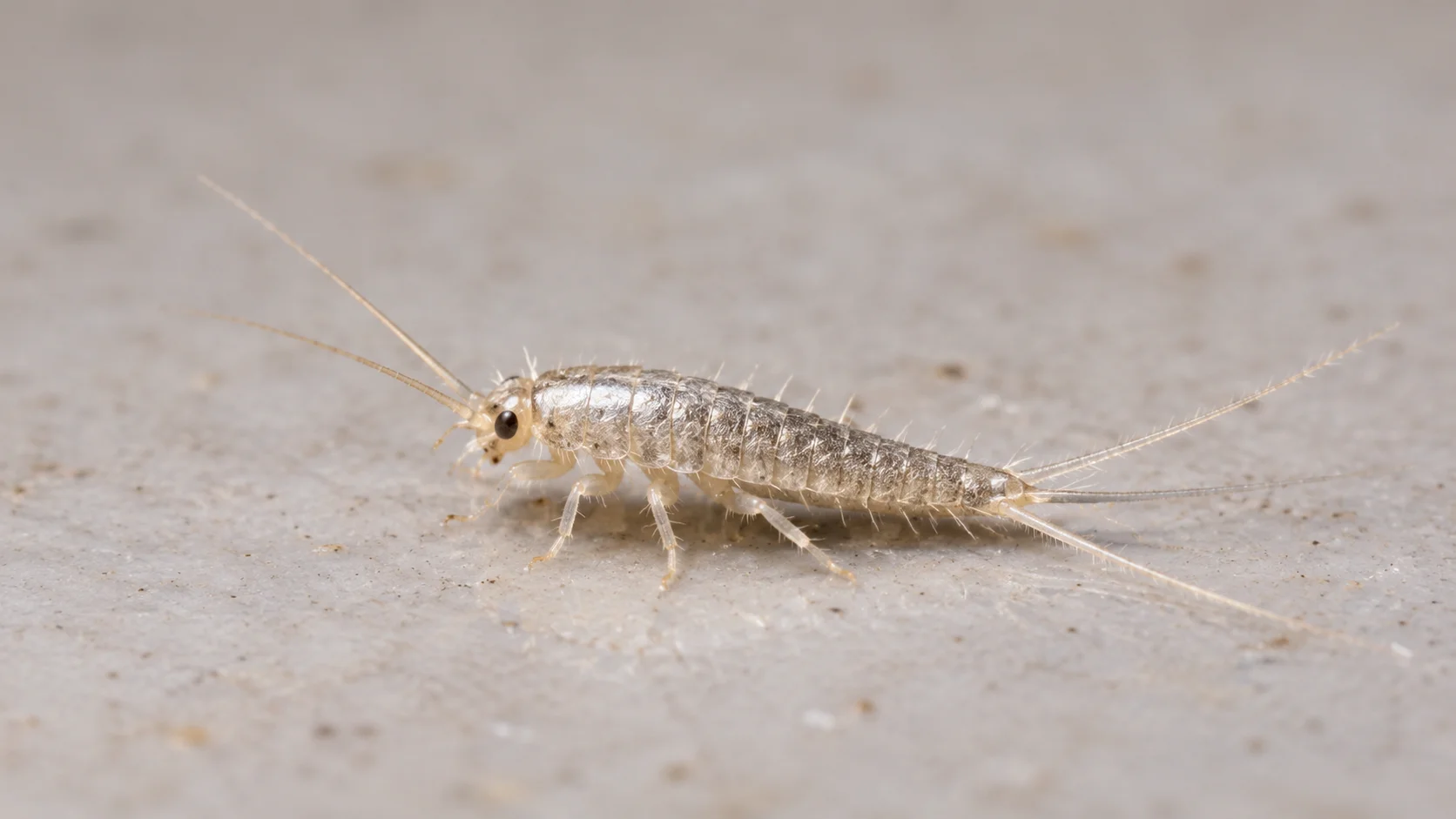
Baby silverfish are the immature stage of silverfish and can look noticeably different from the familiar silvery-gray adults. Newly hatched nymphs are extremely small, pale or white, wingless, and already have the slender body shape associated with mature silverfish. They emerge from eggs as miniature versions of the adult rather than passing through a larval stage.
As they grow, baby silverfish gradually become darker and develop the scales that give adults their characteristic silver appearance. They remain wingless and continue molting throughout development. Because silverfish are nocturnal and prefer dark, humid areas, their young may remain hidden in cracks, basements, bathrooms, storage spaces, and other sheltered locations. Let's undertand , what do baby silverfish look like.
Baby Silverfish Appearance at a Glance
Baby silverfish are best recognized by their combination of very small size, pale coloration, elongated body, antennae, and three rear filaments. Their appearance changes as they mature, so a very young nymph can look almost completely white while an older nymph becomes increasingly gray or silver.
Key Physical Features of Young Silverfish
A newly hatched silverfish nymph is only a fraction of an inch long and is usually white or very pale. It already has the basic body structure of an adult, although many adult characteristics become more noticeable with successive molts.
Important identification features include:
- Very small body size
- White or pale coloration when newly hatched
- Slender, elongated body
- Flattened body profile
- Two long antennae at the front
- Three filament-like appendages at the rear
- Six legs
- No wings
- Gradual darkening with age
- Scales developing as the insect matures
- Quick movement when disturbed
- Multiple molts during development
- Similar overall body shape to an adult silverfish
- Preference for dark hiding places
- Association with humid indoor environments
Baby Silverfish Color and Body Development
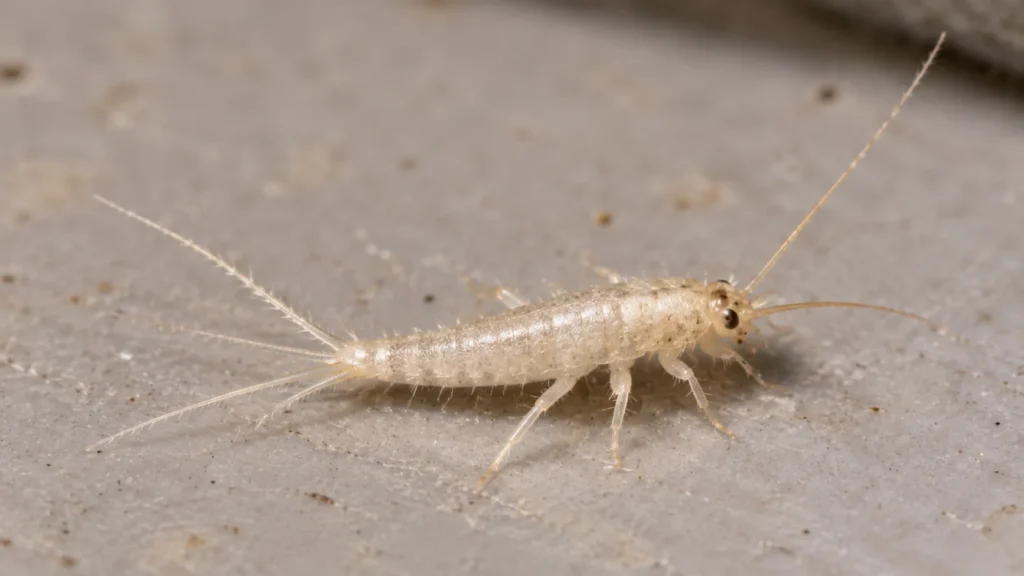
Color is one of the easiest characteristics to notice when comparing young silverfish with adults. Newly hatched nymphs are white, while older immature silverfish gradually develop darker gray or silvery tones. Their scales also develop over time, contributing to the familiar metallic appearance of mature insects.
Changes During the Nymph Stage
Silverfish do not suddenly transform into adults through a pupal stage. Instead, they gradually increase in size through repeated molts. This means different-sized silverfish can appear in the same home at the same time.
A very young nymph may appear almost translucent or bright white, while a more developed nymph can look grayish and increasingly similar to an adult. The body remains elongated and tapered throughout development, making body shape useful for identification even when color varies.
Baby Silverfish Compared With Adult Silverfish
The biggest difference between baby and adult silverfish is size and coloration rather than overall body design. Nymphs already resemble adults because silverfish develop without a dramatic metamorphic stage.
Identifying the Growth Differences
Adult silverfish generally measure around 12–19 mm, while newly hatched nymphs are only a fraction of an inch long. Adults have a more obvious silver-gray appearance because their bodies are covered with scales, whereas newly hatched nymphs lack those scales.
| Feature | Baby Silverfish | Adult Silverfish |
| Size | Fraction of an inch when newly hatched | About 12–19 mm |
| Color | White to pale | Silver, gray, or brownish-gray |
| Scales | Absent when newly hatched | Present |
| Wings | None | None |
| Antennae | Two long antennae | Two long antennae |
| Rear filaments | Three | Three |
| Body shape | Slender and tapered | Slender and tapered |
| Development | Repeated molts | Continues molting |
Where Baby Silverfish Hide Indoors
Young silverfish tend to stay in protected environments where moisture, darkness, and food sources are available. Indoor silverfish are commonly associated with cool, damp, dark areas, including basements and other parts of a home where humidity is elevated.
Common Hiding Locations
Nymphs can remain concealed in narrow spaces during the daytime because silverfish are primarily nocturnal. Potential locations include cracks, crevices, storage areas, bathrooms, kitchens, basements, attics, and spaces around stored paper products.
Cardboard boxes, books, wallpaper, clothing, and other materials containing starches or sugars can provide potential food sources. Moisture can make these areas more favorable for silverfish activity.
Baby Silverfish Life Cycle
Silverfish have three main developmental stages: egg, nymph, and adult. The young hatch as miniature versions of the adult and gradually grow through repeated molts rather than developing through a pupal stage.
From Egg to Mature Silverfish
Depending on environmental conditions and species, silverfish eggs can take roughly 19 to 60 days to hatch. After hatching, the nymph grows through successive molts. Under favorable conditions, some silverfish can reach maturity in approximately three to four months, while development can take much longer in cooler environments.
Silverfish continue molting even after reaching maturity, which is unusual compared with many other household insects. Some species may undergo numerous molts throughout their lives.
Explore more articles:
- Fruit Flies vs Gnats
- Rat vs Mouse
- Bugs That Look Like Flying Termites
- Bugs That Look Like Fleas
- What Do Fleas Look Like?
- Wood Ants vs Termites
- What Are Centipedes Attracted To?
- What Do Drain Flies Look Like
- What Do Baby Black Widows Look Like?
- False Widow vs Black Widow
Baby Silverfish and Household Damage
Baby silverfish are not considered dangerous to people. Silverfish do not bite humans, but they can become nuisance pests because they feed on materials containing starches, sugars, cellulose, and other substances found in household items.
Materials Silverfish May Damage
Silverfish can be associated with damage to paper goods, books, wallpaper, clothing, fabrics, and other materials. Their feeding behavior means that finding nymphs can be useful evidence that suitable food and environmental conditions exist somewhere nearby.
Damage may appear as irregular feeding marks, holes, or surface deterioration on susceptible materials. The presence of young silverfish does not automatically establish the size of an infestation, but repeated sightings deserve further inspection.
Signs of Baby Silverfish Activity
Because young silverfish are small and secretive, spotting one may be the first visible indication of activity. Other evidence can help determine whether silverfish are using a particular area regularly.

Evidence to Look For
Inspect dark and humid areas where paper products, cardboard, textiles, or other potential food sources are stored. Pay particular attention to locations that remain undisturbed for long periods.
Useful signs include:
- Small pale or white silverfish-like insects
- Older grayish nymphs
- Adult silverfish nearby
- Silverfish hiding in cracks
- Activity around damp storage areas
- Damage to paper or cardboard
- Feeding marks on wallpaper
- Damage to susceptible fabrics
- Silverfish found around books
- Repeated sightings after dark
Reducing Conditions That Support Silverfish
Moisture management is an important part of silverfish prevention because these insects favor humid environments. Addressing leaks, improving ventilation, and reducing excessive indoor humidity can make areas less suitable for them.
Practical Prevention Measures
Start by checking bathrooms, basements, kitchens, laundry areas, storage rooms, and other locations where condensation or water leaks occur. Repair plumbing leaks and improve airflow where necessary.
Store vulnerable paper goods and clothing in suitable containers, remove unnecessary cardboard, clean accumulated dust and debris, and seal cracks or gaps that can provide hiding places. These measures reduce both shelter and accessible food sources.
10 Important Facts About Baby Silverfish
- Baby silverfish are called nymphs rather than larvae.
- Newly hatched nymphs are generally white or very pale.
- Young silverfish are only a fraction of an inch long when they hatch.
- Nymphs emerge from eggs as miniature versions of the adult body form.
- They do not develop through a pupal stage.
- Their color becomes darker as they mature.
- Scales develop as young silverfish grow.
- Silverfish remain wingless throughout their development.
- Moist, dark, sheltered areas are common silverfish habitats.
- Finding nymphs can indicate that suitable conditions exist for silverfish activity nearby.
Conclusion
Baby silverfish are tiny, pale nymphs that already resemble adult silverfish in their basic body structure. Their most noticeable characteristics include a slender body, two antennae, three rear filaments, six legs, and a lack of wings. Newly hatched individuals are usually white, while repeated molts gradually increase their size and darken their coloration.
Seeing young silverfish indoors can point to a suitable combination of moisture, shelter, and food sources. Inspecting damp and secluded areas, correcting moisture problems, reducing clutter, and protecting susceptible household materials can help make the environment less favorable for continued silverfish activity.
1. What do baby silverfish look like when they first hatch?
Newly hatched silverfish are very small and generally white or pale. They already have the elongated body shape, antennae, legs, and three rear filaments associated with mature silverfish.
2. Do baby silverfish look different from adults?
Yes. Baby silverfish are much smaller and initially white, while adults are usually silver-gray and covered with scales. Their basic body shape remains similar throughout development.
3. Are baby silverfish dangerous to people?
No. Silverfish do not bite people and are generally considered nuisance pests rather than dangerous household insects. They can, however, damage susceptible paper, fabrics, wallpaper, and other materials.
4. Where are baby silverfish commonly found?
They are commonly associated with dark, damp, sheltered locations such as basements, bathrooms, kitchens, storage areas, cracks, and spaces containing paper or other potential food sources.
5. How long does it take baby silverfish to become adults?
Under favorable conditions, silverfish can reach adulthood in roughly three to four months, although development can take considerably longer in cool environments.