

Gnats are attracted to different environmental conditions depending on the type of gnat involved. Fungus gnats, for example, are strongly associated with moist potting soil and organic material around houseplants, while fruit flies are attracted to fermenting fruits, vegetables, liquids, and other decaying organic matter. Some small biting flies respond to host-related cues such as carbon dioxide and other odors.
This means there is no single attractant that applies to every insect commonly called a gnat. The most useful way to understand what are gnats attracted to is to identify the type first and then look at its preferred food, moisture level, breeding material, light response, and host cues. That distinction also helps explain why gnats may suddenly appear around houseplants, kitchens, windows, drains, or outdoor vegetation.
What Gnats Are Most Attracted To
For many nuisance gnats, the strongest attraction comes from conditions that provide food, moisture, or a suitable place for reproduction. Fungus gnats are particularly associated with wet growing media, while fruit flies seek fermenting or decaying food material.
Main gnat attractants
The most common attractants include:
- Moist potting soil
- Overwatered houseplants
- Fungi and algae in growing media
- Decaying plant material
- Fermenting fruit
- Overripe vegetables
- Fermenting beverages
- Food residue and organic waste
- Damp environments
- Light around windows for some small flying species
The exact attraction varies by species. Fungus gnats, for instance, are highly attracted to moist growing media, while fruit flies are commonly found around fermenting fruits, vegetables, beverages, trash, and similar materials.
What Are Fungus Gnats Attracted To
Fungus gnats are particularly associated with indoor plants. Their larvae develop in growing media and feed mainly on fungi, algae, decaying plant material, and sometimes plant roots. Adults are especially attracted to moist growing media.
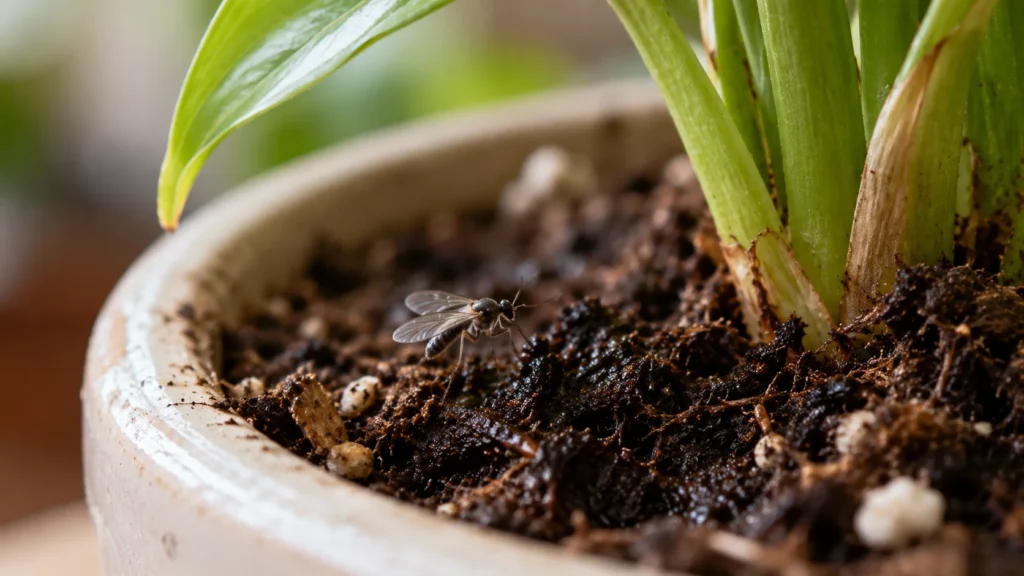
Moist soil and organic matter
Continuously wet soil is one of the strongest conditions associated with fungus gnat activity. Growing media containing substantial organic material, particularly peat-based material that retains moisture, can provide favorable conditions for egg-laying females and developing larvae.
Overwatering can therefore make a houseplant environment more suitable for fungus gnats. University of Minnesota Extension recommends allowing the soil to dry appropriately between watering rather than keeping it continuously saturated.
What Are Gnats Attracted To in the House
Indoor gnats usually appear because something inside the home is providing food, moisture, breeding material, or shelter. Houseplants are a major source for fungus gnats, while kitchens and food-storage areas are common sources for fruit flies.
Common indoor sources
Check areas such as:
- Houseplant soil
- Plant saucers containing standing water
- Overwatered containers
- Decaying leaves
- Overripe fruit
- Fermenting vegetables
- Juice and soft-drink containers
- Wine or beer residue
- Trash containers
- Damp organic debris
- Floor drains and other moist areas
Fruit flies are commonly found indoors where fermenting fruits and vegetables, fermenting liquids, soft-drink containers, or trash are present. Removing the breeding source is therefore more important than simply killing visible adults.
What Foods Are Gnats Attracted To
Food attraction depends on the type of gnat or small fly. Fruit flies are strongly associated with ripe and overripe fruit, vegetables, and decaying organic material. Fungus gnats do not primarily seek household fruit; their immature stages depend on fungi and organic material in moist growing media.
Fruit and fermenting foods
Common fruit-fly attractants include bananas, berries, melons, apples, tomatoes, and other ripening or decaying produce. Fermenting liquids such as wine and beer can also provide attractive conditions.
Apple cider vinegar is widely used in monitoring traps for vinegar flies, including spotted-wing drosophila. USU Extension identifies apple cider vinegar and sugar-water-yeast mixtures as common liquid baits.
What Smells and Scents Are Gnats Attracted To
Odor can be an important cue for small flies because it helps them locate food and breeding resources. Fermentation produces volatile compounds associated with ripe or decomposing organic material, which can make these sources attractive to fruit flies.

Fermentation-related odors
Fruit flies are commonly associated with the odors produced by fermenting fruits, vegetables, beverages, and other organic materials. University of Minnesota Extension notes that adult spotted-wing drosophila respond to cues associated with ripening fruit, while traditional fruit flies are commonly found around fermenting food sources.
This explains why uncovered fruit, spilled juice, wine residue, recycling containers, and food waste can sometimes support noticeable fly activity.
What Color Are Gnats Attracted To
Color attraction is not universal among gnats because different species respond differently to visual cues. Fungus gnat adults are attracted to yellow, which is why yellow sticky cards are commonly used for detecting and capturing them around houseplants.
Yellow and other light cues
Yellow sticky traps can be useful for monitoring fungus gnats, but their effectiveness does not mean every gnat species is strongly attracted to yellow. Visual attraction varies by species and environment.
Some other small flies can respond to natural or artificial light. For example, Penn State research reports that mushroom phorid flies are attracted to ultraviolet and natural light, demonstrating that light response can differ among small fly groups.
What Gnats Are Attracted To Outside
Outdoor gnat activity is influenced by moisture, vegetation, organic matter, fungi, decaying material, and available hosts. Conditions vary considerably according to the species and local environment.
Outdoor moisture and breeding areas
Fungus gnats can occur where damp organic material and fungi are abundant. Outdoors, suitable habitats may include moist soil, decomposing vegetation, shaded plant material, and other areas that retain moisture.
Biting midges, sometimes called no-see-ums, have different behavior from fungus gnats. They are tiny flies that can seek animal hosts, and CDC materials describe light traps and carbon dioxide-baited traps as tools for sampling host-seeking midges.
Explore more articles:
- Fruit Flies vs Gnats
- Rat vs Mouse
- Bugs That Look Like Flying Termites
- Bugs That Look Like Fleas
- What Do Fleas Look Like?
- Wood Ants vs Termites
- What Are Centipedes Attracted To?
- What Do Drain Flies Look Like
- What Do Baby Black Widows Look Like?
- False Widow vs Black Widow
What Gnats Are Attracted To on Humans
Not every insect called a gnat is attracted to humans. Fungus gnat adults do not bite people, while certain biting flies and biting midges actively seek animal hosts. Colorado State University Extension specifically describes fungus gnat adults as harmless and non-biting.
Human-related cues
For host-seeking biting midges, carbon dioxide can be an important cue because it helps indicate the presence of animals. CDC trapping information describes increased capture of host-seeking female mosquitoes and no-see-ums when traps are baited with carbon dioxide.
Body heat, moisture, movement, and natural odors can also contribute to host detection in various biting insects, although the importance of each cue differs among species.
What Gnats Are Attracted To in Plants
Plants can attract gnats directly or provide the environmental conditions gnats need. Fungus gnats are especially associated with indoor plant containers because moist growing media can support fungi and decaying organic matter used by their larvae.
Plant conditions that encourage gnats
Continuously wet soil, poor drainage, decaying leaves, and aging potting media can all create favorable conditions. University of Minnesota Extension recommends avoiding overwatering and keeping the soil surface appropriately dry between watering periods.
Healthy watering practices therefore address the environmental condition attracting fungus gnats rather than simply removing the flying adults.
What Are Gnats Attracted To to Kill Them
Attractants can be useful for monitoring and trapping, but the most effective approach depends on the species. Yellow sticky cards are useful for adult fungus gnats, while vinegar-based traps can attract fruit flies and some vinegar flies.

Targeted trapping
For fungus gnats, yellow sticky traps capture adults around houseplants, while controlling excessive soil moisture targets the conditions supporting eggs and larvae. For fruit flies, vinegar traps can catch adults, but sanitation and removal of breeding material remain essential.
Traps work best as part of an integrated approach rather than as the only control measure.
How to Reduce the Things Gnats Are Attracted To
Reducing attractants is often more effective than repeatedly killing individual flying adults. The appropriate strategy depends on whether the problem involves fungus gnats, fruit flies, or another small fly.
Practical prevention steps
- Allow houseplant soil to dry appropriately between waterings.
- Improve drainage in containers.
- Remove dead leaves and decaying plant material.
- Avoid leaving standing water in plant saucers.
- Store ripe fruit properly.
- Refrigerate susceptible produce when appropriate.
- Clean food and beverage spills promptly.
- Empty food waste regularly.
- Keep recycling containers clean.
- Use yellow sticky traps for fungus gnat monitoring.
10 Key Things Gnats Are Attracted To
The most important attraction factors can be summarized as follows:
- Moist soil strongly attracts fungus gnats.
- Overwatered houseplants create favorable fungus gnat conditions.
- Fungi and algae support fungus gnat larvae.
- Decaying organic matter can attract or support several small fly species.
- Ripe and overripe fruit attracts fruit flies.
- Fermenting liquids can attract vinegar flies.
- Food residue and trash can provide breeding resources for fruit flies.
- Yellow visual cues are useful for attracting adult fungus gnats to sticky traps.
- Natural and artificial light can attract some small fly species.
- Carbon dioxide and host cues can attract certain biting midges and other host-seeking flies.
Conclusion
The answer to what are gnats attracted to depends largely on the species. Fungus gnats are strongly associated with moist soil, fungi, algae, and organic material around plants, while fruit flies are attracted to ripe or fermenting produce, beverages, food residue, and decaying organic matter. Some other small flies respond to light or host-related cues such as carbon dioxide.
Reducing the conditions that attract gnats is usually the most useful long-term strategy. Proper watering, better drainage, removal of decaying plant material, food sanitation, and targeted traps can reduce different gnat populations according to their biology. Correctly identifying the type of gnat first makes the prevention and control approach much more precise.
1. What are gnats most attracted to?
Fungus gnats are most strongly associated with moist growing media, fungi, algae, and decaying organic material, while fruit flies are attracted to ripe or fermenting fruits, vegetables, liquids, and food waste.
2. What color are gnats attracted to?
Fungus gnats are attracted to yellow, which is why yellow sticky cards are commonly used to monitor and capture adults around houseplants. Attraction varies among different gnat and small-fly species.
3. What are fungus gnats attracted to?
Fungus gnats are strongly attracted to moist growing media, particularly soil that remains wet and contains organic material. Their larvae feed mainly on fungi, algae, decaying plant material, and sometimes plant roots.
4. What are gnats attracted to in the house?
Indoor gnats may be attracted to overwatered houseplants, moist soil, decaying plant material, fermenting fruit, beverages, trash, and other organic sources. The exact source depends on the species.
5. What are gnats attracted to on humans?
Fungus gnats do not bite humans. Certain biting midges and other host-seeking flies can respond to carbon dioxide and other cues associated with animals.