

The term types of bed bugs can refer to true bed bug species as well as closely related insects that are sometimes found in beds, bedrooms, attics, and other parts of homes. The common bed bug, Cimex lectularius, is the species most frequently associated with people in the United States, while the tropical bed bug, Cimex hemipterus, occurs mainly in tropical and subtropical regions.
Several related insects can also be mistaken for bed bugs, including bat bugs and swallow bugs. These insects belong to the same broader family, Cimicidae, and can look remarkably similar. Accurate identification therefore depends on body features, location, host association, and sometimes microscopic examination rather than appearance alone.
Main Types of Bed Bugs
Bed bugs belong to the family Cimicidae and order Hemiptera. Although many species in this family feed primarily on bats or birds, only certain species are commonly associated with humans. In the United States, the common bed bug is by far the species most often encountered in homes.
Common bed bug
The common bed bug, Cimex lectularius, is the principal human-associated bed bug across much of the world. Adults are small, flat, oval, reddish-brown insects that are wingless and typically around 5–7 mm long.
They hide in mattress seams, bed frames, cracks, box springs, baseboards, furniture joints, and other protected spaces close to sleeping hosts. Females lay small eggs in sheltered locations, and the immature nymphs resemble smaller, paler versions of adults.
Tropical bed bug
The tropical bed bug, Cimex hemipterus, is another true bed bug species that feeds on humans. It is primarily associated with tropical and subtropical regions, although its distribution can overlap with areas where Cimex lectularius occurs.
Its overall appearance is similar to the common bed bug, which makes visual identification difficult. Species-level identification may require examination of anatomical characteristics rather than simply comparing color or body size.
Explore more articles:
- Fruit Flies vs Gnats
- Rat vs Mouse
- Bugs That Look Like Flying Termites
- Bugs That Look Like Fleas
- What Do Fleas Look Like?
- Wood Ants vs Termites
- What Are Centipedes Attracted To?
- What Do Drain Flies Look Like
- What Do Baby Black Widows Look Like?
- False Widow vs Black Widow
Bed Bug Relatives Found in Homes
Some insects that appear in searches for different types of bed bugs are technically relatives rather than true bed bug species. Bat bugs and swallow bugs belong to the same family and can bite people when their normal animal hosts are unavailable.
Bat bugs
Bat bugs include species such as Cimex adjunctus and Cimex pilosellus. They primarily live with bats and can occur inside buildings where bats roost in attics, walls, eaves, or other protected locations.
Bat bugs can look almost identical to bed bugs without magnification. One useful identification feature is the longer hair around the head and eyes, but reliable separation can require a hand lens or microscope.
Swallow bugs
Swallow bugs, including Oeciacus vicarius, are relatives of bed bugs that primarily parasitize cliff swallows and other nesting birds. They can enter buildings when bird nests are located around structures or when their normal hosts leave.
They may bite humans temporarily, but they generally cannot maintain a long-term infestation without access to their preferred bird hosts. Their presence can therefore point toward nesting activity around a home rather than a conventional bed bug infestation.
What Bed Bugs Look Like
Adult bed bugs are generally reddish-brown, oval, flattened, and wingless. Their bodies become swollen and more elongated after feeding, making a recently fed specimen look considerably different from an unfed one.
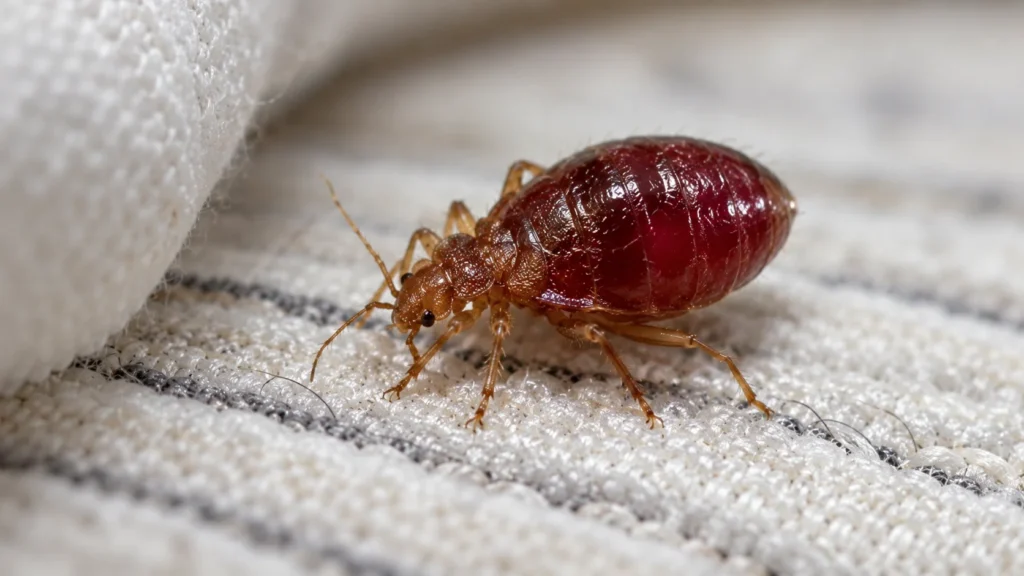
Bed bug appearance
Important identification features include:
- Adults are generally reddish-brown.
- Bodies are oval and flattened when unfed.
- Adults are approximately 5–7 mm long.
- Bed bugs have no functional wings.
- Small wing pads are present.
- Legs and antennae are relatively slender.
- The body becomes swollen after a blood meal.
- Newly hatched nymphs are pale and translucent.
- Nymphs become darker through successive stages.
- Eggs are tiny, pale, and approximately 1 mm long.
Different Types of Bugs Found in Beds
Not every small insect found on or around a bed is a bed bug. A bedroom can contain various insects and arthropods, especially when humidity, food sources, pets, or outdoor activity provide suitable conditions.
Common bed bug look-alikes
Several organisms may be mistaken for bed bugs:
- Bat bugs
- Swallow bugs
- Carpet beetle larvae
- Fleas
- Booklice
- Spider beetles
- Cockroach nymphs
- Mites
- Flea beetles
- Small ticks
These insects differ substantially in biology and behavior. For example, carpet beetle larvae are hairy, fleas have enlarged hind legs, and booklice are much smaller and often associated with humid conditions. Bat bugs and swallow bugs are among the closest visual relatives because they belong to the Cimicidae family.
Types of Bed Bug Bites
Bed bug bites can vary between individuals. Some people develop itchy, inflamed areas, while others may have little or no noticeable reaction. The appearance of a bite alone cannot reliably establish that a bed bug caused it.

Bed bug bite characteristics
Bed bugs feed by piercing the skin and taking a blood meal. Their bites can produce itching and inflammation, and repeated exposure may contribute to sleep disturbance. The CDC states that bed bugs are not known to spread diseases to people, although bites can cause allergic reactions in some individuals.
Because flea bites, mosquito bites, other insect bites, and skin conditions can look similar, identifying the insect itself is more useful than relying only on skin marks.
Types of Bed Bugs by Life Stage
Bed bugs do not have a larval stage. Their development consists of an egg followed by five nymphal stages and then adulthood. Each nymphal stage requires a blood meal before molting to the next stage.
Eggs and nymphs
Bed bug eggs are approximately 1 mm long, translucent white, and typically deposited in sheltered locations. Nymphs are smaller and paler than adults and gradually become more pigmented as they mature.
A newly hatched nymph can be difficult to spot because of its pale color and tiny size. Finding eggs, shed skins, dark fecal spots, or multiple developmental stages together provides stronger evidence of an established infestation.
Regional Types of Bed Bugs
The species encountered depends partly on geography. The common bed bug has a broad global distribution, while the tropical bed bug is primarily associated with tropical and subtropical regions. Related bat and bird-associated species also vary by region.
Common regional examples
In the United States, Cimex lectularius is the principal bed bug species associated with people. Cimex hemipterus has a more tropical and subtropical distribution, while Cimex adjunctus and Cimex pilosellus are examples of bat bugs associated with bats.
The distinction matters because treating a bat bug infestation like a conventional bed bug infestation may leave the underlying bat roost unresolved. Extension guidance recommends considering the associated animal host when identifying these close relatives.
How to Identify Different Types of Bed Bugs
Correct identification is the first step when dealing with a suspected infestation. Because closely related cimicids can look nearly identical, professional identification can be useful when the specimen is unclear.
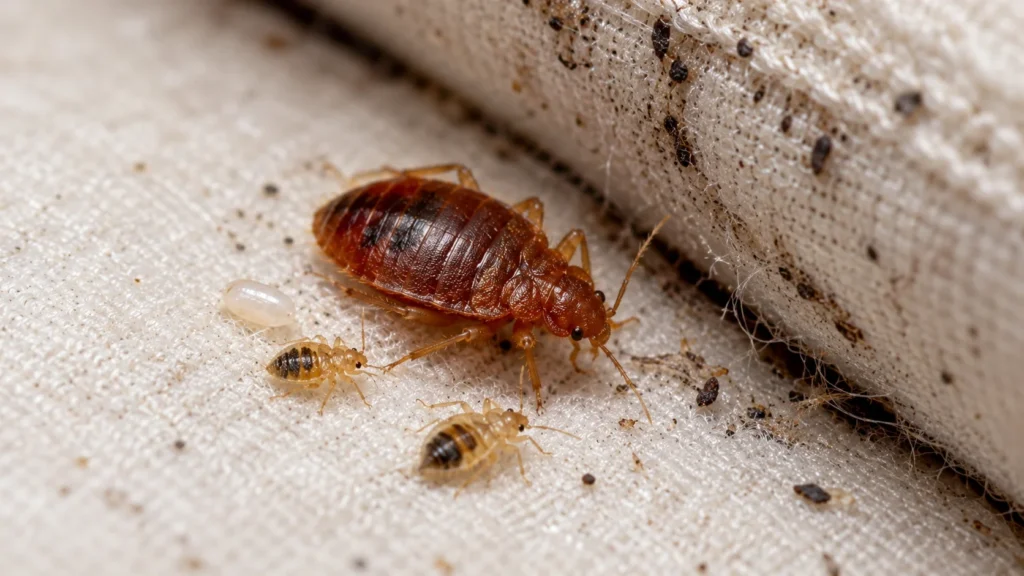
Identification checklist
Use these clues when examining a suspected specimen:
- Check the insect's overall body shape.
- Look for a flattened oval body.
- Examine its reddish-brown coloration.
- Check whether functional wings are absent.
- Compare the insect with known bed bug photographs.
- Look for eggs or shed skins nearby.
- Inspect mattress seams and bed-frame joints.
- Check cracks around sleeping areas.
- Consider nearby bats or bird nests.
- Use magnification or professional identification for difficult specimens.
Bed Bugs vs Other Bugs in Your Bed
Finding a bug in bedding does not automatically establish a bed bug infestation. A reliable identification should consider the insect's morphology and the evidence surrounding it.
Important differences
Bed bugs are flattened and oval, whereas fleas are laterally flattened and have prominent jumping legs. Carpet beetle larvae are covered in hairs, while booklice are much smaller and are usually associated with damp environments. Bat bugs and swallow bugs are more challenging because they are close relatives of bed bugs and can look nearly identical.
A suspected specimen can be collected carefully in a sealed container or on clear tape for examination. Avoid crushing it before identification when possible, because intact physical characteristics can make professional identification easier.
10 Key Facts About Types of Bed Bugs
The following points summarize the most useful information for identifying true bed bugs and their close relatives:
- Cimex lectularius is the common bed bug.
- Cimex hemipterus is the tropical bed bug.
- Common bed bugs have a broad global distribution.
- Tropical bed bugs are mainly associated with tropical and subtropical regions.
- Bat bugs are close relatives rather than ordinary household bed bugs.
- Cimex adjunctus is an eastern bat bug.
- Cimex pilosellus is a western bat bug.
- Swallow bugs primarily use birds as hosts.
- Bed bugs are reddish-brown, flat, oval, and wingless.
- Accurate identification may require magnification or professional examination.
Conclusion
There are several types of bed bugs and bed bug relatives, but the species most commonly associated with human infestations in the United States is the common bed bug, Cimex lectularius. The tropical bed bug, Cimex hemipterus, is another true bed bug species, while bat bugs and swallow bugs are closely related cimicids that normally depend on bats or birds.
Identifying the insect correctly is important because these species can look extremely similar while requiring different management approaches. A combination of body characteristics, location, host association, eggs, shed skins, and surrounding infestation evidence provides a more dependable identification than a bite mark or color comparison alone.
1. How many types of bed bugs are there?
Several species belong to the broader Cimicidae family, but the two species most commonly implicated in human bed bug infestations are Cimex lectularius and Cimex hemipterus. Other cimicids, including bat bugs and swallow bugs, are closely related but normally have different hosts.
2. Are there different types of bed bugs?
Yes. The common bed bug and tropical bed bug are the two principal species associated with humans. Closely related bat bugs and swallow bugs can also occur in buildings and may occasionally bite people.
3. What are the small types of bugs that can be found in beds?
Possible insects and arthropods include bed bugs, bat bugs, swallow bugs, fleas, carpet beetle larvae, booklice, mites, and other small household pests. Accurate identification is necessary because their appearance and control requirements differ.
4. Are bat bugs a type of bed bug?
Bat bugs are close relatives of bed bugs within the Cimicidae family, but they are not the same species as the common bed bug. They primarily feed on bats and can enter living areas when bat hosts are absent or inaccessible.
5. What does a common bed bug look like?
An adult common bed bug is a small, reddish-brown, oval, flattened, wingless insect. Adults are generally around 5–7 mm long, while nymphs are smaller and paler.