
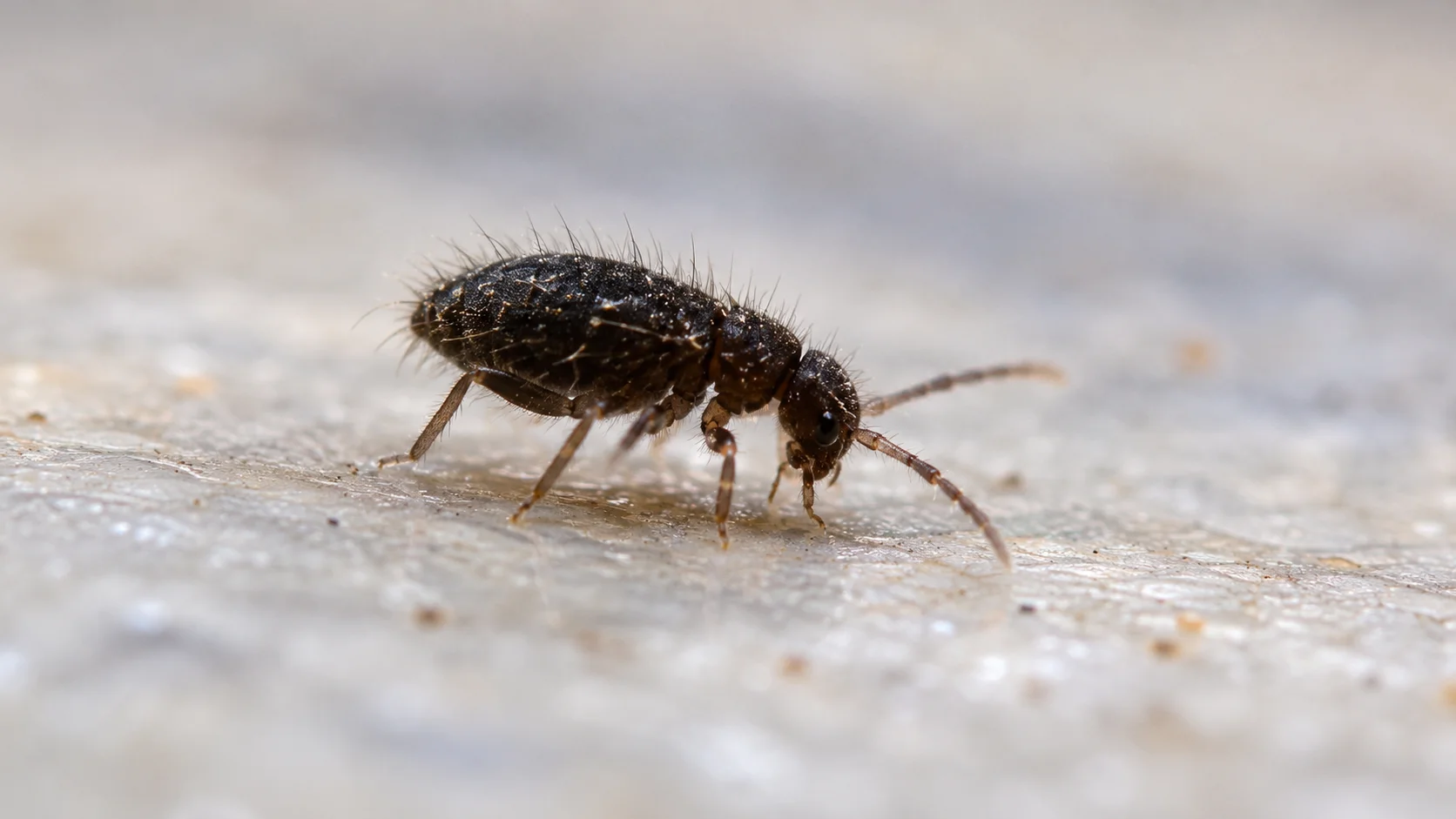
Finding tiny black bugs that jump like fleas can be alarming, especially when they appear indoors, around bedding, in bathrooms, or near pets. Several small pests can jump or suddenly spring away when disturbed, but they do not all behave like fleas or pose the same risks. Springtails are one of the most common possibilities because their spring-loaded abdominal structure allows them to launch themselves into the air.
Correct identification depends on more than color and jumping ability. Body shape, location, moisture conditions, biting behavior, and association with pets can help separate springtails from fleas and other small insects. Fleas are blood-feeding parasites, while springtails are generally harmless decomposers associated with damp environments, fungi, and organic material.
Common Tiny Black Bugs That Jump Like Fleas
Several pests can be mistaken for fleas because of their small size and sudden jumping movement. Springtails are especially important because they can be black, gray, brown, white, or other colors and may occur in large numbers around moisture.
Fleas are another possibility when the insects are dark, flattened, associated with pets, and accompanied by bites or flea dirt. Flea beetles can also jump strongly, but they are primarily plant pests rather than household parasites.
Main Identification Possibilities
The most likely candidates include:
- Springtails: Tiny moisture-loving organisms that jump using a furcula
- Fleas: Dark, flattened, blood-feeding parasites
- Flea beetles: Small beetles that jump when disturbed and feed on plants
- Snow fleas: Dark springtail species active around thawing snow
- Small soil insects: Moisture-associated organisms that may occasionally move indoors
- Other minute beetles: Some can move suddenly when disturbed
- Plant-associated pests: Small insects that may jump from foliage or potting soil
- Young insects: Immature stages of some species can appear extremely small
- Outdoor springtails: Individuals entering homes from damp landscaping
- Pet-associated fleas: Fleas introduced indoors through dogs, cats, wildlife, or infested environments
Springtails Are a Major Lookalike
Springtails are among the strongest candidates when very tiny dark bugs suddenly jump across floors, windowsills, bathrooms, or other damp areas. Most household springtails are only about 1–2 mm long, although species vary considerably in size and appearance.
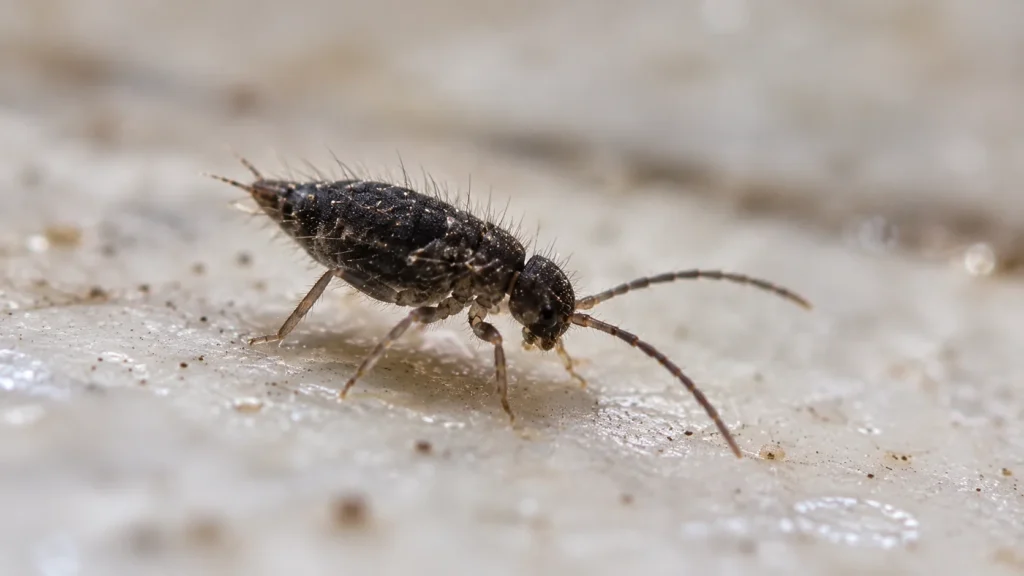
They do not jump with enlarged flea-like hind legs. Instead, a specialized forked structure called a furcula is held underneath the abdomen and released to propel the animal through the air. This can make a springtail appear to disappear instantly when disturbed.
Springtail Features
Springtails have several characteristics that separate them from fleas.
They are generally soft-bodied compared with the hard body of a flea, and their bodies may be slender or rounded depending on the species. They are commonly found in damp soil, mulch, leaf litter, houseplant soil, bathrooms, basements, and areas affected by condensation.
Most importantly, springtails do not bite or sting people or animals. A large number indoors often indicates excessive moisture rather than a parasitic infestation.
Fleas Can Also Appear as Tiny Black Jumping Bugs
Fleas are dark brown to black, wingless insects that are less than about 1/8 inch long. Their bodies are flattened from side to side, and their enlarged hind legs allow them to jump efficiently.
Unlike springtails, fleas are parasites. Adult fleas feed on blood and commonly infest cats, dogs, and other animals, although they can also bite people. Their presence indoors is often connected with pets, wildlife, carpeting, furniture, and areas where animals rest.
Signs That Point Toward Fleas
A flea problem becomes more likely when jumping insects occur alongside other evidence of flea activity.
Look for flea dirt, which resembles dark pepper-like particles, particularly on pet bedding or animal fur. Flea bites may also occur, commonly around the lower legs and ankles.
Fleas can also be detected with a simple white-sock test because their dark bodies contrast against light fabric. However, identification should ideally include examination of pets and their sleeping areas rather than relying on jumping behavior alone.
Tiny Black Bugs in the House
The location of the insects provides valuable identification information. Springtails are strongly associated with excessive moisture, while fleas are more closely associated with animals and areas where hosts spend time.
Springtails commonly occur around plumbing leaks, condensation, damp basements, bathrooms, kitchens, and overwatered houseplants. UMN Extension identifies moisture control as the most effective way to manage indoor springtails.
Tiny Black Bugs in Damp Rooms
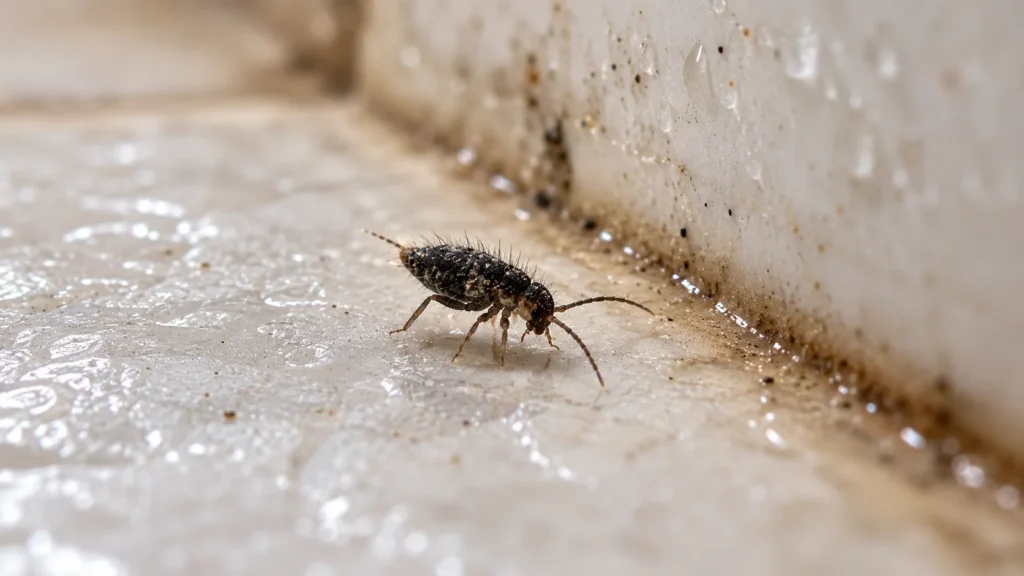
Bathrooms are a particularly important location for springtail identification. Moisture around showers, sinks, plumbing, wet flooring, and poorly ventilated spaces can create conditions suitable for these organisms.
Basements, laundry rooms, kitchens, crawlspaces, and damp storage areas can also support springtails. If the insects appear immediately after watering houseplants, check the potting soil because excessive moisture can encourage springtail populations.
Tiny Black Bugs in Beds and Bedrooms
Small jumping insects discovered around a bed should not automatically be identified as fleas. Springtails may wander into bedrooms when moisture conditions elsewhere in a structure support them, while fleas are more likely when pets or other hosts have access to the room.
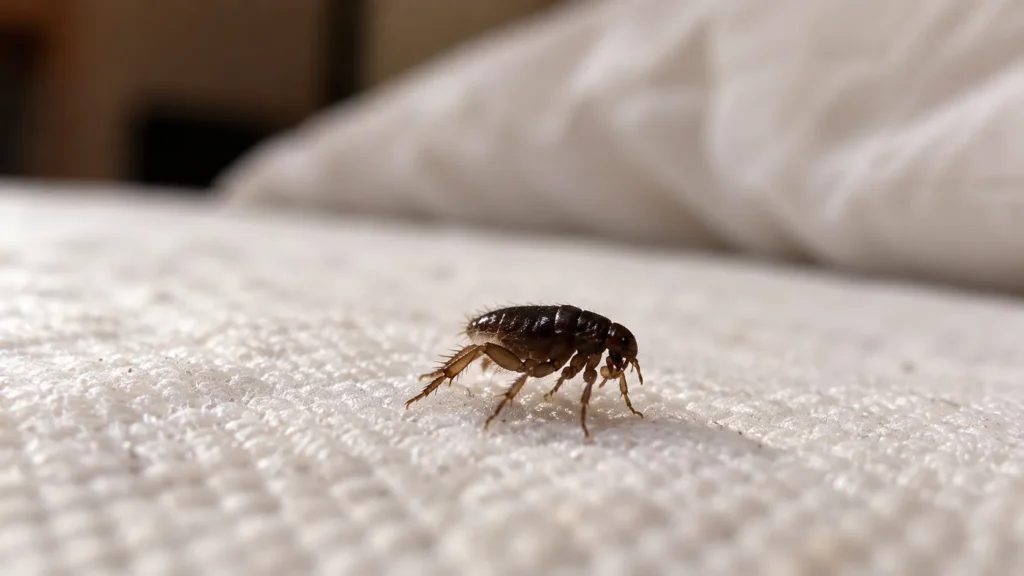
Fleas commonly occur around pet sleeping locations because eggs fall from the host and develop in surrounding areas. Carpets, cracks, furniture, and pet bedding can therefore become important flea-development sites.
Bedroom Identification Clues
Consider the surrounding evidence before treating the room.
Springtails are more plausible when there is condensation, dampness, mold, wet houseplant soil, or another moisture source. Fleas become more plausible when pets are scratching, flea dirt is present, or dark jumping insects are found where animals regularly sleep.
Bed bugs are much less likely when the insects are genuinely jumping because bed bugs do not jump or fly. Their bodies are also considerably larger and differently shaped than fleas.
Tiny Black Bugs That Jump and Bite
Biting behavior is an important distinction. Springtails do not bite or sting, so confirmed bites make fleas or another biting pest more likely than springtails.
Fleas have piercing mouthparts adapted for blood feeding and can bite both pets and people. Their bites may produce irritation, while some individuals and animals can experience stronger allergic reactions.
Separating Biting Pests From Harmless Jumpers
Do not use skin irritation alone as proof that a particular jumping insect is responsible. Different skin conditions and insect exposures can produce similar-looking irritation, and seeing springtails nearby does not establish that they caused bites.
Instead, combine the skin symptoms with physical insect evidence, pet inspection, flea dirt, and the environmental conditions surrounding the insects.
Explore more articles:
- Fruit Flies vs Gnats
- Rat vs Mouse
- Bugs That Look Like Flying Termites
- Bugs That Look Like Fleas
- What Do Fleas Look Like?
- Wood Ants vs Termites
- What Are Centipedes Attracted To?
- What Do Drain Flies Look Like
- What Do Baby Black Widows Look Like?
- False Widow vs Black Widow
Tiny Black Bugs on Dogs and Pets
When tiny dark insects are repeatedly found on dogs, fleas deserve particular attention. Adult fleas spend much of their time on animal hosts and feed on blood, making pets a major source of indoor flea introductions.
Springtails are not parasites of dogs and do not infest living animals. Finding a jumping organism near a pet therefore does not automatically indicate a flea infestation.
Pet Inspection Clues
A careful inspection can provide useful evidence:
- Check the fur around the neck
- Examine the lower back
- Inspect the base of the tail
- Look around the abdomen
- Search pet bedding
- Look for dark flea dirt
- Watch for persistent scratching
- Use a flea comb when appropriate
- Check favorite resting areas
- Discuss suitable flea-control products with a veterinarian
For pet flea treatments, veterinary guidance is important because products differ by species, age, weight, and health status.
Springtails in Bathrooms and Houseplants
Springtails often become noticeable in bathrooms and around indoor plants because these environments can provide persistent moisture. Overwatered potting soil is a particularly common habitat, and springtails may become more visible immediately after watering.
Moisture Clues
Indoor springtail activity may point toward:
- Plumbing leaks
- Excess condensation
- Damp bathroom surfaces
- Poor drainage
- Overwatered plants
- Wet basements
- Damp crawlspaces
- Water entering around foundations
- Excessive outdoor irrigation
- Mold or decaying organic material
Correcting the underlying moisture source is generally more useful than relying on insecticides for springtail management.
Springtails vs Fleas Identification Table
| Feature | Springtails | Fleas |
| Typical size | About 1–2 mm for many household types | Usually less than 1/8 inch |
| Body | Often soft and rounded or slender | Hard and flattened |
| Jumping mechanism | Furcula beneath abdomen | Powerful hind legs |
| Color | Black, gray, white, brown, and others | Dark brown to black |
| Bites people | No | Yes |
| Parasite | No | Yes |
| Common habitat | Damp soil and moisture | Animals and host resting areas |
| Food | Fungi, algae, decaying material | Blood |
| Common indoor clue | Excess moisture | Pets or wildlife |
| Control priority | Reduce moisture | Treat pets and environment |
10 Key Facts About Tiny Black Bugs That Jump Like Fleas
- Springtails are one of the most common flea lookalikes among tiny jumping organisms.
- Springtails can be black, gray, brown, white, or other colors.
- Springtails use a furcula to launch themselves into the air.
- Springtails are commonly associated with excessive moisture.
- Springtails do not bite or sting people or pets.
- Fleas are dark, flattened, blood-feeding parasites.
- Fleas commonly become established where pets or wildlife are present.
- Flea dirt can provide additional evidence of flea activity.
- Damp bathrooms and overwatered houseplants strongly favor springtails.
- Identifying the insect before treatment helps prevent unnecessary pest-control measures.
Conclusion
Tiny black bugs that jump like fleas can represent several different pests, but springtails and fleas are two of the most important possibilities. Springtails are extremely small, moisture-loving organisms that use a furcula to jump and are harmless to people and pets. Fleas are flattened, blood-feeding parasites that are more closely associated with animals, pet bedding, and host resting areas.
The surrounding conditions provide valuable clues. Damp bathrooms, wet soil, condensation, and moisture problems point more strongly toward springtails, while pets, flea dirt, scratching, and insects found around animal resting areas increase the likelihood of fleas. Careful identification should come before treatment so the underlying cause can be addressed appropriately.
1. What are the tiny black bugs that jump like fleas?
Springtails are a common possibility, especially when the insects are extremely small and found around damp areas. Fleas are another possibility when the insects are dark, flattened, associated with pets, and capable of biting.
2. Can springtails bite people or pets?
No. Springtails do not bite or sting people or animals and are considered harmless. Large numbers indoors are usually associated with excessive moisture.
3. Are tiny jumping bugs in a bed always fleas?
No. Jumping insects found around bedding are not automatically fleas. Springtails can enter bedrooms, particularly when moisture problems exist elsewhere in the home. Fleas become more likely when pets, flea dirt, or other signs of flea activity are present.
4. Are springtails found on dogs?
Springtails do not parasitize dogs. If tiny dark insects are actually living on a dog and feeding from the animal, fleas are a much more relevant possibility.
5. How can springtails be controlled indoors?
Reducing moisture is the primary approach. Fix leaks, improve ventilation, dry damp areas, reduce excessive humidity, and allow excessively wet houseplant soil to dry appropriately between waterings.