
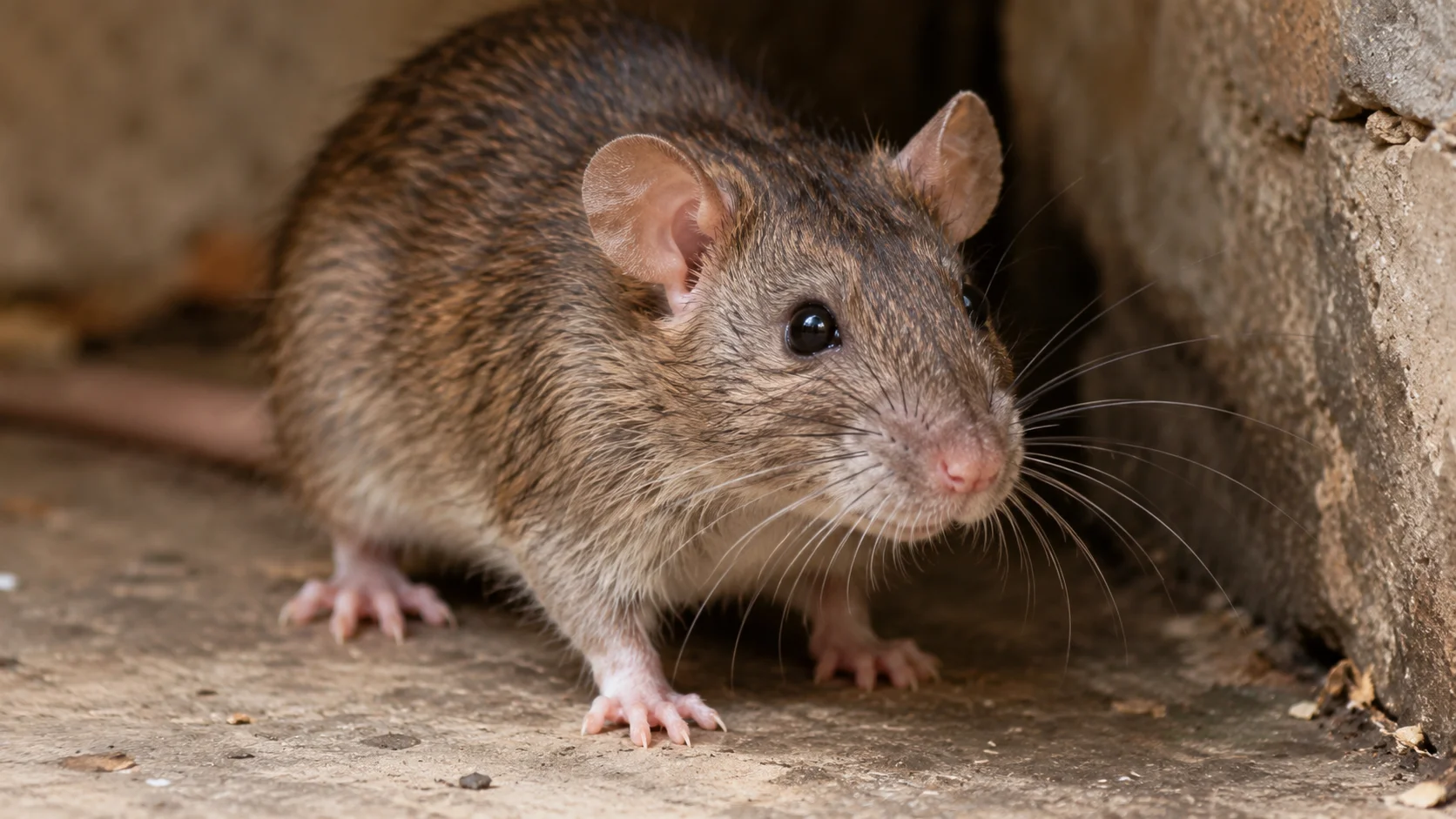
The question do rats have rabies has a reassuring answer in most situations: rabies is extremely uncommon in rats. Rats and other small rodents can theoretically become infected because rabies can affect mammals, but public-health surveillance shows that rats are among the rodents in which rabies is rarely documented. In the United States, a 2011–2020 analysis found no confirmed rabies cases among 1,052 tested Rattus specimens.
A rat bite still deserves prompt attention because rodent bites can cause other infections and injuries. Rabies decisions depend on the species, location, animal behavior, circumstances of exposure, and local epidemiology. CDC guidance recommends immediate wound washing and consultation with healthcare or public-health professionals after a potentially concerning animal exposure.
Do Rats Have Rabies
Rats can theoretically become infected with rabies, but naturally occurring rabies in rats is exceptionally uncommon. The CDC-supported U.S. study of rodent and lagomorph rabies from 2011 through 2020 found no confirmed rabies cases among the 1,052 rats tested during that period.
Wisconsin Department of Health Services classifies rats and mice among small rodents and states that these animals are rarely found to be infected with rabies and have not been known to transmit rabies to humans.
Rabies Risk in Rats
The low risk does not mean every bite should automatically be ignored. Public-health authorities evaluate unusual circumstances individually, especially when an animal appears neurologically ill or behaves abnormally.
- Rats are mammals and are biologically susceptible to rabies.
- Natural rabies infections in rats are extremely rare.
- U.S. surveillance found no rabid Rattus specimens from 2011–2020.
- Rats are not considered major rabies reservoir species in the United States.
- Larger wild rodents can have a different risk profile.
- Groundhogs account for most documented rabies cases among U.S. rodents and lagomorphs.
- Rabies risk varies by species and geographic region.
- Abnormal neurological behavior can increase concern.
- A bite should still receive appropriate wound care.
- Local public-health authorities can assess unusual exposures.
Do Mice Carry Rabies
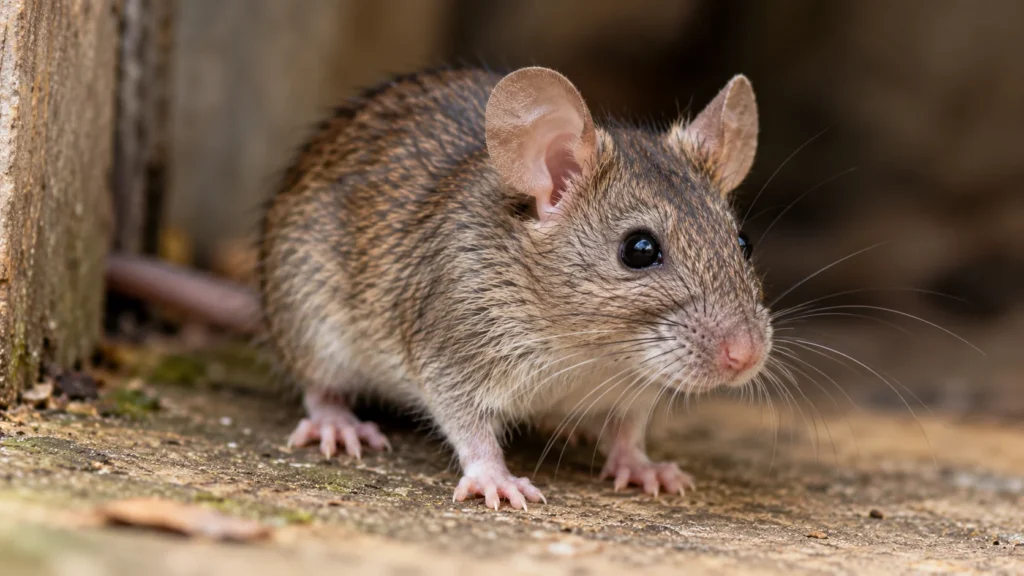
The same general principle applies to mice. Do mice carry rabies is a reasonable concern after a bite or unusual encounter, but rabies is exceptionally rare in common small mice.
The U.S. rodent surveillance study found no confirmed rabies cases among 840 house mice tested from 2011–2020. The authors also concluded that smaller rodents generally have a much lower rabies risk than certain larger rodent species.
Do Rats and Mice Usually Have Rabies
Rats and mice do not normally carry rabies in the way that established reservoir species carry and maintain rabies virus. In the United States, common rabies reservoirs include bats, raccoons, skunks, and foxes rather than rats and house mice.
This distinction matters because seeing a rat, mouse, sewer rat, or street rat does not by itself indicate rabies infection.
Do All Rats Have Rabies
Do all rats have rabies has a clear answer: no. The overwhelming majority of rats are not rabid.
In the 2011–2020 U.S. surveillance dataset, 1,052 Rattus specimens were tested and none tested positive for rabies. The same study reported no rabies cases among 840 tested house mice.
Rat Size Does Not Determine Rabies
A large rat is not automatically more likely to have rabies than a small rat. Size alone cannot diagnose infection.
The surveillance research found that larger-bodied rodents such as groundhogs and North American beavers accounted for most documented rodent and lagomorph rabies cases, but this does not mean that a big rat should be presumed rabid.
Rat With Rabies and Abnormal Behavior
A rat with rabies would be expected to develop neurological disease, but unusual behavior alone cannot establish that a rat has rabies. Rabies can cause behavioral and neurological changes in infected mammals, and public-health professionals consider animal behavior as part of an exposure assessment.
A rat behaving strangely may instead be injured, frightened, poisoned, diseased, or reacting to its surroundings. This is particularly important with claims that circling automatically indicates rabies.
Signs That Require Extra Caution
An animal displaying severe neurological abnormalities should not be handled, cornered, or deliberately approached. Contacting local animal-control or public-health authorities is safer than attempting to capture it personally.
- Unusually aggressive behavior
- Extreme disorientation
- Loss of normal coordination
- Difficulty moving normally
- Apparent paralysis
- Unusual responsiveness to people
- Repeated abnormal movements
- Severe weakness
- Unprovoked biting behavior
- Other dramatic neurological changes
These signs are not specific to rabies and should not be used as a home diagnosis.
Explore more articles:
- Fruit Flies vs Gnats
- Rat vs Mouse
- Bugs That Look Like Flying Termites
- Bugs That Look Like Fleas
- What Do Fleas Look Like?
- Wood Ants vs Termites
- What Are Centipedes Attracted To?
- What Do Drain Flies Look Like
- What Do Baby Black Widows Look Like?
- Deer Mouse vs House Mouse
- Bugs That Look Like Lice
Rat Bites and Rabies Exposure
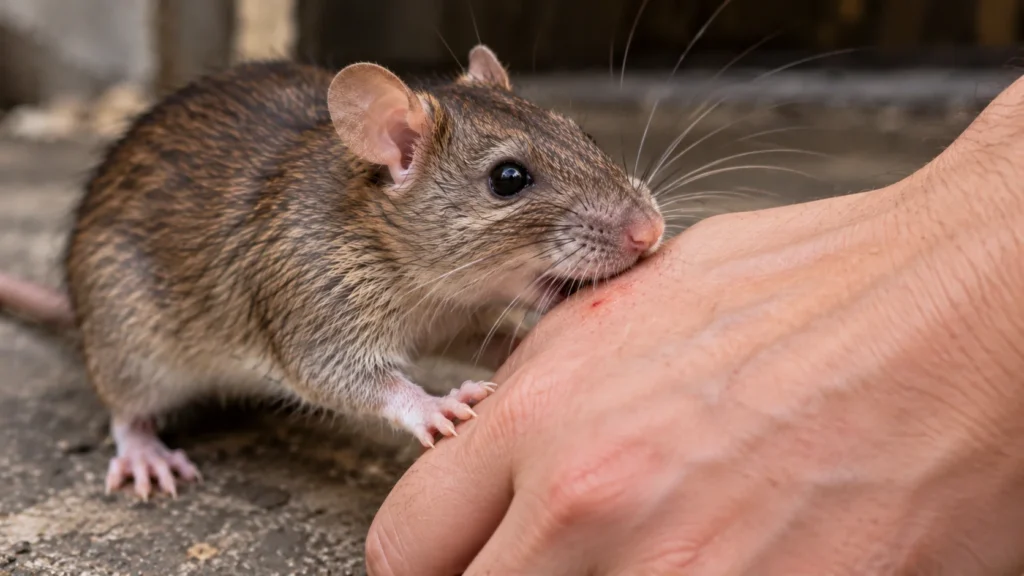
A rat bite is much more likely to raise concerns about wound infection than rabies. WHO states that rabies is relatively rare in domestic rodents and notes that rodent bites can instead be associated with bacterial infections and other diseases.
WHO also states that, under normal circumstances, rabies is not transmitted by rodents and that PEP is generally not necessary after a rat bite, while still recommending proper wound cleaning and medical advice regarding other care.
What to Do After a Rat Bite
Prompt wound care is important even when rabies risk is very low. CDC recommends washing an animal bite or scratch with soap and water for 15 minutes and contacting a healthcare or public-health professional for an exposure assessment.
Do not wait for symptoms to develop before seeking professional advice if the exposure is concerning.
Do Pet Rats Have Rabies
Do pet rats have rabies is another common concern. Pet rats are also classified among small rodents, and rabies is very uncommon in this group.
Wisconsin health guidance specifically includes rats kept as pets among rodents that are rarely found to be infected with rabies.
A bite from a healthy pet rat should still be cleaned carefully. The animal's health history, behavior, vaccination status where applicable, and circumstances surrounding the bite can help a healthcare professional determine whether additional care is necessary.
Pet Rat Bites and Medical Care
A pet rat bite can introduce bacteria even when rabies is not a realistic concern. Medical evaluation may be appropriate when the wound is deep, painful, swollen, contaminated, or showing signs of infection.
Healthcare professionals can also assess tetanus protection and other potential complications.
Do Wild Rats Have Rabies
Wild rats can theoretically become infected, but rabies is extremely rare among rats. The distinction between wild rats, house rats, sewer rats, and street rats does not automatically change the basic rabies risk because these descriptions do not establish that an individual animal is infected.
U.S. surveillance found zero confirmed rabies cases among tested Rattus specimens during 2011–2020.
Sewer Rats and Street Rats
Urban rats can carry other pathogens and should not be handled unnecessarily. Their environment can expose them to contaminated food, waste, bacteria, and parasites.
A rat found in a sewer or city environment should therefore be treated as a potentially unhealthy wild animal even though rabies itself is an exceptionally unlikely explanation.
Do Rats and Mice Have Rabies in the United States
In the United States, rats and house mice have an extremely low documented rabies risk. The 2011–2020 national analysis found zero rabies-positive rats and zero rabies-positive house mice among the specimens tested.
CDC's current rabies exposure algorithm classifies small rodents such as mice and rats as a negligible-risk category and states that PEP is rarely indicated, while noting that unusual animals showing neurological disease should receive further public-health assessment.
Regional Rabies Risk
Rabies epidemiology differs around the world. A conclusion based on U.S. surveillance should not automatically be applied to every country.
WHO reports that rodent bites are not known to transmit rabies and that rabies risk is driven primarily by recognized reservoir animals such as dogs in many parts of the world.
For exposures outside the United States, local health authorities should guide the risk assessment.
Do Rats Go in Circles When They Have Rabies
The claim that rats run in circles when they have rabies should not be treated as a reliable diagnostic rule. Circling can occur for multiple neurological or physical reasons, and a person cannot confirm rabies from one behavior.
CDC advises that animal behavior is considered as one part of a broader rabies exposure assessment rather than being used as a stand-alone diagnosis.

Rat Behavior and Rabies Assessment
A strangely behaving rat should be left alone, particularly if it appears sick or neurologically impaired. Avoid trying to capture the animal with bare hands or deliberately provoking it.
If a person has been bitten or scratched, the exposure should be discussed with healthcare or public-health professionals.
Do Rats Have Rabies in the UK and Other Countries
Rabies risk depends strongly on regional disease patterns and the animal involved. The fact that rats rarely have rabies in U.S. surveillance does not mean every country has identical surveillance, wildlife reservoirs, or public-health protocols.
WHO states that rabies is present on every continent except Antarctica and that prevention decisions depend on the exposure and epidemiological setting.
International Rat Bite Precautions
The safest approach after a rat bite is consistent across locations: clean the wound promptly and seek professional advice when exposure circumstances are uncertain or concerning.
This is especially important for travelers or people living in regions where rabies is more common in animals that may interact with rodents.
Rabies Prevention After a Rat Bite
Rabies is preventable when appropriate post-exposure treatment is given before symptoms begin. CDC emphasizes immediate wound washing and prompt professional assessment after a potentially rabies-related exposure.
A healthcare or public-health professional can determine whether rabies PEP is appropriate based on the animal, exposure, location, and local epidemiology. PEP can include wound care, rabies immune globulin, and vaccination when indicated.

Steps After Possible Exposure
Do not delay basic first aid while trying to determine whether a rat looked rabid.
- Wash the wound immediately with soap and running water
- Continue washing for about 15 minutes
- Avoid handling the animal again
- Do not attempt to diagnose rabies from behavior alone
- Note the animal's species and circumstances
- Report the bite when required locally
- Contact a healthcare professional
- Contact local public-health authorities when rabies exposure is a concern
- Follow professional advice about tetanus and wound care
- Follow any recommended rabies PEP schedule completely
10 Essential Facts About Rats and Rabies
- Rats are mammals that can theoretically become infected with rabies.
- Rabies in rats is extremely uncommon.
- U.S. surveillance found zero rabid Rattus specimens among 1,052 tested from 2011–2020.
- Zero rabies cases were also found among 840 tested house mice during that period.
- Rats are not major rabies reservoir species in the United States.
- A large or aggressive rat is not automatically rabid.
- Running in circles is not a reliable way to diagnose rabies.
- Rat bites can cause bacterial infections even when rabies is unlikely.
- Wounds should be washed promptly after a rat bite.
- Rabies exposure decisions should be made with healthcare or public-health professionals when circumstances are concerning.
Conclusion
So, do rats have rabies? Rats can theoretically contract rabies, but the disease is exceptionally rare in rats, and they are not considered major rabies reservoir animals. U.S. surveillance from 2011–2020 found no confirmed rabies cases among more than one thousand tested Rattus specimens, while public-health guidance classifies rats and mice as very low-risk animals for rabies exposure.
A rat bite should nevertheless be taken seriously because wound infection and other rodent-associated illnesses remain possible. Wash any bite or scratch promptly, avoid handling the animal, and seek professional advice when the animal behaved abnormally or the exposure occurred in a region with relevant rabies risk.
Do rats have rabies?
Rats can theoretically become infected with rabies, but infection is extremely rare. U.S. surveillance found no confirmed rabies cases among 1,052 tested Rattus specimens from 2011–2020.
Do all rats have rabies?
No. The vast majority of rats are not rabid. Rats are considered a very low-risk group for rabies compared with recognized reservoir species such as bats, raccoons, skunks, and foxes.
Do mice carry rabies?
Mice can theoretically become infected, but rabies is extremely rare in common mice. The U.S. surveillance study found no rabies-positive house mice among 840 tested specimens from 2011–2020.
Do rats go in circles when they have rabies?
Circling is not a reliable rabies diagnostic sign. Neurological abnormalities can have several causes, so an unusually behaving rat should not be handled and should be assessed by appropriate authorities when necessary.
Do you need rabies treatment after a rat bite?
Rabies treatment is generally rarely indicated after a normal rat bite, but the decision depends on the specific exposure and local public-health guidance. The wound should be washed immediately, and medical or public-health advice should be obtained when the circumstances are concerning.