
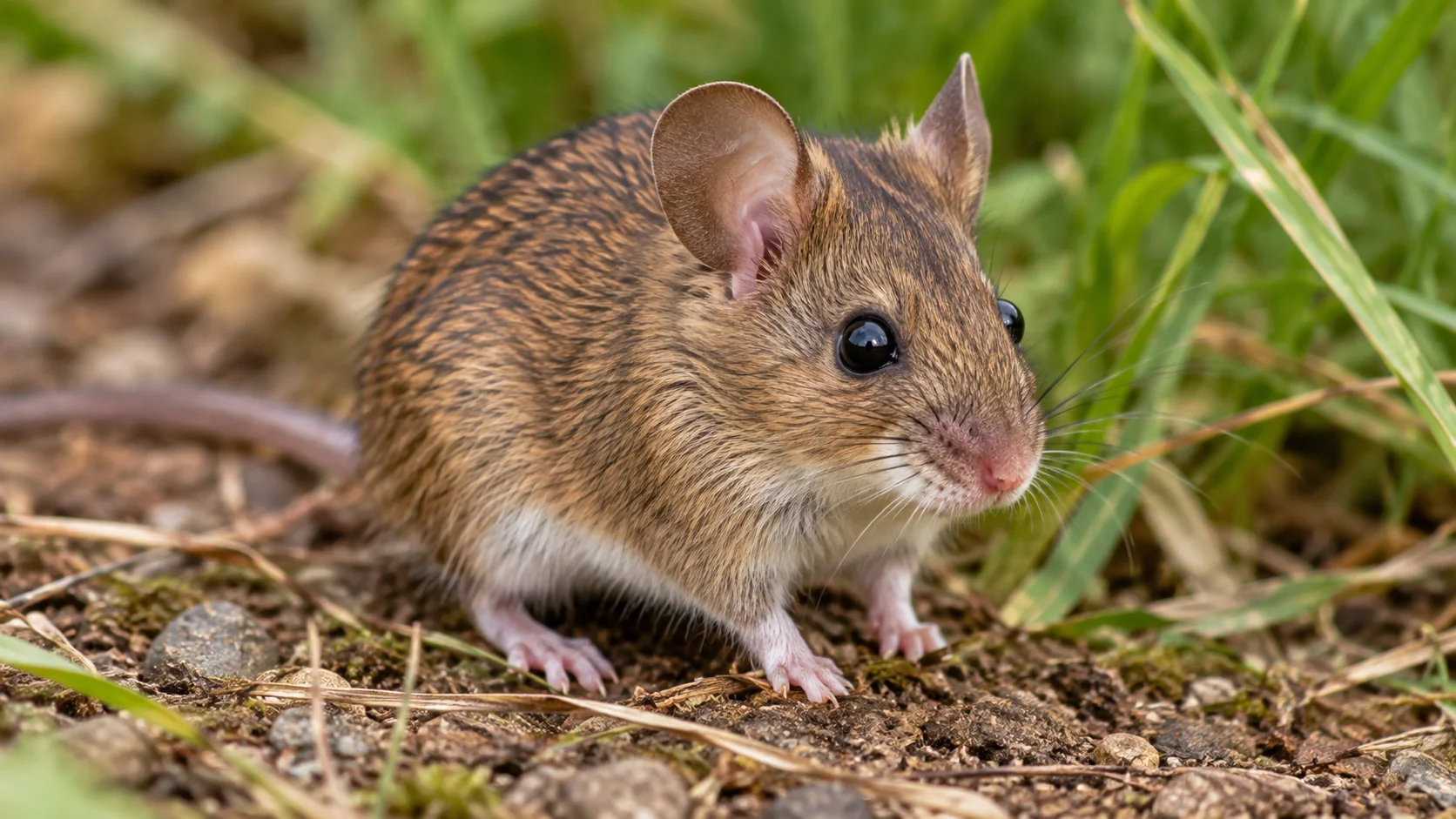
The term field mouse is used for several small wild mice, so its exact meaning can vary by region. In the UK, field mouse commonly refers to the wood mouse (Apodemus sylvaticus), also called the long-tailed field mouse. In the United States, the term can be broader and may refer to different mice that commonly live in fields, woodland, grassland, or other outdoor habitats.
Field mice are generally small, agile rodents that feed heavily on seeds, berries, plants, and other available foods. They normally live outdoors, but some can enter sheds, garages, barns, and homes when suitable shelter or food is available. Understanding the animal's appearance, habitat, droppings, nest, and behavior helps distinguish a field mouse from a house mouse, deer mouse, vole, or rat.
Field Mouse Identification and Appearance
A typical field mouse has a compact body, relatively large eyes and ears, a pointed face, and a long tail. The exact appearance varies because field mouse is not always a species-level name, particularly in North America.
The UK wood mouse is golden-brown or sandy-brown above with a paler underside, prominent ears, large eyes, and a long tail. The Wildlife Trusts lists an adult body length of about 8–10 cm, a tail length of 7–9.5 cm, and an average weight of around 25 grams.
Common Field Mouse Features
These characteristics can help when identifying a small mouse seen outdoors or around a building.
- Brown, sandy-brown, gray-brown, or similar natural coloring depending on species
- Pale or whitish underside in many field-dwelling species
- Large eyes compared with the head
- Prominent rounded ears
- Pointed or tapered snout
- Relatively long tail
- Small, lightweight body
- Quick and agile movement
- Excellent climbing ability in some species
- Coloring that can blend with grass, leaves, soil, and woodland debris
Field Mouse Size and Body Proportions
There is no single universal field mouse size because the common name covers more than one type of mouse. The wood mouse, one of the animals commonly called a field mouse, has an adult body length of roughly 8–10 cm and a tail that can approach the body length.
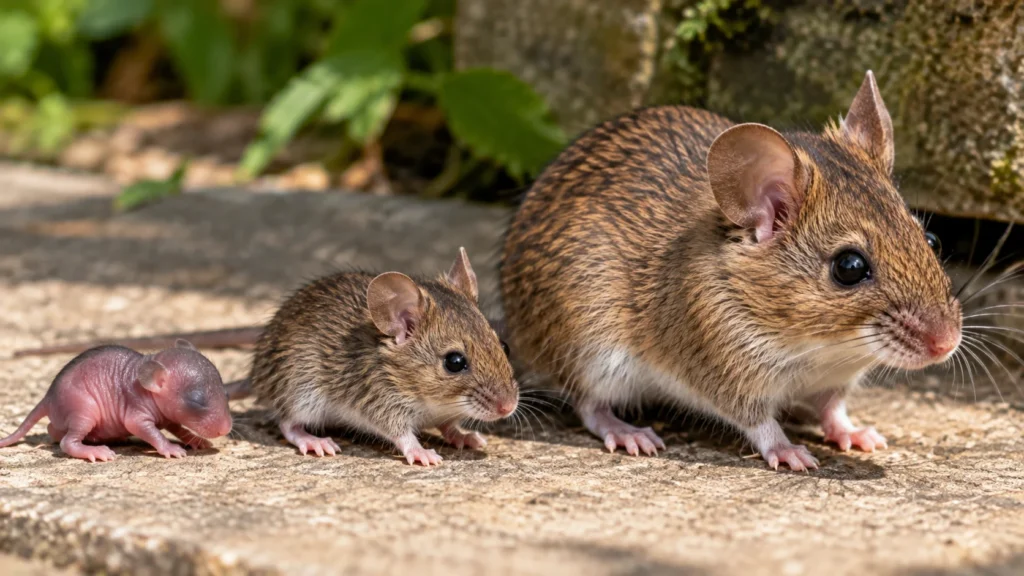
A field mouse can therefore look surprisingly large compared with a tiny juvenile mouse while still being much smaller than a rat. Body size, ear size, tail characteristics, fur color, and habitat should be considered together rather than relying on size alone.
Small, Large, and Fully Grown Field Mice
Baby field mice are substantially smaller than adults and undergo rapid development. Orkin notes that baby field mice are born blind, bald, and deaf and develop quickly over the following weeks.
A large field mouse or big field mouse is generally an adult rather than a separate type of mouse. Differences between individual species can also make one field mouse appear noticeably larger than another.
Baby Field Mouse Development
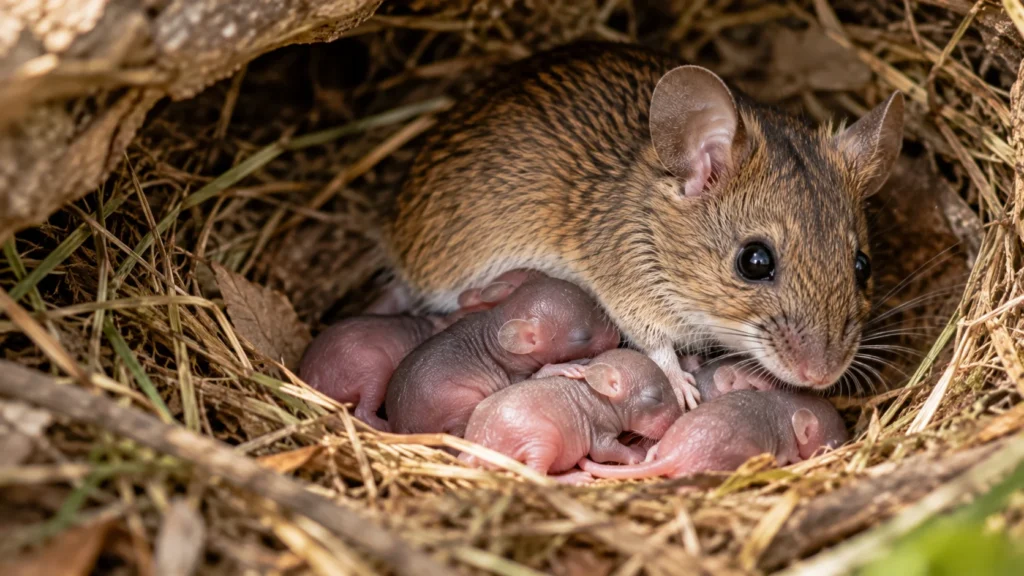
A baby field mouse has a very different appearance from a mature animal. Newborn mice have little or no visible fur, their eyes are closed, and their ears are not yet fully developed.
As they grow, the coat develops, the eyes open, and the young become increasingly mobile. Orkin reports that baby field mice can reach maturity within several weeks, although exact development varies between species.
Field Mouse Baby and Nest Signs
Young mice remain dependent on their nest during their earliest stage of development. A nest can contain shredded grass, leaves, paper, insulation, fabric, or other soft material depending on its location.
- Hairless or lightly furred young
- Closed eyes in newborns
- Small bodies compared with adults
- Nest material made from soft fibers
- Dry grass or leaves in outdoor nests
- Shredded paper in buildings
- Fabric or insulation in sheltered spaces
- Concentrated droppings near active areas
- Repeated movement around the nesting location
- Adult mice nearby when young are present
Explore more articles:
- Fruit Flies vs Gnats
- Rat vs Mouse
- Bugs That Look Like Flying Termites
- Bugs That Look Like Fleas
- What Do Fleas Look Like?
- Wood Ants vs Termites
- What Are Centipedes Attracted To?
- What Do Drain Flies Look Like
- What Do Baby Black Widows Look Like?
- Deer Mouse vs House Mouse
- Bugs That Look Like Lice
Field Mouse Habitat and Nesting Behavior
Field mice are strongly associated with outdoor environments such as woodland, grassland, farmland, gardens, heathland, and areas containing vegetation. The wood mouse is widespread and occurs in habitats ranging from woodland and farmland to gardens and towns.
They commonly shelter beneath vegetation, natural debris, burrows, logs, dense ground cover, and other protected locations. Some may enter buildings when conditions provide convenient shelter or access to food.
Field Mouse in House and Garden Areas
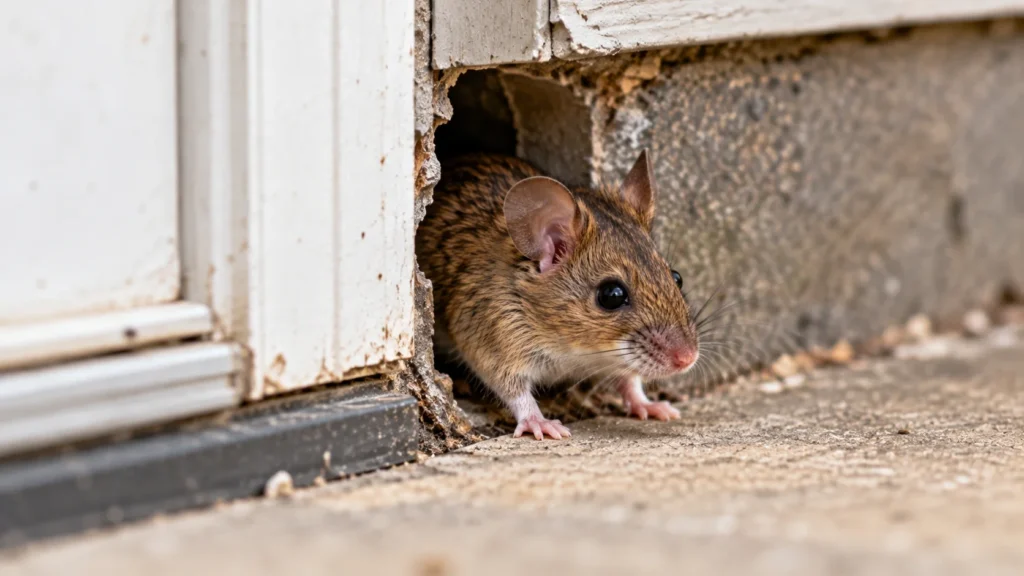
Finding a field mouse in house does not automatically mean the animal is a house mouse. Outdoor species can occasionally enter structures, particularly sheds, garages, barns, and other less-sealed buildings.
Some UK local-authority guidance specifically notes that wood or field mice may enter houses but are more commonly encountered in sheds and garages.
Field Mouse Diet and Feeding Habits
A field mouse diet is generally based around plant material and naturally available foods. Seeds, grains, berries, fruits, nuts, and other plant foods can form important parts of the diet, although many mice are opportunistic feeders.
Wood mice are known to collect and store food, particularly seeds and berries. The Wildlife Trusts reports that they gather food stores during autumn and may keep them in underground burrows or old bird nests.
What Field Mice Eat Around Buildings
When a field mouse reaches a home, shed, garage, or outbuilding, it can exploit easily accessible human or animal food.
- Seeds
- Grains
- Berries
- Fruits
- Nuts
- Plant material
- Birdseed
- Livestock feed
- Pet food
- Food scraps
Keeping food sources secured is important because accessible food can encourage wild rodents to remain near buildings.
Field Mouse Lifespan and Reproduction
The field mouse lifespan depends on species, predators, food availability, weather, disease, and habitat. For the UK wood mouse, the Wildlife Trusts gives an average lifespan of about one year, reflecting the high mortality experienced by wild small mammals.
Wood mice can reproduce rapidly when conditions are favorable. Females may produce several litters during a breeding season, with the Wildlife Trusts reporting up to six litters of four to eight young.
Field Mouse Droppings and Poop
Field mouse droppings are small, dark pellets that can be found near feeding areas, nests, runways, or sheltered locations. Their appearance can overlap with droppings produced by other small rodents, so droppings alone are not always enough for species identification.
Other signs provide useful context. Rodent activity can also leave gnaw marks, nesting material, damaged food packaging, tracks, or greasy travel marks. identifies droppings and gnaw marks as common signs of rodent presence.
Safe Handling of Field Mouse Waste
Wild rodent urine, droppings, saliva, and nesting material can carry infectious organisms. recommends avoiding direct contact and using appropriate cleaning procedures after rodents have been present.
Do not dry sweep or vacuum potentially contaminated rodent waste before following appropriate disinfection procedures. For significant infestations, professional assistance can provide safer cleanup and exclusion.
Field Mouse vs House Mouse
The field mouse vs house mouse comparison can be confusing because the name field mouse is used differently across regions. In the UK, the wood mouse is commonly called the field mouse, while the house mouse is a separate species.
Wood mice generally have larger eyes and ears, a longer tail, and browner upperparts. House mice are commonly gray or brown and have a relatively slender body with a tail that is usually sparsely haired.
House Mouse Versus Field Mouse Traits
| Feature | Field or Wood Mouse | House Mouse |
| Typical habitat | Fields, woodland, gardens | Buildings and human structures |
| Fur | Brown or golden-brown | Gray, brown, or similar shades |
| Eyes | Relatively large | Smaller relative to wood mouse |
| Ears | Prominent | Smaller |
| Tail | Long | Usually slender and sparsely haired |
| Food behavior | Seeds, berries and natural foods | Opportunistic household feeding |
| Outdoor association | Strong | Also possible |
| Indoor association | Occasional to common depending on species | Strong |
Field Mouse vs Deer Mouse and Vole
A deer mouse vs field mouse comparison is complicated because “field mouse” can describe different species. Deer mice are small North American mice with brown or gray-brown upperparts and a noticeably white underside and feet. Orkin uses field mouse as a broad term and notes that deer mice are frequently associated with the term in the United States.
A vole vs field mouse comparison is easier when physical proportions are considered. Voles tend to have stockier bodies, shorter tails, and smaller eyes than many true mice. A field mouse generally has a more mouse-like body shape with a longer tail and prominent eyes.
Field Mouse, Deer Mouse, and Vole Differences
- Field mouse is a common rather than universally precise species name
- Deer mice are associated with North American habitats
- Wood mice are commonly called field mice in the UK
- Voles generally have stockier bodies
- Voles have relatively short tails
- Field mice usually have more prominent eyes
- Deer mice commonly have sharply contrasting white undersides
- Wood mice often have golden-brown upperparts
- Habitat is useful for narrowing identification
- Exact identification may require geographic and species-level information
Getting a Field Mouse Out of Your House
If a field mouse enters a building, the most effective long-term approach is to identify how it gained access and remove conditions that encourage continued activity. recommends sealing gaps, securing food and garbage, and keeping outdoor food and shelter sources away from buildings.
Mice can enter through openings around 1/4 inch or 6 mm in diameter, so even apparently insignificant gaps deserve attention. Small openings can be filled with steel wool and caulk or suitable spray foam, while larger openings may require metal, hardware cloth, or other durable materials.
Practical Field Mouse Prevention Steps
- Inspect doors and windows for gaps
- Check around pipes and utility lines
- Examine vents and foundation openings
- Seal small entry holes with suitable materials
- Repair damaged screens
- Store food in tightly closed containers
- Clean food spills promptly
- Keep pet food secured after feeding
- Reduce outdoor clutter near buildings
- Monitor for fresh droppings and gnaw marks
Field Mouse Slang and Meaning
The phrase field mouse slang can appear in informal writing, but it does not have one universally accepted slang definition. In ordinary language, field mouse generally describes a small mouse associated with fields, grassland, woodland, or rural environments.
The phrase can also be used figuratively in literature or informal descriptions to evoke an image of a small, quiet, timid, or rural animal. Context determines whether the expression is literal or figurative.
10 Key Field Mouse Facts
- Field mouse is a common name rather than one universally defined species.
- The UK wood mouse is commonly known as the long-tailed field mouse.
- Wood mice have large eyes and ears relative to their body size.
- A typical wood mouse has an 8–10 cm body and a 7–9.5 cm tail.
- Field mice commonly live in grassland, woodland, farmland, gardens, and similar habitats.
- Seeds, berries, grains, fruits, and other plant foods are important parts of their diet.
- Baby field mice are born blind, bald, and deaf.
- Wood mice can store food in burrows and other sheltered locations.
- Field mouse droppings and gnaw marks can indicate rodent activity.
- Sealing entry points and removing food sources are important when wild mice enter buildings.
Conclusion
The field mouse is a broad common name that can describe different small wild mice depending on location. In Britain, it commonly refers to the wood mouse, a brown, long-tailed species with large eyes and ears that lives primarily in woodland, grassland, farmland, and gardens. In the United States, the term can be used more broadly, which makes geographic context important when identifying an animal.
A field mouse is usually an outdoor animal, but individual mice can enter buildings when shelter and food are available. If one appears indoors, identification should be followed by practical exclusion measures. Sealing small openings, protecting food, reducing outdoor attractants, and monitoring for fresh rodent signs are more dependable than relying on appearance alone.
What is a field mouse?
A field mouse is a common name used for small mice associated with outdoor habitats. In the UK, it commonly refers to the wood mouse, Apodemus sylvaticus, also called the long-tailed field mouse.
What does a field mouse look like?
A typical field mouse has brown or golden-brown fur, a pale underside, large eyes, prominent ears, a pointed face, and a relatively long tail. Exact features vary by species and region.
How long does a field mouse live?
The lifespan varies by species and environmental conditions. The Wildlife Trusts lists an average lifespan of approximately one year for the wood mouse.
Can you keep a field mouse as a pet?
A wild field mouse is not the same as a domesticated pet mouse. Wild rodents can carry pathogens and parasites, so capturing and handling them unnecessarily is not recommended. advises avoiding contact with wild rodent urine, droppings, saliva, and nesting materials.
How can you get a field mouse out of your house?
Start by identifying and sealing entry points, securing food and removing accessible water sources, then use appropriate rodent traps where activity remains. recommends sealing gaps and using traps when rodents are present inside buildings.