
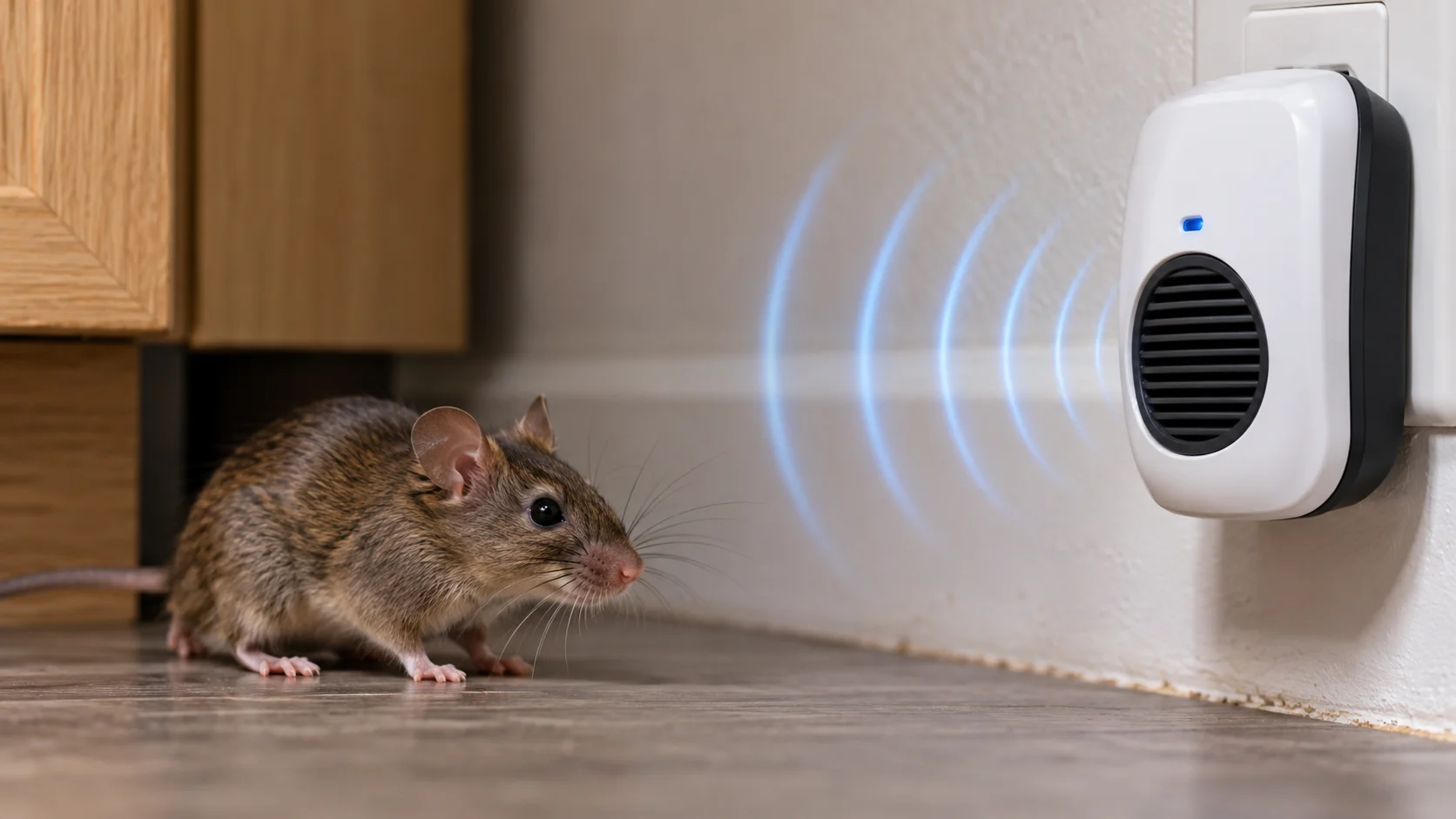
A mouse deterrent sound is designed to make an area uncomfortable for mice by producing loud, high-frequency, or ultrasonic sound. These products are commonly marketed as electronic mouse repellents, high-pitched mouse deterrent sound devices, and mouse & rat ultrasonic sound deterrents. The basic idea is simple: expose mice to an unpleasant sound and encourage them to leave or avoid the treated area.
The important distinction is between temporary disturbance and reliable mouse control. Wildlife-management guidance reports that unfamiliar loud sounds can frighten mice temporarily, but mice may become accustomed to repeated sounds. Commercial ultrasonic devices also have limited usefulness because ultrasound loses intensity with distance and does not move effectively around obstacles.
What a Mouse Deterrent Sound Is Designed to Do
A mouse deterrent sound is intended to create an environment that mice find uncomfortable or unfamiliar. Some devices produce audible sounds, while ultrasonic models generate frequencies above the normal range of human hearing. describes ultrasonic rodent repellents as electronic devices intended to deter mice and rats through high-frequency sound waves, generally above 20 kHz.
Common Types of Mouse Deterrent Sounds
Different products and recordings use different approaches depending on their design and intended purpose.
- Ultrasonic mouse repellers produce high-frequency sound intended for rodents.
- High-pitched mouse deterrent sound recordings may use irritating or unusual tones.
- Electronic rodent repellers commonly plug into electrical outlets.
- Mouse deterrent sound apps attempt to generate repellent tones through phones or tablets.
- Mouse deterrent sound YouTube videos provide downloadable or streamable recordings.
- Mouse & rat ultrasonic sound deterrents are marketed for both rodents.
- Sonic deterrents may operate within an audible range.
- Variable-frequency devices change their output instead of producing one constant tone.
- Motion-activated units may activate when movement is detected.
- Combination devices may advertise ultrasonic and electromagnetic technologies together.
How Ultrasonic Mouse Sound Deterrents Work
Ultrasonic devices are based on the principle that rodents can perceive high-frequency sounds that humans generally cannot hear. The sound is intended to create an uncomfortable environment near the device and encourage rodents to avoid the area.
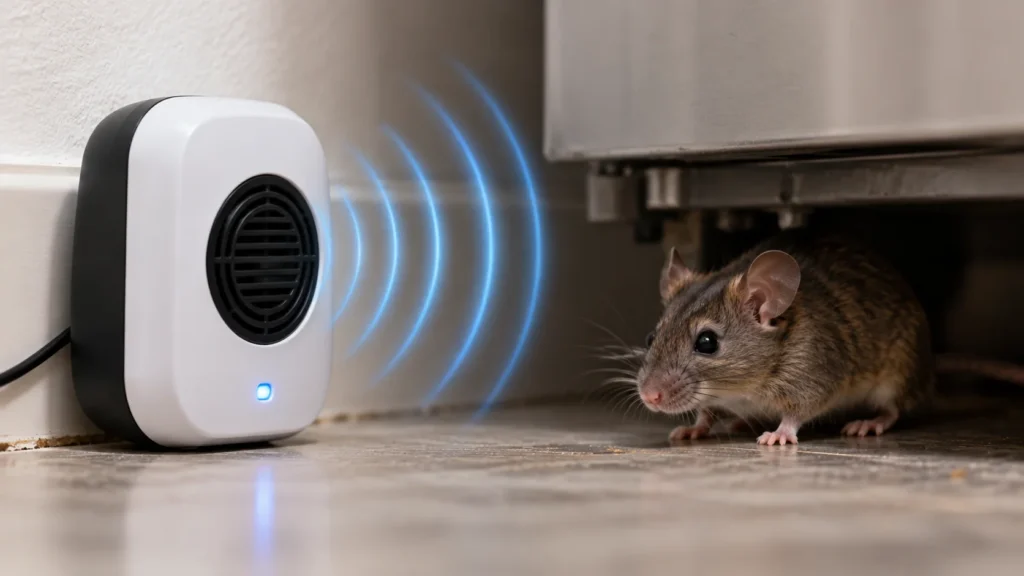
In practice, the performance of these devices is much less predictable than advertising often suggests. The Internet Center for Wildlife Damage Management reports that ultrasound is directional, has limited range, loses intensity as it travels away from its source, and does not move effectively around corners.
Why Sound Coverage Can Be Limited
Ultrasonic sound does not behave like a chemical treatment that spreads throughout an entire room.
Furniture, walls, stored items, cabinets, and other obstacles can interfere with sound reaching areas where mice are hiding. similarly notes that ultrasonic waves do not travel through walls or furniture effectively, making whole-home coverage unrealistic from a single unit.
This is especially important when mice are nesting behind appliances, inside wall voids, under cabinets, or in cluttered storage areas. A sound source in an open section of a room may not create the same exposure in a concealed location.
How Effective Mouse Deterrent Sound Really Is
Evidence does not support treating ultrasonic sound as a dependable stand-alone solution for an established mouse infestation. Wildlife-management guidance says commercial ultrasonic devices may repel rodents from the immediate area for a few days in some tests, but other results vary according to frequency, intensity, and the existing infestation.
The has also repeatedly addressed unsupported claims surrounding ultrasonic pest-control products. In 2001, the FTC warned more than 60 manufacturers and retailers that effectiveness claims needed competent and reliable scientific evidence. The agency noted previous complaints alleging that any reaction to ultrasound could be temporary because rodents may become accustomed to the sound.
Temporary Avoidance Is Not the Same as Elimination
A mouse may initially move away from an unfamiliar sound without leaving the property. If food, water, shelter, and nesting opportunities remain available, the underlying conditions attracting mice have not been corrected.
This makes a sound device fundamentally different from exclusion and trapping. guidance recommends sealing entry points, removing food and water sources, and trapping rodents that remain inside the home.
Mouse Deterrent Sound YouTube Videos and Recordings
YouTube and other audio platforms contain recordings marketed as mouse deterrent sound YouTube solutions. These can be convenient for experimenting with sound, but a streamed recording should not be considered equivalent to a professionally tested pest-control treatment.
A recording may also depend heavily on the speaker or playback equipment. Ordinary consumer speakers, phones, televisions, and headphones are not necessarily designed to reproduce every ultrasonic frequency that a dedicated electronic device claims to generate.
Using Audio Recordings Responsibly
A sound recording can be viewed as an experimental supplemental measure rather than a proven infestation-control method.
Avoid assuming that a recording has driven mice away simply because you stop hearing or seeing them. Continue checking for droppings, gnaw marks, nesting material, food damage, and other signs of activity. identifies droppings and gnaw marks among the common signs of rodent presence.
Explore more articles:
- Fruit Flies vs Gnats
- Rat vs Mouse
- Bugs That Look Like Flying Termites
- Bugs That Look Like Fleas
- What Do Fleas Look Like?
- Wood Ants vs Termites
- What Are Centipedes Attracted To?
- What Do Drain Flies Look Like
- What Do Baby Black Widows Look Like?
- Deer Mouse vs House Mouse
- Bugs That Look Like Lice
- What Does a Gnat Look Like
Mouse Deterrent Sound Apps and Phone-Based Repellers
A mouse deterrent sound app attempts to turn a smartphone or tablet into a source of high-frequency or high-pitched audio. These apps are attractive because they do not require purchasing a dedicated electronic repeller.
However, the effectiveness of an app depends on the actual capabilities of the device producing the sound. More importantly, the existence of an audio-frequency setting does not establish that the resulting sound will reliably repel mice in a real home.
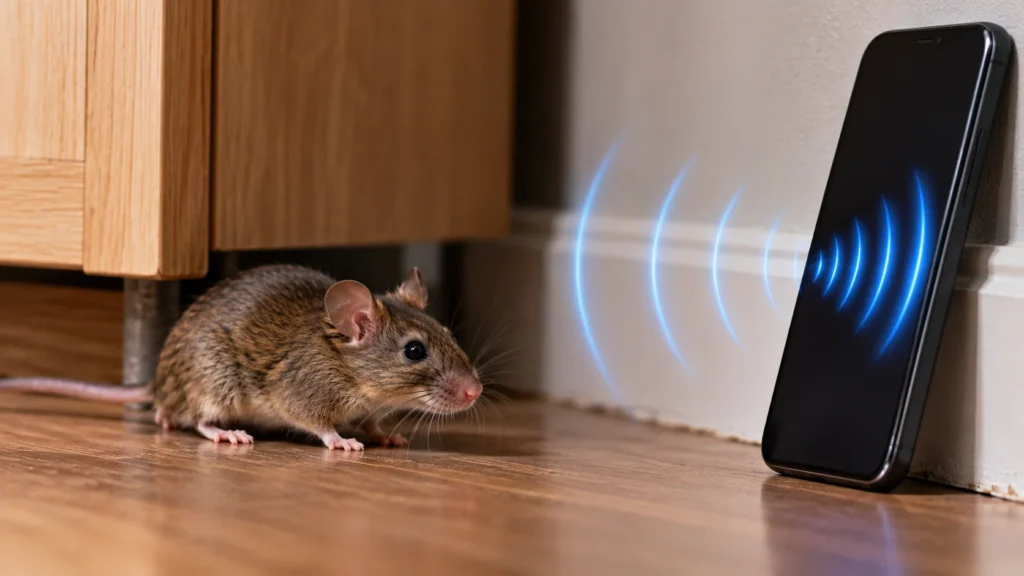
For an active infestation, relying on an app alone can allow mice to continue breeding, feeding, nesting, and contaminating areas while the underlying entry points remain open.
Safer and More Reliable Mouse Control Methods
The most dependable strategy combines exclusion, sanitation, monitoring, and appropriate trapping. recommends looking for gaps and holes inside and outside the home, sealing openings, securing food and garbage, and removing conditions that provide rodents with food, water, and shelter.
Seal Entry Points
Mice can enter through surprisingly small openings. states that mice can fit through a hole about 1/4 inch or 6 millimeters in diameter, roughly the width of a pencil.
Inspect areas around pipes, doors, windows, vents, appliances, cabinets, foundations, attics, crawl spaces, and utility lines. Small openings can be filled with steel wool followed by caulk or spray foam, while larger openings may require metal, hardware cloth, cement, or similar durable materials.
Remove Food and Shelter
Keep food in tightly sealed containers and clean spills promptly. Pet food and water should not remain available overnight, and garbage should be stored in containers with secure lids. Outdoor clutter, brush, and potential nesting materials should also be reduced around buildings.
Use Appropriate Mouse Traps
recommends snap traps for reducing rodent populations around homes. Traps should be placed in areas where mouse activity has been observed, including locations with droppings, gnaw marks, nesting materials, or damaged food.
Place traps against walls because rodents commonly travel alongside walls and other objects. Keep traps and bait inaccessible to children and pets, and follow the manufacturer's instructions.
Mouse Deterrent Sound Compared With Other Methods
| Method | Main purpose | Reliability for active mice |
| Ultrasonic sound | Temporary deterrence | Limited |
| Sound recording | Creates an unusual sound environment | Unproven |
| Mouse deterrent app | Generates high-frequency audio | Limited and device-dependent |
| Sealing holes | Prevents entry | Highly important |
| Removing food sources | Reduces attraction | Highly important |
| Snap traps | Removes mice | Established control method |
| Professional inspection | Finds and addresses infestation sources | Useful for persistent infestations |
10 Key Points About Mouse Deterrent Sound
- A mouse deterrent sound is intended to discourage mice through sound exposure.
- Ultrasonic devices generally produce frequencies above the normal human hearing range.
- Unfamiliar sounds may cause temporary avoidance.
- Mice can become accustomed to repeated sounds.
- Ultrasound has limited range and does not move effectively around obstacles.
- A single device cannot reliably protect every concealed area of a home.
- YouTube recordings are not proven substitutes for comprehensive mouse control.
- Mouse deterrent sound apps depend heavily on the capabilities of the playback device.
- Sealing entry points is essential because mice can enter through openings around 1/4 inch wide.
- Trapping, exclusion, sanitation, and monitoring provide a stronger control strategy than sound alone.
Conclusion
A mouse deterrent sound can create an unfamiliar or irritating sound environment, and some mice may temporarily avoid an area. However, available wildlife-management guidance does not support commercial ultrasonic devices as a reliable stand-alone solution for established infestations. Mice can adapt to repeated sounds, while ultrasonic energy has limited range and can be blocked or weakened by obstacles.
For lasting mouse control, focus on the conditions that allow mice to remain in the building. Seal openings, secure food, reduce shelter, monitor for fresh signs, and use appropriate traps when mice are already inside. These measures address the infestation itself rather than simply attempting to make one area uncomfortable.
Does a high pitched mouse deterrent sound work?
Does mouse deterrent sound work through walls?
Is a mouse deterrent sound app effective?
A mouse deterrent sound app may generate high-frequency audio, but its usefulness depends on the phone or device producing the sound. There is not enough evidence to treat an app as a dependable replacement for exclusion and trapping.