
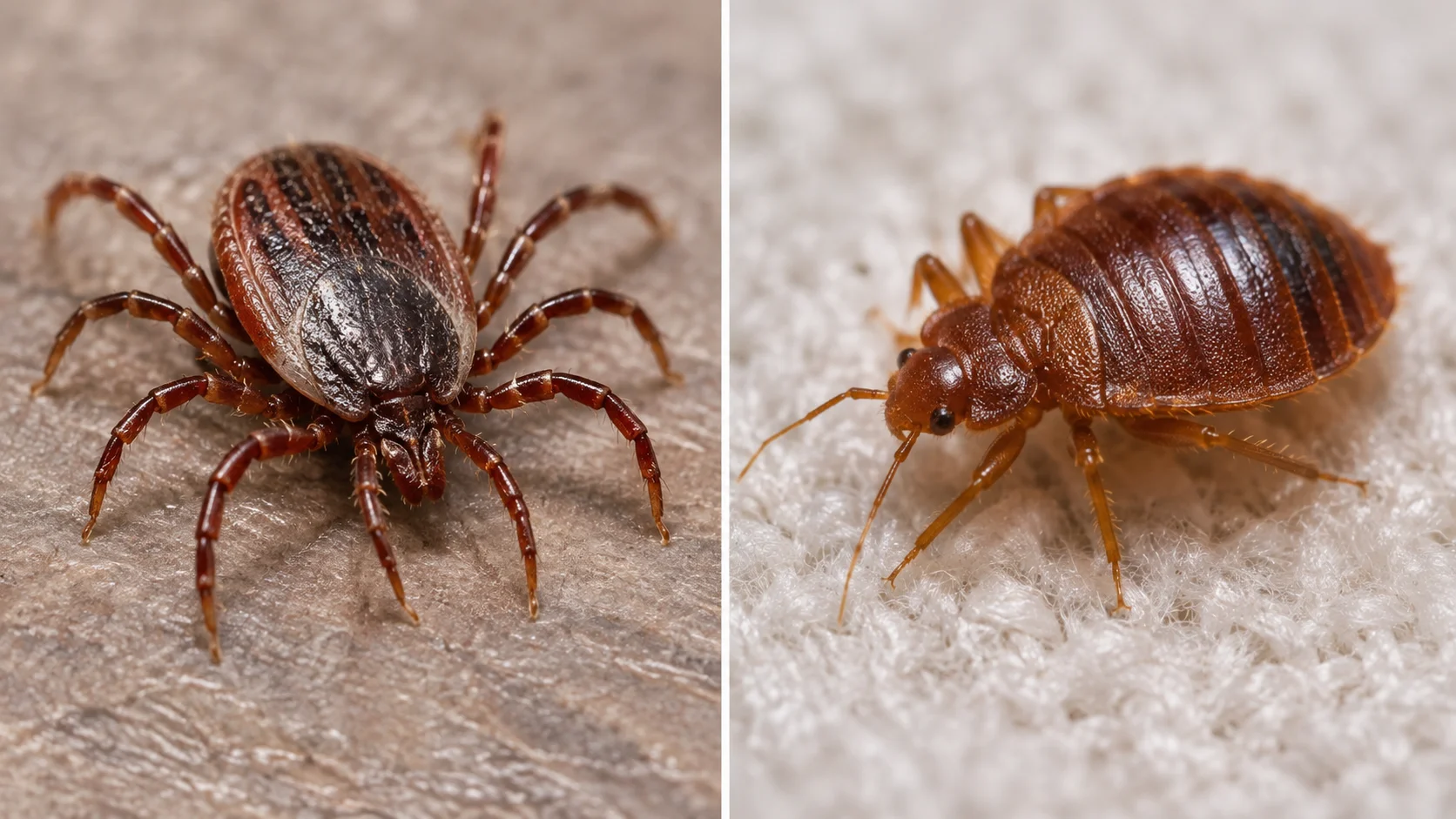
The tick vs bed bug comparison can be confusing because both pests are small, flat or oval-shaped, brownish arthropods that can be found around people and animals. A bed bug may even look surprisingly similar to a tick at first glance, especially when viewed without magnification.
The most important difference is biological: bed bugs are six-legged insects, while nymphal and adult ticks have eight legs and are arachnids. However, tick larvae are an exception because they have six legs after hatching. Bed bugs are also wingless and flattened, while ticks have a body structure adapted for attaching to hosts and taking blood meals.
Correct identification matters because ticks can transmit pathogens, while bed bugs are primarily a household nuisance and are not known to spread diseases to people.
Tick vs Bed Bug at a Glance
Ticks and bed bugs have different anatomy, habitats, feeding behavior, and life cycles. Their differences become much easier to recognize when several characteristics are examined together.
| Feature | Tick | Bed Bug |
| Classification | Arachnid | Insect |
| Legs | 8 in nymphs/adults; 6 in larvae | 6 |
| Body | Oval, variable depending on species and feeding | Oval and flattened |
| Wings | None | None |
| Color | Varies by species and feeding stage | Brown to reddish-brown |
| Feeding | Blood-feeding parasite | Blood-feeding parasite |
| Typical location | Vegetation, animals, outdoors, or attached to hosts | Beds, furniture, cracks, and sleeping areas |
| Movement | Crawls and can attach to hosts | Crawls; does not jump or fly |
| Life stages | Egg, larva, nymph, adult | Egg, nymph, adult |
| Main identification clue | Leg count and tick anatomy | Six legs and flattened insect body |
Adult bed bugs are generally about 5–9 mm long, while tick size varies substantially by species and life stage.
Tick Identification Features
Ticks are members of the arachnid group and have a body structure very different from insects. Most ticks of public-health importance develop through four stages: egg, six-legged larva, eight-legged nymph, and adult.
Their bodies consist of a fused main body region rather than the distinct head, thorax, and abdomen arrangement seen in insects. Hard ticks may also have a dorsal shield called a scutum, which is an important identification feature.
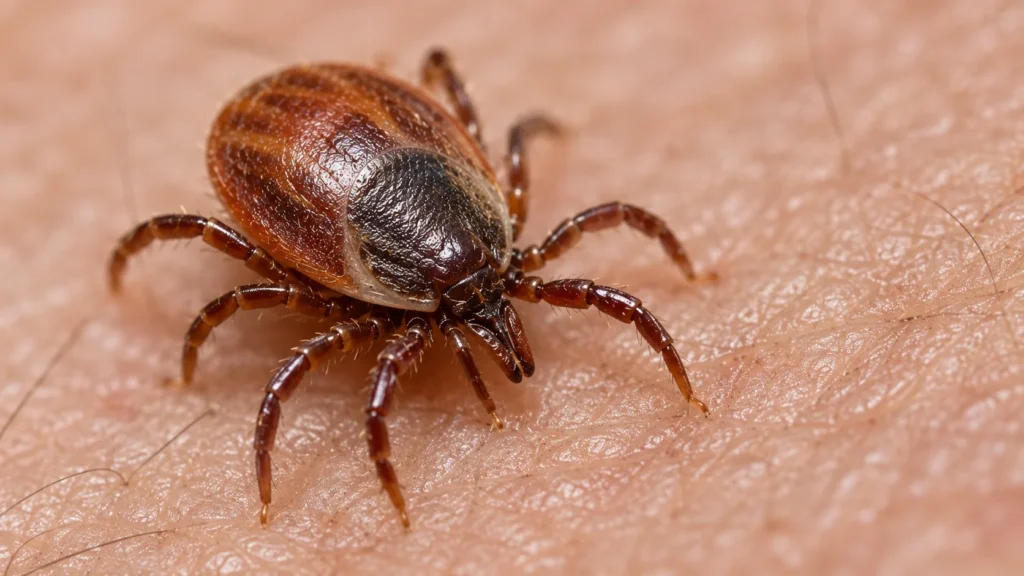
Tick Appearance
An unfed tick may look like a tiny dark, brown, gray, or reddish oval object with legs extending from the front and sides of the body. After feeding, some ticks become considerably larger and more rounded or elongated.
Nymphal ticks can be extremely small. Blacklegged tick nymphs, for example, can be approximately the size of a poppy seed, making them difficult to notice on the body.
Deer Tick Appearance
The term deer tick commonly refers to blacklegged ticks in the genus Ixodes. In North America, Ixodes scapularis is the eastern blacklegged tick and Ixodes pacificus is the western blacklegged tick.
Different life stages look different, with larvae having six legs and nymphs and adults having eight. Identification at the species level can require examination of specialized anatomical features.
Bed Bug Identification Features
Bed bugs are small, wingless insects that feed on blood. Adults are oval, flattened, and typically brown to reddish-brown, while newly hatched nymphs are much paler.
Adult bed bugs are approximately 1/4 to 3/8 inch long, although exact size varies with feeding status and life stage. After a blood meal, their bodies become larger and more reddish.
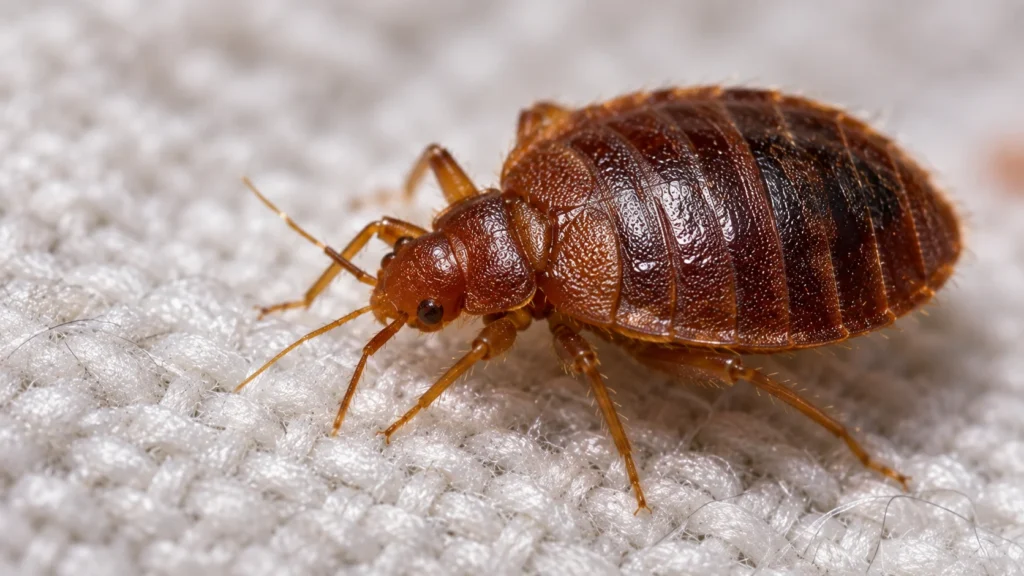
Bed Bug Appearance
A bed bug has a broad, flattened oval body with six legs. It does not have wings and cannot jump or fly. Its antennae and legs are relatively small compared with the body.
Bed bug nymphs are much smaller and lighter than adults. Newly hatched nymphs can be around 1.6 mm long and are pale enough to be difficult to see without close inspection.
Baby Bed Bug vs Baby Tick
Young bed bugs and young ticks can both be extremely small, but their anatomy provides an important distinction.
A bed bug nymph has six legs throughout its nymphal development. A tick larva also has six legs, but after molting into the nymphal stage, it develops eight legs.
This means that a six-legged tiny arthropod should not automatically be assumed to be a bed bug; the body shape, location, and other anatomical characteristics still matter.
Tick vs Bed Bug Size
Size alone is not a dependable way to distinguish these pests because both ticks and bed bugs occur in several life stages and species.
Adult bed bugs are generally 5–9 mm long, while tick dimensions range from extremely tiny larvae and nymphs to larger adults and engorged females.
A fully fed tick can change dramatically in size and shape, while a bed bug also becomes larger and more elongated after feeding.
Small Tick vs Bed Bug
A small nymphal tick can be much smaller than an adult bed bug. Blacklegged tick nymphs are approximately poppy-seed sized and can be difficult to spot on skin.
A small bed bug nymph is also tiny but generally retains the basic flattened, oval insect shape. Careful examination under magnification is often more useful than comparing size alone.
Explore more articles:
- Fruit Flies vs Gnats
- Rat vs Mouse
- Bugs That Look Like Flying Termites
- Bugs That Look Like Fleas
- What Do Fleas Look Like?
- Carpenter Bee vs Bumble Bee
Side by Side Bed Bug vs Tick Identification
A side-by-side comparison should focus on legs, body structure, location, and feeding behavior rather than color alone.
Legs and Body Structure
An adult or nymphal tick has eight legs, while a bed bug has six. Ticks have a fused body structure characteristic of arachnids, whereas bed bugs have the typical insect body plan.
The six-legged larval tick is an important exception. Therefore, leg count should be considered together with the rest of the insect's anatomy and life stage.
Wings and Antennae
Neither bed bugs nor ticks fly. Bed bugs are wingless insects, while ticks are wingless arachnids.
Bed bugs possess insect antennae, while ticks have specialized mouthparts and sensory structures associated with feeding and locating hosts.
Tick vs Bed Bug Habitat
The environment where an arthropod is found provides valuable identification information.
Ticks are commonly associated with vegetation, animals, outdoor environments, and hosts. Many species wait on grasses or shrubs and attach when a person or animal brushes against them.
Bed bugs are strongly associated with areas where people sleep or rest. They commonly hide around mattresses, box springs, bed frames, headboards, furniture, cracks, and other protected spaces close to sleeping areas.
Bed Bug Hiding Places
Common bed bug hiding locations include:
- Mattress seams
- Box springs
- Bed frames
- Headboards
- Furniture cracks
- Baseboards
- Wall crevices
- Behind wallpaper
- Upholstered furniture
- Clutter near sleeping areas
Bed bugs are especially good at hiding in narrow cracks and crevices because of their flattened bodies.
Tick vs Bed Bug Bites
Both ticks and bed bugs feed on blood, but their feeding behavior is different.
Bed bugs usually feed while people are sleeping and can leave itchy red marks, although some people have little or no visible reaction. The appearance of a bite alone is not reliable for confirming a bed bug infestation.
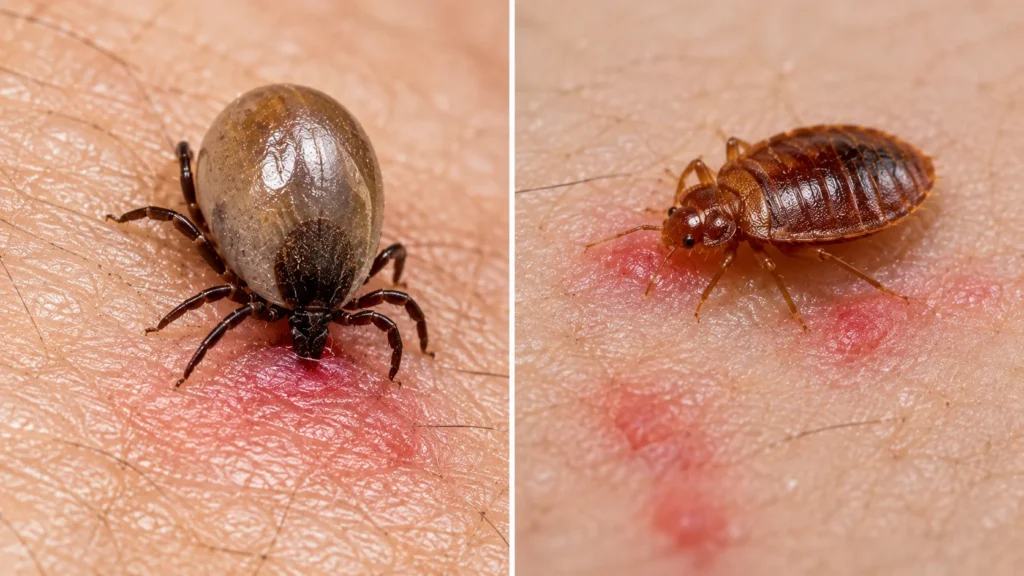
Ticks attach to a host and feed over a longer period depending on the species and life stage. Tick bites are medically important because infected ticks can transmit pathogens that cause tickborne diseases.
Tick Bite vs Bed Bug Bite
Bed bug bites may appear as small, itchy, swollen red areas and can occur in clusters or lines, but reactions vary considerably among individuals.
A tick bite can be associated with an attached tick or a recently removed tick. Because different tick species transmit different pathogens, the geographic location, tick species, attachment duration, and symptoms can matter when evaluating possible exposure.
Bed Bug Bites vs Tick Bites
Bite appearance alone cannot reliably distinguish the two. Bed bug reactions can resemble flea or mosquito bites, while tick bites can also produce localized skin reactions.
For suspected bed bugs, finding and identifying the insect or other infestation evidence is more reliable than relying on skin marks. For a suspected tick exposure, prompt tick removal and appropriate medical guidance are more important than trying to identify a bite from appearance alone.
Bed Bug vs Tick vs Flea
Fleas can add another layer of confusion because they are also small blood-feeding pests.
| Feature | Tick | Bed Bug | Flea |
| Classification | Arachnid | Insect | Insect |
| Legs | 8 in nymphs/adults | 6 | 6 |
| Wings | None | None | None |
| Jumping | No | No | Yes |
| Typical host association | Wildlife, pets, humans | People and animals | Mammals and birds |
| Body | Oval, varies by stage | Flattened oval | Laterally flattened |
| Common environment | Outdoor vegetation/hosts | Sleeping and resting areas | Pets, carpets, animal resting areas |
Ticks do not jump or fly; they commonly wait on vegetation and attach to passing hosts.
Tick vs Bed Bug Pictures and Identification Clues
When comparing tick vs bed bug pictures, a close-up photograph should show the entire body and legs whenever possible. A single cropped image can hide the features needed for reliable identification.
Look for the number of legs, body shape, presence of a dorsal shield on hard ticks, antennae, and the location where the specimen was discovered. For bed bugs, also look for nearby eggs, shed skins, fecal spots, or live bugs around sleeping areas.
If a specimen is available, preserving it in a sealed container or clear bag can help with identification. EPA guidance specifically recommends capturing specimens for proper identification before taking further control measures.
Tick vs Bed Bug Prevention
Prevention differs because these pests enter environments in different ways.
For ticks, reducing exposure involves avoiding tick-infested vegetation when possible, using appropriate repellents, wearing protective clothing, and performing a full tick check after outdoor activities. CDC recommends checking the body after potentially tick-infested exposure and showering soon after returning indoors.
For bed bugs, prevention focuses on inspecting sleeping areas, luggage, used furniture, mattresses, and other places where bed bugs can hitchhike. Early detection can make control easier.
10 Key Tick vs Bed Bug Differences
- Ticks are arachnids, while bed bugs are insects.
- Adult and nymphal ticks have eight legs, while bed bugs have six.
- Tick larvae have six legs, making them an important exception.
- Bed bugs are oval, flattened, and wingless.
- Ticks have a fused main body structure rather than the typical insect body plan.
- Bed bugs commonly hide around mattresses, beds, and sleeping areas.
- Ticks are commonly associated with vegetation, animals, and outdoor environments.
- Bed bugs do not jump or fly.
- Ticks can transmit pathogens that cause tickborne diseases.
- Bite appearance alone cannot reliably confirm a bed bug infestation or identify a tick species.
Conclusion
The tick vs bed bug distinction becomes much clearer when anatomy and habitat are considered together. Adult and nymphal ticks have eight legs and an arachnid body structure, while bed bugs are six-legged, wingless insects with flattened oval bodies. Tick larvae are a special case because they begin with six legs.
Bed bugs are usually associated with mattresses, bed frames, furniture, and cracks around sleeping areas. Ticks are more commonly encountered outdoors, on vegetation, or attached to people and animals. Their feeding behavior also differs, with ticks attaching to hosts while bed bugs typically feed at night and retreat to nearby hiding places afterward.
When a specimen is difficult to identify, examining the actual insect is more reliable than diagnosing it from a bite mark alone. Proper identification is especially important when a tick may have been attached because some ticks transmit disease-causing pathogens.
What is the main difference between a tick and a bed bug?
Adult and nymphal ticks have eight legs and are arachnids, while bed bugs have six legs and are insects. Bed bugs also have a distinctive flattened oval body.
Can a bed bug look like a tick?
Yes. Adult bed bugs can resemble wood ticks because both can be small, oval, brownish, and flattened. Leg count and body anatomy provide more reliable clues than color or general shape.
Do ticks have six or eight legs?
Larval ticks have six legs, while nymphal and adult ticks have eight legs.
Do bed bugs have eight legs?
No. Bed bugs are insects and have six legs.
What does a baby tick look like compared with a baby bed bug?
A larval tick can have six legs and be extremely small, while a bed bug nymph is also tiny and pale but has the flattened insect body structure. After a tick molts into the nymphal stage, it develops eight legs.
Are bed bug bites and tick bites the same?
No. They result from different feeding behaviors, and their skin reactions can vary widely. Bed bug bites can resemble mosquito or flea bites, while tick bites require consideration of the attached tick and potential disease exposure.
Can a tick bite look like a bed bug bite?
Yes. Skin reactions can overlap, so the appearance of a bite alone is not a dependable way to identify the arthropod responsible.
Where do bed bugs usually hide?
Bed bugs commonly hide in mattress seams, box springs, bed frames, headboards, furniture, baseboards, cracks, and other locations close to sleeping areas.
Where are ticks commonly found?
Many ticks wait on grasses, shrubs, and vegetation where they can attach to passing hosts. They may also be found attached to people or animals after outdoor exposure.
What should be done with an unidentified bug that may be a tick?
Avoid handling it unnecessarily and preserve the specimen for identification when possible. If a tick was attached to the skin, remove it promptly using appropriate tick-removal methods and monitor for relevant symptoms or seek medical guidance based on local disease risks.