
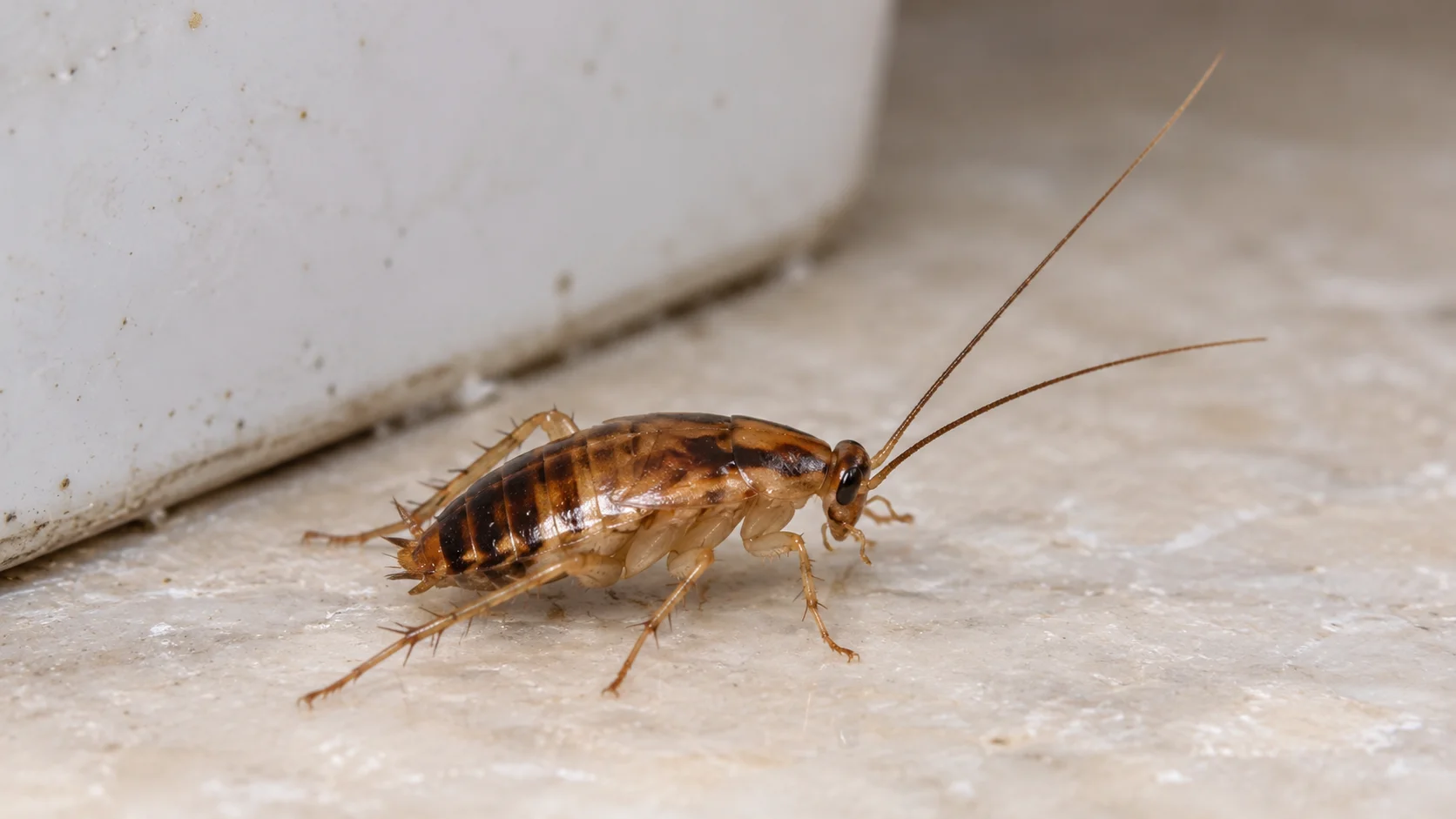
Baby cockroaches are called nymphs, and they look like smaller, wingless versions of adult cockroaches. Their exact color and markings depend on the species. Newly hatched nymphs can initially appear pale or even white, but their outer body hardens and darkens soon after emerging from the egg case.
Unlike some insects that undergo a dramatic transformation, cockroaches develop through three main stages: egg, nymph, and adult. Nymphs molt several times as they grow, gradually developing the characteristics of mature cockroaches.
Seeing baby roaches inside a home is important because nymphs generally indicate that cockroaches are reproducing nearby or that an established population has access to the building. Their small size also allows them to hide in narrow cracks and crevices that larger roaches cannot easily reach.
Baby Cockroaches Have a Small, Wingless Appearance
A typical baby cockroach has a flattened, oval body, six legs, long antennae, and no fully developed wings. Its body shape resembles that of an adult cockroach, but the nymph is considerably smaller and changes appearance through successive molts.
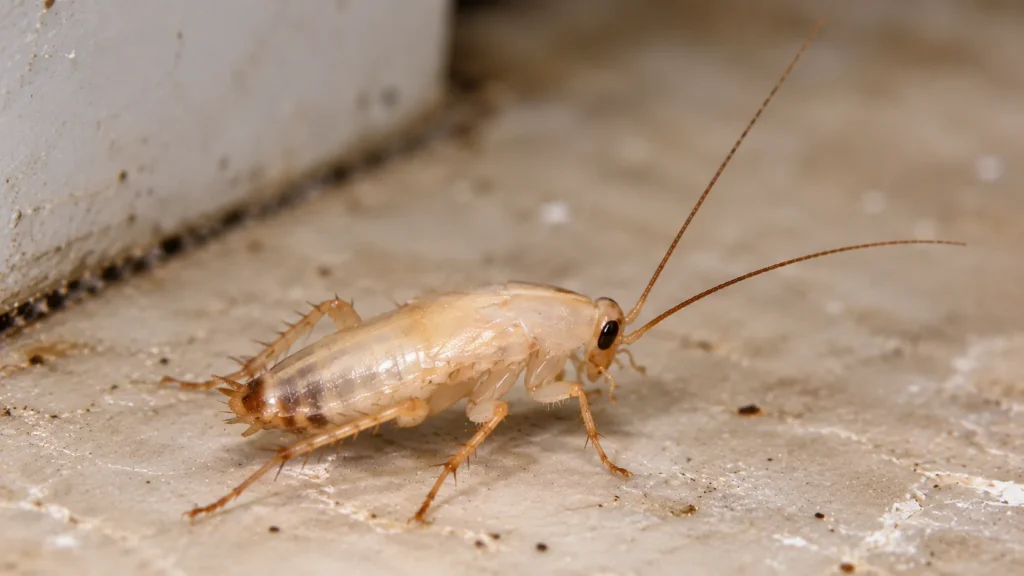
Newly emerged nymphs can be pale because their outer covering has not yet hardened. Within hours, the body becomes darker and firmer. This temporary pale appearance can sometimes lead people to mistake a newly molted cockroach for a different insect.
Baby Roaches Do Not Have Functional Wings
One of the easiest ways to distinguish a cockroach nymph from an adult is the absence of developed wings. Nymphs may eventually develop small wing pads, but they cannot fly like a fully winged adult.
A small, wingless insect with long antennae and a body shape resembling an adult cockroach is therefore consistent with a cockroach nymph.
Nymphs Become Darker as They Mature
Cockroach nymphs typically become darker through successive molts. Their markings can also become easier to recognize as they approach adulthood.
Because different species have different nymph patterns, identifying the species can provide useful information about where the infestation may be located and what environmental conditions are supporting it.
Baby German Cockroaches Have a Distinctive Light Stripe
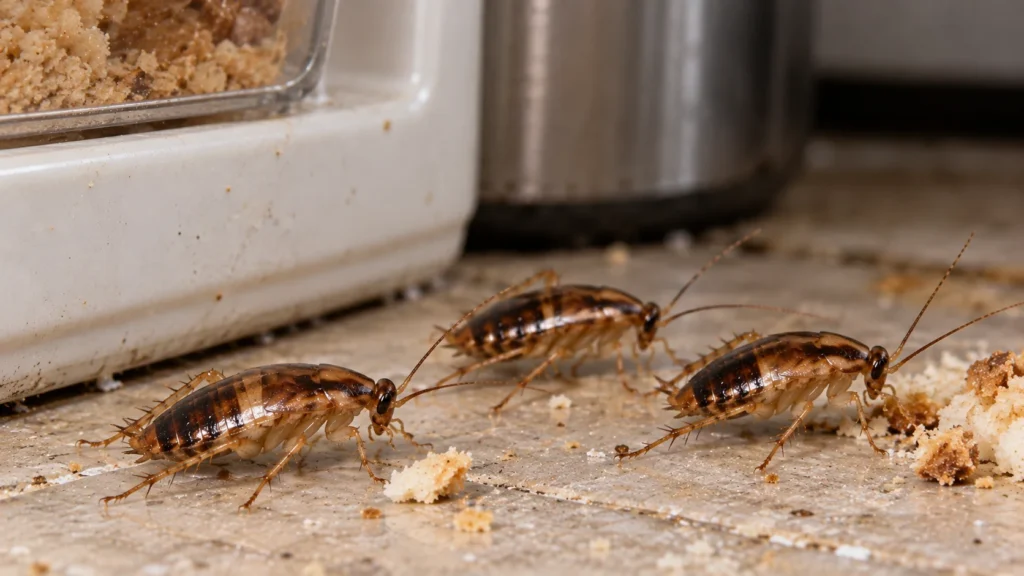
German cockroach nymphs (Blattella germanica) are among the most frequently encountered baby roaches inside homes. They are small, dark-colored, wingless insects with a characteristic light-colored stripe running along the back.
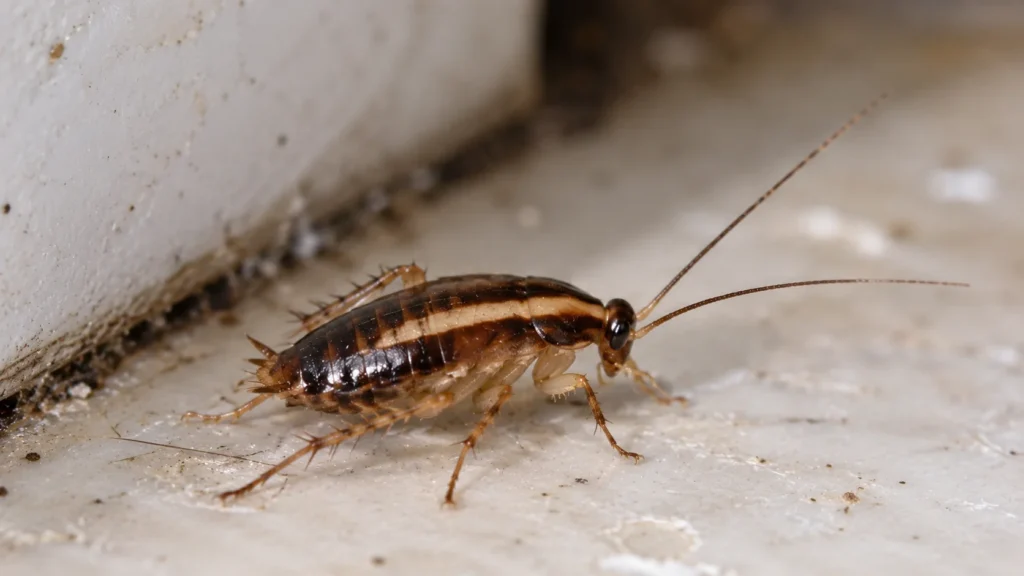
Newly hatched German cockroach nymphs can be less than 3 mm long. As they mature, their dark body and lighter dorsal marking become increasingly recognizable.
German Nymphs Are Common Around Kitchens and Bathrooms
German cockroaches prefer warm, humid areas and are frequently associated with kitchens and bathrooms. They can hide near sinks, dishwashers, stoves, cabinets, plumbing fixtures, and other protected areas.
Their small size makes it possible for nymphs to occupy very narrow spaces. Finding several tiny dark roaches around these areas can therefore be an important sign of an indoor German cockroach population.
German Baby Roaches Have a Dark Body and Pale Back Marking
A mature German nymph is generally dark brown or nearly black, with a lighter stripe running lengthwise down its back. The nymph lacks the two dark pronotal lines that are characteristic of the adult German cockroach because its adult wings and adult body markings have not yet developed.
Baby American Cockroaches Are Gray-Brown and Gradually Become Reddish
American cockroach nymphs are substantially different from German cockroach nymphs. They begin as grayish-brown insects and gradually become more reddish-brown as they pass through their developmental stages. They remain wingless while immature.
Adult American cockroaches are among the largest common household cockroaches, reaching roughly 1½ inches in length in the Penn State description. Their nymphs are therefore much smaller but retain the general body form of the adult.
American Nymphs Prefer Damp Areas
American cockroaches are commonly associated with dark, warm, and moist environments such as basements, crawl spaces, drains, pipe areas, and sewers. Nymphs and adults can occur in these same environments.
A small reddish-brown roach found near a floor drain, basement, sewer connection, or damp utility area can therefore fit the appearance and habitat of an American cockroach nymph.
Baby Oriental Cockroaches Are Dark and Wingless
Oriental cockroach nymphs (Blatta orientalis) are dark brown to nearly black and develop in damp, cool environments. The species is sometimes called a water bug because of its strong association with moisture.
Nymphs and adults can occur around drains, crawl spaces, damp basements, sewers, and areas containing decaying organic material. Their relatively dark coloration can make them look almost black.
Oriental Nymphs Develop Slowly
Oriental cockroach nymphs can require a relatively long period to reach adulthood, with multiple molts during development. Their developmental environment is strongly influenced by temperature and moisture.
Because these cockroaches are strongly associated with damp locations, persistent moisture around foundations, plumbing, crawl spaces, and basements can contribute to their presence.
Baby Brown-Banded Cockroaches Have Pale Bands
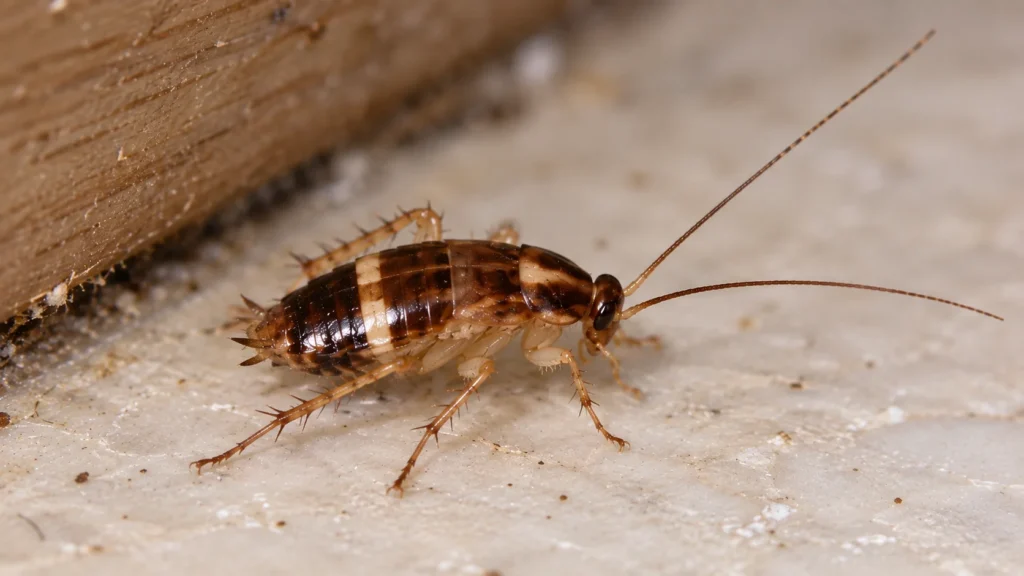
Brown-banded cockroach nymphs (Supella longipalpa) can be recognized by two lighter bands crossing their darker bodies. These markings are particularly useful because they distinguish brown-banded nymphs from many other common household cockroach nymphs.
Brown-banded cockroaches tend to prefer warmer, relatively dry locations compared with German cockroaches. They can hide behind furniture, pictures, clocks, books, and appliances.
Brown-Banded Nymphs Hide in Elevated Locations
Unlike moisture-loving species that commonly stay near sinks and drains, brown-banded cockroaches can occur higher in buildings. Their hiding locations can include ceilings, furniture, cabinets, wall spaces, and appliances.
The two pale horizontal bands on a small dark nymph can therefore provide an important identification clue.
Tiny Baby Cockroaches Can Be Difficult to Identify
Tiny roaches can be challenging to identify because several species look similar during their earliest nymphal stages. Their size may also make important characteristics difficult to see without magnification.
A newly hatched cockroach can initially appear white or pale before its body hardens and darkens. This temporary appearance is normal and does not indicate a separate species.
Size Changes With Each Nymphal Stage
Cockroach nymphs grow through a series of molts. Each molt produces a larger developmental stage, and the body gradually begins to resemble the adult more closely.
German cockroach nymphs, for example, can begin at less than 3 mm and continue developing through several nymphal stages before reaching adulthood.
Baby Roaches Can Hide in Extremely Small Spaces
Nymphs can occupy narrow cracks, gaps around cabinets, spaces under appliances, plumbing areas, and other protected locations. Their small size makes them considerably harder to find than adults.
This is one reason an infestation can continue even after several visible adult cockroaches have been removed.
Baby Cockroaches in the House Can Indicate Reproduction
Finding a single adult cockroach may sometimes represent an accidental introduction, particularly with larger outdoor-associated species. Finding multiple baby cockroaches in the house, however, is more significant because nymphs develop from eggs produced by adult females.
Cockroach egg cases, called oothecae, contain multiple eggs. The number varies by species. German cockroach egg cases, for example, can contain up to 48 eggs, while American cockroach egg capsules average about 14–16 eggs.
Multiple Nymphs Usually Deserve Attention
Several nymphs appearing over a short period can indicate an active population rather than an isolated insect. The exact significance depends on the species and location.
German cockroach nymphs are especially important to investigate because German cockroaches are highly adapted to indoor environments and commonly infest kitchens, bathrooms, apartments, restaurants, and other buildings.
Nymphs Can Point Toward Nearby Hiding Areas
Because young cockroaches generally remain relatively close to shelter, food, water, and other favorable conditions, repeated sightings can help identify areas that require inspection.
Common inspection locations include cracks around cabinets, plumbing penetrations, appliances, sinks, drains, storage areas, and other dark spaces.
Baby Cockroaches Can Be Confused With Bed Bugs and Other Insects
Small cockroach nymphs are sometimes mistaken for bed bugs, beetles, or other small household insects. A closer examination of body shape, antennae, legs, coloration, and movement can help separate them.
Cockroach nymphs generally have long antennae, six legs, a flattened body, and a shape resembling a miniature adult cockroach. Bed bugs have a broader, more rounded body and much shorter antennae.
Cockroach Nymphs Have Long Antennae
The antennae are an important visual clue. Cockroaches have long, thread-like antennae that can be considerably longer than their bodies, while several common look-alike insects have shorter antennae.
The combination of long antennae, six legs, flattened body, and gradual development toward an adult cockroach is useful for identification.
Newly Molted Roaches Can Look Unusual
A freshly molted cockroach may appear almost completely white. Its new outer covering gradually hardens and darkens, so this appearance is temporary.
This can create confusion when comparing photographs because the same species can look dramatically different immediately after molting.
Explore more articles:
- Fruit Flies vs Gnats
- Rat vs Mouse
- Bugs That Look Like Flying Termites
- Bugs That Look Like Fleas
- What Do Fleas Look Like?
- What Does a Cockroach Look Like?
Baby Flying Cockroaches Are Actually Nymphs Without Flight
The phrase baby flying cockroaches can be misleading because cockroach nymphs do not have fully developed wings and therefore cannot fly. Some adult cockroach species have wings, but the ability and tendency to fly varies considerably by species and environmental conditions.
For example, adult American cockroaches have fully developed wings, while adult German cockroaches have wings but generally do not fly.
Small Flying Insects May Be Something Other Than a Baby Roach
An insect that is genuinely flying while also appearing extremely small is unlikely to be a cockroach nymph. A photograph showing wings can therefore be useful when distinguishing cockroaches from other household insects.
Species identification should rely on multiple characteristics rather than size alone.
Baby Cockroach Identification by Species
| Cockroach type | Baby/nymph appearance | Common habitat |
| German cockroach | Dark body with a light stripe along the back | Kitchens, bathrooms, warm humid areas |
| American cockroach | Gray-brown, becoming reddish-brown | Basements, drains, sewers, damp areas |
| Oriental cockroach | Dark brown to nearly black | Damp basements, drains, crawl spaces |
| Brown-banded cockroach | Dark body with two pale horizontal bands | Warm, dry, elevated hiding places |
| Smokybrown cockroach | Dark or black with a pale thoracic band when young | Warm southern/coastal environments |
The appearance and habitat characteristics in this table are based on extension and pest-identification references.
Signs That Baby Cockroaches May Be Present
Baby roaches rarely occur completely independently of the rest of the population. Other evidence can help establish whether the insects are part of an active infestation.
Common Supporting Signs
Look for:
- Small wingless roaches around kitchens or bathrooms
- Adult cockroaches nearby
- Cockroach droppings or dark fecal spotting
- Cockroach egg cases or oothecae
- Shed skins from developing nymphs
- Dead cockroaches
- Musty or unusual odors in severe infestations
- Roaches appearing after dark
- Activity around sinks, plumbing, appliances, or drains
- Repeated sightings in the same protected areas
German cockroaches, in particular, tend to hide during daylight and become active at night.
Practical Steps for Managing Baby Cockroaches
Effective cockroach management begins with identification and integrated pest management, rather than simply treating visible insects. Penn State Extension recommends identifying the pest, removing conditions that allow it to survive, using prevention and exclusion, and selecting chemical controls carefully when needed.
Food should be stored securely, leaks should be repaired, clutter should be reduced, and cracks or entry points should be addressed. Monitoring can also help reveal where cockroach activity is concentrated.
Reduce Food, Water, and Shelter
Keep food in sealed containers, clean food residues promptly, remove garbage regularly, repair plumbing leaks, and reduce unnecessary clutter. These measures make the environment less favorable for cockroaches.
If an infestation is established, targeted professional treatment may be appropriate, particularly when nymphs continue appearing despite sanitation and exclusion measures.
10 Key Facts About Baby Cockroaches
- Baby cockroaches are called nymphs.
- Cockroach nymphs have six legs and long antennae.
- Nymphs do not have fully developed wings.
- Newly hatched cockroaches can initially appear white or pale.
- German cockroach nymphs are dark with a light stripe along the back.
- American cockroach nymphs begin gray-brown and gradually become more reddish-brown.
- Oriental cockroach nymphs are generally dark brown to nearly black.
- Brown-banded cockroach nymphs have two pale horizontal bands.
- Several baby cockroaches inside a home can indicate an active breeding population.
- Correct species identification helps determine the likely hiding places and environmental conditions supporting the infestation.
Conclusion
Baby cockroaches are nymphs, and their appearance varies according to species and developmental stage. Most have a small, flattened body, six legs, long antennae, and no functional wings. Newly hatched nymphs can be pale before their outer covering hardens and darkens, while older nymphs develop increasingly recognizable species-specific markings.
German cockroach nymphs are particularly recognizable by their dark body and light dorsal stripe, while American, Oriental, and brown-banded nymphs have different colors and markings. Habitat is another useful clue because German cockroaches favor warm, humid indoor areas, American and Oriental cockroaches are frequently associated with damp locations, and brown-banded cockroaches can occupy warmer, drier areas.
Repeated sightings of baby roaches should not be ignored. Identifying the species, locating food and water sources, reducing hiding places, and using an integrated pest-management approach can help address the underlying infestation rather than only removing the insects that are visible.
What do baby cockroaches look like?
Baby cockroaches are small, wingless nymphs with six legs, long antennae, and flattened bodies. Their color depends on the species, and newly hatched nymphs can initially be pale before becoming darker.
What do baby German cockroaches look like?
Baby German cockroaches are dark-colored, wingless nymphs with a lighter stripe running along their backs. Newly hatched individuals can be less than 3 mm long.
What do baby American cockroaches look like?
American cockroach nymphs are grayish-brown when young and gradually become reddish-brown as they mature. They are smaller than adults and lack developed wings.
What do baby Oriental cockroaches look like?
Oriental cockroach nymphs are generally dark brown to nearly black and wingless. They are commonly associated with damp, cool areas such as basements, drains, crawl spaces, and sewers.
What do baby brown-banded cockroaches look like?
Brown-banded cockroach nymphs have darker bodies with two lighter bands running horizontally across them. This banding is one of their useful identification features.
What do tiny baby cockroaches look like in the house?
Tiny baby cockroaches generally look like miniature, wingless versions of adult cockroaches. Their exact appearance depends on the species, and very young nymphs can be difficult to identify without magnification.
Can baby cockroaches fly?
No. Cockroach nymphs do not have fully developed wings and cannot fly. Wings develop as they mature into adults, although adult flight behavior varies among species.
Can baby cockroaches look like bed bugs?
Yes, very small cockroach nymphs can sometimes be mistaken for bed bugs. Long antennae, a flattened body, six legs, and species-specific markings help distinguish cockroach nymphs from bed bugs.
Does seeing baby cockroaches mean there is an infestation?
Repeated sightings of nymphs can indicate an active cockroach population because nymphs develop from cockroach egg cases. The likelihood of an infestation is higher when multiple nymphs, adults, egg cases, droppings, or shed skins are also present.
What should be done after finding baby cockroaches?
Identify the cockroach species, inspect nearby hiding areas, eliminate food and water sources, reduce clutter, seal cracks and gaps, and monitor activity. Persistent infestations may require targeted professional pest management using an integrated approach.