
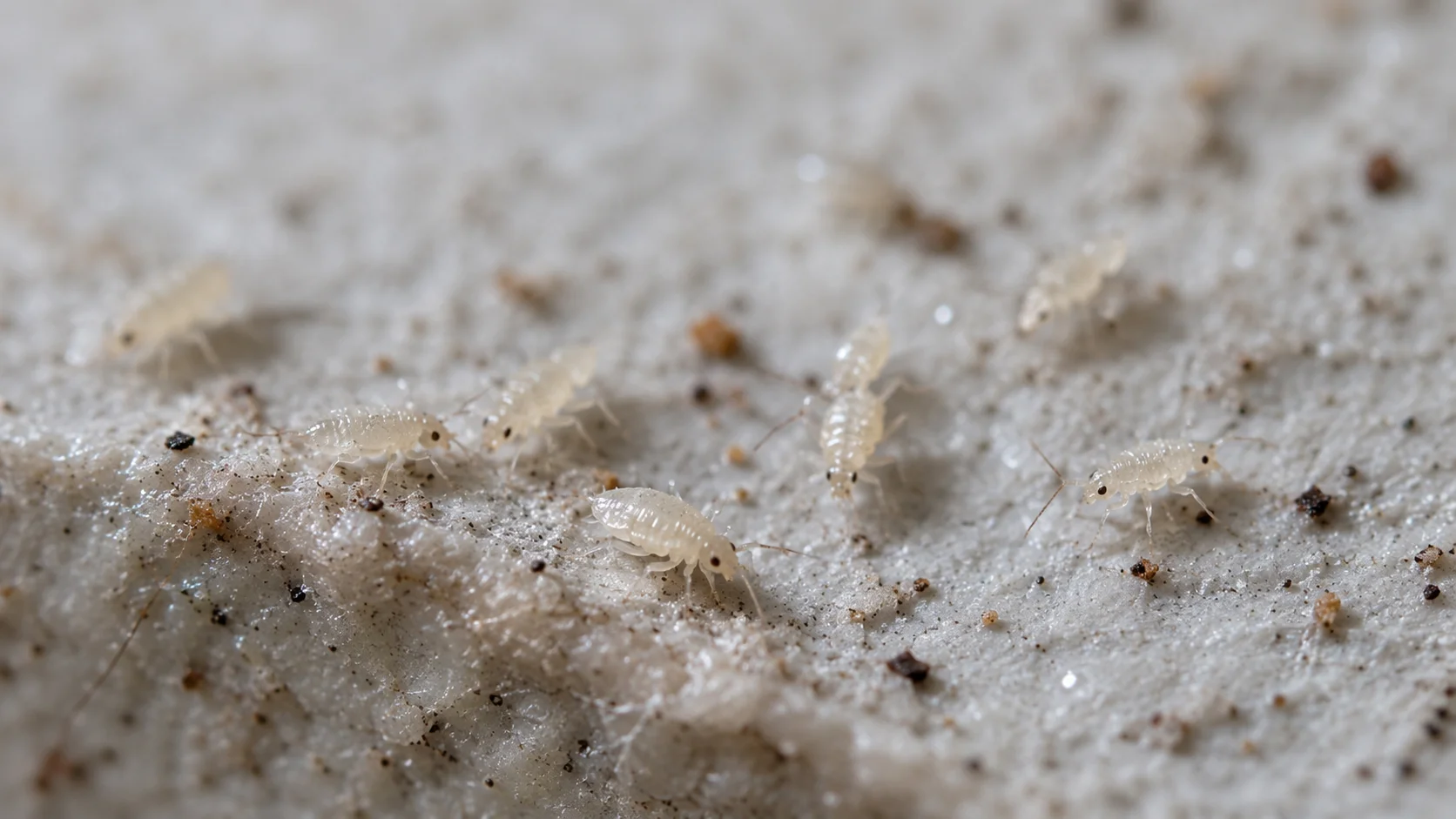
Finding very tiny white bugs that look like dust can be confusing because some insects are so small that they appear to be moving particles, lint, or specks of debris. The insects may become more noticeable on walls, windowsills, furniture, kitchen surfaces, bathrooms, houseplants, or damp areas.
Several different organisms can create this appearance. Booklice (psocids) and springtails are particularly important possibilities inside homes because both can be extremely small and associated with moisture. Some plant pests, including whiteflies and mealybugs, can also look like tiny white particles around indoor or outdoor plants.
Correct identification matters because the best way to manage these insects depends on where they are found, whether they fly or jump, and whether moisture or plants are involved.
What Very Tiny White Bugs That Look Like Dust Usually Are
The phrase very tiny white bugs that look like dust does not describe one specific species. Their appearance can be caused by several different tiny insects or arthropods.
Booklice are soft-bodied and generally white, gray, or brown, while some springtail species are white and extremely small. Whiteflies are another possibility when the insects are concentrated around plants.
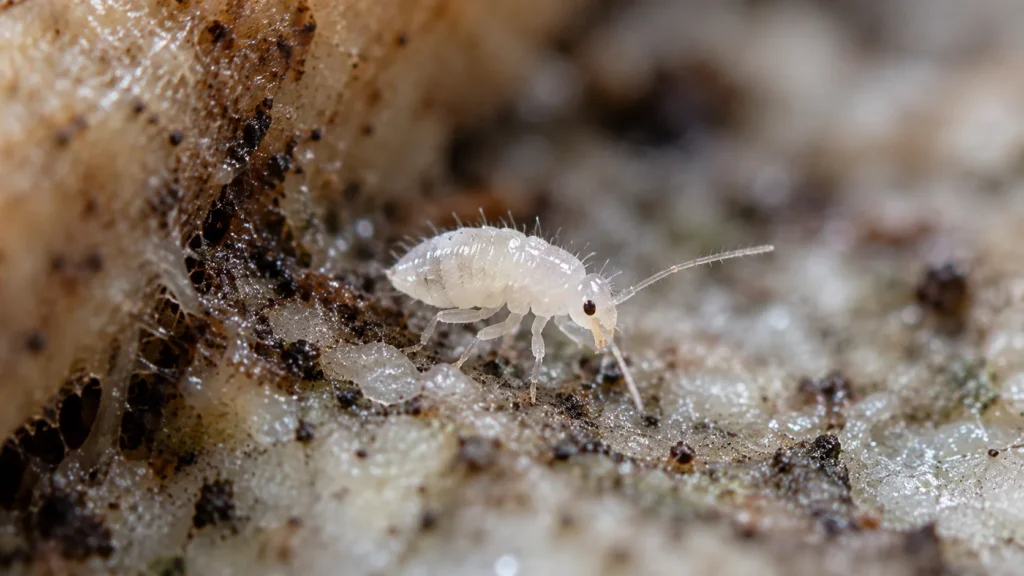
Booklice or Psocids
Booklice are among the strongest possibilities when tiny pale insects are moving across walls, shelves, cardboard, books, cabinets, or other indoor surfaces. They are usually wingless, soft-bodied, and less than 3/16 inch long.
They are strongly associated with warm, damp locations where mold and fungi can develop. Despite their name, booklice are not parasitic lice and do not bite people or pets.
Springtails
Springtails can also appear as very tiny white bugs that look like dust, particularly when certain white species occur around damp soil, bathrooms, basements, or wet organic material.
They are generally only a few millimeters or smaller, and they do not have wings. Instead, many springtails can suddenly jump when disturbed using a specialized appendage beneath the abdomen.
Very Tiny White Bugs That Look Like Dust in House
When these tiny white insects are in the house, the location provides an important identification clue. Bathrooms, kitchens, basements, areas under sinks, damp cabinets, and spaces with condensation deserve particular attention.
Booklice commonly occur indoors in warm, humid, undisturbed areas where mold and fungi are present. Springtails are similarly associated with moisture and may enter or establish themselves in damp indoor areas.
Bathroom and Kitchen Sightings
Tiny pale insects around a bathroom or kitchen may indicate excessive moisture rather than a conventional household pest infestation. Leaks, condensation, wet wood, damp cardboard, and poor ventilation can all create favorable conditions.
Orkin notes that tiny pale insects that resemble sawdust or dust in bathrooms are often psocids, although springtails can have a similar appearance and proper identification may require close inspection.
Houseplants and Damp Potting Soil
Tiny white insects around houseplants may have a different explanation. Springtails frequently live in excessively damp potting soil and become especially noticeable after watering.
Whiteflies are another possibility when tiny white, flying insects are concentrated on the undersides of leaves. They are plant-feeding insects rather than moisture-associated household pests.
Explore more articles:
- Fruit Flies vs Gnats
- Rat vs Mouse
- Bugs That Look Like Flying Termites
- Flea Bugs That Look Like Bed Bugs
- What Do Fleas Look Like?
Very Tiny White Flying Bugs That Look Like Dust
Some people notice tiny white particles flying around windows, plants, or light sources. Flying behavior immediately narrows the possibilities, but it does not identify a species by itself.
Booklice can occur in winged forms, while whiteflies are tiny white flying insects commonly associated with plants. Some other small insects may also appear airborne because they are disturbed or carried by air currents.
Whiteflies Around Plants
Adult whiteflies are approximately 1/16 inch long and resemble tiny white gnats or moth-like insects. They are usually found on the undersides of plant leaves, where adults and immature stages feed on plant sap.
Heavy whitefly activity can cause yellowing and weakening of plants. If the tiny white bugs are concentrated on leaves and fly away when the plant is disturbed, a plant pest such as a whitefly deserves consideration.
Winged Booklice
Some psocids have wings, while many indoor booklice are wingless. Winged forms are more commonly associated with outdoor psocids, but winged individuals can sometimes be encountered around buildings.
Their very small size means they may look like floating dust from a distance. Moisture, mold, and the location where the insects are found can help distinguish them from plant pests.
Very Tiny White Bugs That Look Like Dust Outside
Tiny white insects outside can have a much wider range of possible identities. Soil, plants, tree bark, leaf litter, mulch, fungi, and decaying organic matter provide habitats for many small arthropods.
Outdoor psocids can live on tree bark and foliage, while springtails are commonly found in soil, mulch, leaf litter, and other moist organic environments.
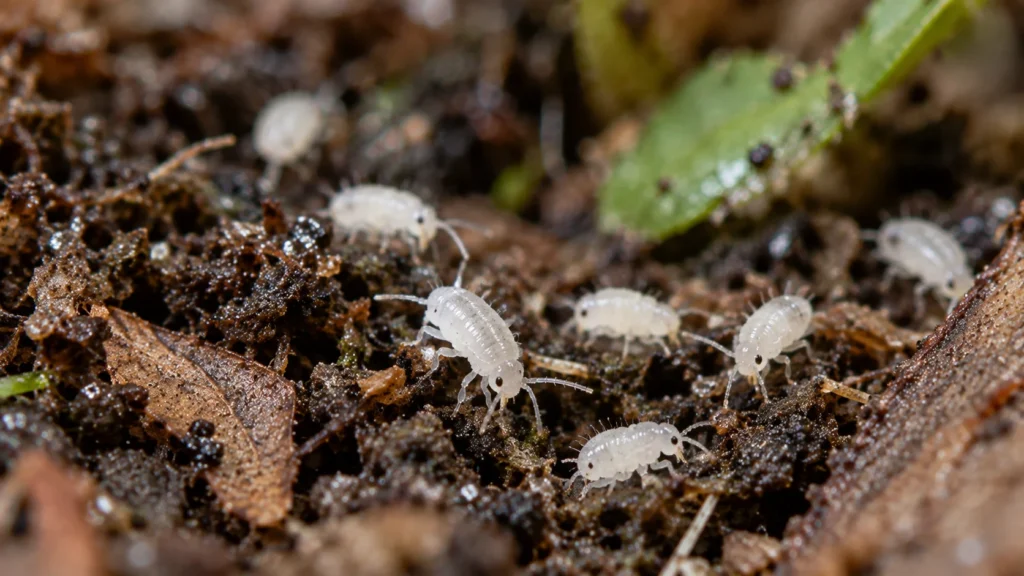
Outdoor Psocids
Outdoor psocids, also called barklice, may gather in large numbers on trees and shrubs. They feed on fungi, lichens, pollen, decaying vegetation, and other organic material.
Although their numbers can make them conspicuous, UMN Extension describes psocids as generally harmless to people, pets, and plants.
Outdoor Springtails
Springtails are especially common in moist soil and organic debris. They can occur around mulch, gardens, compost, decaying vegetation, and areas with excessive irrigation.
If large numbers suddenly appear around a home, moisture conditions may be contributing to the activity.
Very Tiny White Bugs That Fly or Jump
Movement is one of the easiest clues to observe without handling the insects. A bug that flies when disturbed should be considered differently from one that suddenly jumps across a surface.
Springtails do not have wings and cannot fly; they jump using their furcula. Whiteflies are winged adults, while psocids may occur in either winged or wingless forms depending on the group.
Jumping Behavior
If the insects remain on a damp surface but suddenly disappear several inches away when disturbed, springtails become a strong possibility. Their jumping mechanism is distinctive and separates them from many tiny flying insects.
Springtails are harmless to people and pets and generally indicate a moisture-rich environment rather than a biting pest problem.
Crawling Behavior
Booklice generally crawl across surfaces rather than making the characteristic leaps associated with springtails. Their tiny size and pale coloration can make them appear like moving dust.
A hand lens or close photograph can make body shape, antennae, wings, and movement much easier to evaluate.
Why Moisture Often Matters
Moisture is one of the most important clues when very tiny white bugs appear indoors. Both booklice and springtails thrive under conditions where humidity, condensation, damp materials, mold, or fungi are present.
The EPA recommends keeping indoor relative humidity below 60%, with 30%–50% considered an ideal range when possible. Controlling leaks and condensation also helps limit indoor mold growth.
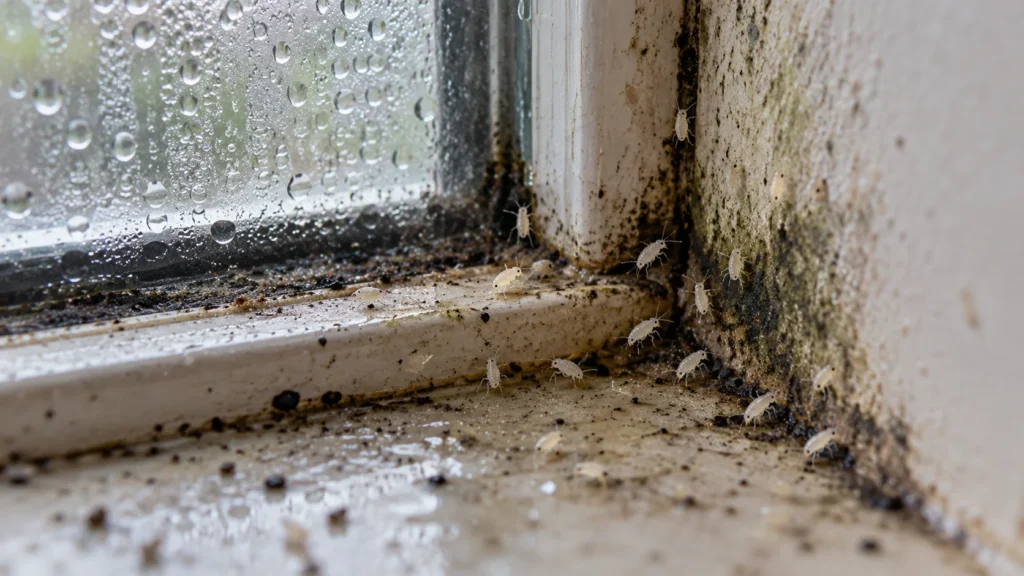
Damp Conditions and Mold
Booklice feed on mold and fungi, so their presence can sometimes point toward an underlying moisture problem. Wet cardboard, damp paper, condensation, and poorly ventilated spaces can create favorable conditions.
Simply killing visible insects may not solve the underlying issue if the area remains humid. Reducing moisture is therefore an important part of long-term management.
Humidity Reduction
Ventilation, fans, dehumidifiers, leak repairs, and drying damp materials can help make indoor conditions less favorable to moisture-loving pests.
For booklice, UMN Extension reports that reducing humidity to below roughly 45%–50% prevents their survival. Springtail management similarly centers on correcting excessive moisture.
Safe Ways to Identify Tiny White Bugs
Identification should begin with observation rather than immediately applying insecticide. Note the exact location, movement, body color, whether wings are visible, and whether plants or moisture are nearby.
A magnifying glass or close-up photograph can reveal details that are impossible to see with the naked eye. If the insects persist and their identity remains uncertain, an extension diagnostic service or qualified pest professional can help.
10 Quick Identification Points
- Booklice are tiny, soft-bodied insects associated with humidity and mold.
- Some psocids are wingless, while others have wings.
- Springtails can be white, gray, black, or other colors.
- Springtails do not fly; they jump when disturbed.
- Whiteflies are tiny white flying insects associated with plants.
- Damp bathrooms can support booklice and springtails.
- Excessively wet houseplant soil can support springtails.
- Outdoor psocids commonly occur on bark and foliage.
- Moisture control is important when booklice or springtails are present.
- A close photograph or magnified examination is more reliable than identifying an insect from its apparent dust-like appearance.
Conclusion
Very tiny white bugs that look like dust can be difficult to identify because several unrelated pests and harmless arthropods can appear as tiny moving specks. Inside homes, booklice and springtails are important possibilities, particularly when the insects are found around bathrooms, kitchens, damp areas, or houseplants.
Outside, psocids and springtails are common possibilities in moist soil, mulch, foliage, bark, and organic debris. Whiteflies should be considered when tiny white insects are flying around plant leaves.
The most useful approach is to examine their location, movement, wings, body shape, and moisture conditions before deciding how to manage them.
What are very tiny white bugs that look like dust?
They may be booklice, springtails, whiteflies, or another tiny arthropod. The correct identification depends on where they occur and how they move.
What are very tiny white bugs that look like dust in a house?
Booklice and springtails are common possibilities, especially in humid or damp areas. Both are associated with moisture-rich conditions.
What are very tiny white bugs that look like dust and fly?
Winged psocids or whiteflies can create this appearance. Whiteflies are particularly likely when the insects are concentrated around plants.
Can very tiny white bugs that look like dust be harmful?
Booklice and springtails are generally harmless to people and pets. Whiteflies primarily affect plants rather than people.
Why are tiny white bugs appearing indoors?
Excess moisture, condensation, damp materials, mold, fungi, or wet plant soil can create favorable conditions for several tiny pests.
What is the first step for getting rid of tiny white bugs?
Identify the insects and inspect the surrounding area for moisture. Drying damp areas, improving ventilation, fixing leaks, and reducing excessive humidity can address conditions that support booklice and springtails.