

Finding a small brown insect around a bed can make it difficult to know whether you are dealing with bed bugs, fleas, or another household pest. Several insects share similar colors or body shapes, while their behavior, movement, and preferred hiding places can be very different.
Flea bugs that look like bed bugs are particularly confusing because fleas are small, brownish, wingless insects that can occur around beds, carpets, furniture, and pets. Carpet beetles, ticks, cockroach nymphs, and other insects can also be mistaken for bed bugs. Accurate identification should come before choosing a treatment method. The U.S. The Environmental Protection Agency specifically recommends correct identification because treating the wrong pest can waste time and allow a real bed bug infestation to spread.
What Bed Bugs Actually Look Like
Adult bed bugs are typically about 5–7 mm long, reddish-brown, flat, and oval when unfed. They are wingless and have six legs. After feeding, their bodies become more elongated and swollen.
Bed bugs usually stay close to areas where people sleep or rest, hiding in mattress seams, box springs, bed frames, headboards, furniture cracks, and other sheltered spaces. Their physical evidence can include live insects, shed skins, eggs, dark fecal marks, and rusty stains on bedding.
Bed Bug Body Characteristics
A bed bug has a broad, flattened body rather than the narrow, vertically oriented appearance of a flea. Its reddish-brown coloration can become darker after feeding, which sometimes makes it look more like other blood-feeding insects.

Bed bugs do not jump or fly. Their movement is primarily crawling, so a tiny insect that repeatedly launches itself from a surface is less consistent with a bed bug.
Bed Bug Evidence Around Sleeping Areas
Physical evidence is more useful than skin reactions alone. Dark spots, shed skins, eggs, blood stains, and live insects around mattress seams and bed frames can provide stronger evidence of bed bug activity.
The EPA notes that bites are a poor identification method because skin reactions can resemble bites from other insects or even non-insect skin conditions.
Fleas That Look Like Bed Bugs
Fleas are among the insects most easily confused with bed bugs because both are small, brownish, wingless insects that feed on blood. Their body structures, however, are different enough to provide useful identification clues.
Fleas are generally smaller than adult bed bugs, with a laterally compressed body and strong hind legs adapted for jumping. They are frequently associated with pets, pet bedding, carpets, and areas where animals rest.
Flea Body and Movement
A flea has a narrow, flattened body when viewed from the side, while a bed bug has a broader, oval shape. Fleas can jump, sometimes making them disappear quickly when someone tries to inspect them.
This difference in movement is especially useful. If the insect repeatedly jumps rather than simply crawling away, a flea becomes a more plausible identification.
Explore more articles:
Fleas Around Beds and Carpets
Fleas can be found around beds without actually being bed bugs. Pets can introduce fleas into a home, and flea activity may continue in carpets, upholstered furniture, pet bedding, and other areas where immature stages develop.
Finding an animal in the household with scratching or flea evidence can therefore provide important context. A flea problem can exist even when no obvious infestation is visible directly on the pet.
Carpet Beetles Mistaken for Bed Bugs
Carpet beetles are another common source of confusion. Adult carpet beetles can have small, rounded bodies and dark or patterned coloration, while their larvae are hairy and look completely different from adult insects.
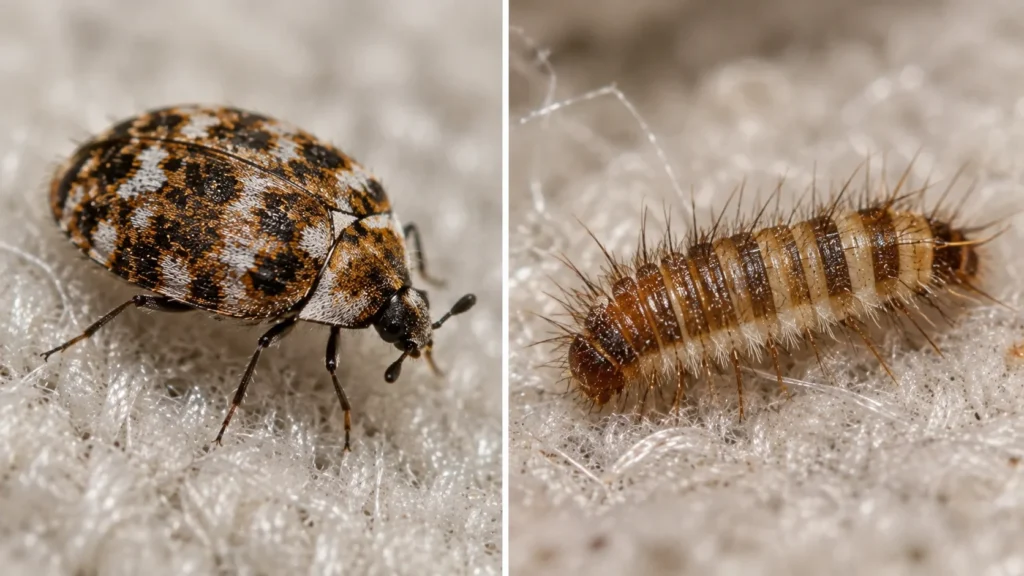
Unlike bed bugs, adult carpet beetles have wings and can fly. Their larvae feed on materials such as natural fibers, hair, fur, feathers, and other organic materials. They do not bite people, although larval hairs can sometimes cause skin irritation that resembles insect bites.
Adult Carpet Beetle Features
Adult carpet beetles are usually small and may display mottled combinations of brown, black, white, or yellow. Their patterned appearance can help distinguish them from the relatively uniform reddish-brown appearance of many bed bugs.
Finding an adult near windows can also provide a clue because adult carpet beetles can fly toward light. Their presence does not automatically indicate a bed bug infestation.
Carpet Beetle Larvae and Shed Skins
Carpet beetle larvae are elongated and covered with bristles or hairs. Their shed skins can sometimes be mistaken for bed bug cast skins, particularly when found near carpets, bedding, or stored fabrics.
The presence of hairy larvae, fabric damage, or shed larval skins therefore points toward carpet beetles rather than bed bugs.
Other Flea-Like Bugs That Resemble Bed Bugs
Not every small insect found around a bed is a flea or bed bug. Ticks, spider beetles, booklice, cockroach nymphs, bat bugs, and other small arthropods can create similar identification problems.
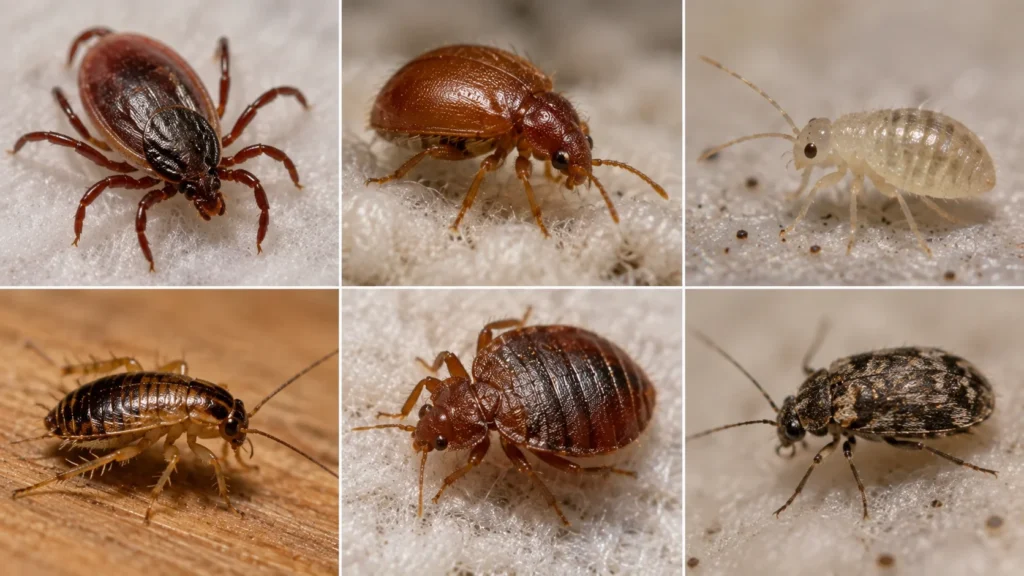
The Toronto Metropolitan University identification guide specifically documents several insects commonly mistaken for bed bugs, including fleas, carpet beetles, spider beetles, booklice, and cockroach nymphs.
Ticks
Ticks can resemble small brown insects at first glance, particularly before feeding. One important distinction is that ticks are arachnids with eight legs, whereas bed bugs and fleas are insects with six legs.
Ticks are also more commonly associated with outdoor environments and animals. Finding one near a pet or after outdoor exposure provides useful context when distinguishing it from a bed bug.
Cockroach Nymphs
Young cockroaches can be reddish-brown and relatively small, making them another possible bed bug look-alike. Their bodies tend to be more cylindrical, and their antennae are considerably more prominent.
Their behavior also differs. Cockroach nymphs generally move quickly and are associated with food, moisture, cracks, kitchens, bathrooms, and other suitable hiding areas rather than sleeping areas specifically.
Booklice and Spider Beetles
Booklice are tiny insects associated with humidity, mold, fungi, paper, and other damp materials. Their smaller size and lighter coloration can help separate them from bed bugs.
Spider beetles can have rounded reddish-brown bodies and may resemble a blood-fed insect. They do not feed on blood, however, and their body shape and habitat provide additional identification clues.
Flea Bites, Bed Bug Bites, and Identification
Skin marks should not be used by themselves to identify either pest. Flea bites and bed bug bites can both produce itchy, red reactions, and individual reactions vary substantially between people.
The CDC states that bed bug bites can resemble flea or mosquito bites, and some people may show little or no visible reaction. The EPA likewise recommends looking for physical evidence rather than relying on bites alone.
Flea Bite Patterns
Flea bites can occur in clusters and are commonly associated with the lower legs and ankles, although fleas can bite other areas. Their association with pets and carpets can provide additional clues.
A bite pattern alone cannot establish that fleas are responsible, so it should be combined with evidence such as jumping insects, flea dirt, pets showing flea activity, or fleas found during inspection.
Bed Bug Bite Reactions
Bed bug reactions can appear as itchy red marks, sometimes in clusters or lines, but not everyone develops a visible reaction. This makes visual identification of bites unreliable.
Stronger evidence includes live bed bugs, shed skins, eggs, dark fecal marks, and rusty stains around sleeping areas.
Identifying Flea Bugs That Look Like Bed Bugs
A reliable identification process combines body shape, size, movement, number of legs, location, and surrounding evidence. Looking at one characteristic in isolation can produce the wrong conclusion.

If the insect jumps, is very small and narrow, and is associated with pets or carpets, fleas become more plausible. If it is flat, oval, reddish-brown, crawls rather than jumps, and appears with fecal marks or shed skins around a mattress, bed bugs become more plausible.
Inspection Around the Bed
Inspect mattress piping, seams, tags, the box spring, headboard, bed frame joints, and nearby furniture. Use a flashlight and look for insects, eggs, shed skins, dark marks, and rusty stains.
Do not rely solely on whether you can see an insect immediately. Bed bugs are good at hiding, and low-level infestations can be difficult to locate.
Inspection Around Pets and Flooring
If fleas are suspected, inspect pets and their resting areas as well as carpets and upholstered furniture. Fleas can be connected to animal hosts and the surrounding environment.
A flea comb can assist with finding adult fleas or flea dirt on a pet. Veterinary guidance is appropriate when an animal has persistent itching, skin irritation, or suspected parasites.
10 Quick Identification Points
- Fleas: Usually smaller and more slender than adult bed bugs.
- Flea movement: Fleas can jump; bed bugs crawl.
- Flea body: Laterally compressed and adapted for movement through fur.
- Bed bug body: Flat and oval when unfed.
- Carpet beetles: Adults may have patterned bodies and wings.
- Ticks: Have eight legs rather than six.
- Cockroach nymphs: Tend to have longer antennae and more cylindrical bodies.
- Bites: Skin reactions alone cannot reliably identify the pest.
- Bed bug evidence: Dark fecal marks, shed skins, eggs, and live bugs are useful clues.
- Location: Pets and carpets can point toward fleas, while mattress seams and bed frames are important places to inspect for bed bugs.
Conclusion
Flea bugs that look like bed bugs can be confusing because both pests are small, wingless, brownish insects that can occur around sleeping areas. The most useful differences involve body shape, movement, size, habitat, and supporting evidence.
Fleas are smaller, laterally compressed, and capable of jumping, while adult bed bugs are broader, oval-shaped, and crawl rather than jump or fly. Carpet beetles, ticks, cockroach nymphs, booklice, and spider beetles create additional possibilities when a small insect is discovered indoors.
Before treating a suspected infestation, identify the pest as accurately as possible. The EPA emphasizes that correct identification is an important first step because different insects require different control approaches.
What flea bugs look like bed bugs?
Fleas can resemble bed bugs because both are small, dark, wingless insects. Fleas are generally smaller, have a laterally compressed body, and can jump, while bed bugs have a broader, flat oval body and crawl.
Can carpet beetles look like bed bugs?
Yes. Adult carpet beetles can have small rounded bodies and dark coloration. Their ability to fly, patterned appearance, and hairy larvae help distinguish them from bed bugs.
Can fleas live in a bed?
Fleas can be found in bedding and areas where pets rest, particularly when a pet has a flea infestation. Their environmental stages can also occur in carpets and other protected areas.