
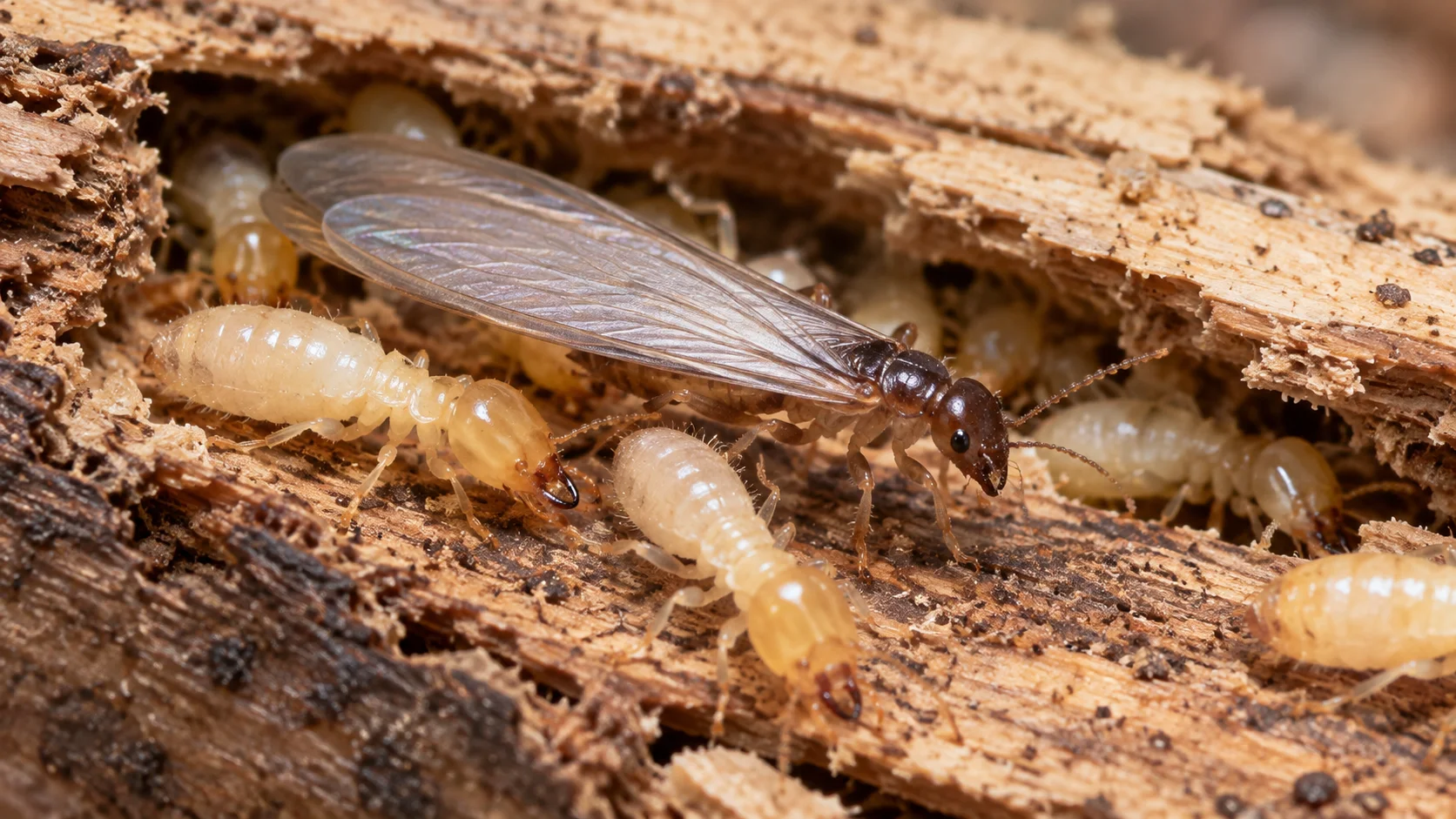
Pictures of termites can make identification much easier because termites vary in appearance according to their species, caste, age, and life stage. Workers are usually pale and soft-bodied, soldiers have enlarged heads and jaws, while reproductive termites develop darker bodies and wings.
The most commonly encountered groups include subterranean, drywood, and dampwood termites. Their habitats and visible signs can differ considerably, so a picture of the insect itself is only one part of identification. Shelter tubes, damaged wood, discarded wings, and dry fecal pellets can provide additional clues.
This guide covers pictures and visual descriptions of different termites, including flying termites, baby termites, termites in walls and houses, termite damage, and termites compared with flying ants.
What Termites Look Like
Termites have soft bodies, straight or bead-like antennae, and a broad waist rather than the narrow waist seen in ants. Their color can range from creamy white and pale brown to dark brown or black, depending on the caste and species.
Worker termites are generally pale and wingless, while soldiers have noticeably larger heads with defensive mandibles. Winged reproductive termites, also called alates or swarmers, are darker and have two pairs of wings.
Pictures of Adult Termites
Adult termite appearance depends heavily on caste. Workers commonly appear cream or white, soldiers have enlarged heads, and reproductive termites are darker and winged.
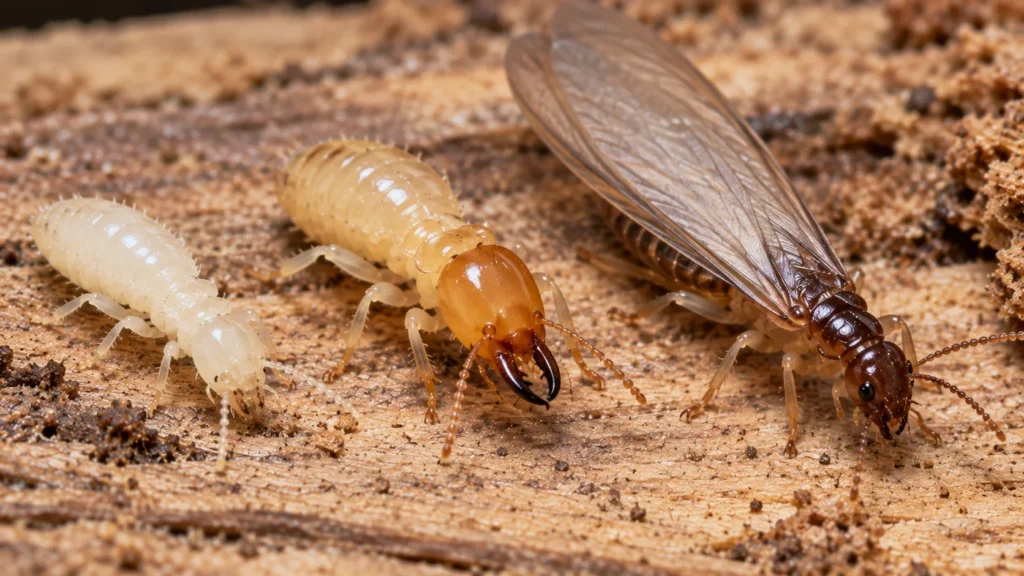
Subterranean termite workers are commonly around 1/4 inch long, while eastern subterranean termite soldiers are approximately the same size but have prominent jaws. Winged reproductives may be around 3/8 to 1/2 inch long.
Pictures of Baby Termites
Very young termites are generally pale and soft-bodied. After eggs hatch, the young termites develop through molts and eventually become workers, soldiers, or reproductive forms depending on the colony's needs.
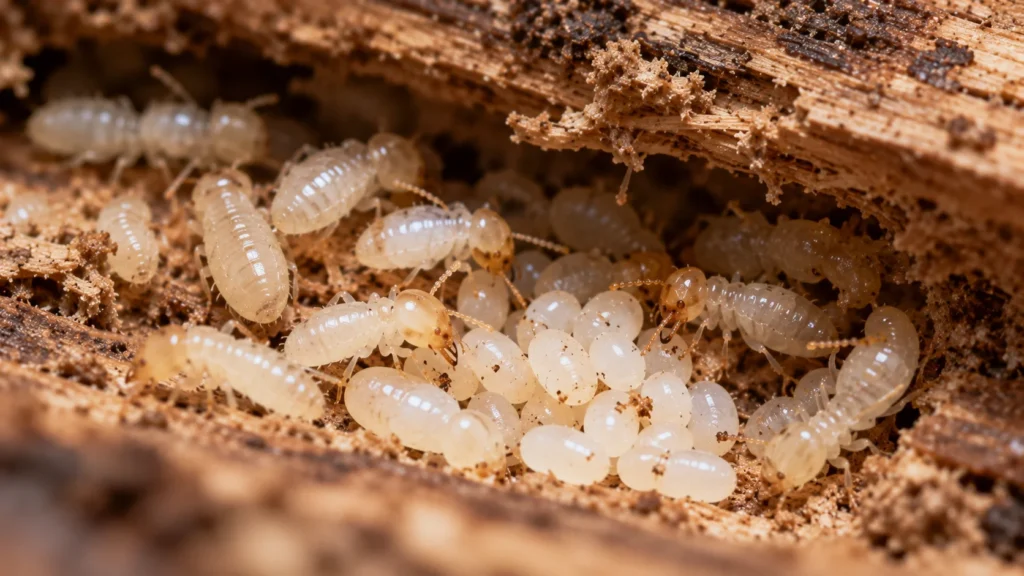
Because baby termites are small and often remain inside the colony, they are less commonly seen than workers or swarmers.
Pictures of Different Types of Termites
Termite identification becomes more useful when the insect is considered together with its habitat and damage pattern. Subterranean termites generally maintain connections with soil, while drywood termites can establish colonies directly inside relatively dry wood. Dampwood termites are associated with moist wood and humid conditions.
Pictures of Subterranean Termites
Subterranean termites commonly have pale workers and soldiers with larger heads. Their reproductive swarmers are darker and winged.
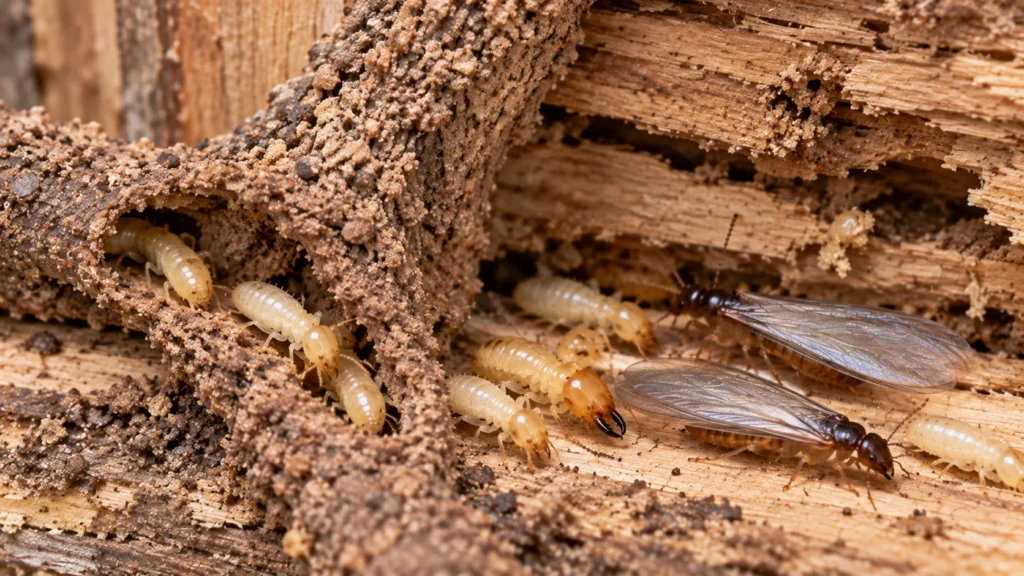
A major visual clue is the presence of mud or shelter tubes. These earth-colored passages help subterranean termites travel between soil and wooden structures while maintaining the moisture they need.
Subterranean termites occur widely across the United States and are especially important as structural wood pests.
Pictures of Drywood Termites
Drywood termites live within relatively dry wood rather than requiring a direct connection with soil. Their colonies can occur in structural lumber, attic wood, furniture, and other wooden materials.
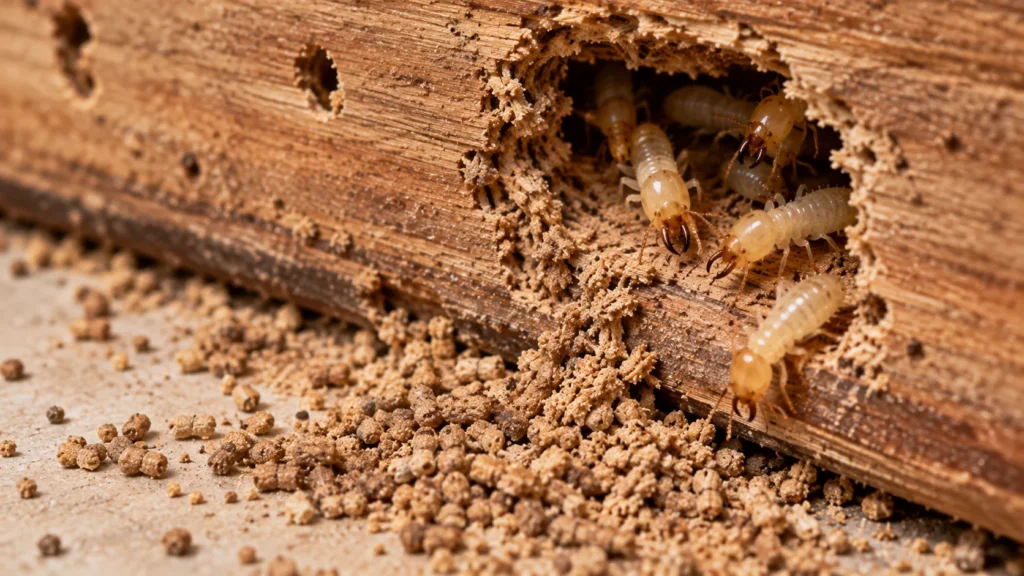
Pictures of drywood termite evidence often show small kick-out holes and piles of dry fecal pellets, called frass. The pellets can resemble coarse grains of sand and accumulate below openings in infested wood.
Drywood galleries generally do not contain the mud or soil material characteristic of subterranean termite galleries.
Pictures of Dampwood Termites
Dampwood termites are associated with wood containing substantial moisture. Their colonies can occur in wet or decaying wood, including trees, logs, posts, and other moisture-exposed materials.
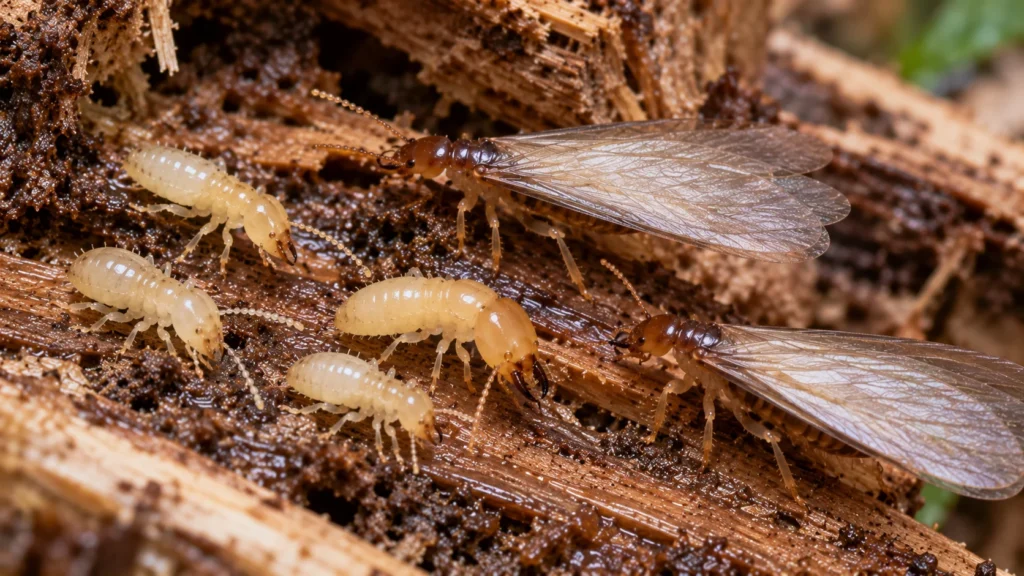
Florida dampwood termites are relatively large compared with many other termite groups, and their winged forms have forewings and hind wings that are approximately equal in size and shape.
Pictures of Termites With Wings
Winged termites are called alates or swarmers. They are reproductive termites that leave mature colonies during a swarming event, pair up, shed their wings, and attempt to establish new colonies.
Winged termites usually have two pairs of wings that are similar in length. Their wings can be longer than the body and are often pale, gray, or translucent depending on the species.
Pictures of Flying Termites
Flying termite pictures commonly show dark-bodied insects with four long wings. Swarms can contain numerous individuals and may appear around windows, doors, lights, or other illuminated areas.
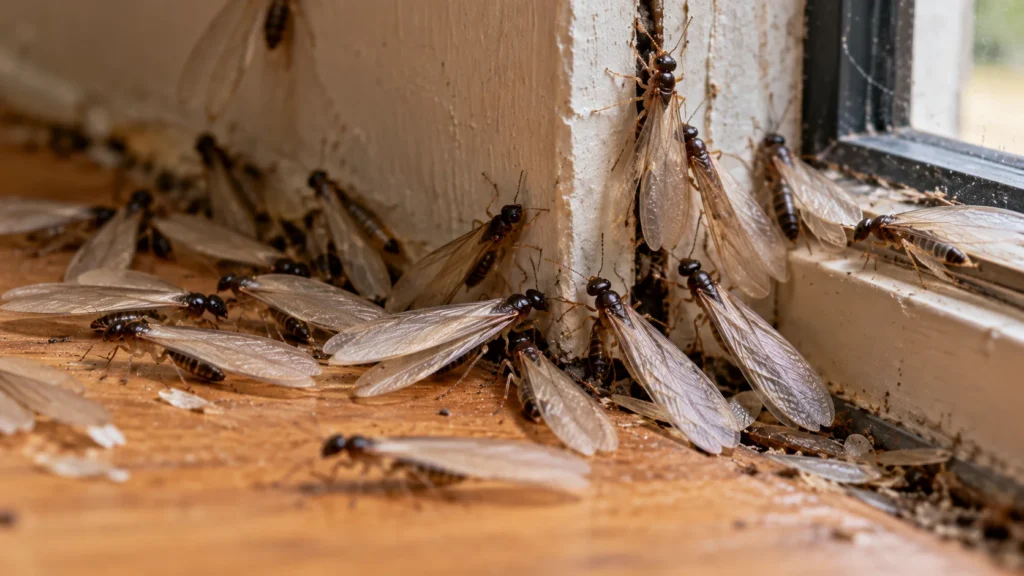
Orkin's termite photo guide includes visual examples of individual swarmers, groups of swarmers, swarms on wood, and winged termites emerging from wall cracks.
Pictures of Swarming Termites
A termite swarm is usually easier to recognize when multiple winged insects appear together. Swarmers may emerge from an established colony and are attracted to light after becoming airborne.
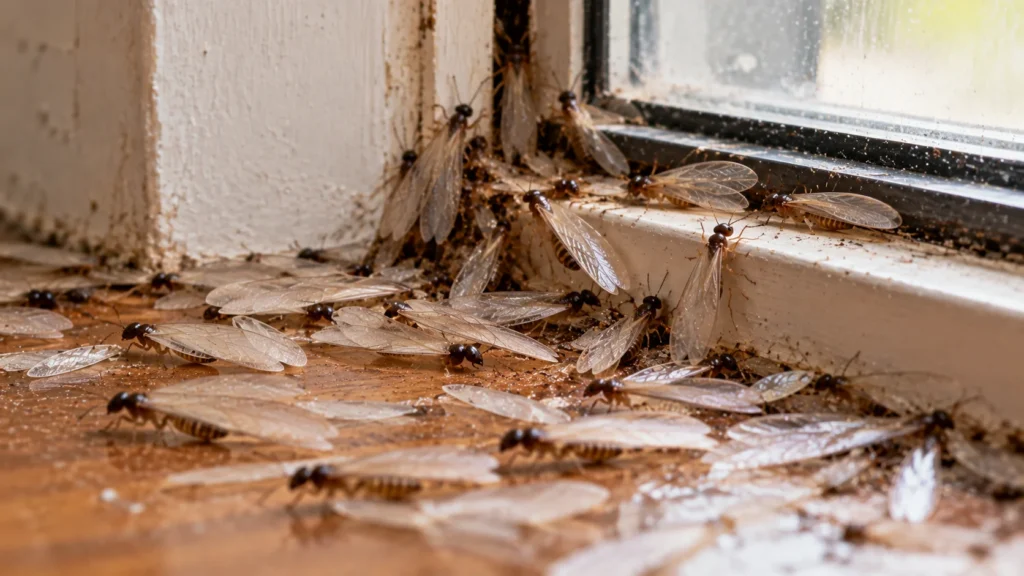
Discarded wings can remain on windowsills, floors, or other surfaces after the swarmers land and shed them.
Seeing swarmers does not automatically prove that the colony is inside the house because termites can sometimes fly in from nearby locations. A structural inspection is useful for determining whether an infestation is actually present.
Pictures of Termites and Flying Ants
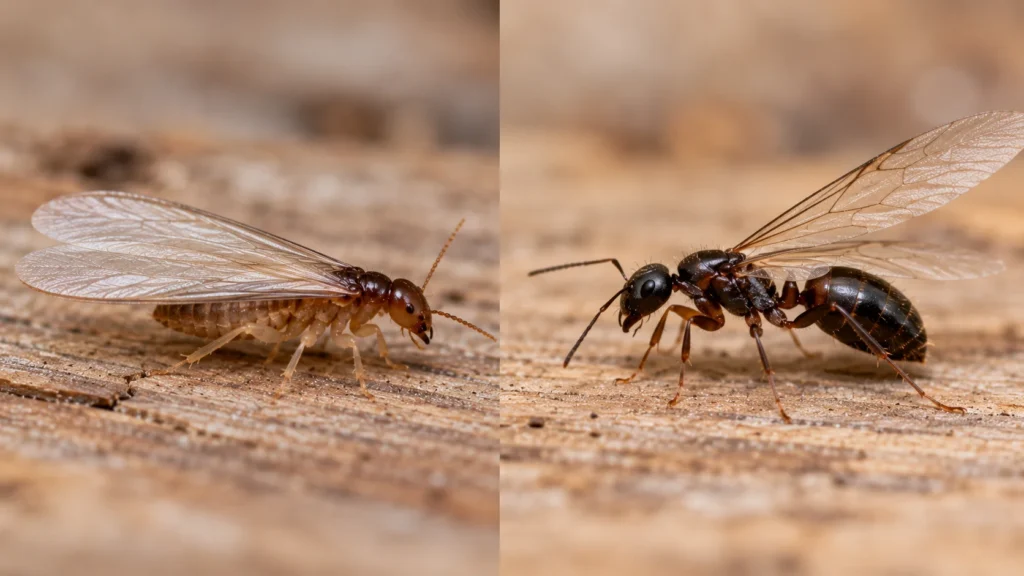
Termites and flying ants can look remarkably similar at first glance, especially when both are seen during a swarm. Their body structure provides several reliable visual differences.
| Feature | Termites | Flying Ants |
| Waist | Broad and relatively straight | Narrow, pinched waist |
| Antennae | Straight or bead-like | Elbowed |
| Wings | Four wings generally similar in length | Front wings longer than hind wings |
| Body | More uniform body shape | Clearly divided body sections |
| Swarm appearance | Often many similar winged individuals | Variable depending on ant species |
| Discarded wings | Similar-sized wings may be found | Unequal fore and hind wings |
These differences are supported by UC IPM and Penn State Extension identification guidance.
Pictures of Ants Versus Termites
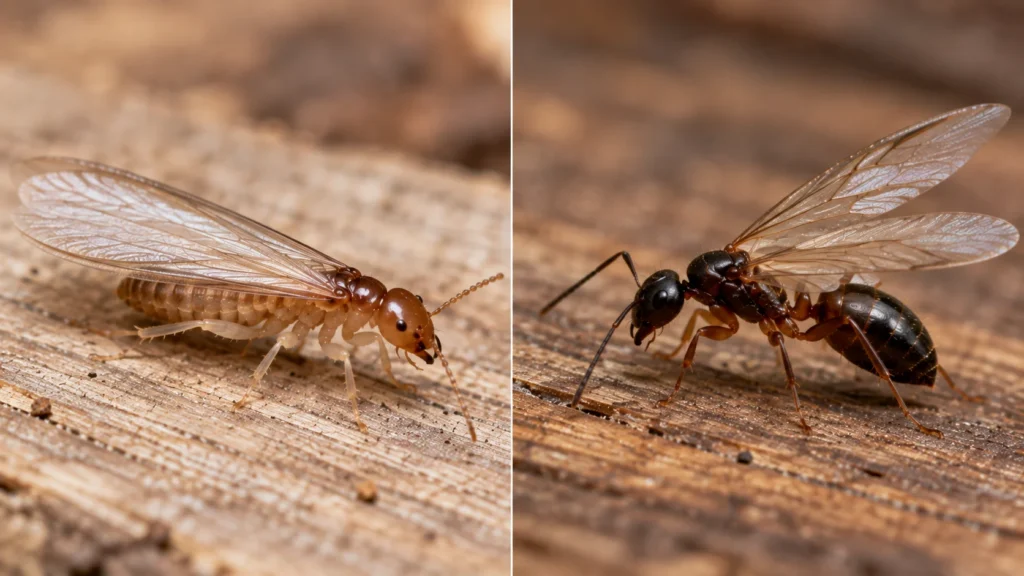
A close-up picture should focus on the antennae, waist, wings, and overall body shape. Termites have a broad waist and wings of approximately equal length, whereas flying ants have a narrow waist, elbowed antennae, and unequal fore and hind wings.
Pictures of Termites in Walls and Houses
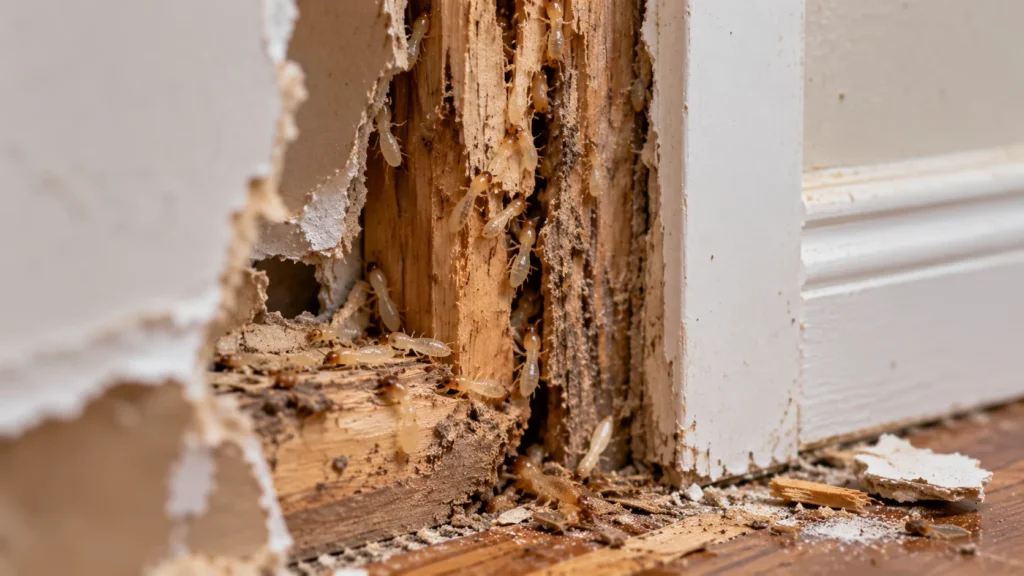
Termites can remain hidden inside walls, floors, ceilings, crawl spaces, foundations, and wooden structural components. Consequently, homeowners may notice evidence before seeing an actual termite.
Pictures of termites in walls may show swarmers emerging from cracks or openings, but more useful photographs often show mud tubes, damaged wood, blistered surfaces, discarded wings, or frass.
Subterranean termites can construct shelter tubes along foundation walls, wooden posts, wall studs, mudsills, and other pathways between soil and wood.
Signs of Termites in House Pictures
Common visual evidence includes:
- Mud or shelter tubes along foundations
- Hollowed or damaged wooden material
- Discarded termite wings
- Winged termites around windows and lights
- Small holes in infested wood
- Drywood termite fecal pellets
- Blistered or uneven wood surfaces
- Damaged wood with internal galleries
- Termite swarmers emerging from cracks
- Wood deterioration near moisture sources
Not every sign confirms an active infestation by itself. Correct identification of the termite group and inspection of the structure provide stronger evidence.
Explore more articles:
- Fruit Flies vs Gnats
- Rat vs Mouse
- Bugs That Look Like Flying Termites
- Bugs That Look Like Fleas
- What Do Fleas Look Like?
- Wood Ants vs Termites
- What Are Centipedes Attracted To?
Pictures of Termites in Different U.S. Regions
Termite species and appearance vary geographically. The same visual description should therefore not automatically be used to identify termites in every state.
Pictures of Termites in Florida
Florida has numerous established termite species, including subterranean, drywood, dampwood, and other termite groups. UF/IFAS lists multiple species affecting structures, with several considered major structural pests.
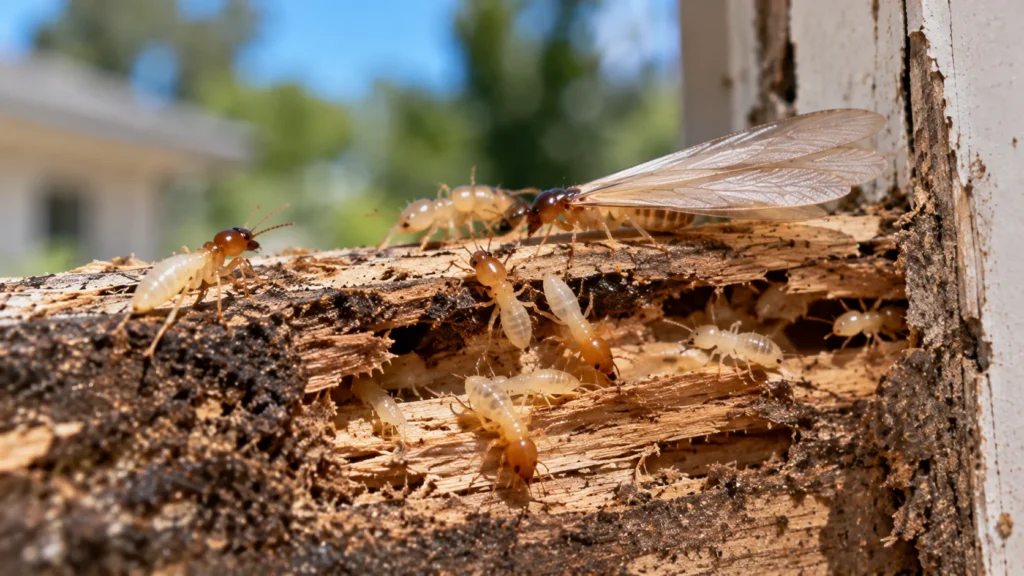
Pictures from Florida may therefore show different termite sizes, colors, wing patterns, soldiers, and damage characteristics.
Pictures of Termites in Texas
Texas contains several important termite groups, including subterranean termites and drywood termites. Identification should consider both insect appearance and the location of the colony.
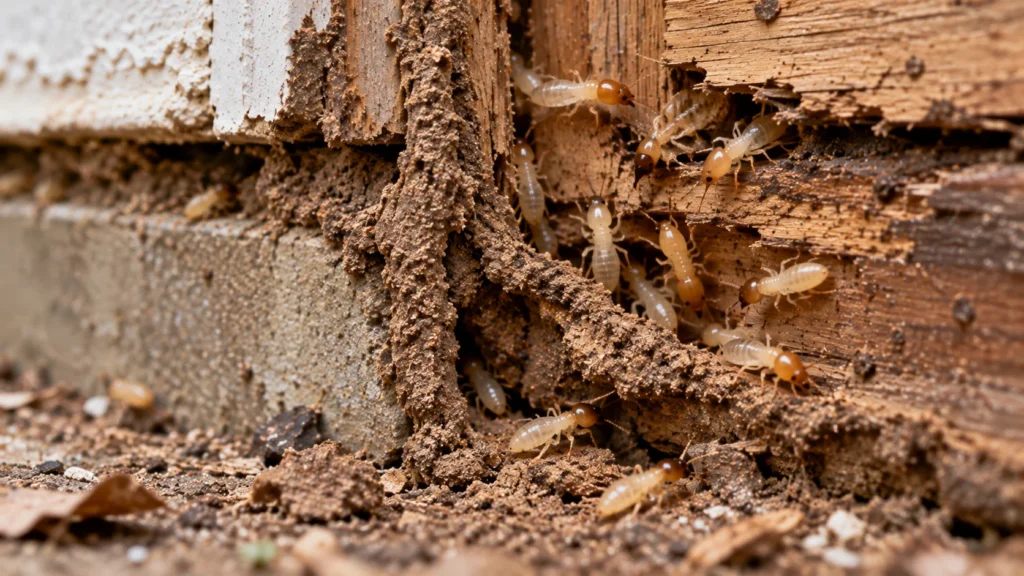
Subterranean termites generally have a soil connection or shelter tubes, while drywood termites can remain inside wood above ground.
Pictures of Termites in Georgia
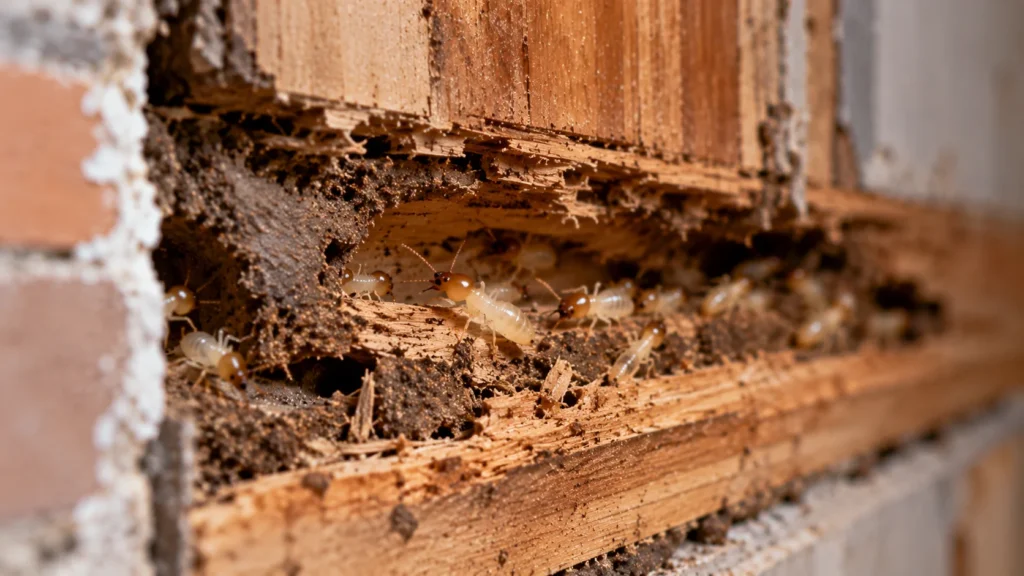
Subterranean termites are particularly important in Georgia and throughout the southeastern United States. UGA Extension describes subterranean termites as economically important wood-destroying pests and notes that they excavate galleries through wood as they consume it.
Pictures of Termites in Ohio
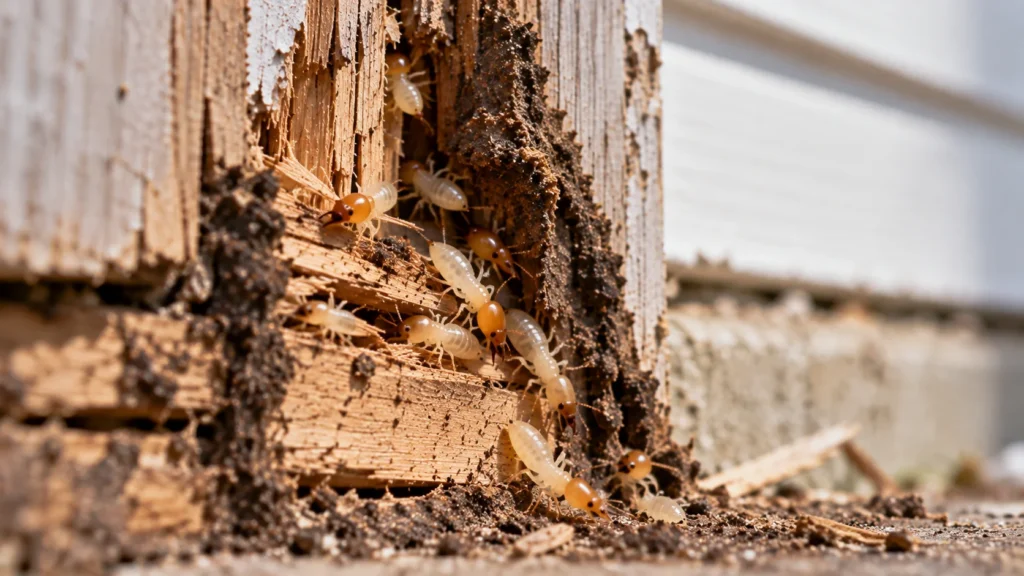
Eastern subterranean termites are among the termite groups relevant to the eastern United States. Their workers are pale and their soldiers have enlarged heads and jaws, while reproductive termites become darker and winged.
Early Warning Signs of Termites
Photographs of termite damage can reveal evidence that is not obvious from a picture of the insect alone. Subterranean termites may leave earth-colored shelter tubes, while drywood termites may leave dry pellets beneath small openings in wood.
Wood damaged by subterranean termites can contain galleries that leave only a thin outer layer. Long-term infestations can make affected wood appear hollowed or weakened.
A swarm of winged termites or a collection of discarded wings can also be an important warning sign, although a professional inspection is needed to determine the source and extent of an infestation.
Termite Life Stages and Caste Pictures
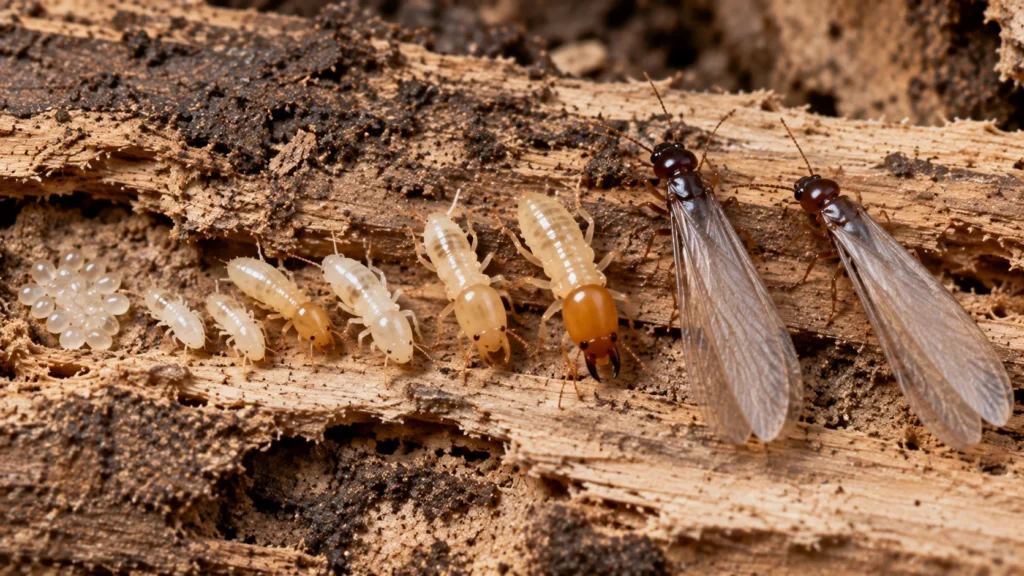
Termites undergo incomplete metamorphosis rather than developing through a pupal stage. Their life cycle includes eggs and immature stages that develop into different colony castes.
Stages of Termites Pictures
The main visual stages include:
Eggs: Small, pale eggs are kept within protected colony areas.
Larvae: Newly hatched termites are pale, soft-bodied, and immature.
Nymphs: Developing termites molt as they mature, with some developing wing buds before becoming reproductives.
Workers: Usually pale and wingless, workers maintain the colony, care for young, and gather food.
Soldiers: Soldiers have enlarged heads and strong mandibles used for colony defense.
Alates: Darker winged reproductives leave mature colonies during swarming flights.
Pictures of Queen Termites
Queen termites look very different from the small workers and soldiers normally associated with termite activity. The queen has a specialized reproductive role and, in mature colonies, can become much larger as her abdomen expands with egg production.
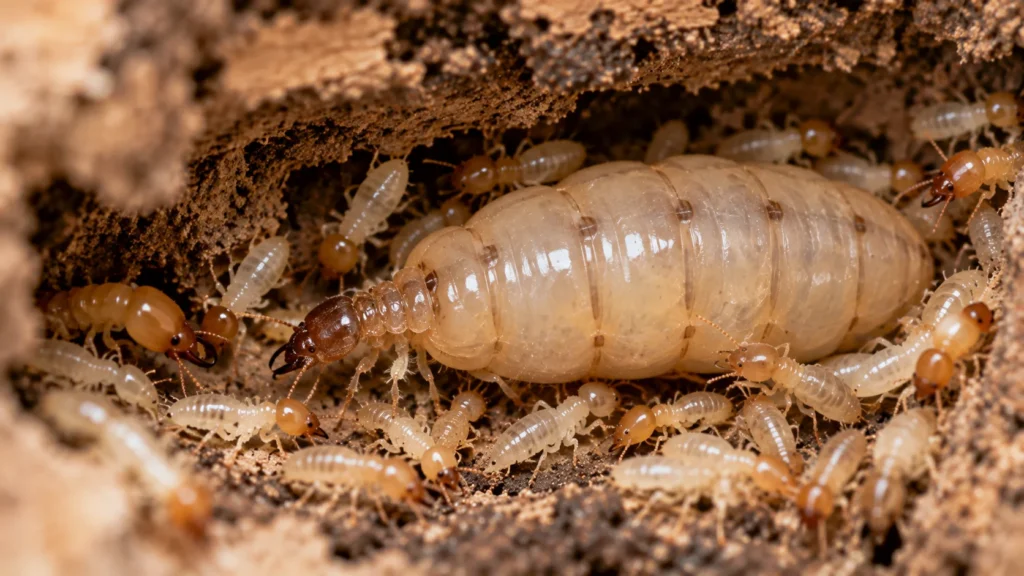
Because queens generally remain deep inside protected colony areas, homeowners rarely encounter them during routine inspections. Identification is usually based on workers, soldiers, swarmers, damage, or other accessible evidence.
Pictures of Bugs That Look Like Termites
Several insects can be confused with termites, especially winged ants. Carpenter ants are particularly important because they can also be associated with damaged wood.
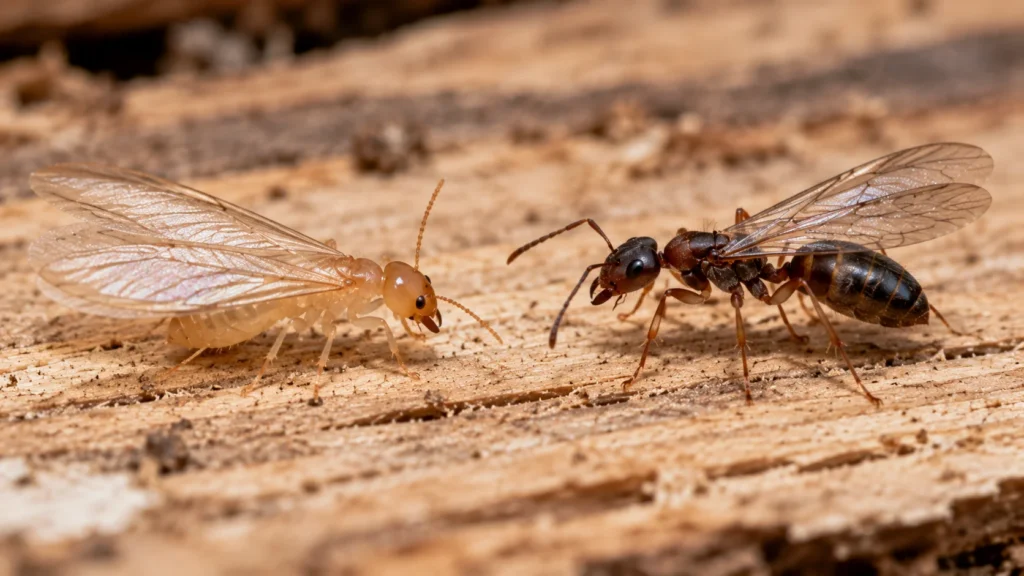
The most useful visual comparison focuses on waist shape, antennae, wings, and body structure rather than color alone. Termites have broad waists, straight or bead-like antennae, and similarly sized wings when winged; ants have narrow waists, elbowed antennae, and unequal fore and hind wings.
10 Key Things to Notice in Termite Pictures
- Body color: Workers are usually pale, while swarmers are often darker.
- Waist shape: Termites have a broad waist without the narrow constriction typical of ants.
- Antennae: Termite antennae are straight or bead-like rather than elbowed.
- Wing length: Winged termites have four wings that are generally similar in length.
- Body size: Termite size varies by species and caste.
- Head shape: Soldiers have disproportionately large heads and defensive jaws.
- Mud tubes: Earth-colored tubes strongly suggest subterranean termite activity.
- Frass: Dry, grain-like fecal pellets can indicate drywood termites.
- Discarded wings: Shed wings around windows or lights can accompany termite swarming.
- Wood galleries: Hollowed or tunneled wood can indicate feeding activity inside structural timber.
Conclusion
Pictures of termites are most useful when visual insect features are combined with location, damage patterns, and other evidence. Pale workers, large-headed soldiers, dark winged swarmers, mud tubes, discarded wings, and drywood frass can each provide valuable identification clues.
Subterranean, drywood, and dampwood termites differ in their preferred environments and the signs they leave behind. When termite activity is suspected inside a building, photographs can help with initial identification, but a professional inspection is the more reliable way to determine whether termites are actively infesting the structure.
What do termites look like?
Termites generally have soft bodies, straight or bead-like antennae, and a broad waist. Workers are commonly pale, soldiers have enlarged heads, and winged reproductives are darker.
What do termites with wings look like?
Winged termites have darker bodies and four long wings that are generally similar in length. These reproductive termites are called alates or swarmers.
What do baby termites look like?
Baby termites are small, pale, soft-bodied immatures that develop from eggs and molt as they mature into different colony castes.
What do termites in walls look like?
Termites hidden in walls may not be visible at all. Visible evidence can include swarmers emerging from cracks, discarded wings, mud tubes, damaged wood, or other signs around structural materials.
What do drywood termite signs look like?
Drywood termite evidence commonly includes small kick-out holes and piles of dry fecal pellets resembling coarse grains of sand.
What do subterranean termite signs look like?
Subterranean termite signs can include earth-colored shelter tubes, damaged or hollowed wood, swarmers, and discarded wings.
What do termites look like compared with flying ants?
Termites have broad waists, straight or bead-like antennae, and similarly sized wings. Flying ants have narrow waists, elbowed antennae, and unequal fore and hind wings.
What do queen termites look like?
Queen termites are specialized reproductive termites with much larger abdomens than workers or soldiers. They usually remain inside the protected colony and are rarely seen by homeowners.
What do swarming termites look like?
Swarming termites are darker, winged reproductive termites that leave mature colonies to establish new colonies. They may appear in groups around light sources or windows.
Do pictures alone confirm a termite infestation?
Pictures can provide useful identification clues, but they do not always establish whether an active infestation exists inside a structure. A professional inspection can evaluate the insects, wood, shelter tubes, and other evidence together.