
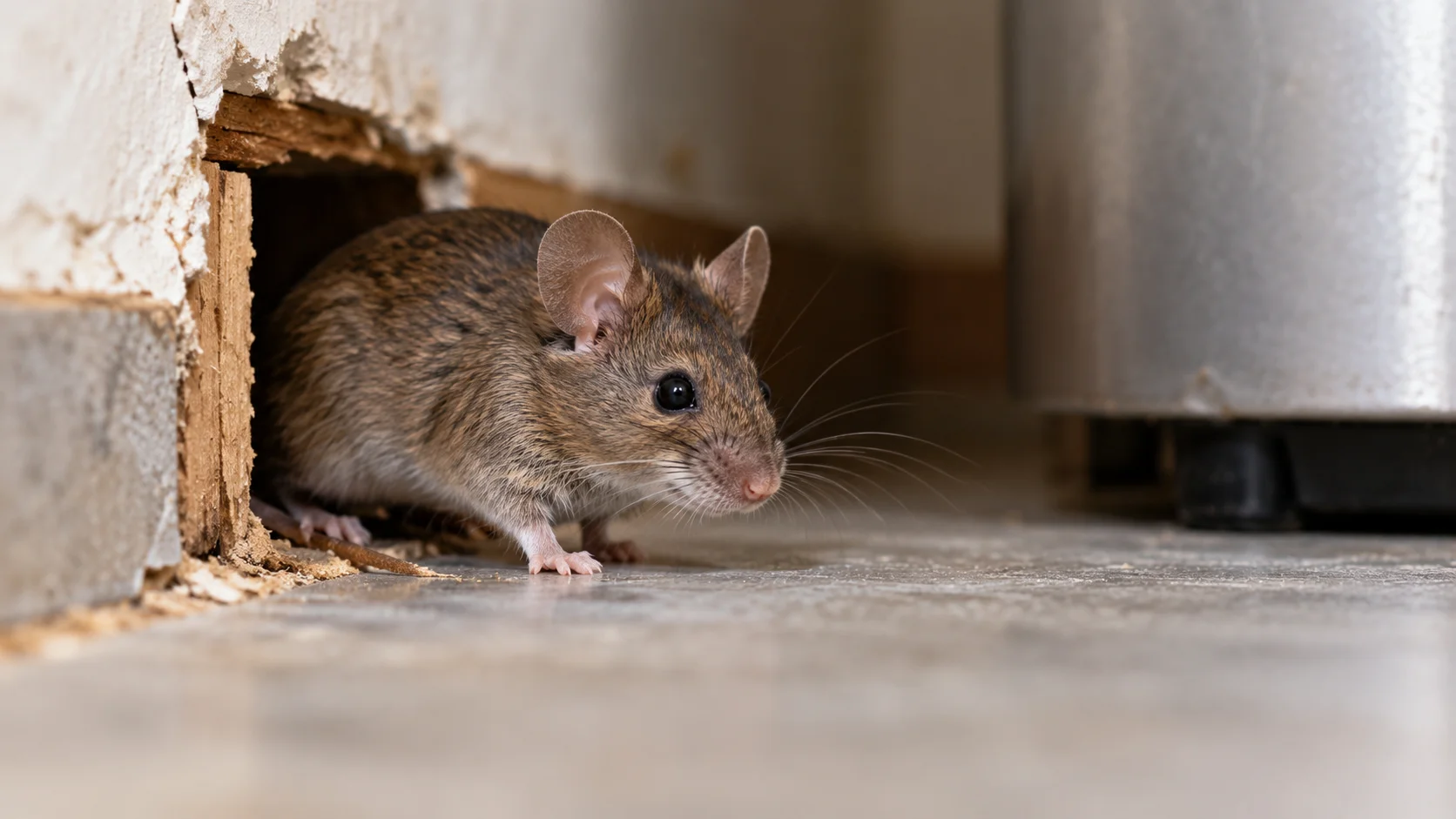
Getting rid of mice usually requires more than catching the mice that are already visible. A lasting solution combines removing food and water sources, sealing entry points, trapping mice that remain indoors, and safely cleaning contaminated areas. The recommends inspecting both the inside and outside of a home because mice can enter through openings as small as about 1/4 inch, roughly the width of a pencil.
A humane approach focuses on preventing additional mice from entering while using appropriate control methods for mice already inside. Household remedies such as vinegar or mothballs are not dependable solutions, while correct exclusion and properly positioned traps provide a more practical strategy. Poison should be considered carefully because rodenticides can harm children, pets, and wildlife if misused.
How to Get Rid of Mice in Your House
The first step is to determine where mice are active and where they are entering. Look for droppings, gnaw marks, nesting material, damaged food packaging, greasy marks, and sounds coming from concealed areas. These signs can reveal travel routes and help determine where traps and exclusion work should be concentrated.
Once activity is located, remove accessible food and water while inspecting the structure for gaps. Mice can move through remarkably small openings, so even seemingly insignificant spaces around pipes, doors, vents, foundations, and utility lines deserve attention.
Remove Food and Water Sources
Reducing available resources makes the home less attractive to mice and supports other control measures.
- Store food in tightly sealed containers
- Clean crumbs and spills promptly
- Keep garbage containers tightly covered
- Wash dishes after use
- Store pet food securely
- Remove pet food and water overnight
- Clean food residue from counters
- Keep pantry shelves free of spilled grains
- Repair leaking pipes and faucets
- Avoid leaving food accessible in rooms overnight
How to Get Rid of Mice in Walls
Mice inside walls can be difficult to reach because the animals may travel through wall cavities, insulation, plumbing spaces, and utility routes. Directly opening walls is usually unnecessary during the first stages of control. Instead, identify the entry points and active areas around the structure while placing traps where mice can safely reach them.
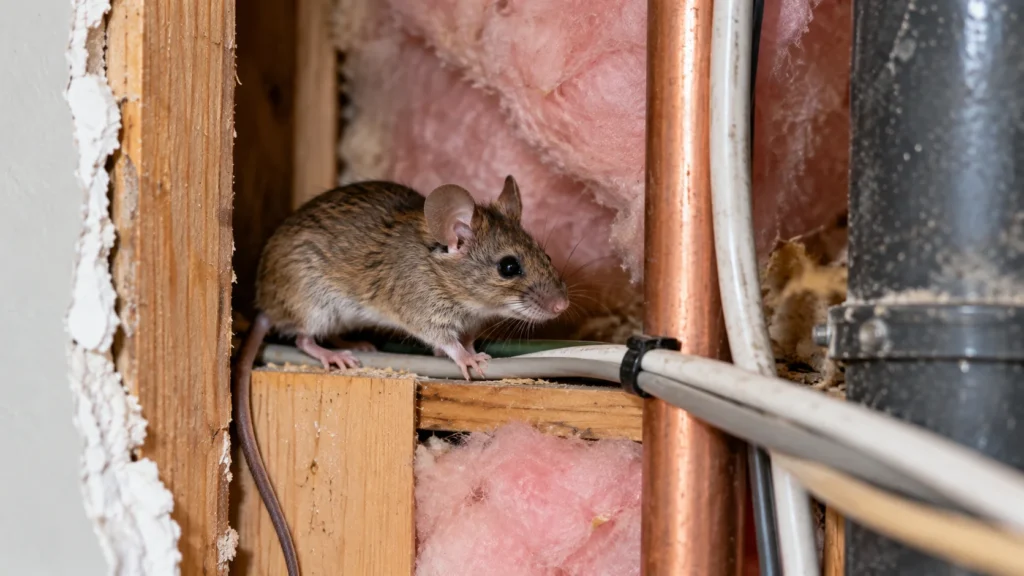
Sealing an active entry point requires some care. Closing every opening without addressing mice already inside can leave animals trapped in inaccessible areas. A coordinated approach of trapping, monitoring, and exclusion is more practical than simply filling visible holes.
Seal Common Mouse Entry Points
The recommends checking numerous areas because mice can fit through openings approximately 1/4 inch wide.
- Around doors
- Around windows
- Behind kitchen cabinets
- Around plumbing pipes
- Around electrical lines
- Around heating and cooling lines
- Around vents
- Around fireplaces
- Around foundations
- Around attic and crawl-space openings
How to Get Rid of Mice in the Attic
Attics can provide mice with shelter, nesting material, and relatively undisturbed travel routes. Inspect insulation, stored belongings, corners, roof penetrations, vents, soffits, and utility openings for droppings or nesting evidence. Outdoor branches and structural gaps can also create pathways into attic spaces.
After identifying activity, address exterior openings and trap mice that remain inside. If insulation is heavily contaminated with urine or droppings, special cleaning precautions may be necessary. The recommends additional precautions for heavy infestations and contaminated insulation.
Attic Prevention Measures
Focus on the structure as well as the rodents.
- Inspect roof edges
- Check soffits
- Examine attic vents
- Repair damaged screens
- Seal utility penetrations
- Inspect roof-to-wall junctions
- Remove unnecessary stored clutter
- Keep food away from attic areas
- Trim vegetation touching the structure
- Check for fresh droppings after control
How to Get Rid of Mice in the Garage
Garages can attract mice because they often contain cardboard, pet food, birdseed, gardening materials, trash, vehicles, and sheltered nesting locations. Reducing clutter and storing food-related materials in sealed containers can significantly improve control efforts.
Inspect the garage door seal, corners, foundation, utility penetrations, vents, and wall-floor junctions. The specifically recommends sealing outbuildings and garages as part of rodent prevention.
Garage Mouse Prevention
A cleaner and less accessible garage provides fewer opportunities for mice.
- Keep garage doors closed
- Repair damaged door seals
- Store birdseed securely
- Store animal feed in sealed containers
- Remove unnecessary cardboard
- Elevate stored materials
- Seal foundation gaps
- Keep trash containers closed
- Reduce clutter around walls
- Inspect the garage regularly
Explore more articles:
- Fruit Flies vs Gnats
- Rat vs Mouse
- Bugs That Look Like Flying Termites
- Bugs That Look Like Fleas
- What Do Fleas Look Like?
- Wood Ants vs Termites
- What Are Centipedes Attracted To?
- What Do Drain Flies Look Like
- What Do Baby Black Widows Look Like?
How to Get Rid of Mice Without Poison
Trapping and exclusion can provide effective control without relying on rodenticide. The recommends traditional snap traps for reducing rodent populations around homes and advises placing traps where mice have been observed or where evidence such as droppings and gnaw marks occurs.
For households with children or pets, trap placement deserves particular attention. Traps should be positioned where they cannot be accidentally reached, and instructions supplied with the product should be followed carefully.
Safer Non-Poison Control Methods
A non-poison strategy can combine several measures.
- Inspect for entry points
- Seal structural openings
- Remove accessible food
- Remove unnecessary water sources
- Reduce nesting materials
- Use appropriately sized snap traps
- Place traps along active travel routes
- Keep traps away from children
- Keep traps away from pets
- Continue monitoring after captures
How to Get Rid of Mice Humanely
Humane mouse control begins with prevention because stopping mice from entering reduces the need for repeated killing. Sealing gaps, removing attractants, and maintaining a clean environment can prevent future animals from entering the structure.
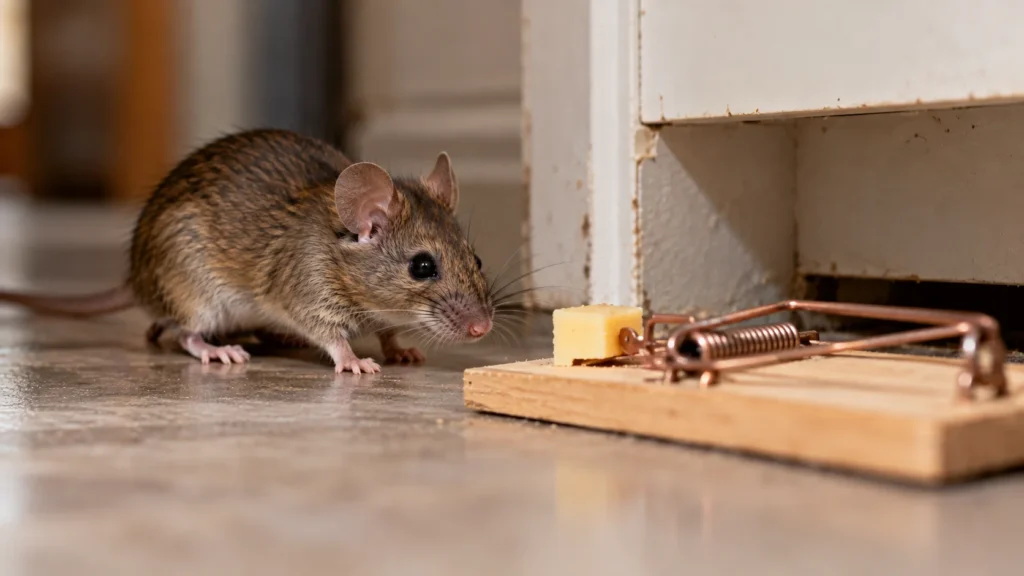
For mice already inside, control should be carried out responsibly and without unnecessary exposure to harmful chemicals. The does not recommend glue traps or live traps for home rodent control and instead recommends traditional snap traps, while emphasizing safe placement and proper handling.
How to Get Rid of Mice Naturally
Many household substances are promoted online as natural mouse repellents, but strong evidence for remedies such as vinegar as a dependable mouse-control method is lacking. Natural cleaning products may remove odors or residue, but they should not be treated as a substitute for exclusion and trapping.
The most reliable low-chemical approach is environmental management: remove food, water, shelter, and access points. This approach addresses the reasons mice remain around the property instead of depending on a strong-smelling substance to repel them.
Natural Prevention Priorities
Use structural and sanitation measures first.
- Seal holes
- Store food securely
- Remove spilled food
- Keep garbage covered
- Reduce clutter
- Remove outdoor debris
- Keep vegetation controlled
- Eliminate standing water
- Store animal feed securely
- Maintain regular inspections
Mice in Walls and Ceilings
Mice may travel through wall and ceiling cavities because these spaces provide protection from people and predators. Scratching or movement sounds, droppings near openings, and repeated activity in the same section of a building can indicate concealed movement.
When there is no direct access to the cavity, concentrate on accessible entry and exit routes. Trapping should be combined with structural exclusion rather than relying on inaccessible poison placement. For persistent activity in inaccessible areas, professional pest control can provide safer inspection and removal.
Areas Worth Inspecting
Pay particular attention to:
- Wall-floor junctions
- Ceiling penetrations
- Plumbing openings
- Electrical penetrations
- HVAC openings
- Attic connections
- Basement ceilings
- Crawl spaces
- Cabinet voids
- Areas behind appliances
Mice in Apartments
Apartment mouse control requires attention to both the individual unit and shared building structures. Mice may move between apartments through wall cavities, utility openings, corridors, plumbing routes, and other connected spaces.
Residents should notify property management when activity appears to originate from shared structural areas. Inside the apartment, food storage, sanitation, exclusion, and appropriately positioned traps can reduce available resources and control mice that remain within the unit.
Mice in Cars
Mice can enter vehicles and build nests around the engine compartment, air intake areas, insulation, or passenger spaces, especially when a vehicle is parked for extended periods. Food left inside the vehicle can increase its attractiveness.
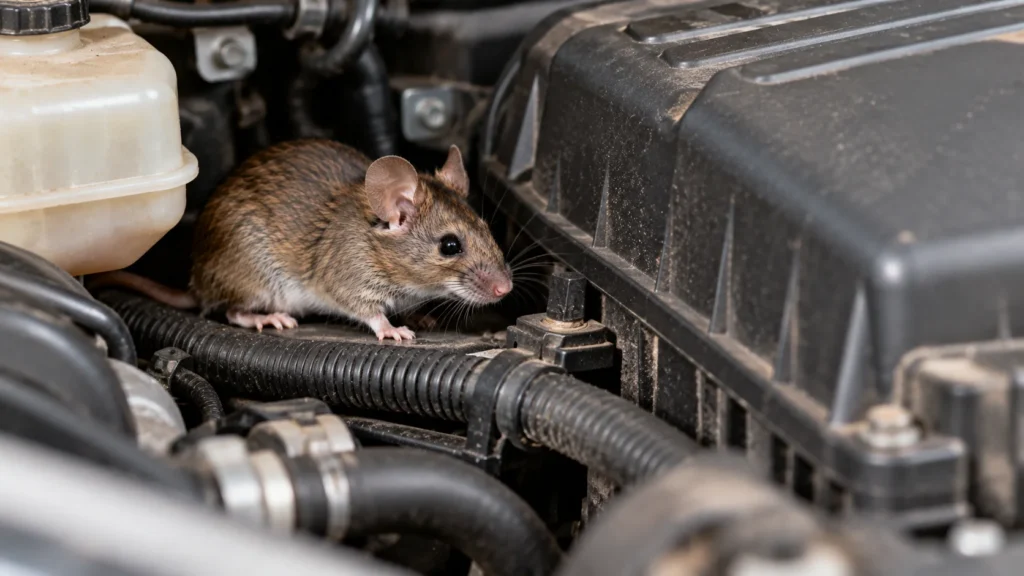
The recommends airing out an infested vehicle, inspecting for droppings and nesting material, disinfecting contaminated areas, and avoiding vacuuming or high-pressure spraying before contamination has been disinfected.
Vehicle Prevention
Regular inspections can reduce the chance of a hidden infestation.
- Remove food from the vehicle
- Remove food wrappers
- Inspect under the hood
- Check air intake areas
- Inspect filters
- Look for nesting material
- Check the passenger compartment
- Park away from dense vegetation when practical
- Inspect vehicles that sit unused
- Seek mechanic assistance for inaccessible contamination
Mice in a Chicken Coop
Chicken coops can provide food, water, nesting material, and shelter, making rodent prevention particularly important. Feed should be stored in secure containers, spilled grain should be removed promptly, and unnecessary clutter should be minimized.
Outdoor sanitation should be combined with structural exclusion. The recommends keeping animal feed in tightly sealed containers and reducing food and shelter sources around the home and associated structures.
Why Mothballs and Vinegar Are Poor Mouse Solutions
Mothballs are pesticides intended for specific labeled uses, not general-purpose mouse repellents. Using them in occupied spaces contrary to their label can expose people and animals to pesticide vapors. EPA guidance emphasizes reading and following pesticide labels and keeping pesticides away from children and pets.
Vinegar may be useful as a household cleaning product, but its odor should not be relied upon as a permanent mouse-control strategy. Sealing openings, removing attractants, and using appropriate traps provide a more dependable approach.
How Long Mouse Control Usually Takes
The time required depends on the number of mice, availability of food, accessibility of nesting sites, and how thoroughly entry points are sealed. A small problem may improve quickly after exclusion and trapping, while an established infestation can require repeated monitoring and additional structural work.
The recommends continuing to trap until there are no remaining signs of rodents. Persistent new droppings, urine spots, or gnawing after a week can indicate continuing activity.
Safe Mouse Dropping Cleanup
Mouse droppings should be treated as potentially contaminated material. The specifically advises not sweeping or vacuuming rodent urine, droppings, or nesting material, because contaminated particles can become airborne. Instead, wet the material thoroughly with an appropriate disinfectant, allow the recommended contact time, and then wipe it up with paper towels.
Heavy infestations require additional protective measures and may warrant professional cleanup. Contaminated insulation and inaccessible areas should receive particular attention rather than being disturbed casually.
10 Key Steps to Get Rid of Mice
- Find droppings, gnaw marks, nests, and other activity signs.
- Inspect inside and outside for entry holes.
- Seal openings about 1/4 inch and larger.
- Store food in tightly closed containers.
- Remove pet food and water when not needed.
- Keep garbage securely covered.
- Reduce clutter and outdoor shelter.
- Use appropriately positioned snap traps.
- Avoid relying on mothballs, vinegar, or unproven repellents.
- Clean rodent waste with proper disinfection procedures instead of sweeping or vacuuming.
Conclusion
The most effective way to get rid of mice is to combine exclusion, sanitation, trapping, and continued monitoring. Removing accessible food and water reduces the reasons mice stay, while sealing gaps prevents new animals from entering. Because mice can fit through openings only about 1/4 inch wide, even small structural defects deserve attention.
For an existing infestation, appropriately positioned traps are a practical first-line option, while rodenticides should be used only according to their labels and with careful protection of children, pets, and wildlife. Safe cleanup is equally important because mouse urine, droppings, and nesting material can present health risks.
1. How to get rid of mice in your house fast?
2. How to get rid of mice in walls?
Inspect accessible areas around pipes, cabinets, floors, ceilings, and utility openings for entry routes. Seal exterior openings and use traps along active routes rather than placing inaccessible poison inside walls.
3. How to get rid of mice permanently?
Permanent control depends on preventing reinvasion. Seal structural openings, maintain food storage and sanitation, reduce outdoor shelter, and monitor regularly for renewed activity.
4. How to get rid of mice without poison?
5. How much does it cost to get rid of mice?
The cost varies according to the severity of the infestation, property size, accessibility of nesting areas, exclusion work, and whether professional pest control is required. Minor problems may require only materials and traps, while established infestations can require professional inspection and structural repairs.