
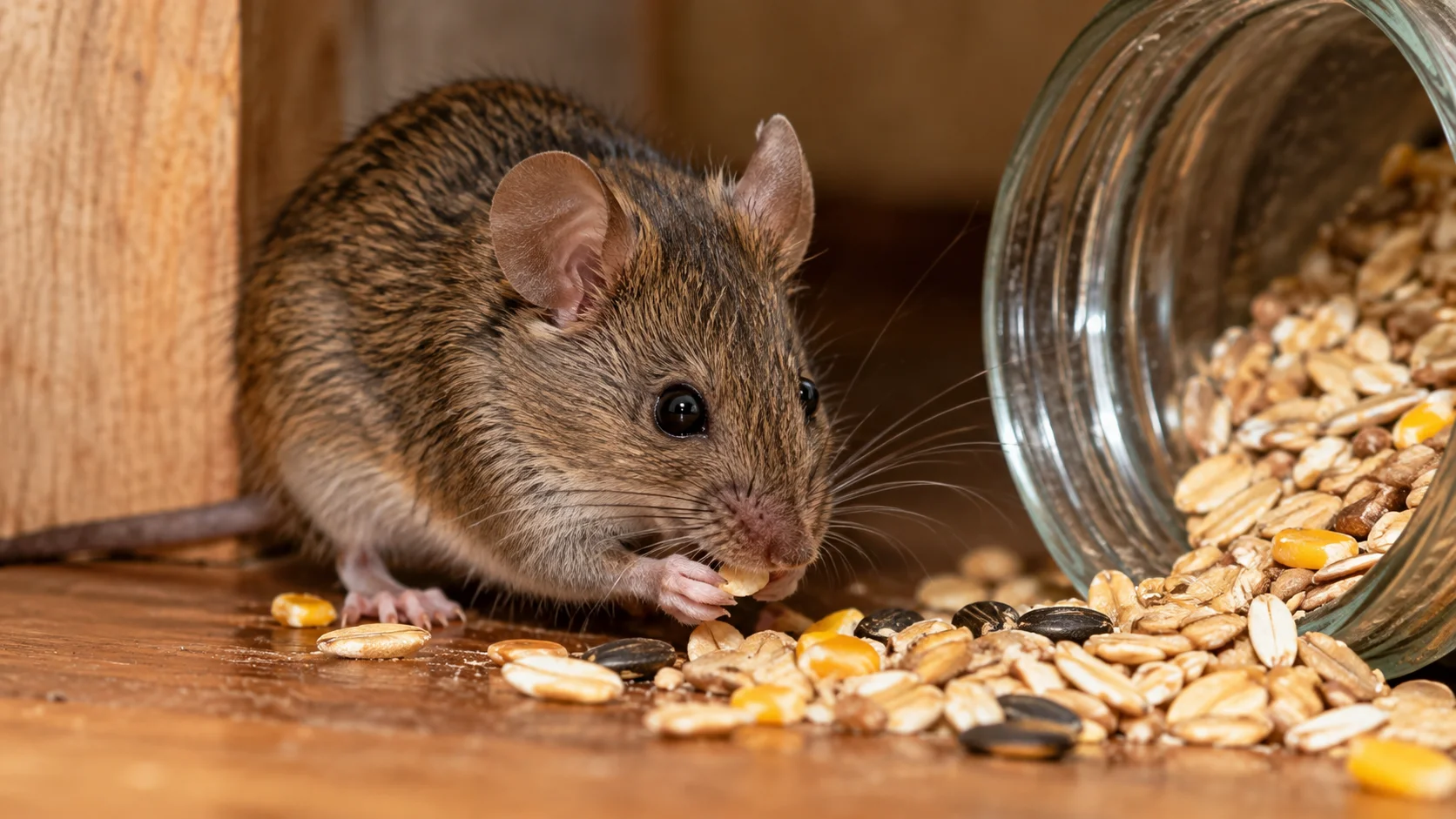
Mice are opportunistic omnivores, meaning they can eat a wide range of plant and animal-based foods when those foods are available. Their natural diet commonly includes seeds, grains, grasses, roots, fruits, berries, and insects, while mice living around people readily take advantage of accessible household food.
The exact diet depends on the mouse species, habitat, season, and available food. House mice are particularly well adapted to human environments because homes provide cereals, grains, crumbs, pet food, garbage, and other accessible food sources. Let's understand what do mice eat in houses and the wild.
Mouse Diet and Food Preferences
Mice do not depend on one specific food. They can switch between different foods according to what is easiest to find, which helps them survive in houses, farms, fields, gardens, and other environments.
House mice especially favor foods such as grains and seeds, but they can consume many other available materials. UC IPM reports that house mice eat cereals, grasses, roots, seeds, and insect larvae and can consume whatever food is available.
Common foods mice eat
Their broad diet explains why even small amounts of accessible food can support mouse activity.
- Seeds
- Grains
- Cereals
- Grass
- Plant roots
- Fruits
- Berries
- Nuts
- Insects
- Food scraps
What Mice Like to Eat the Most
Mice often prefer energy-rich foods, particularly seeds, grains, and other carbohydrate-rich foods. House mice have a strong association with human food storage because cereals and grains are commonly available around buildings.
Their preferences can change when their normal food sources are unavailable. A mouse may consume crumbs, stored foods, pet food, insects, or other edible material rather than remain limited to one favorite food.
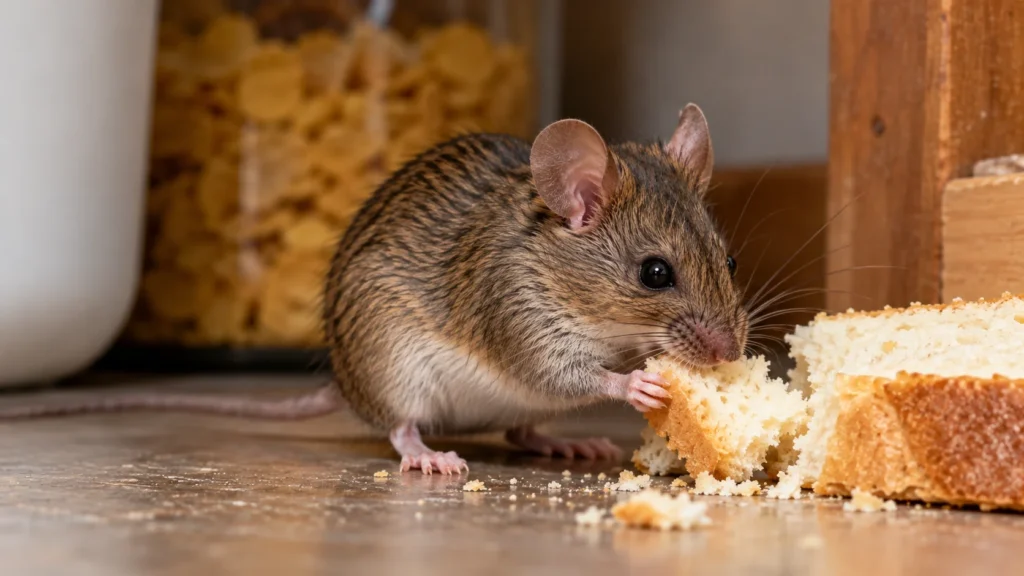
Foods that commonly attract mice
Keeping these foods protected can reduce opportunities for mice to feed indoors.
- Cereal
- Rice
- Pasta
- Bread
- Seeds
- Nuts
- Pet food
- Birdseed
- Fruits
- Food crumbs
What Do Mice Eat in the House
Inside a home, mice take advantage of whatever edible material they can access. Kitchens, pantries, garages, storage areas, and rooms where pet food is kept can provide particularly convenient food sources.
Even small food particles can contribute to mouse activity. RSPCA guidance recommends keeping foods such as cereal, bread, pasta, and dried pet food sealed and removing pet food bowls overnight to reduce access to food.
Household foods mice may consume
Mice are not limited to the foods people normally associate with rodents. Their opportunistic feeding behavior allows them to exploit many food sources around a property.
- Crumbs
- Breakfast cereals
- Bread
- Pasta
- Rice
- Pet kibble
- Birdseed
- Nuts
- Chocolate
- Leftover food
What Do Mice Eat in the Wild
Wild mice have access to a much broader natural food supply than house mice living indoors. Depending on the species and habitat, they may forage for seeds, grains, plant material, fruits, berries, roots, and insects.
RSPCA describes wild mice as opportunistic omnivores that consume seeds, grains, plant material, invertebrates, small vertebrates, and carrion.
Natural mouse food sources
The surrounding habitat strongly influences what wild mice can find and consume.
- Grass seeds
- Wild seeds
- Grains
- Plant stems
- Plant leaves
- Roots
- Berries
- Fruits
- Insects
- Other small animal material
Explore more articles:
- Fruit Flies vs Gnats
- Rat vs Mouse
- Bugs That Look Like Flying Termites
- Bugs That Look Like Fleas
- What Do Fleas Look Like?
- Wood Ants vs Termites
- What Are Centipedes Attracted To?
- What Do Drain Flies Look Like
- Fleas vs Ticks
- What Do Baby Black Widows Look Like?
- What Does a Gnat Look Like
What Do Field Mice Eat
Field mice generally forage outdoors where vegetation, seeds, fruits, and insects are available. Their diet can change throughout the year as different plants produce seeds, fruits, and other edible material.
Field mice and other wild mice may also take advantage of agricultural crops and food provided for birds or livestock. This makes spilled grain, birdseed, and accessible garden produce potential sources of attraction.
Field mouse food sources
Outdoor food availability can vary significantly between habitats and seasons.
- Grass seeds
- Wild grains
- Plant roots
- Leaves
- Stems
- Seeds
- Berries
- Fruits
- Insects
- Agricultural crops
What Do House Mice Eat
House mice are especially adaptable feeders because they commonly live close to human food supplies. UC IPM notes that house mice are associated with cereals and grains and may consume food available in homes, agricultural settings, and other human environments.
They can also carry food away from the original source and consume it in a secluded location. This behavior can make it difficult to identify the precise food source supporting an infestation.
House mouse food habits
Their feeding behavior can help explain why mouse activity is often concentrated around kitchens and storage areas.
- Frequent small meals
- Food carried away from sources
- Preference for accessible food
- Attraction to grains
- Consumption of seeds
- Consumption of cereals
- Feeding on crumbs
- Feeding on pet food
- Opportunistic insect feeding
- Food storage near nests
What Do Baby Mice Eat
Newborn mice have a very different diet from adult mice. Baby mice are initially dependent on their mother and feed on milk rather than solid foods.
As they mature, they gradually transition to solid food. Orkin states that baby mice consume their mother's milk until they can begin eating solid foods at roughly 21 to 28 days, after which they can forage for foods such as nuts, seeds, insects, and crumbs.
Baby mouse feeding stages
The diet changes as young mice develop and become increasingly independent.
- Newborn mice depend on maternal milk
- Newborns are blind and hairless
- Milk provides early nutrition
- Young mice remain close to the nest
- Fur develops during early growth
- Eyes open as development progresses
- Solid foods are introduced later
- Seeds can become part of the diet
- Nuts can become part of the diet
- Young mice eventually forage independently
What Do Deer Mice Eat
Deer mice are primarily outdoor foragers and have access to foods that differ from those commonly found in houses. Their diet includes plant material, seeds, fruits, berries, and insects.
When deer mice move near buildings, they can also take advantage of accessible human food. Orkin describes wild mice as consuming plant leaves, stems, seeds, roots, fruits, berries, and insects.
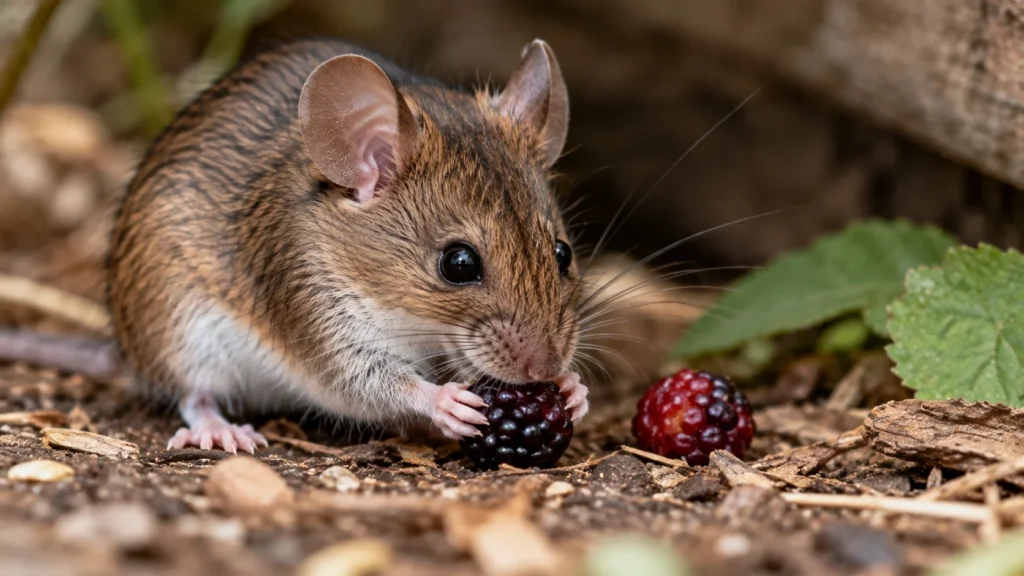
Deer mouse food sources
Their natural diet is strongly connected to their outdoor habitat.
- Seeds
- Plant leaves
- Plant stems
- Roots
- Fruits
- Berries
- Grasses
- Insects
- Agricultural foods
- Accessible human food
What Do Pet Mice Eat
Pet mice need a nutritionally balanced diet rather than simply being given random human foods. RSPCA recommends a good-quality commercial mouse food, such as balanced nuggets, supplemented with small amounts of fresh fruits and vegetables.
Pet mice also need constant access to clean drinking water. Foods that are unsafe for pet mice should be avoided, and treats should remain a limited part of the overall diet rather than replacing balanced food.
Suitable pet mouse foods
A controlled diet helps prevent nutritional problems while providing variety.
- Complete commercial mouse food
- Balanced mouse nuggets
- Small amounts of fresh vegetables
- Small amounts of suitable fruit
- Appropriate foraging foods
- Fresh drinking water
- Controlled portions
- Food scattered for natural foraging
- Species-appropriate treats
- Regularly refreshed food
What Do Mice Eat in Winter
Winter can change where mice obtain food because outdoor food sources become less abundant in many environments. Seeds, stored food, vegetation, and human-associated food sources can become especially important.
This seasonal pressure can bring mice closer to houses, garages, sheds, barns, and other structures that provide both shelter and food. Homes can therefore become attractive winter habitats when food and entry points are available.
Winter mouse food sources
Mice can continue feeding when outdoor conditions become less favorable by exploiting protected food supplies.
- Stored grains
- Seeds
- Birdseed
- Pet food
- Cereal
- Food crumbs
- Agricultural feed
- Pantry foods
- Indoor food waste
- Food stored near buildings
What Do Mice Eat for Traps and Bait
Food can be used as an attractant when setting a mouse trap, but the most important factor is placing the trap where mouse activity is already present. Food alone will not compensate for poor trap placement.
High-value foods with a strong smell can be useful as bait, but mice may respond differently depending on the food already available in the environment. The goal is to make the bait attractive while keeping it securely attached to the trap.
Common mouse trap bait choices
Different food types can work depending on what mice are already eating around the property.
- Peanut butter
- Nut-based spreads
- Seeds
- Nuts
- Small cereal pieces
- Dried fruit
- Chocolate
- Pet food
- Small pieces of bread
- Other familiar mouse foods
What Do Mice Eat When There Is No Food
Mice are adaptable and can survive by using whatever edible resources remain available. When preferred foods become scarce, they may consume less desirable plant material, insects, scraps, or other available organic matter.
House mice can also obtain moisture from food, although they may seek additional liquids when environmental conditions or dietary moisture make it necessary. UC IPM notes that house mice do not necessarily need to drink water to survive because they can obtain moisture through their food.
Alternative mouse food sources
Scarcity can encourage mice to explore areas they would otherwise ignore.
- Plant material
- Seeds
- Insect larvae
- Insects
- Food scraps
- Pet food
- Birdseed
- Stored grains
- Organic waste
- Other accessible edible material
How Mouse Food Attracts Mice to Your Home
Food availability is one of the major reasons mice remain around buildings. Spilled grains, unsecured garbage, pet food, birdseed, crumbs, and poorly sealed pantry products can provide repeated feeding opportunities.
UC IPM recommends keeping food and garbage containers sealed, feeding pets only amounts they will eat, and maintaining good housekeeping to reduce food and shelter available to house mice.
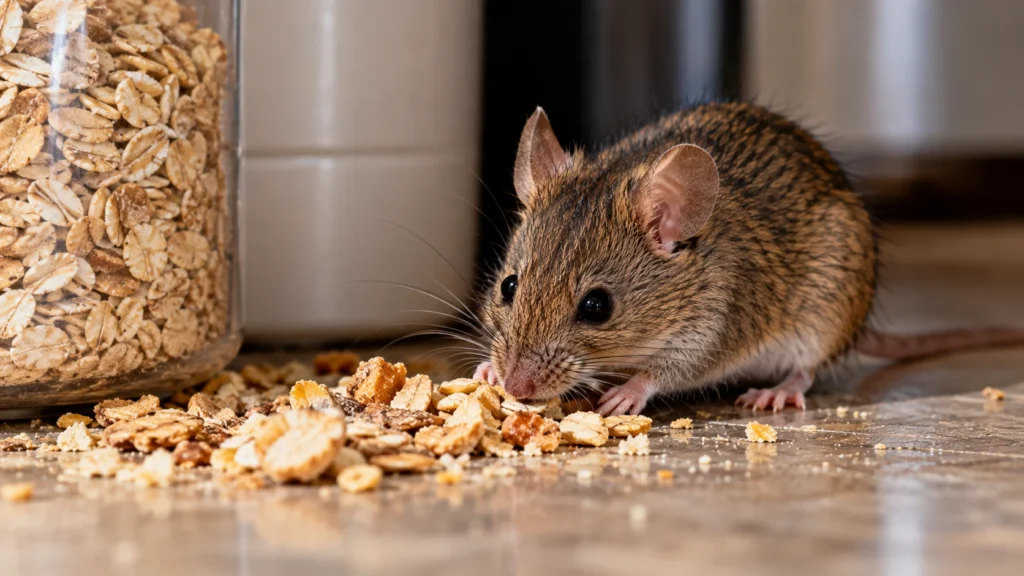
Reducing food sources
Removing accessible food makes a property less attractive while other exclusion measures prevent additional mice from entering.
- Store dry foods in sealed containers
- Clean crumbs promptly
- Wipe food preparation surfaces
- Keep garbage containers closed
- Remove spilled birdseed
- Store pet food securely
- Avoid leaving pet bowls out overnight
- Clean pantry shelves
- Remove food debris from appliances
- Keep outdoor food sources controlled
10 Key Facts About What Mice Eat
These points summarize the most important dietary information for understanding mouse behavior around homes and outdoors.
- Mice are opportunistic omnivores.
- House mice commonly eat cereals and grains.
- Seeds are an important natural food source.
- Mice can eat fruits and berries.
- Wild mice may consume insects and other invertebrates.
- House mice can eat roots and grasses.
- Mice readily exploit accessible pet food.
- Baby mice initially depend on their mother's milk.
- Mice can survive on many different available foods.
- Sealing food and cleaning crumbs can reduce food opportunities for mice.
Conclusion
Mice eat a surprisingly broad range of foods, but seeds, grains, cereals, fruits, plant material, and insects are important components of their diets. House mice are especially adaptable and can take advantage of crumbs, pet food, birdseed, pantry products, and other accessible food around buildings.
The diet also changes with the mouse's species and life stage. Wild mice forage through natural vegetation and animal food sources, while baby mice initially depend on maternal milk and pet mice require a balanced commercial diet. Reducing accessible food around a home can make the environment less attractive and is an important part of mouse prevention.
1. What do mice eat in the house?
Mice commonly eat grains, cereal, seeds, crumbs, pet food, birdseed, nuts, fruits, and other accessible food. They are opportunistic feeders and can consume whatever suitable food is available.
2. What do mice like to eat the most?
Mice commonly favor energy-rich foods such as seeds, grains, cereals, and nuts. Their preferences can change depending on what food is readily available in their environment.
3. What do baby mice eat?
Newborn mice feed on their mother's milk. As they mature, they gradually begin eating solid foods such as seeds, nuts, insects, and other available foods.
4. What do mice eat in the wild?
Wild mice can eat seeds, grains, grasses, roots, fruits, berries, insects, invertebrates, and other available plant or animal material. Their diet varies according to species and habitat.
5. What food attracts mice to traps?
Common trap baits include peanut butter, nuts, seeds, cereal, chocolate, dried fruit, and small portions of foods mice already consume. Proper trap placement near active mouse routes is also important.