
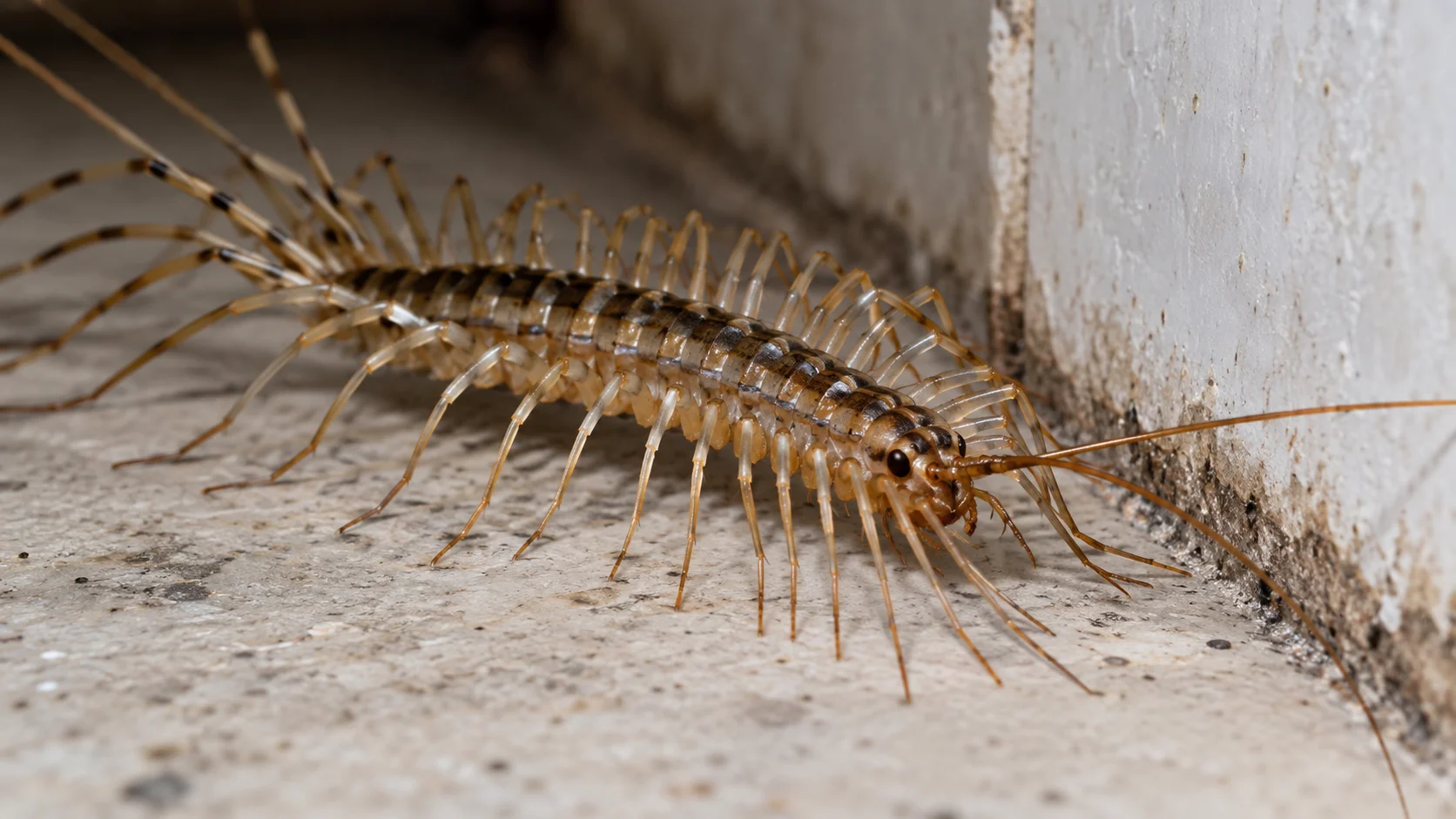
Centipedes are predators that are usually attracted to environments offering food, moisture, shelter, and suitable temperatures. Unlike millipedes, which feed largely on decaying organic matter, centipedes actively hunt insects, spiders, worms, and other small arthropods.
The house centipede (Scutigera coleoptrata) is particularly well adapted to living around buildings. It prefers cool, damp, secluded locations and hunts at night, which is why it is frequently encountered in basements, bathrooms, crawl spaces, and other humid areas.
Understanding the conditions that attract centipedes can make prevention much easier. Reducing moisture, limiting their prey, removing hiding places, and sealing entry points can all make a home less suitable for these fast-moving arthropods. So, let's learn, What Are Centipedes Attracted To?
Centipedes Are Attracted to Moisture
Moisture is one of the strongest environmental factors associated with centipedes. Many species prefer damp habitats outdoors, while house centipedes commonly occur around sinks, tubs, basements, crawl spaces, and other humid areas.
Moist environments also support many of the small insects and arthropods that centipedes hunt. This means humidity can attract centipedes both directly by providing favorable conditions and indirectly by supporting their food supply.
Bathrooms and Basements Provide Suitable Conditions
Bathrooms, basements, laundry areas, crawl spaces, and other poorly ventilated locations can provide the combination of moisture, darkness, and shelter that house centipedes prefer.
Leaks under sinks, damp floors, condensation, wet foundations, and persistently humid air can make these areas more favorable for centipede activity.
Excess Humidity Can Support Their Prey
Moisture is also important because insects and other arthropods can thrive in damp areas. A home with abundant silverfish, spiders, cockroaches, or other prey can consequently provide a reliable food supply for house centipedes.
Centipedes Are Attracted to Insects and Spiders
Centipedes are carnivorous predators, so the presence of prey is a major reason they enter or remain around homes. They do not feed on wood, household fabrics, stored food, or decaying vegetation in the way some other household arthropods do.
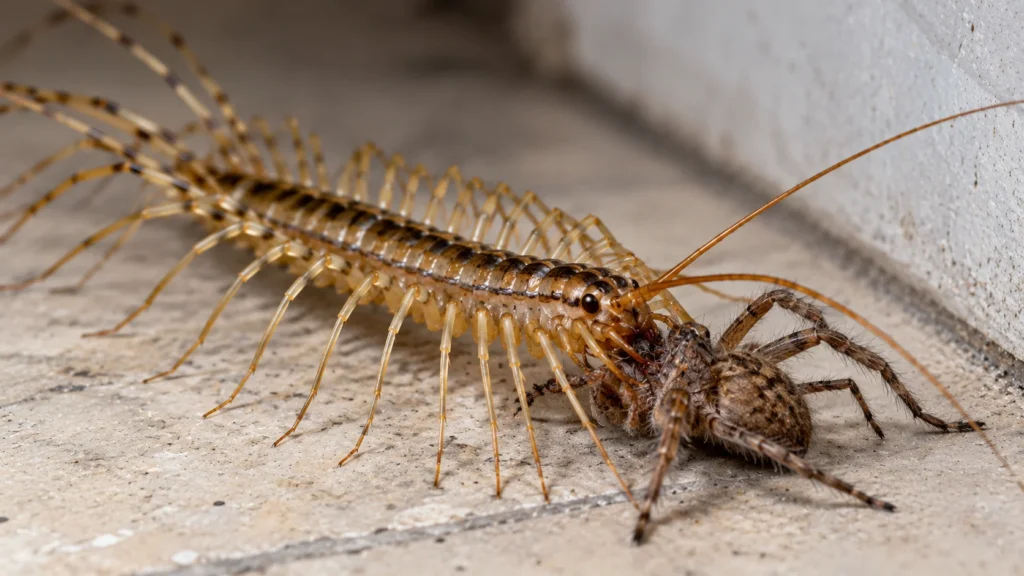
House centipedes commonly hunt small arthropods during the night. Their prey can include insects and spiders that are already living inside the building.
Common Centipede Prey Includes Household Pests
House centipedes can feed on:
- Cockroaches
- Silverfish
- Firebrats
- Spiders
- Carpet beetle larvae
- Ants
- Bed bugs
- Small crickets
- Other small arthropods
- Other centipedes
Penn State Extension specifically lists silverfish, firebrats, carpet beetle larvae, cockroaches, spiders, and other small arthropods among the prey of house centipedes.
Numerous Centipedes Can Signal Another Pest Problem
A noticeable increase in house centipedes can indicate that another arthropod population is providing them with food. Penn State Extension notes that frequent house centipedes may signify an abundance of prey species in the building.
For this reason, eliminating only the visible centipedes may not address the underlying cause. Inspecting for silverfish, cockroaches, spiders, and other prey can provide a more effective long-term approach.
House Centipedes Are Attracted to Dark and Secluded Areas
House centipedes are generally active at night and hide during the daytime. They prefer dark, protected locations where they can remain concealed before emerging to hunt.
Clutter and structural voids can therefore provide useful shelter. Cardboard boxes, cracks, wall spaces, floor drains, and gaps around foundations can all offer protected locations.
Clutter Creates Additional Hiding Places
Boxes, stored materials, debris, and unused items can create sheltered spaces where centipedes and their prey remain undisturbed. Penn State Extension identifies cardboard boxes stored on slabs among locations that can provide harborage for house centipedes.
Reducing unnecessary clutter, especially in basements, garages, crawl spaces, and storage areas, can make these environments less attractive.
Cracks and Crevices Offer Protected Harborage
Centipedes can use cracks in foundations, gaps around structures, spaces beneath slabs, and openings around pipes or other building components.
Sealing these openings can reduce both shelter and potential entry routes.
Explore more articles:
- Fruit Flies vs Gnats
- Rat vs Mouse
- Bugs That Look Like Flying Termites
- Bugs That Look Like Fleas
- What Do Fleas Look Like?
Centipedes Are Attracted to Cool Conditions
House centipedes generally prefer cool, damp, secluded environments. During hot or unusually dry outdoor conditions, some centipedes may move indoors because indoor areas can provide more favorable moisture and shelter.
In colder periods, protected indoor locations can also provide suitable conditions compared with exposed outdoor habitats.
Basements and Crawl Spaces Are Common Locations
Basements and crawl spaces often combine limited sunlight, higher humidity, cooler temperatures, and numerous hiding places. These characteristics make them particularly suitable for house centipedes.
Improving ventilation and controlling humidity can therefore make these areas less favorable.
Centipedes Are Attracted to Damp Outdoor Areas
Centipedes do not originate exclusively indoors. Many species live outside beneath rocks, logs, leaves, mulch, bark, and other sheltered materials.
When outdoor conditions around a building provide moisture and abundant prey, centipedes may remain close to the foundation and eventually enter through available openings.
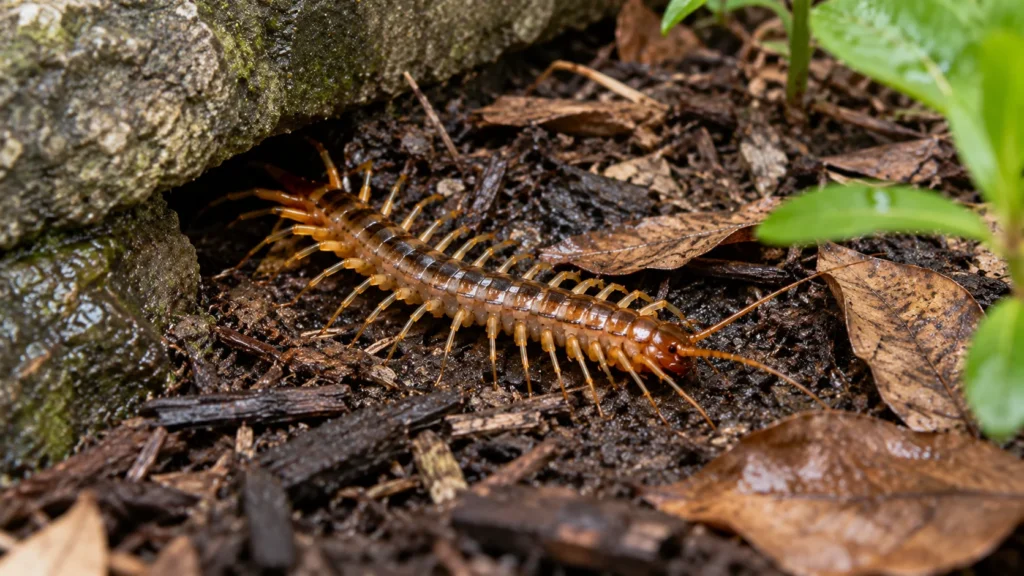
Mulch and Leaf Litter Can Provide Shelter
Thick mulch, leaf litter, rotting wood, compost, rocks, and other debris can create cool and damp environments suitable for centipedes. Orkin recommends keeping these materials away from the foundation as part of centipede prevention.
Reducing these sheltered areas around the exterior can lower the number of centipedes living close to the building.
Vegetation Can Increase Moisture Near Foundations
Dense, low-growing vegetation can shade the soil and help retain moisture around a structure. Keeping foundation areas open enough to dry can make the immediate surroundings less favorable to moisture-loving arthropods.
Proper drainage is also important because standing or persistently wet soil can contribute to conditions that support centipedes and their prey.
Centipedes Are Attracted to Entry Points Around Buildings
Centipedes can enter buildings through small openings, particularly when the surrounding environment offers favorable moisture or prey. Common access points include foundation cracks, gaps around doors and windows, and openings around structural components.
House centipedes may also be encountered around drains, sump areas, and other openings depending on building construction and moisture conditions.
Doors and Windows Need Proper Sealing
Gaps around exterior doors and poorly sealed windows can provide straightforward entry routes. Door sweeps, intact screens, weatherstripping, and caulking can reduce these openings.
Foundation Gaps Can Connect Outdoor and Indoor Habitats
Cracks around foundations, slab edges, pipes, and utility openings can provide access from outdoor harborage areas into basements or other ground-level spaces. Sealing these gaps can reduce recurring activity.
House Centipedes Are Attracted to Other Arthropods More Than Household Materials
Centipedes are predators rather than scavengers of household materials. Their presence usually relates to available prey and suitable shelter rather than attraction to food stored in cabinets or damage to household possessions.
This makes centipedes different from pantry pests, fabric pests, and many other insects that directly consume household products.
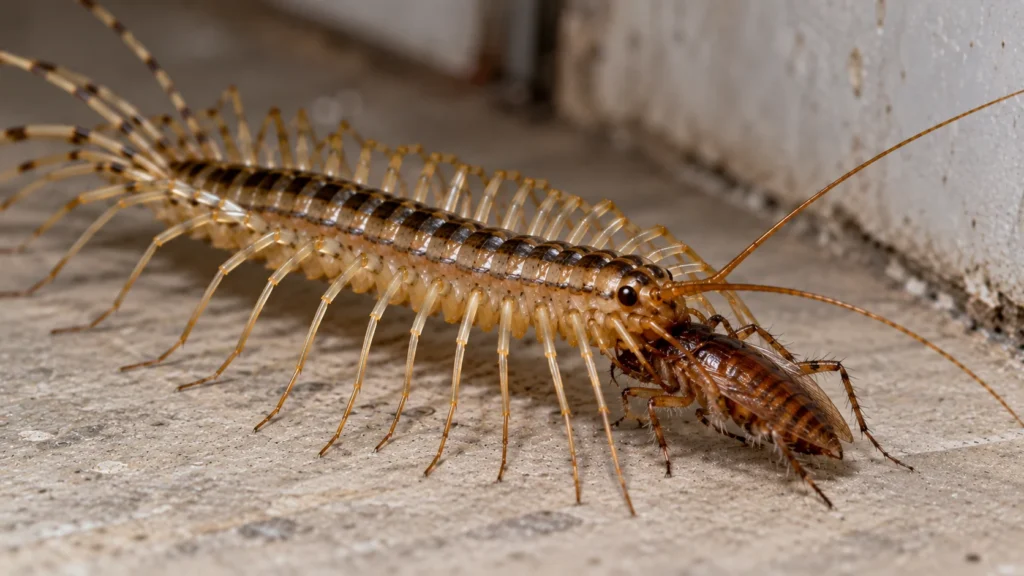
A Centipede Sighting Can Reveal Hidden Prey
A single house centipede may simply be an occasional visitor. Repeated sightings, particularly in the same damp areas, can indicate that insects or spiders are consistently available there.
Sticky insect monitors can help reveal what other arthropods are present and help identify the food source supporting centipede activity. Penn State Extension recommends monitoring prey arthropods as part of house-centipede management.
Reducing Moisture and Prey Helps Keep Centipedes Away
The most useful approach to centipede prevention is to make the property less suitable for both centipedes and their prey. Moisture reduction, clutter removal, exclusion, and insect management can work together to reduce recurring activity.
A dehumidifier can be useful in persistently damp basements or crawl spaces. Fixing leaks and improving drainage can also address the source of excessive moisture.
Practical Prevention Measures
- Repair plumbing leaks and water seepage.
- Use a dehumidifier in persistently damp rooms.
- Improve ventilation in basements and crawl spaces.
- Remove unnecessary cardboard and clutter.
- Seal cracks and crevices around foundations.
- Repair damaged window and door screens.
- Install appropriate door sweeps.
- Keep leaf litter and mulch away from foundations.
- Reduce populations of insects and spiders that serve as prey.
- Improve drainage so soil around the foundation can dry properly.
Penn State and University of Minnesota Extension both emphasize moisture reduction, exclusion, removal of hiding places, and management of prey insects as important parts of controlling house centipede activity.
10 Key Facts About What Centipedes Are Attracted To
- Centipedes are primarily attracted to food, moisture, shelter, and favorable environmental conditions.
- House centipedes feed on small insects, spiders, and other arthropods.
- Silverfish and cockroaches can provide important food sources.
- Damp basements and crawl spaces are common areas for house centipedes.
- Bathrooms can provide moisture and secluded hiding places.
- Dark cracks, wall spaces, and clutter can provide shelter.
- Outdoor mulch, leaf litter, rocks, and rotting wood can support centipede populations.
- Numerous house centipedes can indicate an abundance of other household arthropods.
- Sealing foundation cracks and other openings can reduce entry.
- Lowering indoor humidity and reducing available prey can make a home less attractive to centipedes.
Conclusion
Centipedes are attracted primarily to moisture, prey, darkness, shelter, and suitable temperatures. House centipedes are especially likely to appear in damp basements, bathrooms, crawl spaces, garages, and other secluded areas where insects and spiders are available as food.
The presence of several centipedes does not necessarily mean that the centipedes themselves are causing damage. Instead, recurring activity can point toward excess moisture or an underlying population of insects and spiders. Addressing those conditions can reduce the reasons centipedes remain around the property.
Keeping the home dry, removing clutter, improving drainage, sealing entry points, and reducing their prey can create a less favorable environment without relying immediately on pesticides. If chemical control is necessary, products should be used strictly according to their labels and applicable safety directions.
What are centipedes attracted to in the house?
Centipedes are commonly attracted to damp, cool, dark areas containing insects and spiders. Basements, bathrooms, crawl spaces, and other secluded locations can provide moisture, shelter, and food.
What are house centipedes attracted to?
House centipedes are attracted to moisture, darkness, shelter, and small arthropods they can hunt. Silverfish, cockroaches, spiders, and other insects can provide a dependable food source.
What attracts centipedes to bathrooms?
Bathrooms can provide the moisture and secluded spaces that centipedes prefer. Leaks, condensation, damp floors, and gaps around plumbing can contribute to favorable conditions.
What attracts centipedes to basements?
Basements can offer cool temperatures, high humidity, cracks, clutter, and abundant prey insects. These conditions can make basements suitable for house centipedes.
Do centipedes come into houses because of food?
Yes. Centipedes may enter or remain in houses where small insects, spiders, and other arthropods provide prey. They are predators rather than pests that feed on household food.
Does moisture attract house centipedes?
Yes. Moisture is strongly associated with house centipede activity. Damp basements, bathrooms, crawl spaces, and areas around sinks or tubs can provide suitable conditions.
Do centipedes indicate other bugs in the house?
Frequent house centipede activity can indicate that other arthropods are present because those insects and spiders serve as their food. Penn State Extension specifically notes that numerous house centipedes may indicate an abundance of prey species.
Are centipedes attracted to light?
Centipedes generally prefer dark, secluded areas and are primarily active at night. Bright light can cause them to retreat toward darker hiding places rather than serving as a primary attractant.