
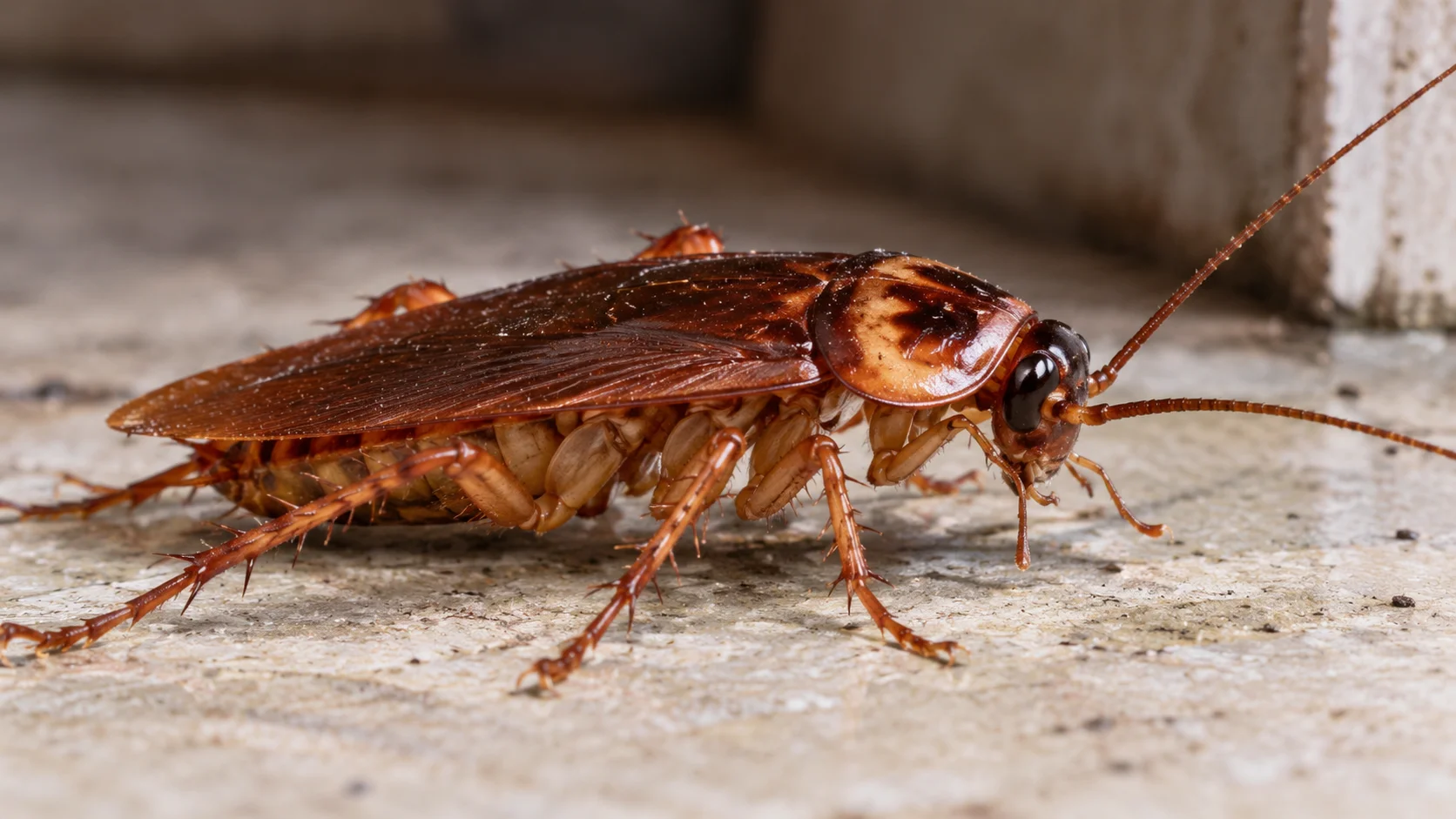
If you have spotted a suspicious insect in your home, knowing what a cockroach looks like can help you distinguish a roach from other household pests. Cockroaches generally have flattened, oval-shaped bodies, long antennae, six legs, and a shield-like structure called a pronotum behind the head. Their exact size, color, markings, and wings vary by species.
Adult cockroaches are not the only form you may encounter. Baby cockroaches, nymphs, egg cases, shed skins, and droppings can all provide clues about an infestation. Accurate identification is important because different species prefer different areas and may require different management approaches.so, let's understand, what does a cockroach look like
What a Cockroach Looks Like
A typical cockroach has a broad, flattened body with six legs, long antennae, and a relatively small head partly covered by the pronotum. The body may be light brown, reddish-brown, dark brown, or nearly black depending on the species.
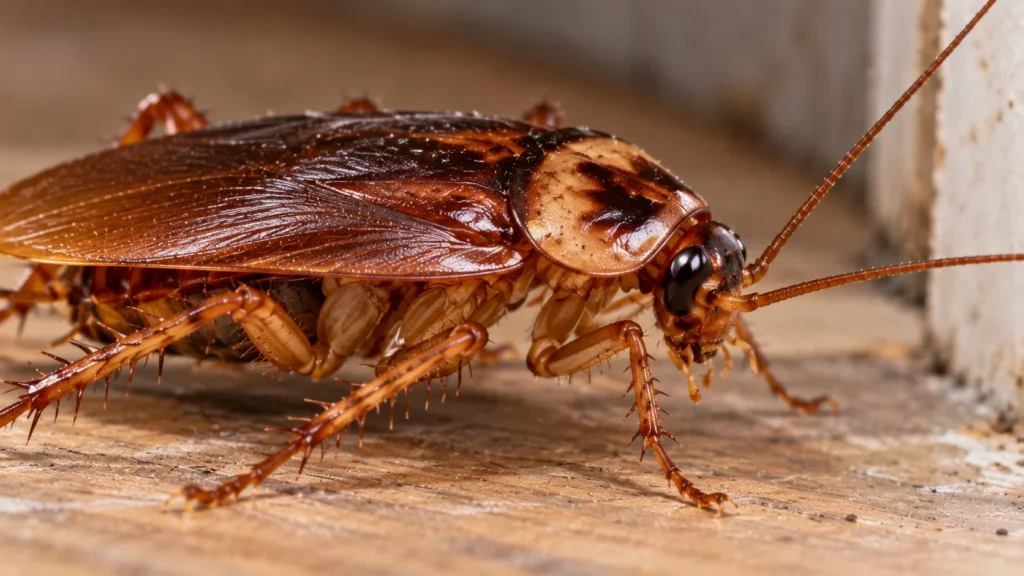
Many adult cockroaches have wings folded over their backs, although the presence and usefulness of wings vary. Some species fly or glide under certain conditions, while others have wings that are reduced or are not capable of flight.
Cockroach Size, Color, and Body Features
Cockroach size varies considerably. Common household species can range from roughly half an inch to around two inches, while the exact dimensions depend on the species and life stage.
The long antennae are one of the easiest features to notice. Cockroaches also have spiny legs adapted for running and climbing. Their flattened bodies allow them to squeeze into narrow cracks and sheltered spaces.
What a Cockroach Looks Like Up Close
Up close, the head is partly hidden beneath the pronotum, while the antennae extend outward from the front. The legs are segmented and usually covered with small spines.
A close inspection can reveal species-specific markings that are difficult to notice from a distance. For reliable identification, body markings should be considered together with size, habitat, wing structure, and other characteristics rather than using color alone.
What a Baby Cockroach Looks Like
A baby cockroach is called a nymph. Nymphs resemble smaller versions of adult cockroaches, but they are generally wingless and may have a different color or pattern during early development.
Immediately after emerging from an egg case, a nymph can be pale or almost white. Its outer body hardens and darkens relatively quickly. As the nymph grows, it molts repeatedly until reaching adulthood.
What a Cockroach Nymph Looks Like
Cockroach nymphs are usually small, wingless, and relatively flat. Their appearance changes as they progress through multiple molts, so a very young nymph may look considerably different from a mature adult.
German cockroach nymphs are particularly recognizable because they can have a dark body with a lighter area on the back. Other species have their own nymph patterns and colors.
What a Newborn or Tiny Cockroach Looks Like
A newly hatched cockroach may be extremely small and pale before its exoskeleton hardens. This is why a tiny cockroach in the house may initially look like a completely different insect.
Finding several small, wingless roaches can be an important indication that an established population is reproducing nearby. Cornell IPM recommends considering the presence of different life stages when assessing cockroach activity.
What a German Cockroach Looks Like
The German cockroach is one of the most common indoor cockroach species. Adults are typically about 13–16 mm long and tan or light brown, with two dark, parallel stripes on the pronotum directly behind the head.
They commonly inhabit warm, humid locations such as kitchens and bathrooms. German cockroach nymphs are smaller and wingless, while adults have wings but generally rely on running rather than sustained flight.
What a Baby German Cockroach Looks Like
A baby German cockroach is small, dark, and wingless. Young nymphs can have a lighter patch on the back, which becomes more noticeable during early development.
Because German cockroaches reproduce efficiently and spend much of their time hidden, finding small nymphs in cabinets, cracks, or around appliances can indicate that adults are nearby.
What a German Cockroach Egg Looks Like
German cockroach eggs are contained inside a protective ootheca, or egg case. The case is generally brown and elongated and can contain numerous developing eggs.
The female German cockroach carries the egg case until the eggs are close to hatching, making its egg case behavior different from some other common species.
What Different Common Cockroach Species Look Like
Not every cockroach in a home looks alike. American, Oriental, brown-banded, and German cockroaches have noticeable differences in size, color, markings, wings, and preferred environments.
American Cockroach Appearance
The American cockroach is large, reddish-brown, and can reach approximately 1.5–2 inches in length. Adults have fully developed wings extending over the abdomen and a lighter area around the pronotum.
They are commonly associated with sewers, drains, basements, boiler rooms, and other warm or damp locations.
Oriental Cockroach Appearance
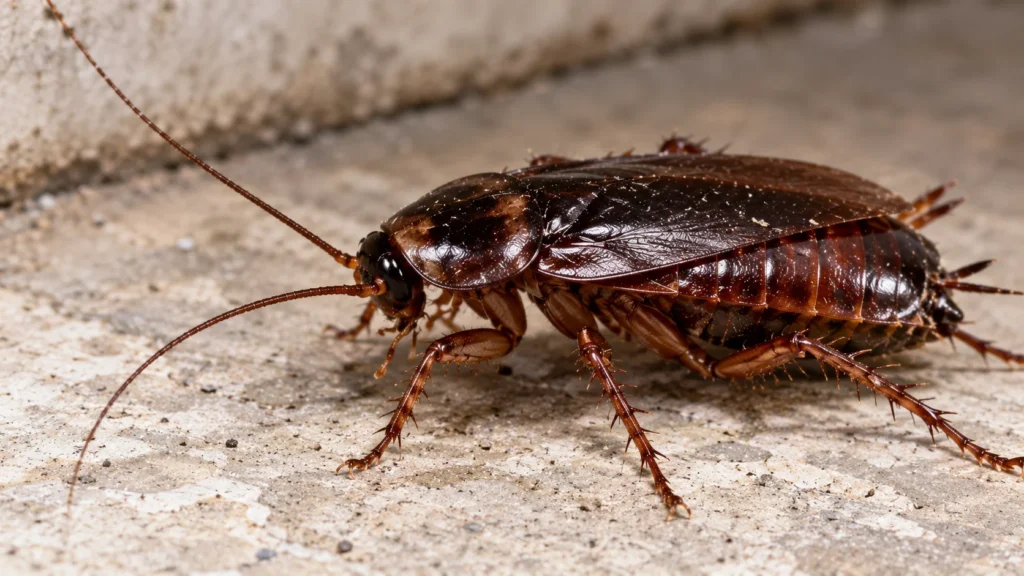
Oriental cockroaches are dark brown to nearly black and have broad, flattened bodies. Adults commonly measure around 3/4 to 1 1/8 inches, although size varies.
They prefer cool, damp environments such as basements, crawl spaces, drains, and areas around foundations. Females have very short wings, while males have wings covering much of the abdomen but cannot fly.
Brown-Banded Cockroach Appearance
Brown-banded cockroaches are smaller than many other common species and have distinctive lighter bands across the body. Adult males have wings covering the abdomen, while females have shorter wings.
They prefer warm, relatively dry locations and may occur in elevated areas, bedrooms, living spaces, electronics, and other areas away from the moisture preferred by German cockroaches.
Wood Cockroach Appearance
Wood cockroaches can resemble other brown roaches but are associated more strongly with outdoor environments. Male Pennsylvania wood cockroaches are attracted to lights and may accidentally enter buildings, while females are less likely to enter homes.
This distinction matters because finding one wood cockroach indoors does not necessarily indicate the same type of indoor infestation associated with German cockroaches.
Explore more articles:
- Fruit Flies vs Gnats
- Rat vs Mouse
- Bugs That Look Like Flying Termites
- Flea Bugs That Look Like Bed Bugs
- What Do Fleas Look Like?
What a Cockroach Egg Case or Nest Looks Like
Cockroaches do not construct nests in the same way that birds or social insects build nests. Instead, females produce protective oothecae, which contain multiple eggs.
An egg case may appear as a small brown, reddish-brown, or tan capsule depending on the species. American cockroach oothecae are commonly reddish-brown and bean-shaped, while German cockroach cases are tan and elongated.
What a Cockroach Nest Looks Like in a House
When people search for a cockroach nest, they are usually referring to a hiding or breeding area rather than an actual nest. Roaches can gather in dark cracks, wall voids, cabinets, appliances, plumbing spaces, and other protected locations.
Evidence around such areas can include live roaches, nymphs, egg cases, shed skins, and droppings. Cornell recommends inspecting tight, dark spaces near sightings and evidence of activity.
What a Pregnant Female Cockroach Looks Like
The term “pregnant cockroach” is commonly used to describe a female carrying an egg case. Technically, cockroaches do not become pregnant like mammals; their eggs develop inside an external or retained ootheca depending on the species.
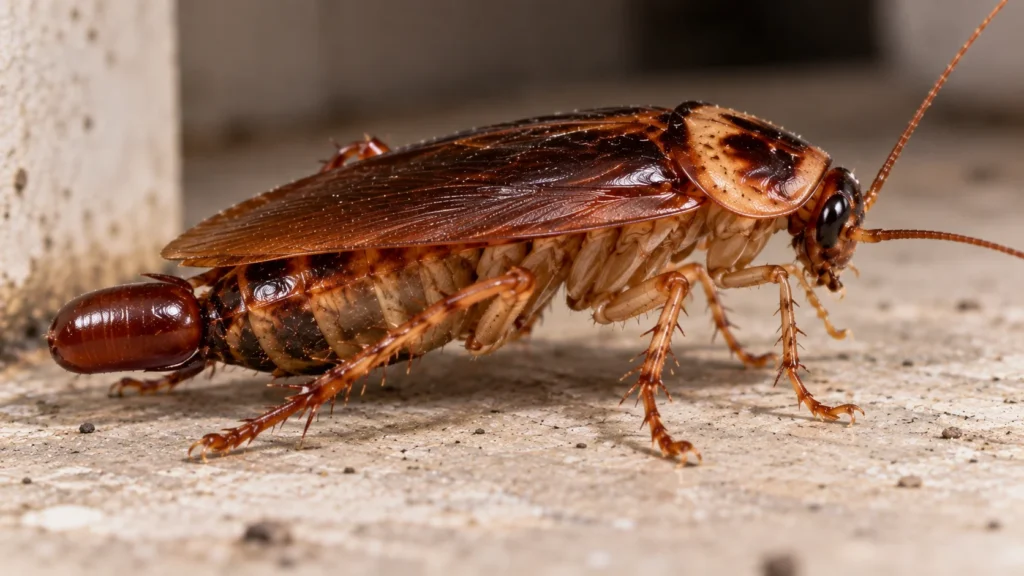
A female carrying an ootheca may have a visible capsule extending from the end of her abdomen. German cockroach females are known for carrying their ootheca until the eggs are ready to hatch.
What Cockroach Droppings and Shed Skin Look Like
Cockroach droppings can provide useful evidence when live insects are difficult to find. German cockroaches may leave small, dark, pepper-like droppings around hiding places, while larger species can leave larger fecal material.
Shed skins are another sign because nymphs must molt repeatedly as they develop. Freshly molted cockroaches may temporarily appear white before their new exoskeleton hardens and darkens.
What a Cockroach Bite Looks Like on a Human
Cockroaches can occasionally bite, but this is not the most typical sign used to identify an infestation. A skin mark cannot reliably establish that a cockroach caused it because many different insects and skin conditions can produce similar reactions.
If a suspected bite becomes increasingly painful, swollen, infected-looking, or otherwise concerning, medical advice is more appropriate than attempting to identify the insect from the skin mark alone.
What a Cockroach Infestation Looks Like
An infestation can involve more than seeing an adult roach. Repeated sightings, particularly around kitchens, bathrooms, appliances, cracks, drains, or other sheltered areas, may indicate ongoing activity.
Other signs include droppings, egg cases, shed skins, unpleasant odors, and multiple life stages. Cornell recommends accurate species identification and monitoring because the species and population level influence management decisions.
10 Quick Cockroach Identification Points
- Cockroaches generally have six legs.
- Their bodies are usually flat and oval-shaped.
- Long antennae are a prominent identifying feature.
- The pronotum partly covers the head.
- Adult size varies substantially between species.
- Baby cockroaches are called nymphs.
- Nymphs are generally smaller and wingless.
- Cockroach eggs are contained inside protective oothecae.
- Droppings, shed skins, and egg cases can indicate cockroach activity.
- Correct species identification is useful because different cockroaches prefer different habitats.
Conclusion
Knowing what a cockroach looks like requires more than identifying a brown insect. Body shape, six legs, long antennae, the pronotum, wings, size, markings, and life stage all contribute to identification.
German, American, Oriental, brown-banded, and wood cockroaches can look noticeably different. Baby cockroaches, egg cases, shed skins, and droppings can also reveal an infestation even when adult roaches are rarely visible. When identification is uncertain, a clear specimen or photograph can be assessed by a qualified pest identification service rather than relying only on appearance from a distance.
What does a cockroach look like?
A cockroach typically has a flat, oval-shaped body, six legs, long antennae, and a shield-like pronotum behind the head. Color and size depend on the species.
What does a baby cockroach look like?
A baby cockroach, or nymph, is smaller than an adult and normally lacks wings. Newly emerged nymphs can be pale before their exoskeleton hardens and darkens.
What does a German cockroach look like?
An adult German cockroach is usually light brown or tan, approximately half an inch long, and has two dark stripes on the pronotum.
What does a cockroach egg look like?
Cockroach eggs are enclosed in an ootheca, a protective capsule whose shape and color vary by species. German cockroach cases are generally tan and elongated.
What does a cockroach nest look like?
Cockroaches do not build conventional nests. Their hiding and breeding areas may contain live roaches, nymphs, egg cases, droppings, and shed skins.
What does a flying cockroach look like?
A flying cockroach generally looks like an adult roach with fully developed wings extending over its abdomen. American cockroaches, for example, can fly under sufficiently warm conditions, although flight behavior varies by species.