
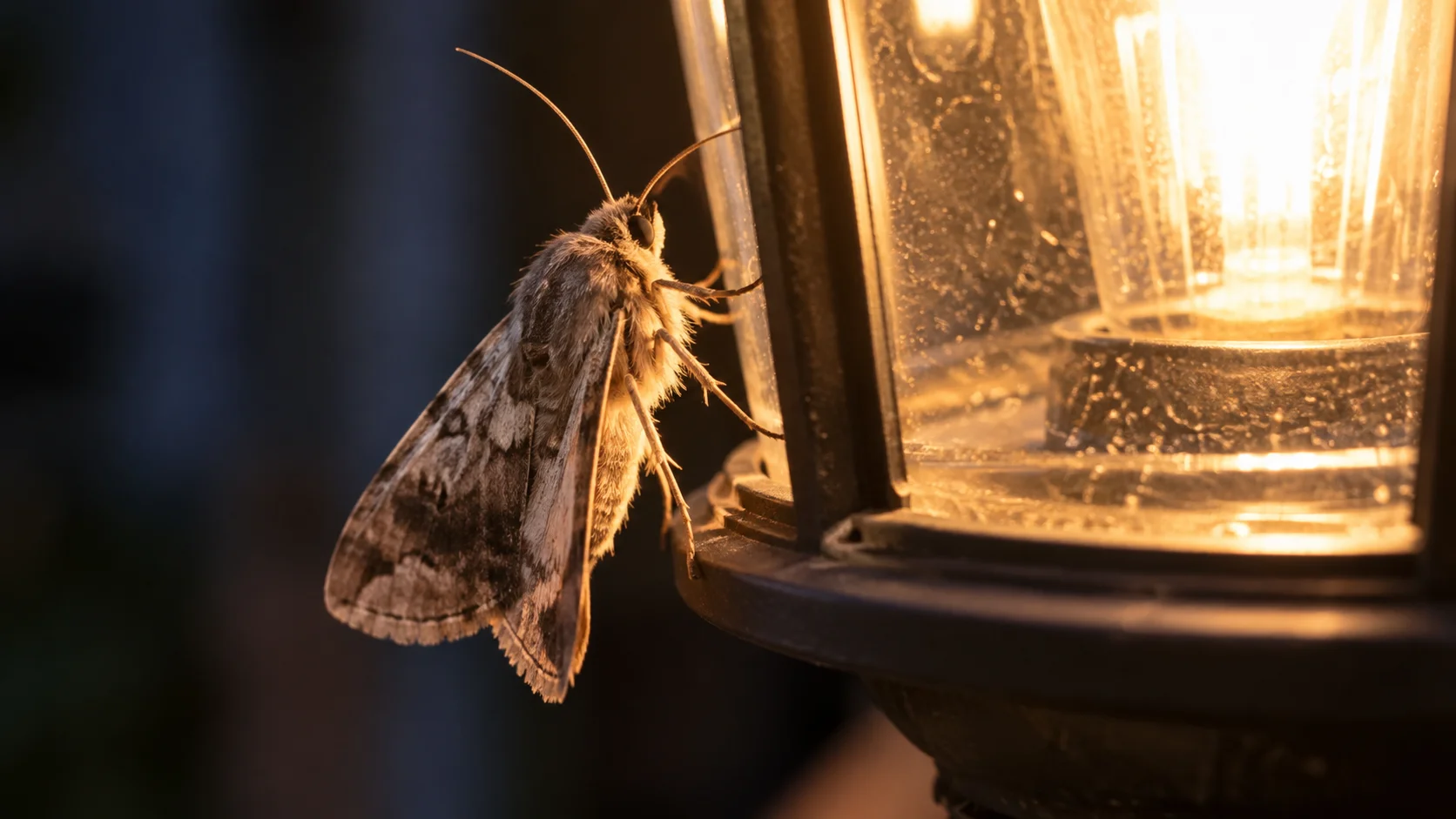
Moths are attracted to different things depending on their species, life stage, and habitat. Many nocturnal moths are strongly drawn to artificial light, while others respond more to flowers, plant scents, food, pheromones, or suitable places to lay eggs. The attraction that brings a moth indoors can therefore be very different from the attraction that supports it outdoors.
Pantry moths are commonly associated with dried foods such as grains, cereals, nuts, seeds, dried fruits, spices, pet food, and birdseed. Clothes moths are associated with animal-based fibers such as wool, fur, feathers, and other keratin-containing materials. Adult moths of many species also visit flowers for nectar, while some species do not feed as adults at all.
Understanding what attracts a particular moth is useful because it can help distinguish a harmless outdoor visitor from a household infestation.
What Are Moths Attracted To
Light is one of the most noticeable moth attractants, particularly after dark. Many nocturnal moths fly toward porch lights, windows, streetlights, illuminated walls, and other artificial light sources. However, scientists do not consider the exact reason for this behavior completely settled.
One current explanation involves the way moths use the brighter nighttime sky as an orientation cue. Artificial light can interfere with that orientation, causing moths to circle, stall, or repeatedly approach the light. Other theories involving navigation and visual cues have also been proposed.
Ultraviolet and Blue Light Can Be Especially Attractive
Research has found that many moths show a strong preference for shorter wavelengths, particularly ultraviolet and blue radiation. In a large study involving 95 species, UV and blue light attracted substantially more moths than several longer-wavelength alternatives.
Indian meal moths also respond strongly to blue and violet wavelengths. Laboratory research found blue light to be more effective than green, orange, or red light for attracting tested Indian meal moths.
Red Light Generally Produces Less Attraction
Red wavelengths are generally less attractive to many nocturnal moths than UV or blue wavelengths, although attraction varies between species. This means there is no universal color of light that every moth will avoid.
For reducing moth activity around outdoor areas, limiting unnecessary nighttime lighting is more dependable than simply changing one bulb color. Artificial light can also disrupt normal moth feeding, mating, and movement.
Moths Are Attracted to Different Foods and Feeding Sources
Food attraction depends heavily on the moth species. Adult moths of many species consume nectar, fruit juices, sap, or other liquids, while their caterpillars may depend on particular plants. Some adult moths have reduced mouthparts and do not feed at all.
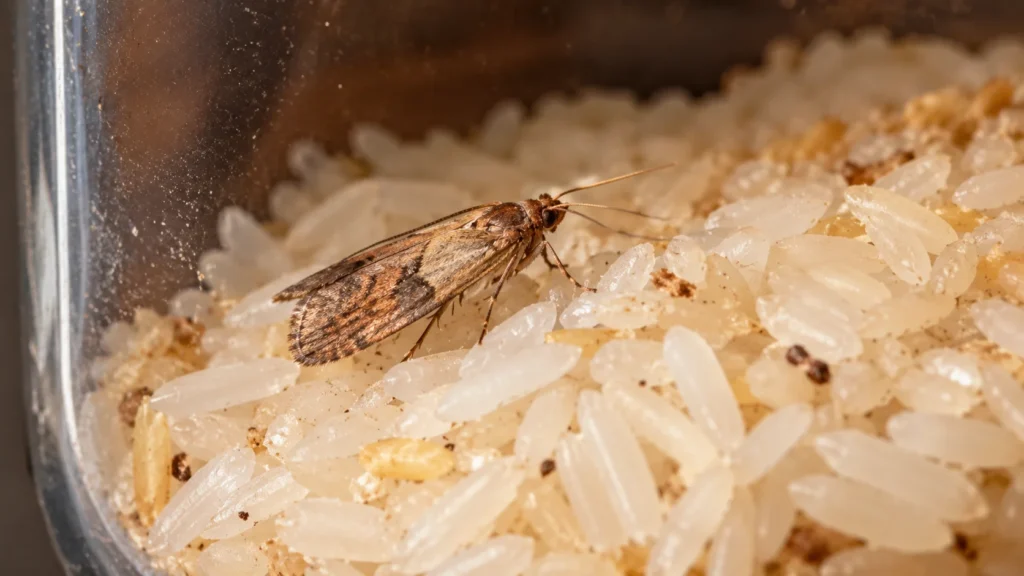
This distinction is important when identifying moth activity because the material attracting an adult moth is not necessarily the material that supports its larvae.
Pantry Moths Prefer Stored Dry Foods
Indian meal moths and related pantry moths are associated with a wide range of stored products. Common food sources include:
- Flour and cereal products
- Rice and pasta
- Grains
- Nuts
- Seeds
- Dried fruits
- Crackers and cookies
- Chocolate and candy
- Spices
- Dry pet food
- Birdseed
- Powdered milk
- Other dried plant-based foods
Indian meal moth larvae are the damaging stage and can contaminate food with silk webbing and droppings. Adults may fly throughout the house, even when the actual food source is hidden elsewhere.
Pantry Moths Can Be Attracted to Pet Food and Birdseed
Dry pet food and birdseed can be overlooked sources of pantry moth infestations. These products can contain grains, seeds, and other materials suitable for developing larvae. Utah State University Extension recommends inspecting incoming food and storing susceptible products in pest-proof containers.
Finding adult moths around a kitchen does not necessarily mean the adults are feeding there. The source may be an older package stored in a cupboard, a bag of pet food, birdseed, or another dry product.
Clothes Moths Are Associated With Animal-Based Fibers
Clothes moths behave differently from pantry moths. Their larvae can damage animal-derived materials, particularly wool, fur, feathers, and other keratin-containing products. Webbing and casemaking clothes moths are two important household species.
Wool, Fur, Feathers, and Hair Can Support Larvae
Clothes moth larvae can develop in wool clothing, carpets, upholstered furnishings, furs, feathers, and similar materials. The adults themselves are not responsible for chewing holes in garments; the larvae cause the feeding damage.
Clothes moth activity is also more commonly associated with dark, quiet, undisturbed areas. Items stored for long periods without inspection can therefore provide suitable conditions for development.
Dirty or Poorly Maintained Fabrics Can Be More Vulnerable
Organic residues on fabrics can make them more suitable for clothes moth larvae. Butterfly Conservation notes that clothes moths can prefer dirty clothing over clean clothing and typically attack animal-derived fibers rather than synthetic fabrics.
Regular cleaning, inspection, and appropriate storage can reduce opportunities for a clothes moth infestation to become established.
Explore more articles:
- Fruit Flies vs Gnats
- Rat vs Mouse
- Brown Recluse vs House Spider
- Bugs That Look Like Flying Termites
- What Do Fleas Look Like?
Flowers and Plant Scents Attract Many Moths
Many adult moths visit flowers after dusk to obtain nectar. Flowers with strong fragrances can be particularly useful for nocturnal moths because scent is an important way moths locate resources in low-light conditions.
Strongly Scented Flowers Can Draw Night-Flying Moths
Moths are commonly observed visiting flowers such as:
- Buddleia
- Red valerian
- Heather
- Sallow
- Ivy
- Night-scented stock
- Hemp agrimony
- Sweet William
The exact plants used vary by moth species and geographic region. Butterfly Conservation also notes that many flowers that attract butterflies can attract moths, with moth activity often becoming easier to observe around dusk.
Nectar-Rich Flowers Provide an Important Food Source
Many adult moths use a proboscis to drink nectar. Species with long proboscises can reach nectar hidden deep inside tubular flowers, making them important nighttime pollinators.
Not every moth follows this pattern. Luna moths, for example, do not feed as adults and have a very short adult lifespan devoted primarily to reproduction.
Moths Respond to Scents and Pheromones
Scent plays a major role in moth behavior. Female moths of many species release pheromones that males detect with highly sensitive antennae. These chemical signals can guide males toward potential mates from considerable distances.
This is different from saying that household perfume or a particular human scent universally attracts moths. Moth responses are species-specific, and pheromones are specialized chemical signals rather than ordinary fragrances.
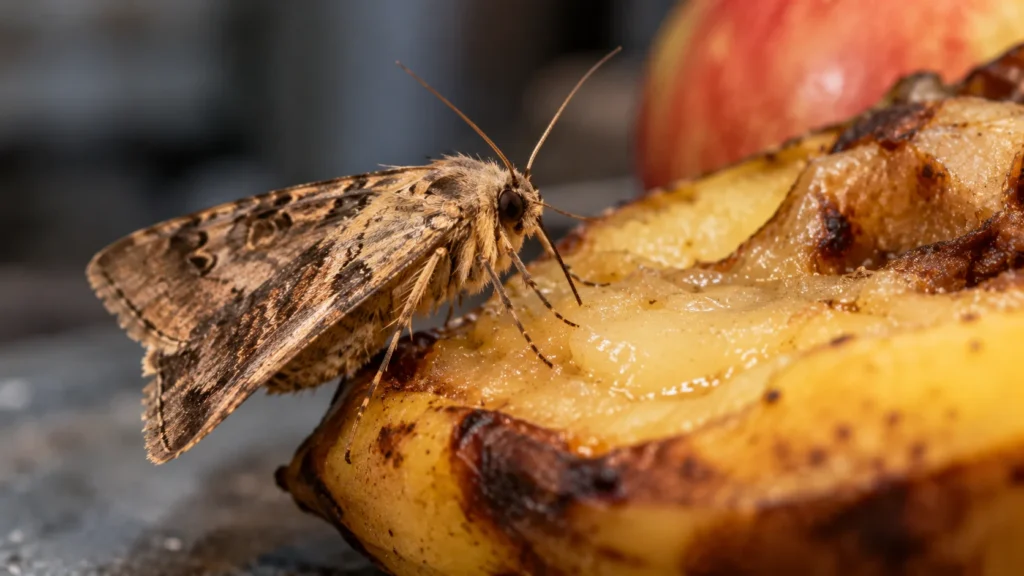
Overripe Fruit and Sugary Materials Can Attract Some Moths
Some adult moths feed on fruit, sap, or other sugary liquids. Overripe fruit can therefore become an attractant outdoors, while moth-monitoring methods sometimes use sugar-based artificial nectar to bring moths into an observation area.
This attraction should not be confused with pantry moth infestations, where larvae develop in stored dry foods.
Moth Color Attraction Depends on the Situation
Moths do not respond to visible colors in exactly the same way butterflies do. Their nighttime behavior is strongly influenced by light intensity and wavelength, and many nocturnal species are more responsive to short-wave radiation than to ordinary color as humans perceive it.
Blue, Violet, and UV Wavelengths Can Increase Attraction
Experimental research found strong attraction to UV and blue light across many tested moth species. Indian meal moths also demonstrated particularly strong responses to blue and violet wavelengths.
This is why a bright outdoor light with a substantial short-wave component may attract more night-flying insects than a light with little UV or blue output.
Moths Are Not Simply Attracted to One Visible Color
There is no single universal answer for the most attractive color because moth species differ in their visual systems and behavior. Light intensity, wavelength, environmental conditions, time of night, and species all influence the response.
For practical household prevention, reducing unnecessary exterior lighting is more useful than relying on a particular visible color as a complete deterrent.
Moths Are Attracted to Suitable Places for Reproduction
Attraction is not always about food. Female moths need suitable locations for laying eggs, and many species are closely associated with particular host plants or materials.
Caterpillars can feed on leaves, flowers, stems, fruits, roots, fungi, lichens, stored foods, or animal-derived materials depending on the species.

Host Plants Can Determine Where Moths Occur
Some moth caterpillars are highly specialized and depend on particular plant species. As a result, an outdoor moth may be present because the surrounding vegetation provides the right conditions for its complete life cycle rather than because the adult is attracted to the house itself.
Dark and Undisturbed Areas Can Support Clothes Moth Activity
Clothes moth larvae prefer protected areas containing suitable animal fibers. Closets, storage containers, carpets, furniture, and rarely disturbed fabrics can therefore become important inspection points when clothing damage is present.
Moths Around the House May Have Several Different Causes
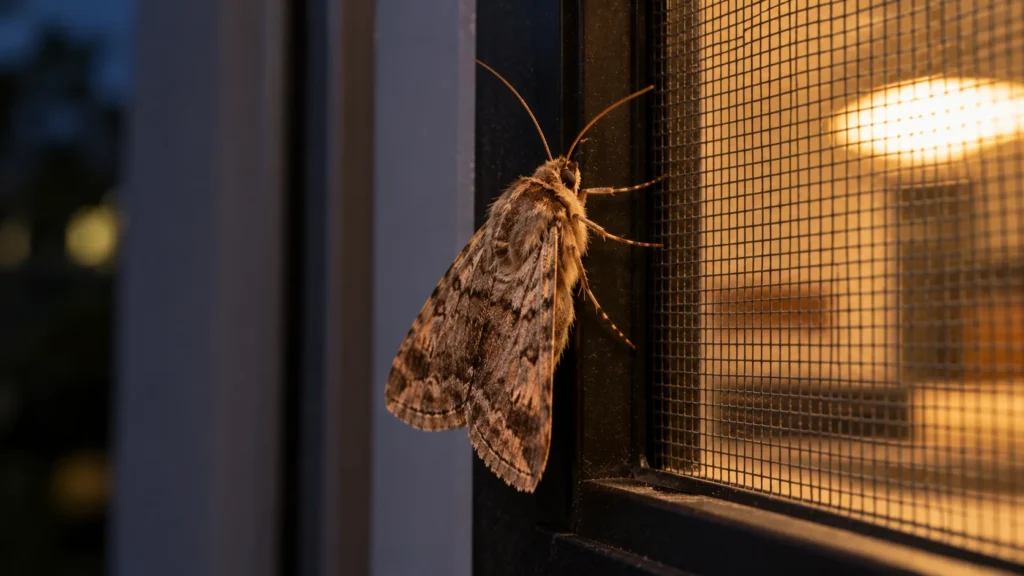
Seeing a moth indoors does not automatically mean an infestation. Some outdoor moths simply enter through open doors, windows, or other openings, particularly when indoor lighting is visible from outside.
A more targeted inspection is appropriate when moths repeatedly appear around a particular food-storage area or when damaged wool, fur, feathers, or other susceptible materials are present.
Pantry Activity Points Toward Stored Food
Look for webbing, larvae, cocoons, or contaminated material in dry food packages. Inspect grains, cereals, nuts, seeds, dried fruits, spices, pet food, and birdseed carefully.
Fabric Damage Points Toward Clothes Moths or Other Fabric Pests
Small holes in wool or other animal-based materials, particularly in dark storage areas, warrant inspection for clothes moth larvae. Other insects can also damage fabrics, so identification is important before treatment.
Practical Ways to Reduce Moth Attraction Indoors
The best prevention method depends on what type of moth is present. For outdoor moths entering because of illumination, reducing unnecessary nighttime lighting and improving window and door screening can help. For pantry moths, source removal is more important than simply killing adult moths.
For pantry infestations, discard contaminated food, clean shelves and cracks thoroughly, and move susceptible foods into sealed containers. University of Minnesota Extension notes that insecticides are not recommended for stored-food cupboards and that removing the infested source is central to control.
For clothes moths, inspect woolens, furs, feathers, carpets, and other susceptible materials, clean or treat affected items appropriately, and reduce long-term undisturbed storage.
10 Key Facts About What Moths Are Attracted To
- Many nocturnal moths are attracted to artificial light.
- UV and blue wavelengths can be especially attractive to numerous moth species.
- Red light is generally less attractive than short-wave light for many tested species.
- Pantry moth larvae commonly develop in stored dry foods.
- Indian meal moths can infest grains, cereals, nuts, seeds, dried fruit, spices, pet food, and birdseed.
- Clothes moth larvae feed on animal-based materials such as wool, fur, and feathers.
- Many adult moths visit flowers for nectar.
- Strongly scented flowers can attract night-flying moths.
- Female moth pheromones attract males of the same or closely related species.
- An indoor moth does not automatically indicate an infestation because outdoor moths can enter homes through openings or follow indoor light.
Conclusion
Moths are attracted to a combination of light, food, plant resources, scents, pheromones, and suitable breeding environments, with the exact attraction depending on the species. Artificial light is a major reason moths gather around windows and outdoor fixtures at night, while pantry moths are associated with stored dry foods and clothes moth larvae with animal-based fibers.
If moths repeatedly appear indoors, identifying the type of moth and locating the source is more useful than treating every moth in the same way. Removing infested food, protecting stored fabrics, sealing entry points, and reducing unnecessary nighttime lighting can all help address the underlying cause.
What are moths attracted to most?
Many nocturnal moths are strongly attracted to artificial light, particularly light containing UV and blue wavelengths. Other species are primarily attracted to flowers, host plants, food sources, or pheromones.
What are pantry moths attracted to?
Pantry moths are attracted to stored dry foods and breeding materials, including grains, cereals, nuts, seeds, dried fruits, spices, pet food, and birdseed.
What are clothes moths attracted to?
Clothes moth larvae are associated with animal-based fibers such as wool, fur, feathers, and related materials. Dark, quiet, undisturbed storage areas can provide suitable conditions.
What color lights are moths attracted to?
Many moths show strong attraction to short-wave radiation, especially ultraviolet and blue light. Research has also found species-specific differences, so no single color affects every moth identically.
What does it mean when moths are attracted to you?
It does not have a scientifically established special meaning. A moth landing near a person can simply be responding to nearby light, movement, environmental conditions, or other ordinary cues. Cultural interpretations of moth encounters are separate from established insect behavior.
What flowers are moths attracted to?
Moths commonly visit nectar-producing flowers, especially strongly scented flowers that are accessible during dusk or nighttime. Buddleia, red valerian, heather, sallow, ivy, and night-scented plants can attract moths, although preferences vary by species.
What are moths attracted to besides light?
Depending on the species, moths can be attracted to nectar, overripe fruit, plant scents, host plants, stored foods, animal-based fibers, and mating pheromones.