
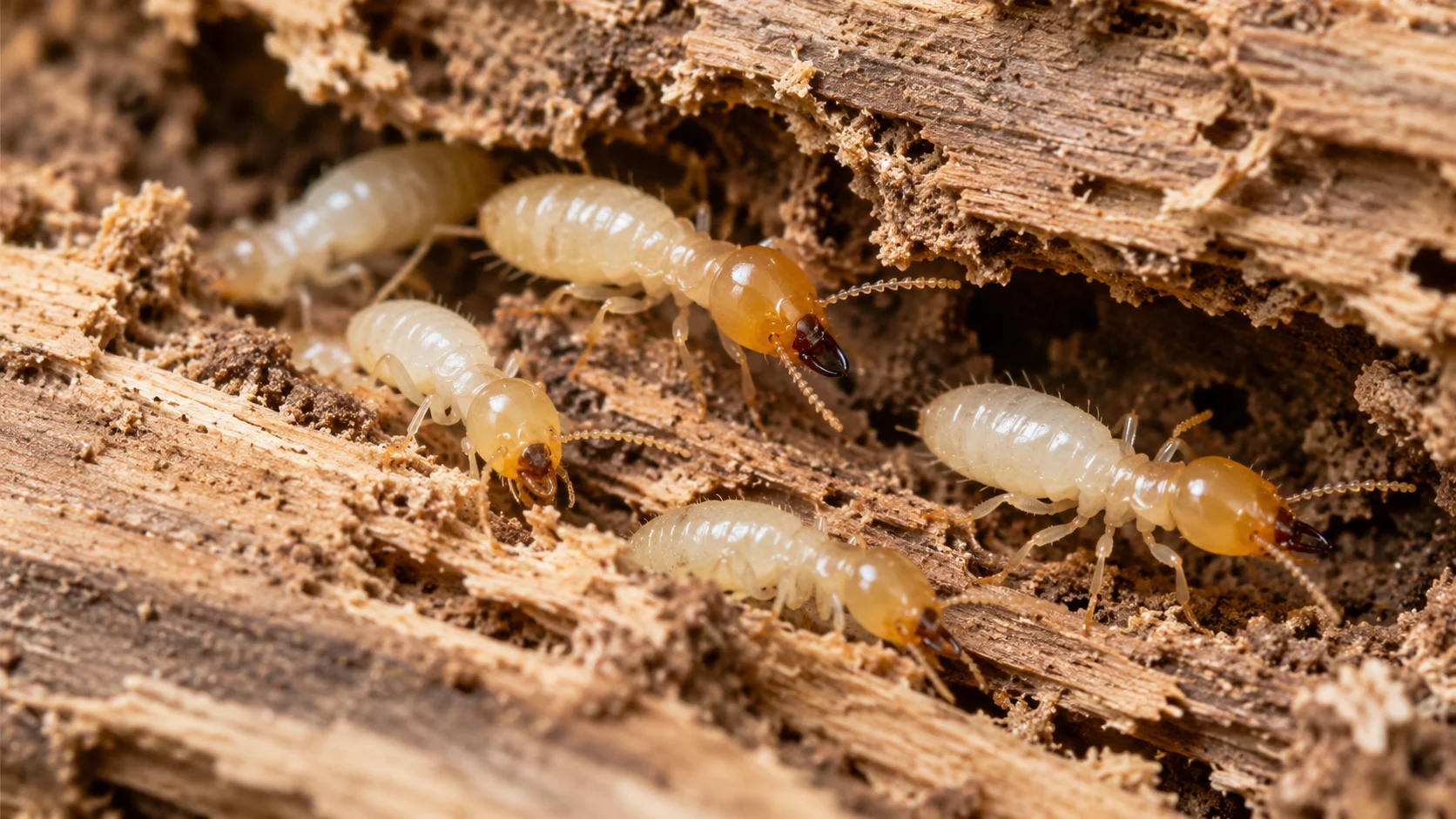
Knowing what termites look like is an important first step when you find an unfamiliar insect around your home or notice unusual damage in wood. Termites are small social insects with different castes, and workers, soldiers, and winged reproductives can look noticeably different from one another.
Termite workers are usually pale or creamy-white and are rarely seen in the open. Soldiers have enlarged heads and jaws used for defense, while reproductive termites, commonly called swarmers or alates, are darker and have two pairs of wings.
The insects themselves are only part of the identification process. Mud tubes, discarded wings, frass, hollowed wood, blistering, and other forms of damage can provide important evidence of termite activity. so, let's understnad, what do termites look like.
What Termites Look Like in General
Termites have soft, relatively straight-bodied forms, but their appearance changes according to their role within the colony. This is why one photograph cannot represent every termite an owner might encounter.
Worker Termites
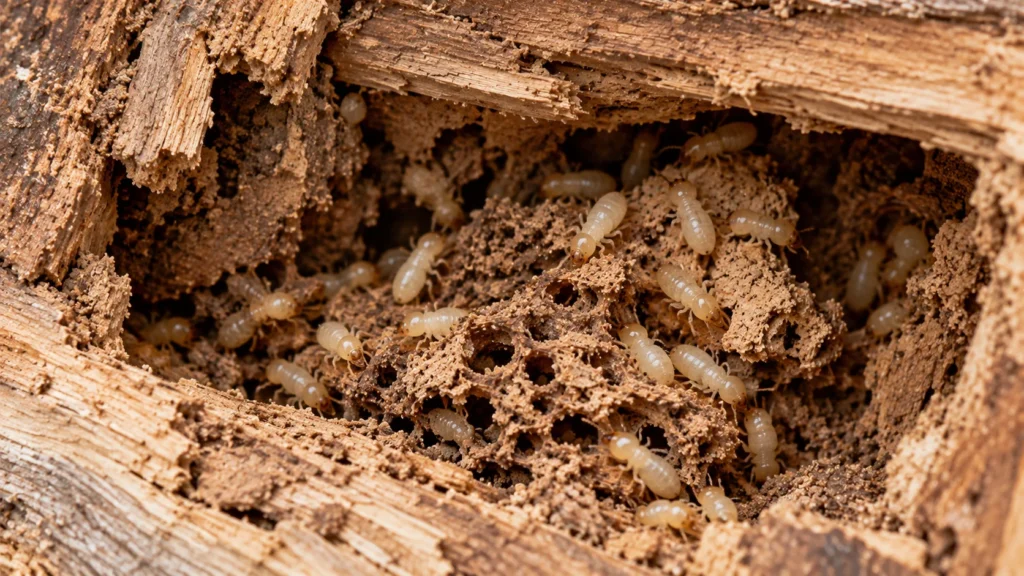
Worker termites are usually creamy-white to pale in color, wingless, and relatively soft-bodied. They spend their lives inside soil, wood, or protected shelter tubes and are responsible for feeding the colony and processing cellulose.
Because workers avoid light and remain concealed, they are often discovered only when infested wood or a termite tube is disturbed. Their pale appearance can sometimes cause them to be confused with other small larvae or insects.
Soldier Termites
Soldiers have a more distinctive appearance because their heads are enlarged and equipped with jaws or other defensive structures. Subterranean termite soldiers can have elongated yellowish heads and prominent mandibles.
They are not responsible for feeding on wood themselves. Instead, they defend the colony while workers provide food and care for other members.
Winged Reproductive Termites
Winged reproductives are usually darker than workers and soldiers. They have two pairs of long, translucent wings that are approximately equal in size and shape. After a swarm, termites can shed these wings, leaving piles of discarded wings near windows, doors, light sources, or other emergence areas.
These are the termites most people notice because they leave the colony during reproductive flights.
What Baby Termites Look Like
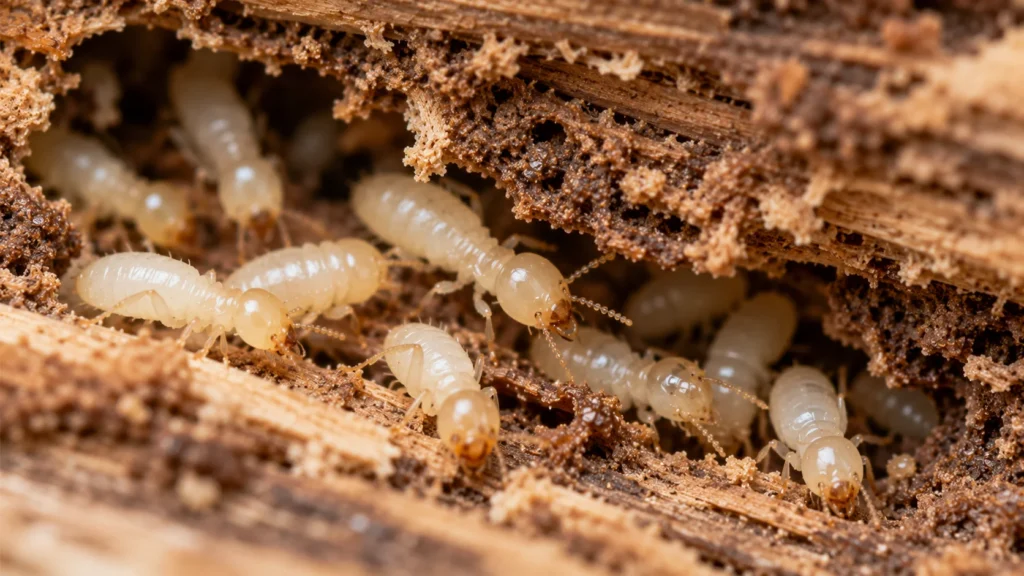
Baby termites are immature termites called nymphs. Their appearance depends on the species and developmental stage, but they generally resemble smaller versions of the colony's immature forms rather than looking like completely different insect larvae.
Small Pale Nymphs
Young termites can be very small and pale, especially during their early development. They do not have the large wings associated with reproductive termites.
In a suspected infestation, finding numerous pale immature termites inside damaged wood or shelter tubes can provide stronger evidence than seeing a single small insect elsewhere in the house.
Immature Termites and Colony Development
Nymphs develop through molts and can eventually become workers, soldiers, or reproductive forms depending on colony biology. Termite colonies contain specialized castes that perform different functions.
For this reason, what baby termites look like can vary, and identification should consider the surrounding colony evidence as well as the insect's appearance.
What Flying Termites Look Like
Flying termites are also called swarmers or alates. They are reproductive adults that leave established colonies to mate and potentially start new colonies.
Dark Bodies and Long Equal Wings
Swarmers are generally darker and more heavily pigmented than workers. Their four wings are similar in length and shape and extend beyond the body.
They can easily be confused with winged ants. Termites have straight or beaded antennae, a broad waist, and four wings of similar size. Winged ants generally have bent antennae, a constricted waist, and hind wings that are shorter than their front wings.
Shed Wings After Swarming
One of the most recognizable signs of a termite swarm is a collection of discarded wings. Reproductive termites often shed their wings after leaving the colony and finding a suitable location for reproduction.
Finding numerous identical wings indoors can therefore be more significant than finding one flying insect.
What Subterranean Termites Look Like
Subterranean termites are associated with soil and moisture and commonly use protected routes to travel between their colony and food sources.
Workers and Soldiers
Subterranean workers are generally creamy-white and wingless. Soldiers have larger heads and jaws and are usually about the same general size as workers.
These castes are rarely seen walking openly across floors because they typically remain inside soil, wood, or shelter tubes.
Subterranean Termite Shelter Tubes
One of the strongest external clues is a mud or shelter tube. These structures are made from soil mixed with materials such as saliva and bits of wood and can connect soil with wooden portions of a structure.
Tubes may run upward along concrete foundations, walls, cracks, or other surfaces. Breaking an active tube can reveal workers and soldiers inside.
What Drywood Termites Look Like
Drywood termites differ from subterranean termites in both habitat and detection. Instead of maintaining a soil connection, they can establish colonies directly inside relatively dry wood.
Termites Hidden Inside Wood
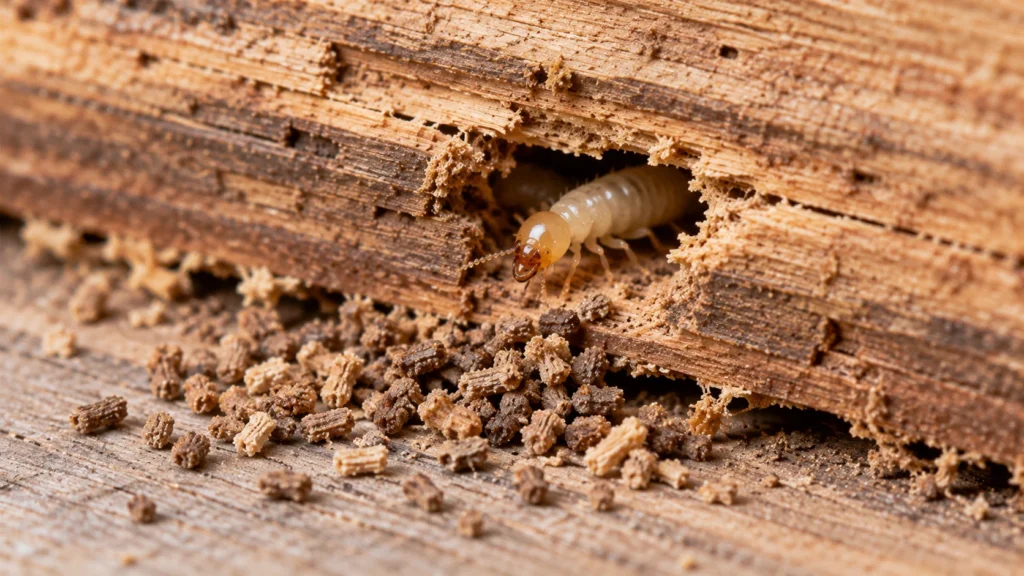
Drywood termites spend most of their lives concealed within wooden structures, furniture, lumber, fences, or other suitable wood. They can therefore remain unnoticed until a swarm occurs or their feeding produces visible evidence.
Their workers, soldiers, and reproductives have different appearances, just as with other termite groups.
Drywood Termite Frass
A particularly useful sign is drywood termite frass, which consists of fecal pellets expelled from galleries through small openings. The pellets are tiny, hard, and characteristically have six longitudinal ridges, giving them a roughly hexagonal cross-section.
Small piles of brownish pellets beneath tiny openings in wood can therefore be an important indication of drywood termite activity.
What Termites Look Like on Wood
Termites may not be visible on the outside of infested wood because many species feed inside protected galleries. The wood itself can provide important clues.
Hollowed Interior Galleries
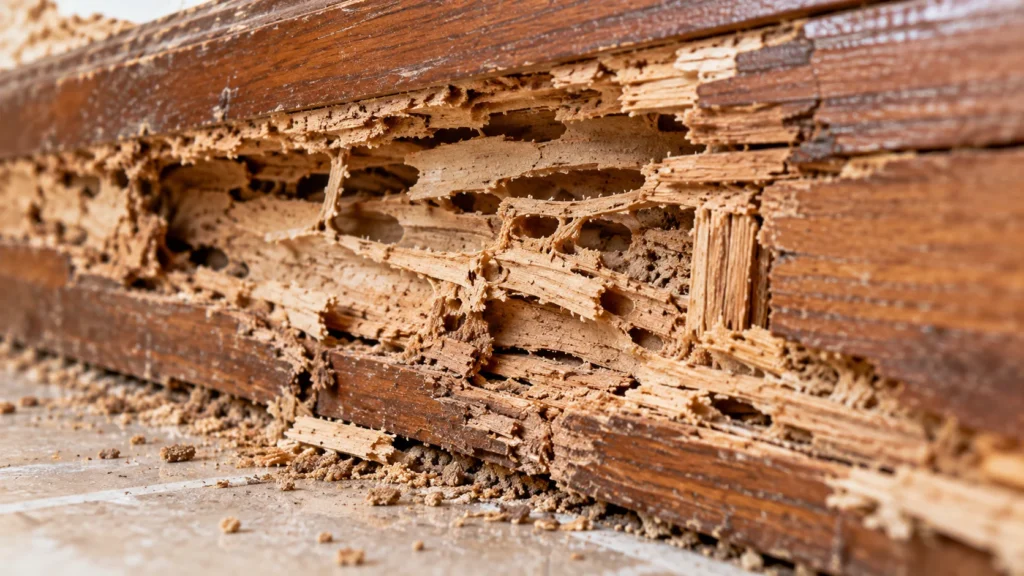
Termites excavate passages and chambers within wood. Subterranean termites commonly create relatively enclosed cavities that follow the grain, particularly through the softer springwood.
The exterior may initially appear relatively normal while the interior has been extensively damaged.
Thin or Blistered Wood
Advanced termite damage can leave wood thin at the surface, darkened, blistered, or weakened. UC IPM notes that damaged structural wood may sometimes be easily punctured with a knife or screwdriver.
Visible damage should not be confused with ordinary rot or damage from other wood-destroying organisms, so professional inspection may be needed for confirmation.
What Termite Damage Looks Like
Termite damage does not always have one uniform appearance. Different termite groups can produce different patterns depending on where and how they feed.
Subterranean Termite Damage
Subterranean termites often follow the grain of wood, leaving interconnected galleries and consuming softer portions of the wood. Darkened or blistered surfaces may accompany an infestation.
Mud tubes connecting soil to a wooden structure provide an additional clue when subterranean termites are involved.
Drywood Termite Damage
Drywood termites can produce galleries within dry wood without needing direct contact with soil. Their activity can result in fecal pellets accumulating beneath small kickout openings.
Because the colony may remain deep inside a piece of wood, visible evidence can be limited even when internal feeding has occurred.
What a Termite Swarm Looks Like
A termite swarm can appear suddenly, with numerous winged insects emerging from a colony or gathering around light sources.
Groups of Winged Termites
Swarming termites generally consist of reproductive adults that leave a mature colony. The timing varies by species and location, and some species swarm in spring or fall while others have different seasonal patterns.
A swarm around a home does not automatically prove that the building itself is infested. Subterranean termites can swarm from colonies located in soil or other nearby sources.
Swarmers Inside a House
When large numbers of winged termites suddenly appear indoors, especially around windows, doors, lights, or cracks, the situation deserves inspection. UC IPM recommends professional evaluation when an infestation is suspected.
Explore more articles:
What Termite Evidence Looks Like Around a House
The insects are not always the first sign. Several types of evidence can reveal termite activity before workers or soldiers are discovered.
Mud Tubes
Mud tubes are among the most commonly recognized signs of subterranean termites. They may run from soil toward wooden structures and can travel over foundations or other hard surfaces.
Not every soil tube is proof of an active infestation, so suspicious structures should be inspected rather than assumed to be active.
Discarded Wings
Small piles of matching translucent wings near windows, doors, or other areas can indicate a recent termite swarm. Winged termites commonly shed their wings after leaving the colony.
The presence of wings should be considered alongside the season, location, insect characteristics, and other evidence.
Frass and Pellet Piles
Small piles of hard brown pellets beneath wood can be associated with drywood termites. Their distinctive ridged structure helps separate them from ordinary sawdust and some other wood debris.
However, pellet identification alone does not establish how large or active an infestation is.
What Termite Eggs Look Like
Termite eggs are extremely small and are usually found within protected colony environments rather than sitting openly on household surfaces.
Eggs Inside the Colony
A queen produces eggs that are cared for by other colony members. Because termite colonies are concealed in soil, wood, or protected nests, homeowners generally encounter damage, shelter tubes, frass, or swarmers rather than individual eggs.
Therefore, finding a few tiny pale particles does not automatically indicate termite eggs.
What a Termite Nest Looks Like
Termite nests differ substantially depending on the termite group.
Subterranean Nests
Subterranean termites generally establish colonies in soil. Their protected tunnels allow workers to travel from the colony toward wood and other cellulose sources.
Above-ground shelter tubes may reveal the route between soil and a structure, but the actual colony may remain hidden underground.
Drywood Nests
Drywood termite colonies remain inside dry wood and do not normally need a soil connection. Colonies can therefore exist inside structural lumber, furniture, fences, or other wooden objects.
10 Quick Facts About What Termites Look Like
- Termites have several specialized castes with different appearances.
- Worker termites are generally pale, creamy-white, and wingless.
- Soldier termites have enlarged heads and defensive jaws.
- Winged reproductives are darker and have four long wings.
- Termite wings are generally equal in size and shape.
- Termite workers usually remain hidden inside soil, wood, or shelter tubes.
- Subterranean termites commonly use mud or shelter tubes.
- Drywood termites can live entirely inside relatively dry wood.
- Drywood termite frass consists of small ridged fecal pellets.
- Discarded wings, mud tubes, frass, and damaged wood can all provide clues of termite activity.
Conclusion
Understanding what termites look like requires more than recognizing one small insect. Workers are usually pale and concealed, soldiers have enlarged heads and jaws, and winged reproductives are darker with four long, similarly shaped wings.
The surrounding evidence can be equally important. Subterranean termites may leave mud tubes and characteristic internal wood galleries, while drywood termites can produce small piles of distinctive fecal pellets. Swarmers and discarded wings can also provide valuable clues.
If termites are suspected in a structure, visual identification of a single insect is not enough to determine the extent of the problem. A professional inspection can identify the termite group, locate hidden activity, and determine whether the evidence represents an active infestation.
What do termites look like to the human eye?
Termites vary by caste. Workers usually look like small creamy-white, soft-bodied insects, soldiers have larger heads and jaws, and winged reproductive termites are darker with four long wings.
What do baby termites look like?
Baby termites are immature nymphs and are generally small, pale, and wingless. Their appearance can change as they develop and differentiate into different colony castes.
What do flying termites look like?
Flying termites are darker reproductive adults with two pairs of long, translucent wings that are generally equal in size and shape. They are commonly called swarmers or alates.
What does termite damage look like?
Termite damage can include hollowed galleries, weakened or blistered wood, darkened areas, and internal passages. Subterranean termites commonly create galleries that follow the grain of wood.
What does termite frass look like?
Drywood termite frass appears as tiny, hard fecal pellets that can form small piles below kickout holes. The pellets have characteristic longitudinal ridges and a roughly hexagonal cross-section.
What does a termite swarm look like?
A termite swarm can look like a concentrated group of dark, winged insects flying or gathering around light sources. After swarming, shed wings may remain nearby.
What does a termite nest look like?
Subterranean termite colonies are generally located in soil, while drywood termite colonies can exist inside dry wood. Shelter tubes can reveal subterranean termite movement between soil and structures.
What does wood look like when termites eat it?
Wood affected by termites may contain hollow galleries and passages, with some surfaces becoming thin, blistered, darkened, or weakened. The exact pattern varies by termite group.
What do termite eggs look like?
Termite eggs are very small and are normally found inside protected colony environments. Homeowners are more likely to notice workers, swarmers, shed wings, mud tubes, or damage than individual eggs.
What do termites look like on a wall?
Termites themselves may not be visible on a wall because they commonly remain concealed. Mud tubes running along a wall or foundation can be an important sign of subterranean termite activity.