
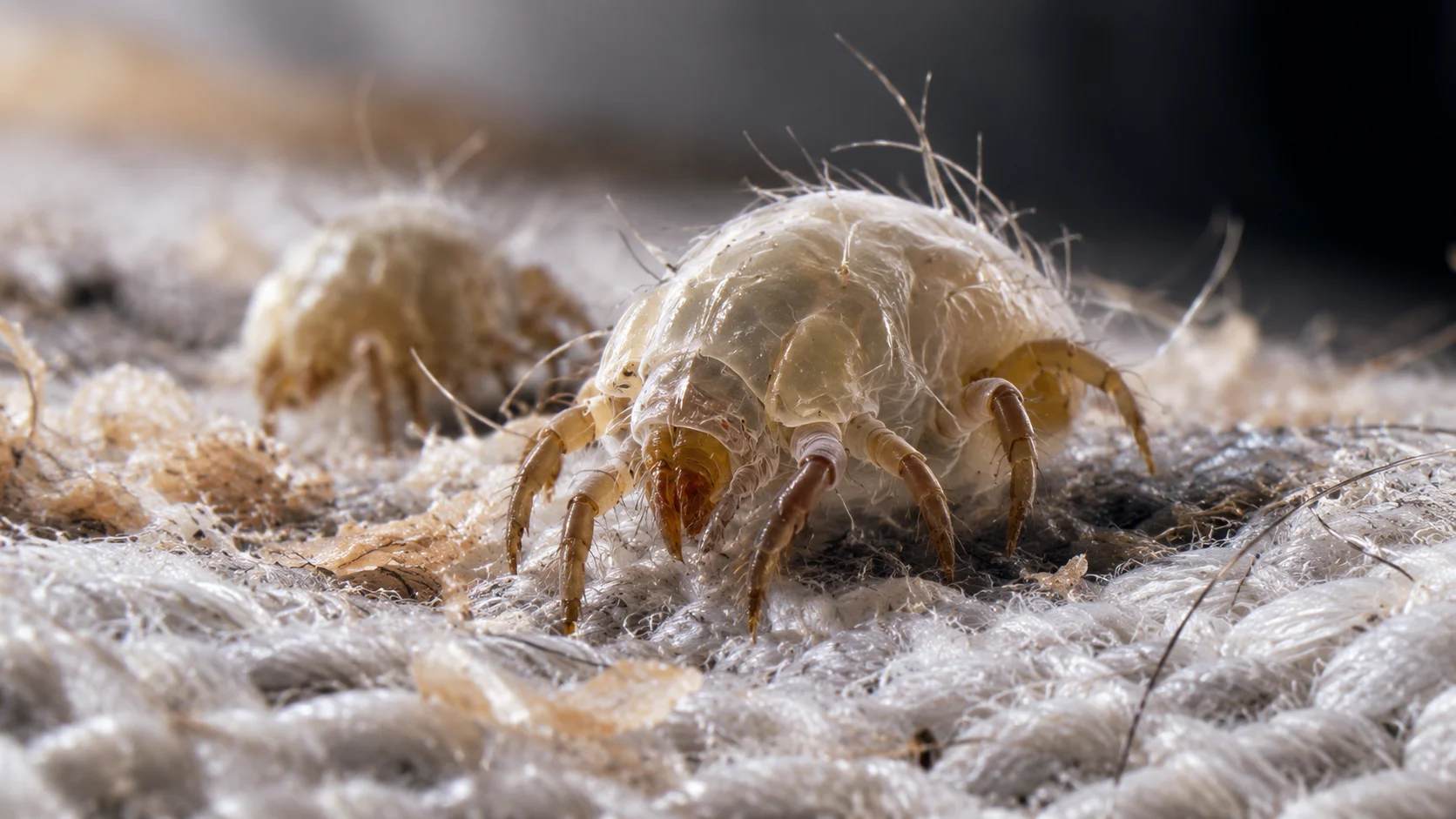
Dust mites are microscopic arachnids that commonly live in household dust, especially in mattresses, pillows, carpets, upholstered furniture, and other fabric-covered materials. They are related to spiders and ticks rather than insects. Unlike many pest mites, house dust mites do not bite people or live on the human body. Their bodies, shed skins, and fecal material can, however, contribute to indoor allergies and asthma symptoms in sensitive people.
The word mite covers thousands of different species with very different lifestyles. Some mites feed on dead organic material, some live on plants, some parasitize animals, and others can affect people. This is why terms such as dust mites, spider mites, ear mites, bird mites, clover mites, Demodex mites, and scabies mites describe very different organisms.
Understanding the type of mite involved is important because identification, health effects, and control methods vary considerably. So, let's understand, what are dust mites?
Dust Mites Are Microscopic Household Arachnids
House dust mites are among the most common mites associated with indoor environments. They are generally too small to see clearly without magnification and are particularly successful in warm, humid conditions.
Dust Mite Appearance and Habitat
The main house dust mite groups include Dermatophagoides pteronyssinus and Dermatophagoides farinae. They feed primarily on flakes of shed skin and organic material found in household dust. Mattresses, pillows, upholstered furniture, carpets, bedding, and fabric-covered items can provide suitable habitats.
Because dust mites are microscopic, seeing a tiny moving insect on a surface does not automatically mean it is a dust mite. Many visible household mites are different species.
Dust Mites and Indoor Allergens
Dust mites are important mainly because proteins associated with their bodies and waste can become part of household dust. In sensitive people, exposure can contribute to allergic symptoms and asthma.
Keeping indoor humidity controlled, washing bedding regularly, using allergen-proof mattress and pillow covers, and reducing accumulated dust can help lower exposure.
Mites Include Many Different Species
The term mites does not describe one particular pest. Mites belong to the broader group of arachnids and include species associated with homes, plants, animals, soil, stored products, and human skin.
Mite Biology
Mites generally have four major life stages: egg, larva, nymph, and adult. Unlike adult mites and most nymphs, mite larvae have three pairs of legs; later stages generally have four pairs.
Their tiny size makes some species difficult to identify without magnification or laboratory examination.
Common Mite Groups
Some mites are beneficial predators or decomposers, while others are plant pests or parasites. A mite found around a window, on a pet, in bedding, or on a plant can therefore represent a completely different species.
This distinction is particularly important when symptoms are involved because itching alone does not prove that mites are responsible.
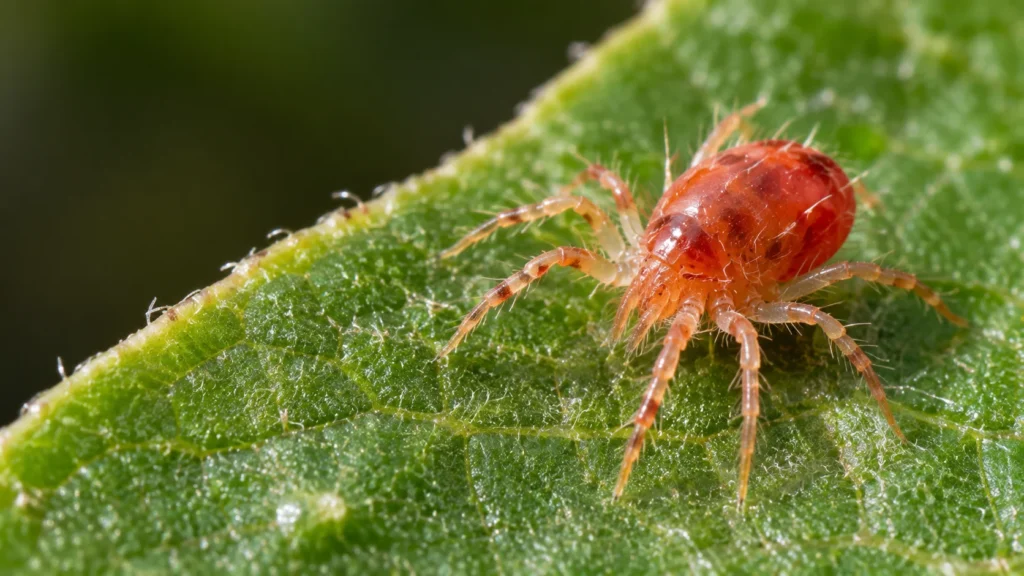
Spider Mites Affect Plants Rather Than People
Spider mites are common plant pests and are especially relevant to gardeners and indoor-plant owners. They are very small and can be difficult to see without close inspection.
Spider Mites on Plants
Spider mites feed on plant tissues and can cause stippling, yellowing, bronzing, leaf damage, and in heavier infestations, webbing around leaves and stems.
They are fundamentally different from house dust mites because their primary habitat and food source are plants rather than household fabrics and human skin flakes.
Spider Mite Color Variation
Spider mite color can vary by species and developmental stage. Some appear greenish, yellowish, reddish, or brownish, so color alone is not a dependable identification method.
Bird Mites and Rodent Mites Can Enter Homes
Bird and rodent mites normally depend on animal hosts. Problems can occur when birds or rodents nest in or near buildings and the mites lose access to their usual hosts.
Bird Mite Activity
Bird mites can be associated with pigeons, sparrows, starlings, chickens, and other birds. Some species may bite people when their normal host is no longer available.
If suspected bird mites appear indoors, locating nearby nests or bird activity can be more useful than treating the entire building with pesticides.
Rodent Mite Activity
Several rodent-associated mites can bite people, particularly when mice or rats abandon a nest or when their host population changes. The Illinois Department of Public Health identifies house mouse mites, spiny rat mites, and tropical rat mites among species that may bite humans.
Ear Mites Commonly Affect Dogs and Cats
Ear mites are parasites that primarily affect animals rather than healthy human skin. Otodectes cynotis is a common ear mite affecting cats and dogs, with cats particularly susceptible.
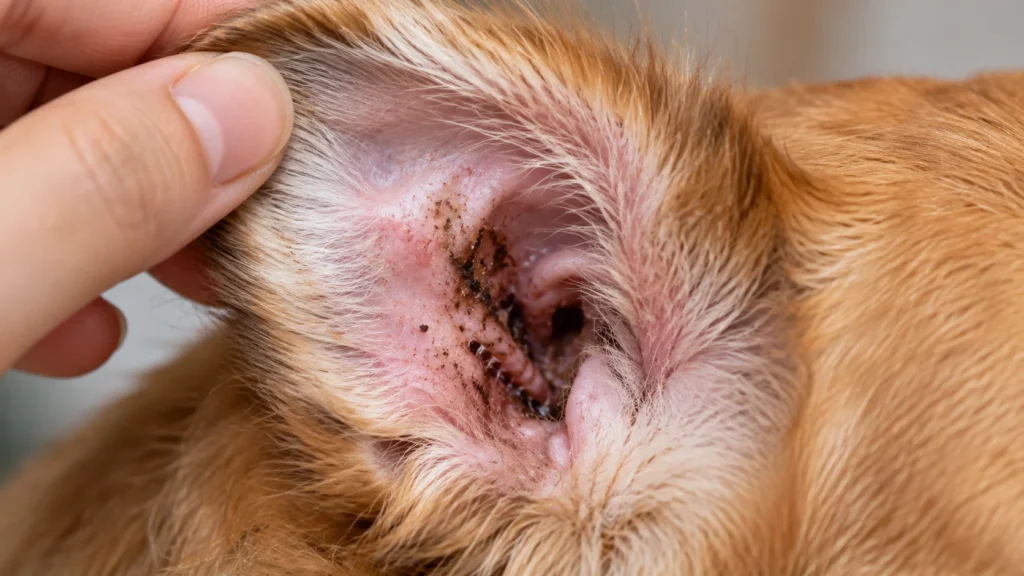
Ear Mites in Dogs
Dogs with ear mites may develop intense ear scratching, head shaking, inflammation, and other signs of external ear disease. The mites generally inhabit the external ear canal but can sometimes occur elsewhere on the body.
Veterinary examination is important because ear infections can have multiple causes, including bacteria, yeast, allergies, and parasites.
Ear Mites in Cats
Cats can develop ear mite infestations that cause itching, head shaking, redness, and dark ear discharge. Veterinary sources note that ear mites are commonly found deep in the external ear canal.
Diagnosis can involve examining ear material under magnification, and treatment should use an appropriate veterinary product rather than household pesticides.
Scabies and Skin Mites Affect People Differently
Some mites genuinely affect human skin, but they should not be confused with dust mites or ordinary household mites.
Scabies Mites
Human scabies is caused by Sarcoptes scabiei. Unlike dust mites, scabies mites live on their host and females burrow into the outer layer of skin where they lay eggs. Severe itching, often worse at night, is a characteristic feature.
Suspected scabies requires medical diagnosis and appropriate treatment. Household spraying is not a substitute for medical care.
Demodex and Eyelash Mites
Demodex mites are microscopic mites associated with human hair follicles and sebaceous glands. They can also be found around facial areas and eyelashes. Their presence alone does not necessarily mean a person has a harmful infestation.
Persistent eye irritation, eyelid inflammation, or unexplained skin symptoms should be evaluated by an appropriate healthcare professional rather than diagnosed from internet images.
Clover Mites Are Tiny Red Household Invaders
Clover mites are plant-feeding mites that sometimes enter homes in very large numbers. They are not the same as dust mites and do not feed on people.
Clover Mite Appearance
Clover mites can be red, green, or brown and have unusually long front legs. When crushed, they can leave a reddish stain on carpets, curtains, walls, and other surfaces.
They commonly feed on grasses, clover, ivy, and other plants around buildings.
Clover Mites Around Buildings
These mites can enter structures when outdoor vegetation becomes less suitable, particularly during seasonal changes. They are primarily a nuisance rather than a biting human pest.
Explore more articles:
Other Mites Found Around Homes and Animals
The broad mite category includes several less familiar groups that may appear in searches for what are mites.
Grain, Cheese, and Mold Mites
Stored products and organic materials can support specialized mites. Grain mites may occur in stored foods or agricultural materials, while cheese mites are associated with certain stored food products.
Mold-associated mites can occur where moisture and fungal growth provide suitable conditions. These are different from house dust mites even though they may occur in similar indoor environments.
Oak, Chigger, and Itch Mites
Oak itch mites and straw itch mites can cause itchy skin reactions after people contact infested vegetation or materials. Chiggers are another type of mite, but only their larval stage feeds on humans and animals.
These mites generally do not establish permanent populations on human skin.
Chicken and Turkey Mites
Bird-associated mites can infest poultry and wild birds. Chicken mites and northern fowl mites may also bite people when their normal hosts are nearby or unavailable.
Mites on Humans Require Careful Identification
People sometimes interpret unexplained itching, crawling sensations, or small skin marks as evidence of mites. However, these symptoms can have many causes.
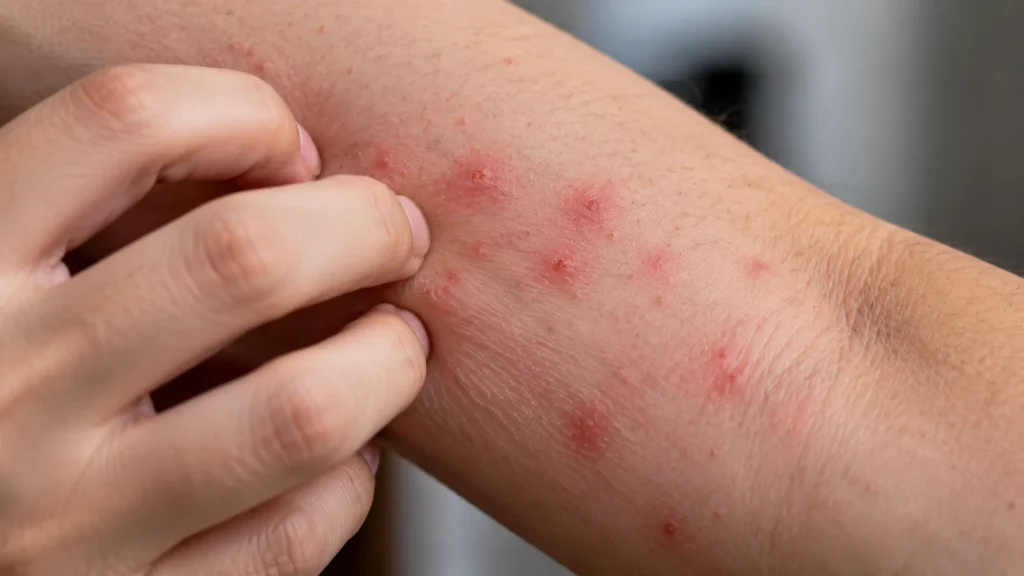
Mite Bites and Skin Irritation
Some mites can cause bites or irritation, including chiggers, bird mites, rodent mites, and itch mites. Others, such as dust mites, do not bite people.
A rash or suspected bite pattern alone cannot reliably identify the responsible organism. NC State Extension specifically cautions that presumed bite marks can have many causes and should not automatically be attributed to mites.
The Importance of Confirming the Pest
When mites are suspected in a home, identifying an actual organism is preferable to repeatedly applying pesticides. Illinois Department of Public Health recommends inspection and identification because different mites have very different biology and control requirements.
For persistent or severe skin symptoms, medical evaluation is more appropriate than self-treating the home.
The Term “Meth Mites” Does Not Describe a Mite Species
The phrase “meth mites” sometimes appears in searches about sensations of crawling or biting associated with stimulant use. It is not the scientific name of a recognized mite species.
Skin Sensations Have Multiple Possible Causes
Crawling or biting sensations can have different medical or environmental explanations. NC State Extension notes that unexplained sensations and presumed bites are sometimes incorrectly attributed to mites, while Illinois public health guidance likewise emphasizes that identifying an actual organism is important.
Persistent unexplained sensations or skin changes should be discussed with a healthcare professional rather than treated with repeated pesticides.
Dust Mite Reduction Focuses on the Indoor Environment
Because dust mites live primarily in household fabrics and feed on shed skin, environmental management is more useful than trying to eliminate every individual mite.
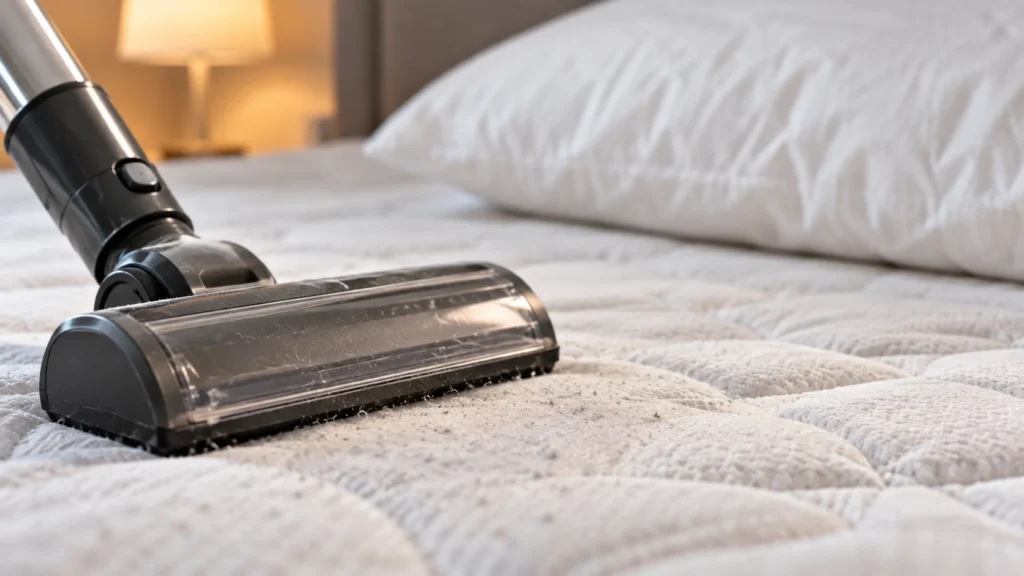
Bedding and Fabric Management
The EPA recommends washing bedding weekly, using dust-proof covers on mattresses and pillows, vacuuming carpets and furniture, and reducing accumulated dust.
These measures are particularly useful for people who are sensitive to dust mite allergens.
Humidity Control
Dust mites favor warm, humid environments. The EPA recommends maintaining indoor relative humidity around 30–50% as part of reducing biological contaminants and dust mite conditions.
A dehumidifier may help in rooms where humidity remains consistently high.
10 Important Facts About Mites
- Dust mites are microscopic arachnids rather than insects.
- House dust mites commonly live in mattresses, pillows, carpets, and upholstered furniture.
- Dust mites feed primarily on shed skin and organic material.
- Dust mite bodies and waste can contribute to indoor allergens.
- Spider mites are primarily plant pests.
- Bird and rodent mites can bite people when their normal hosts are unavailable.
- Ear mites commonly affect cats and dogs.
- Scabies mites live on human skin and require medical treatment.
- Clover mites feed on plants and do not bite people.
- Unexplained itching alone does not prove that mites are present.
Conclusion
What are dust mites? They are microscopic arachnids that commonly inhabit household fabrics and dust, particularly in warm and humid environments. They do not bite people, but their bodies and feces can contribute to allergens that trigger symptoms in sensitive individuals.
The larger category of mites includes many very different organisms. Spider mites feed on plants, ear mites affect animals, bird and rodent mites can occasionally bite humans, clover mites are nuisance plant feeders, and scabies mites live on human skin.
Because these species have different biology and control requirements, identifying the actual mite or underlying cause is more useful than treating every small arthropod as the same pest. For dust mite concerns, reducing humidity, washing bedding, vacuuming regularly, and using allergen-proof covers can help reduce exposure.
What are dust mites?
Dust mites are microscopic arachnids that live primarily in household dust and fabrics such as mattresses, pillows, carpets, and upholstered furniture. They feed on shed skin and can contribute to indoor allergens.
What are mites?
Mites are a large and diverse group of tiny arachnids related to spiders and ticks. Different species feed on plants, organic material, animals, or other organisms, and only some affect humans.
What color are dust mites?
Dust mites are microscopic and are generally not visible clearly to the unaided eye, so ordinary color-based identification is not practical.
What are spider mites?
Spider mites are tiny plant-feeding mites that can damage leaves and other plant tissues. They are different from house dust mites and do not represent the same indoor allergy problem.
What are ear mites in dogs?
Ear mites in dogs are parasites, commonly Otodectes cynotis, that inhabit the external ear canal and can cause itching, head shaking, inflammation, and ear discharge.
What are ear mites in cats?
Cat ear mites are commonly Otodectes cynotis. They can cause significant itching, head shaking, redness, and dark ear discharge and are especially common in cats.
What are mites on humans?
Some mites can affect humans, including scabies mites, chiggers, bird mites, rodent mites, and certain itch mites. Dust mites are different because they do not live on or bite humans.
What are clover mites?
Clover mites are tiny plant-feeding mites that can enter buildings in large numbers. They do not bite people but may leave red stains when crushed.
What are scabies mites?
Scabies mites are Sarcoptes scabiei, microscopic parasites that burrow into the outer layer of human skin. They cause intense itching and require appropriate medical treatment.
What are dust mites and where do they come from?
Dust mites are naturally occurring microscopic organisms that thrive in warm, humid indoor environments. They can be found in bedding, mattresses, carpets, upholstered furniture, and other areas containing household dust.